How to spot a deepfake video: verify before trusting
Most people assume they'd recognize an AI-generated video if they saw one. They wouldn't. In a pre-registered study of 1,276 participants evaluating a mix of authentic and synthetic images, audio, video, and audiovisual clips, average detection accuracy landed at 51.2%, barely better than a coin flip (Communications of the ACM, published last year). That single number is the reason this guide on how to spot a deepfake video isn't a list of visual tells to hunt for. It's a routine for verifying a video before you trust, share, or act on it.
The same study found people correctly identified fully authentic media 64.6% of the time, but caught content containing any synthetic element only 38.8% of the time. Fakes slip past viewers far more often than real footage gets wrongly flagged (Communications of the ACM). Meanwhile the tools got cheap fast: ISC2 reported early last year that a reasonably convincing deepfake video could be made for around $100, with fraud-grade versions running into the thousands (ISC2).
None of what follows is a checklist for catching AI on sight. The evidence says that isn't reliably possible. Instead, this is a guide to the situations that should make you stop and verify, plus a fast routine for doing that verification. The goal isn't a sharper eye. It's a better habit.
Why looking harder at the video won't help
Video of the Day
Human perceptual judgment sits close to chance across every media type the ACM study tested, images, audio, video, and audiovisual combinations, with little variation between them. The researchers concluded that visual and auditory perception alone isn't adequate for reliably spotting synthetic media online (Communications of the ACM).
Faces make it harder still. Accuracy for synthetic still images dropped to 46.6% when a human face was pictured, compared with 54.7% for landscape images (Communications of the ACM). That finding is specific to still images, not a direct video measurement, but it points at the same weakness: faces are difficult for people to judge under any format.
Combining audio and video helps a little. Accuracy for audiovisual material (54.5%) topped video-only (50.7%) and beat single-modality stimuli overall (52.2%), but 54.5% is still barely better than guessing (Communications of the ACM). Checking whether lips and voice "match" is not a dependable test by itself.
Confidence doesn't fix this either. People who described themselves as highly familiar with synthetic media scored 51.9%, hardly different from the 51.1% posted by those who called themselves unfamiliar (Communications of the ACM). A separate study found that higher "new media literacy" actually reduced detection accuracy, with confidence mediating that relationship (Proceedings of the Association for Information Science and Technology, last year). Feeling media-savvy doesn't translate into spotting fakes; it sometimes just makes people surer of a wrong guess.
AI detection tools aren't a shortcut around this problem either. Their known limitations regularly breed user mistrust and confusion between real and fake content (Proceedings of the ACM on Human-Computer Interaction, last year). In a 400-person experiment, the same researchers found that people's reliance on a detector rose and fell with how risky a situation felt and with the AI's own prediction output, not with a stable read on how reliable the tool actually was (Proceedings of the ACM on Human-Computer Interaction). A clean scan from a detector is a data point, not a verdict.
Taken together, this is the case for skipping the squint-and-scrutinize approach entirely. If familiarity, confidence, and even purpose-built software don't reliably close the gap, the fix has to be procedural rather than perceptual.
Video of the Day
Signs of a deepfake video that should make you pause
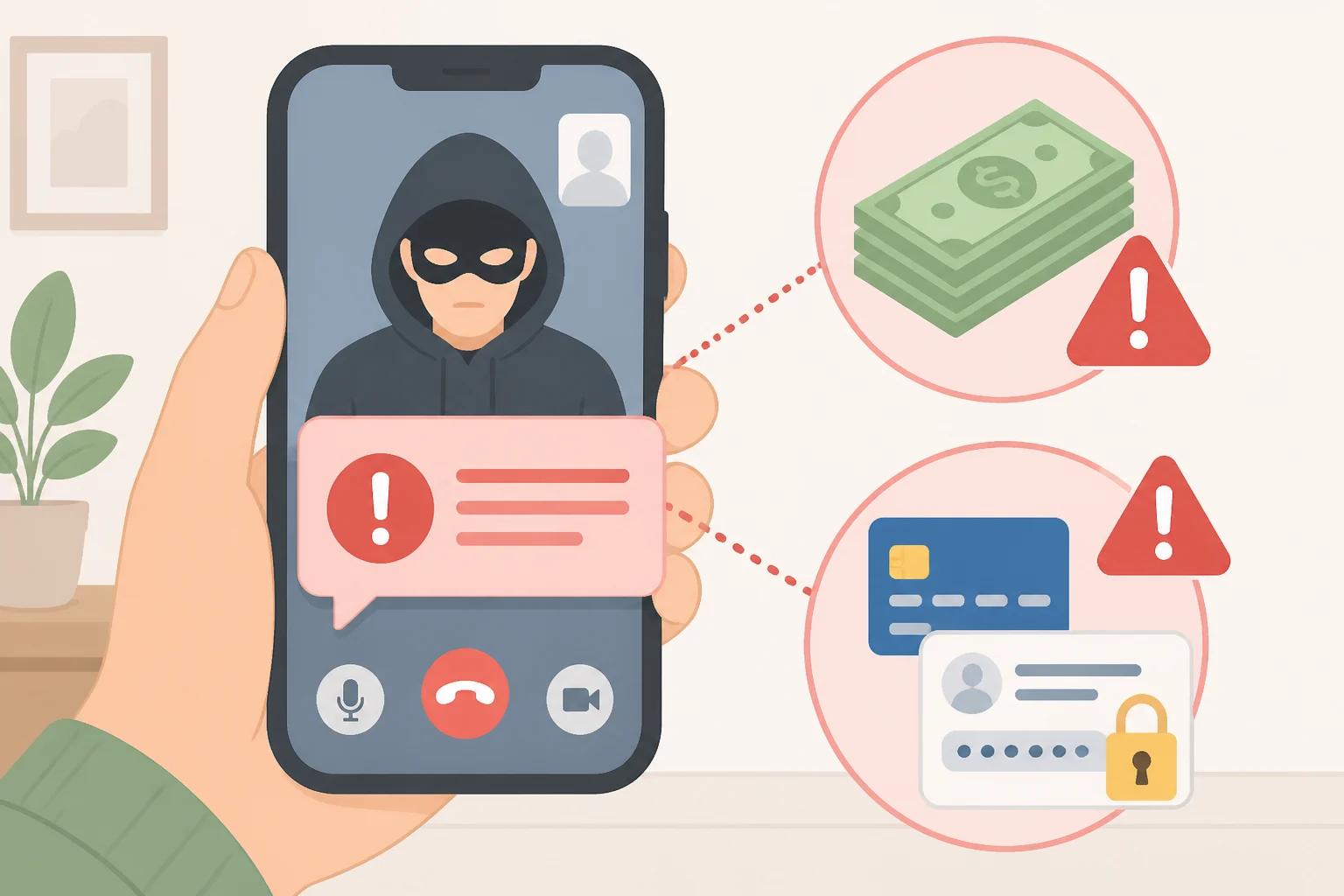
None of the following prove a video was manipulated by AI. Urgency, missing corroboration, and an unverifiable identity all show up in ordinary scams and in misleading-but-genuine footage too. Treat these as triggers to verify, not as a diagnosis.
The video pushes an urgent, high-stakes request. Money, credentials, access codes, secrecy: these are the patterns behind the most damaging documented incidents. Engineering firm Arup lost roughly $25 million after an employee made 15 separate payments based on instructions delivered through video calls that appeared to show senior management (ISC2). The employee's only confirmation came from within those calls themselves, without ever checking through a separate channel. These attacks aren't rare, either: ISC2 cited a Deloitte poll from roughly two years ago that found 25.9% of executives said their company had experienced at least one deepfake attack (ISC2).
A significant claim has no independent corroboration, with a caveat. If a video makes a consequential claim you can't find reported anywhere else, that absence is worth noting. But it's not a universal test. Breaking news, local events, and personal footage can genuinely lack coverage in the first hours. In those cases, verify the source, date, location, and claimed organization directly instead of treating silence elsewhere as proof of fakery.
Audio and video don't quite cohere, or the clip mixes authenticity. Mismatched lip timing, tone, or setting is a reasonable prompt to look closer. But convincing, authentic-sounding audio paired with altered video actually fooled participants more than fully synthetic audiovisual clips did (43.4% accuracy versus 49%) (Communications of the ACM). That suggests, though the study doesn't confirm it as a deliberate tactic, that a real voice can lend false credibility to fabricated visuals. The mixed-authenticity condition simply tested harder than the fully synthetic one, not necessarily the hardest case possible.
You have no way to confirm the person's identity through anything other than the video itself. If the only proof is the clip in front of you, that's the exact gap attackers count on, which is why the next section exists.
How to tell if a video is a deepfake: two verification tracks
Whichever scenario applies below, don't act on the video's request: no payment, code, credential, or transfer, until the relevant checks are done. Which checks matter depends on whether someone in the video wants something from you, or whether a claim is spreading around a clip you can't independently place.
Scenario A: someone on video is asking you to do something
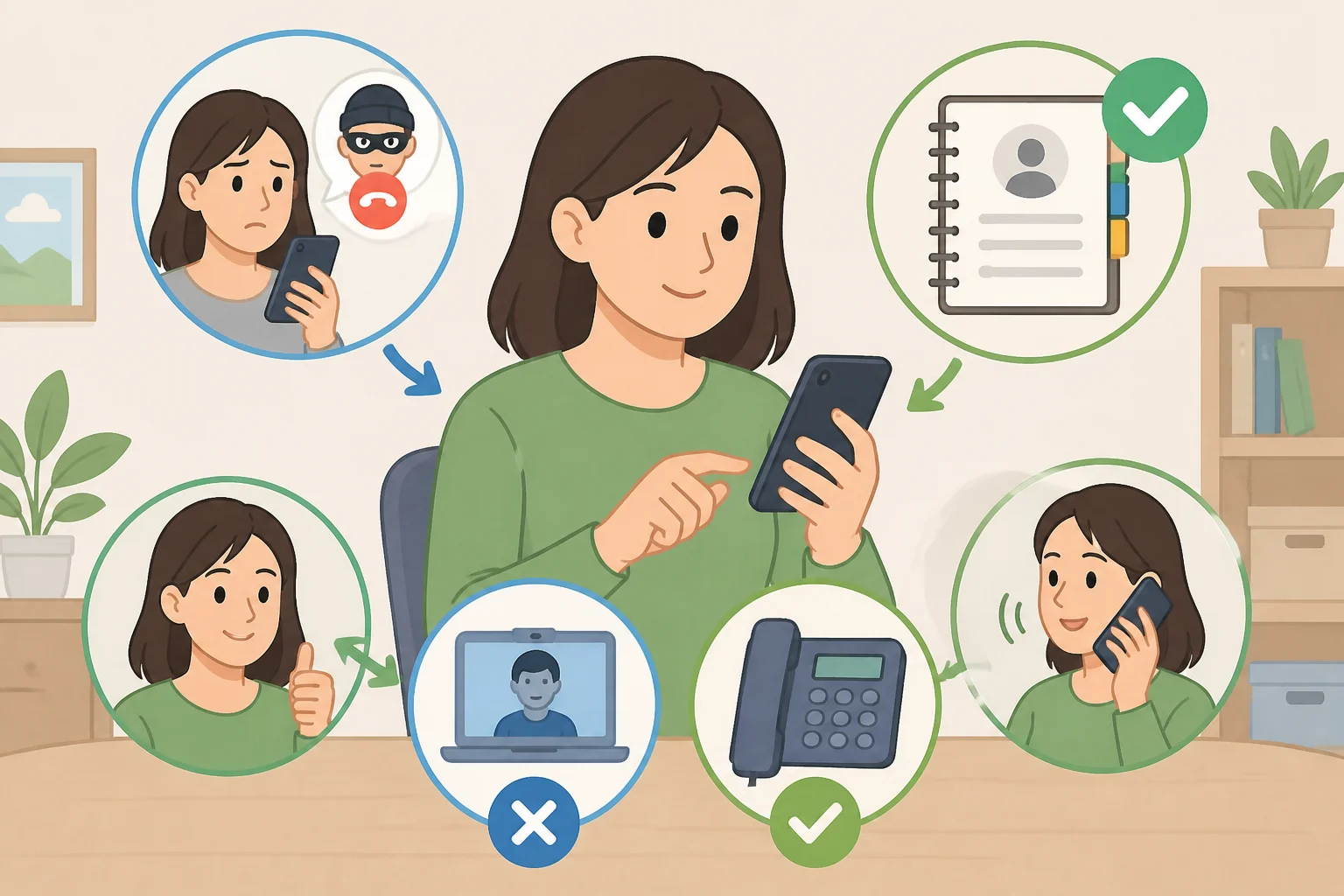
- Pause before reacting. Security specialists describe a "zero trust" posture, verifying everything and trusting nobody by default, as one of the strongest defenses against exactly this kind of manipulation (ISC2). Urgency is a signal to slow down, not speed up.
- Contact the person through a channel you obtained independently. Call a number already saved in your contacts or company directory, message an account you followed before this incident, or use an established approval process. Never use the number, link, or QR code provided inside the suspicious video or an accompanying message. The Arup case fits this exact pattern: the only "verification" the employee had came from within the video calls themselves (ISC2).
- Apply a second-approval step for anything financial. Treat a money or credential request delivered by video with the same skepticism as an unsolicited phone call. Verify first; don't extend trust by default (ISC2).
Scenario B: a video is circulating with a claim about an event, statement, or person
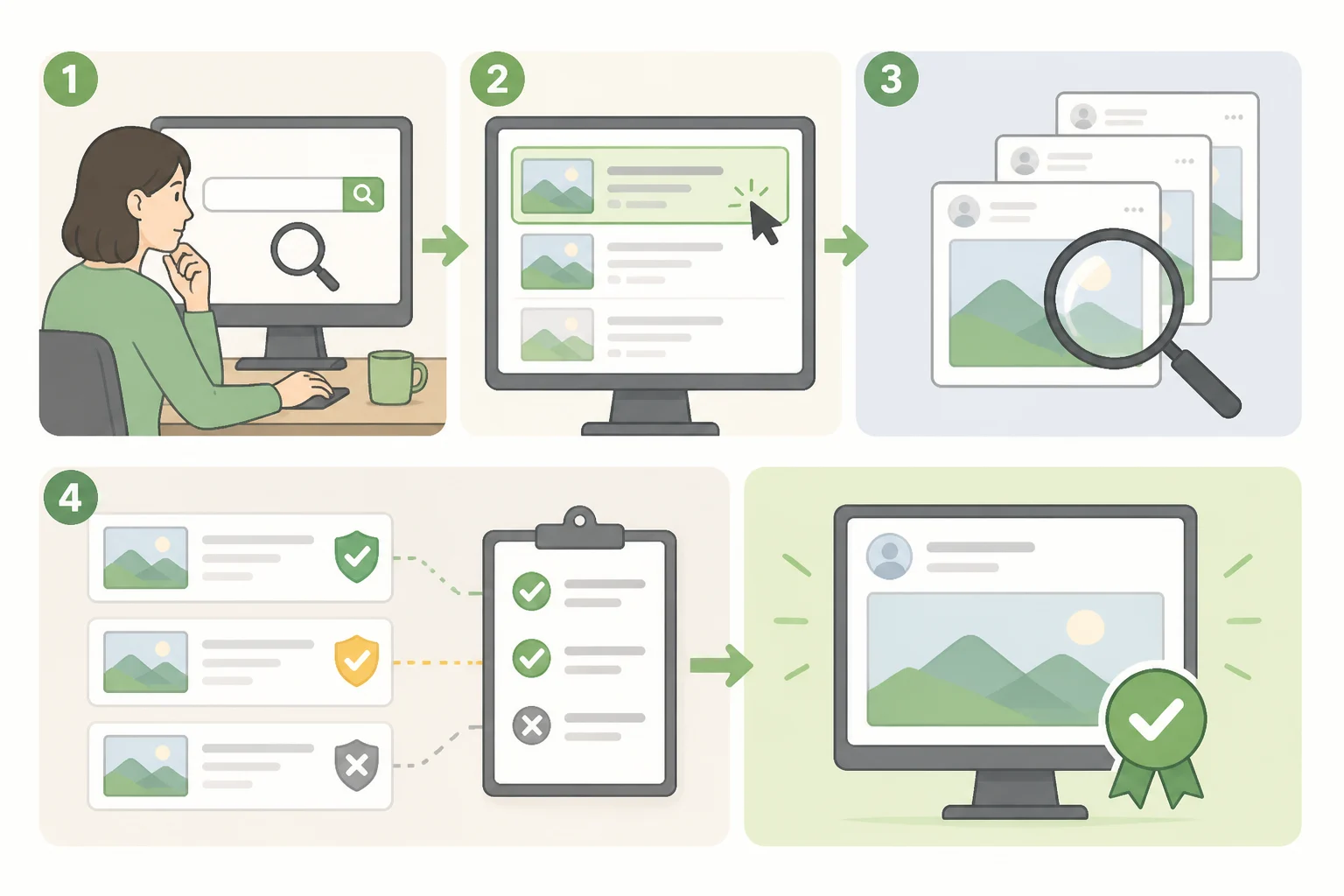
- Trace it to its earliest posting. Search for the original source and check whether it comes from a verified account or an established outlet, rather than a re-upload with the context stripped out.
- Look for independent corroboration, weighing context. A major, established claim should surface elsewhere. A fresh, local, or personal event might not have coverage yet, so verify the source, date, location, and claimed affiliation directly instead of assuming silence means fabrication.
- Treat an AI detector result as one input, not a verdict. Detectors can flag anomalies, but their documented limitations mean a clean result shouldn't override the checks above (Proceedings of the ACM on Human-Computer Interaction).
One more wrinkle applies to both scenarios: don't let gut feeling govern foreign-language content. Detection accuracy dropped when participants judged material in a language they didn't speak fluently, 51.3% versus 54.5% for fluent speakers (Communications of the ACM). If you can't follow the language natively, lean on a trusted translator or an independent source rather than instinct.
The habit that outlasts the next model
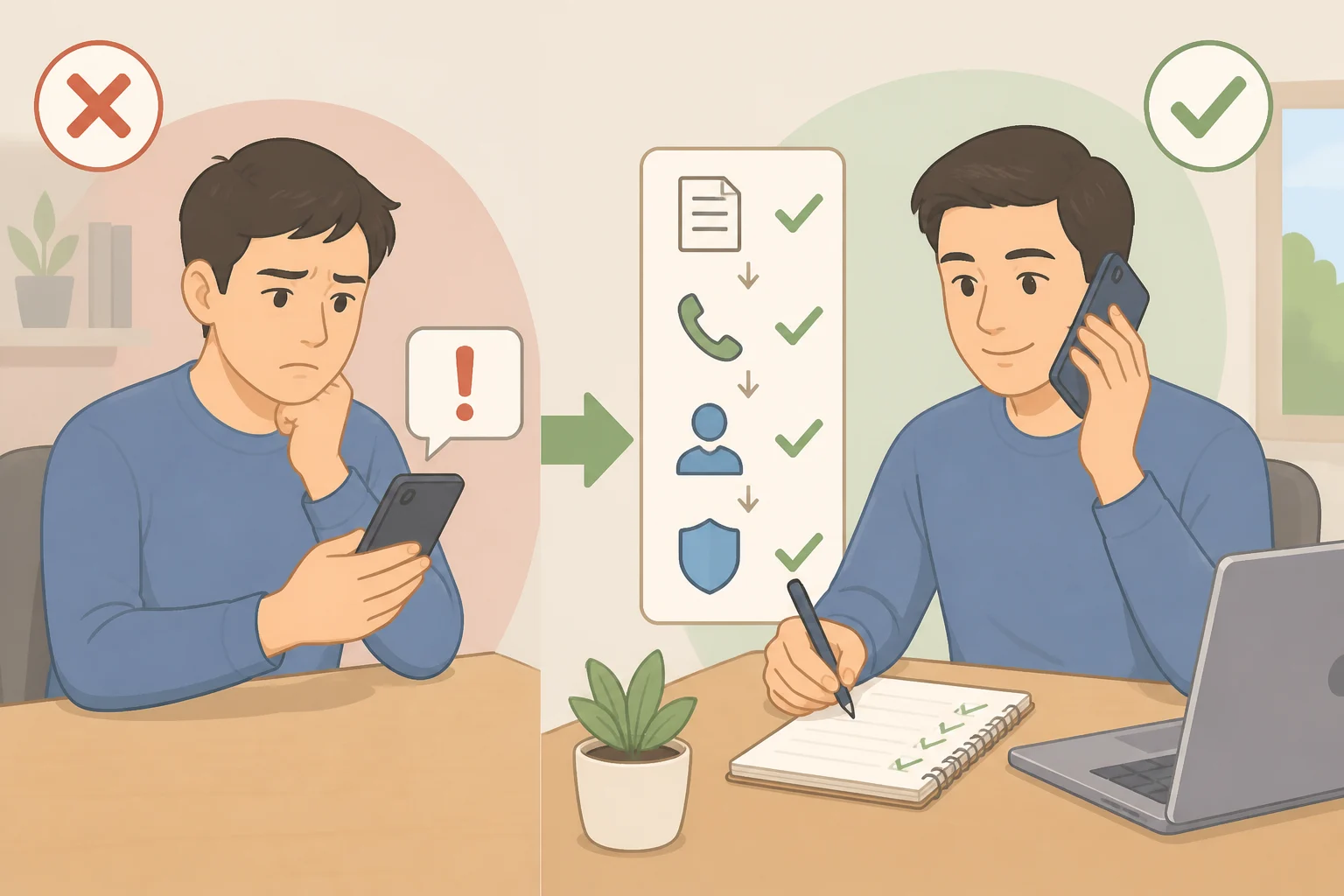
Deepfake incidents are already common enough that more than a quarter of surveyed executives report their company has dealt with one (ISC2). The defense that actually holds up isn't sharper eyesight. It's procedural: verify through a channel the video itself didn't provide.
Generation tools were already cheap and convincing as of early last year, according to ISC2, while detection tools remain structurally imperfect for the same reason anti-malware software has never reached full reliability after decades of development (ISC2). Detection software will keep improving. It won't ever hit 100%, and neither will your instincts. The two-track routine above doesn't expire when the next model ships, which is more than can be said for any list of visual tells.