Most Energy Efficient Refrigerator Type: What DOE Data Shows
Many search results offer a tidy verdict: top-freezer wins, side-by-side loses, case closed. The federal government's own efficiency archive doesn't support that kind of claim. Even the most authoritative efficiency data available, the Department of Energy's own archive, can't produce a current, model-by-model ranking of today's top-freezer, bottom-freezer, side-by-side, French-door, and compact refrigerators. Anyone searching for the most energy efficient refrigerator type is looking for something that doesn't exist yet, at least not in a usable form.
What does exist is a reliable way to compare actual models head-to-head, plus a historical dataset that explains why a clean type-by-type ranking isn't available in the first place.
What the DOE archive actually contains
Video of the Day

The Department of Energy has tracked refrigerator and freezer ratings since 1949 across three searchable tools, covering 1949-1980, 1990-1999, and 2011 through July 2021. Together they list 55,369 entries: 12,045 in the oldest tool, 25,305 in the middle one, 18,019 in the newest (DOE, 1949-1980 tool; DOE, 1990-1999 tool; DOE, 2011-2021 tool). The record is large. It is not current, and it does not cover every model ever made.
The oldest tool, spanning 1949-1980, lists brand, model, year, type, configuration, defrost method, size, and two separate numeric fields, "Energy Rating" and "Adjusted Rating" (DOE, 1949-1980 database). That means the government has long treated configuration as a trackable, searchable variable, at least in this dataset. It doesn't mean every field appears identically across all 55,369 records in all three tools, and nothing in the available documentation confirms that it does.
The newer tools work a little differently. A shopper or historian using the 2011-July 2021 lookup selects an appliance type and brand first, then can optionally narrow the search with a model number and manufacture year (DOE, 2011-2021 tool). Both the 1990-1999 and 2011-2021 tools state plainly that they cover only models larger than 10 cubic feet (DOE, 1990-1999 tool; DOE, 2011-2021 tool).
Video of the Day
Most energy efficient refrigerator type: why a clean ranking is unavailable
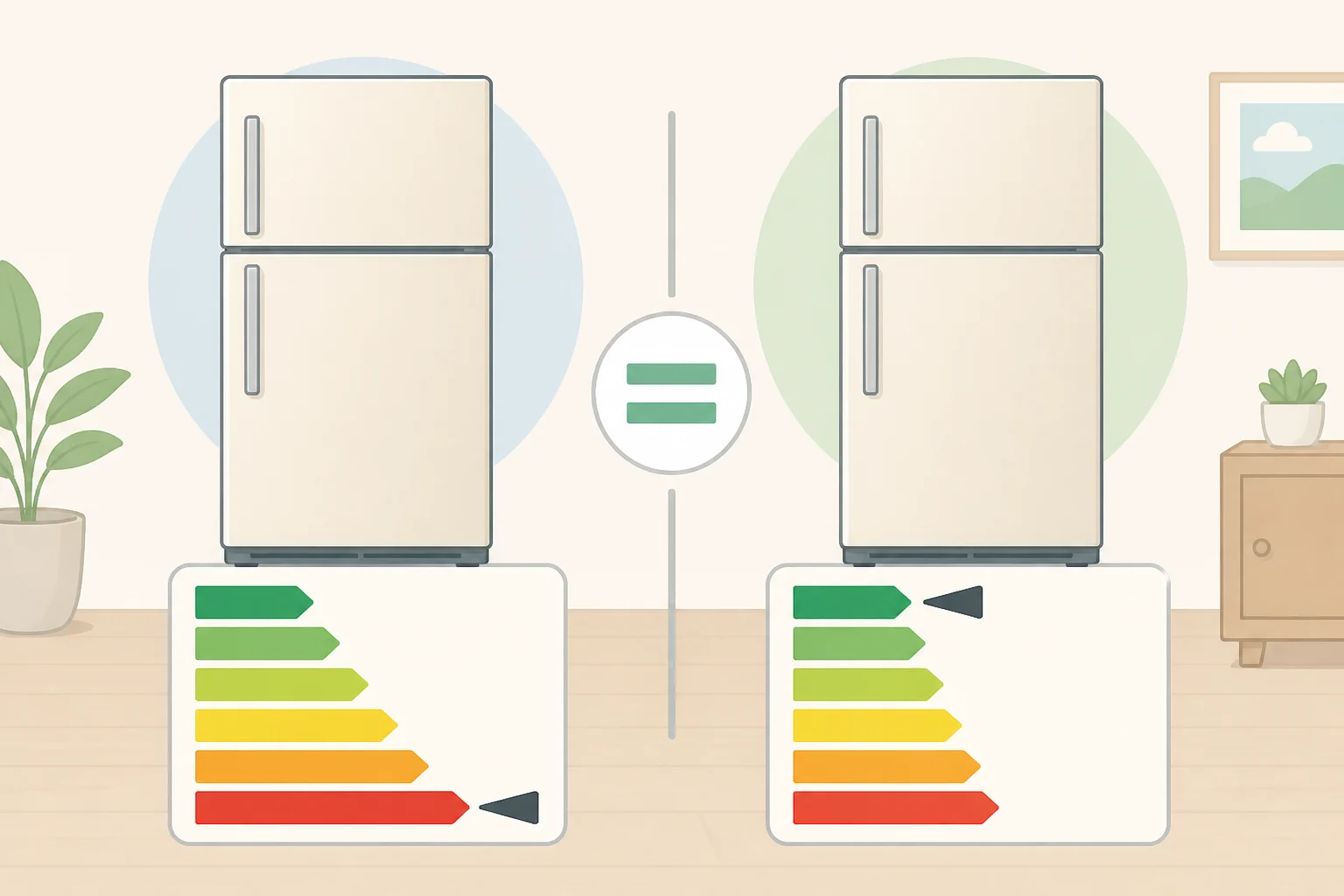
Refrigerator energy consumption by type is exactly what a shopper wants the archive to answer, and exactly where it falls short. Start with the "Adjusted Rating" field in the 1949-1980 database: nothing in the tool's documentation defines what the adjustment accounts for, or confirms that either numeric field maps cleanly onto a modern annual kWh figure.
Consider two entries, offered here as an illustration rather than a type-wide finding. A 1952 Admiral top-freezer model, 10.9 cubic feet, manual defrost, carries an Energy Rating of 1,300. A 1952 Norge top-freezer, 10.3 cubic feet, also manual defrost, comes in at 760, which is 540 rating points lower, or about 42 percent lower than the Admiral entry (DOE, 1949-1980 database). Same year, same configuration, nearly identical size, and a gap that wide. Without knowing what each rating measures or adjusts for, that gap can't be pinned on configuration, manufacturer engineering, or anything else specific. It flags that the field itself needs more context than the archive supplies, not evidence about how top-freezers perform as a class.
Two structural gaps compound the problem for anyone shopping in 2026. First, the newest public dataset stops in July 2021, so any model released since then is absent by definition, regardless of configuration (DOE, 2011-2021 tool). Second, the two newer tools' stated size threshold excludes anything under 10 cubic feet, ruling out compact refrigerators from the comparison entirely (DOE, 1990-1999 tool; DOE, 2011-2021 tool).
The table shows what the supplied records contain, and where they stop, which is the closest honest answer to "refrigerator types ranked by energy efficiency" that this research can support:
| Configuration | What appears in the supplied records | What the records don't establish |
|---|---|---|
| Single door / top-freezer | The supplied records include Frigidaire and Westinghouse single-door models from 1949, and Admiral, GE, Norge, and Philco top-freezer models from 1952, each with an Energy Rating and size | Whether fewer doors translate to lower energy use once size and year are controlled for |
| Bottom-freezer | Not visible in the supplied records | Any comparison against top-freezer or other configurations |
| Side-by-side | Not visible in the supplied records | Dispenser energy draw, or comparative efficiency against any other type |
| French-door / multi-door | Not visible in the supplied records; the newest tool ends in July 2021 | Efficiency relative to older configurations |
| Compact (under 10 cubic feet) | Explicitly excluded by the size threshold stated in the two newer tools | Everything in this category; it can't be evaluated from the available federal data |
That's a map of where the evidence runs out, not a ranking.
How to compare models, not types
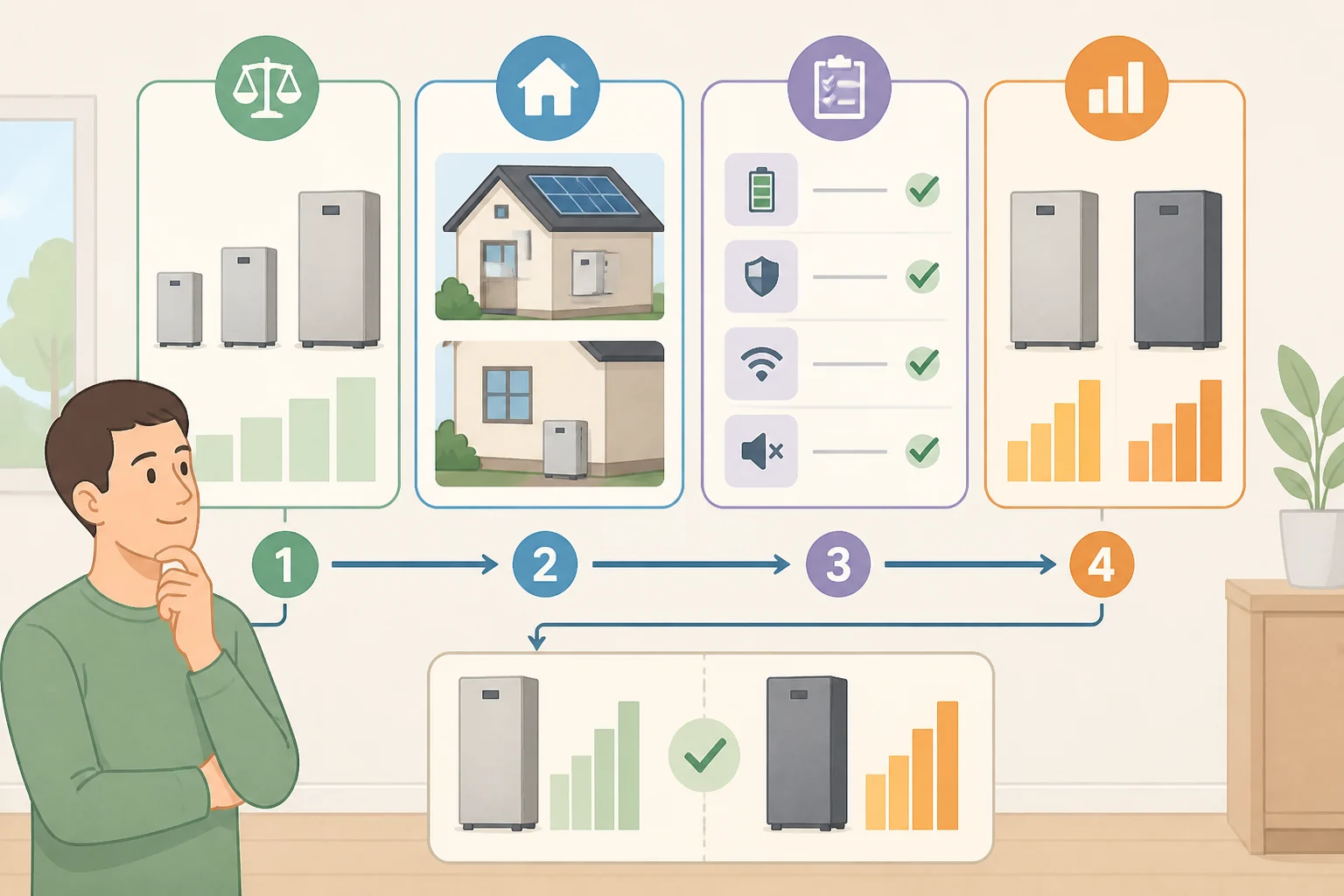
If type alone can't settle the question, the shopping decision has to become a matched comparison instead of a category contest.
Start by narrowing on fit: eliminate anything outside the needed capacity range, installation type (built-in or freestanding), and feature set, whether that's an ice and water dispenser or smart connectivity. These are fit criteria, not energy findings; the supplied research doesn't quantify how any of them affect consumption. The 2011-2021 DOE tool itself only returns a useful match after a user selects an appliance type and brand, then optionally refines with a model number and year (DOE, 2011-2021 tool). Even the government's own lookup tool treats configuration as one input among several, which supports this article's conclusion: configuration alone isn't a usable comparison key.
Once a short list sits within the same capacity range, compare the annual consumption estimate for each specific model rather than letting a configuration name do the sorting. Among comparable models, weigh the estimated annual kWh directly, and treat any per-cubic-foot figure only as a loose secondary check, since two units with similar per-cubic-foot numbers can still carry different real costs if one holds more food. That reasoning isn't drawn from the DOE archive; it's offered here as a judgment call, not a documented finding.
This is where "which refrigerator style uses the least energy" usually breaks down as a question. Searchers want a verdict between, say, top-freezer and bottom-freezer orientations, and the available archive doesn't contain current, matched data to produce one. The only move the evidence supports is pulling the annual consumption estimate for the specific top-freezer model and the specific bottom-freezer model under consideration, then comparing those two numbers directly.
Some buyers also use efficiency certification marks as a quick screening step to shorten a list. The supplied federal research doesn't document what any particular certification measures or guarantees, so treat a certification mark as a filter applied before comparing numbers, never as a substitute for comparing them.
If two finalists are genuinely tied on capacity and annual consumption, some buyers fall back on a simpler configuration, fewer doors, no dispenser, as a last tiebreaker. That's a judgment call, not a documented finding; nothing in the research behind this article measures whether it actually holds up.
A practical version of this process looks like:
- Match approximate capacity.
- Match installation type and required dimensions.
- Hold features such as ice makers and dispensers constant where possible.
- Compare annual kWh or annual consumption estimates.
- Use certification as a screening criterion only after verifying what it means.
- Choose the lower-consumption model that still meets the use case.
Checking the fridge you already own
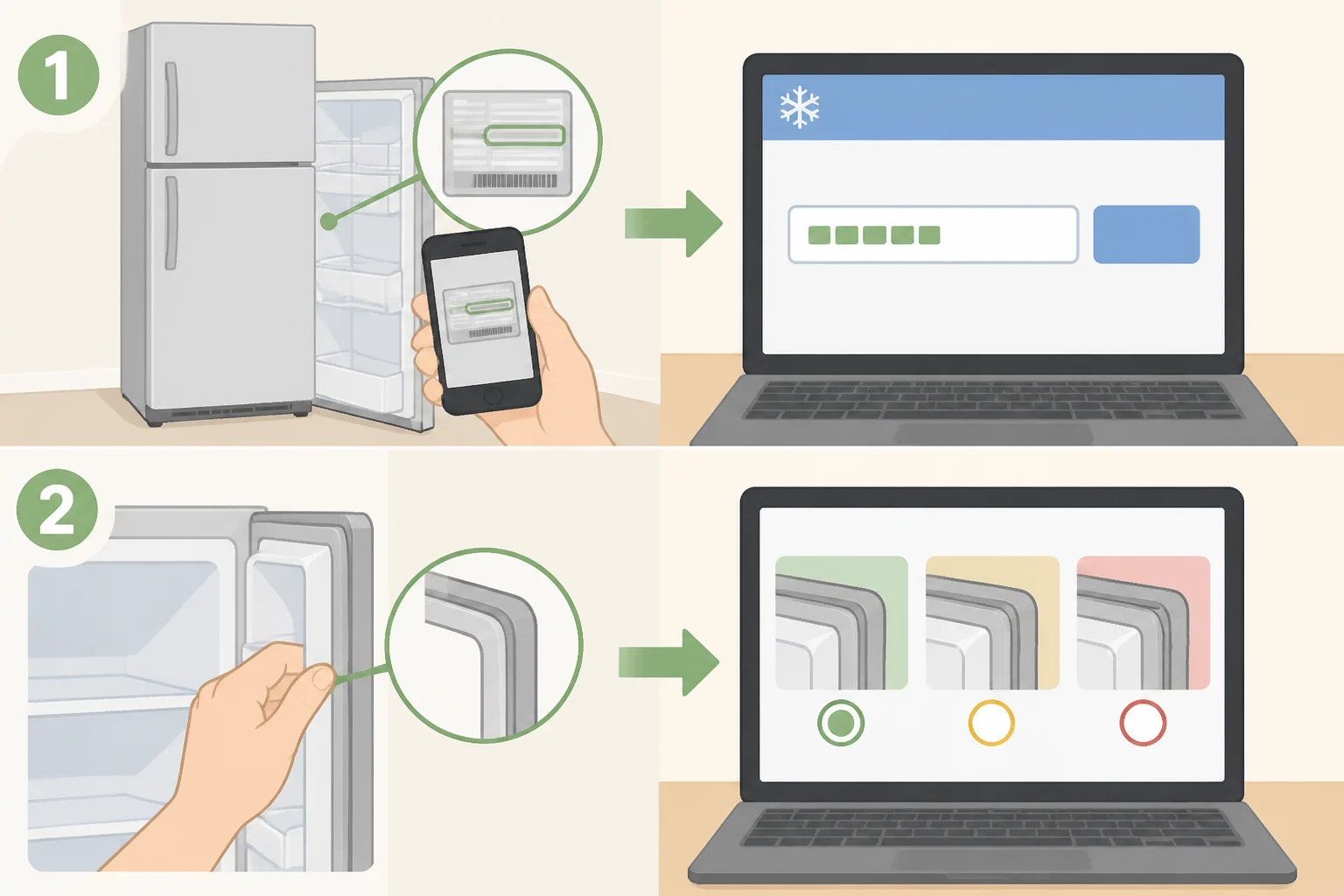
The same archive has a second use beyond shopping: sizing up a refrigerator already in the kitchen.
Set expectations first. DOE's lookup tools cover listed historical models only through July 2021 (DOE, 2011-2021 tool). A unit bought in the last few years may simply not appear, since this is a historical archive with a hard stop, not a live, continuously updated database.
For units the tool does cover, the process is straightforward. Locate the model number on the nameplate, usually inside the food compartment or near the floor on the front frame, and enter it along with the approximate manufacture year, which the tool treats as optional but useful for narrowing results (DOE, 2011-2021 tool). The search returns a closely matching model and an estimated consumption range.
Door-seal condition feeds directly into that estimate. DOE defines a "good" seal as no visible wear or gaps and a "fair" seal as some wear with no gaps (DOE, 2011-2021 tool). In DOE's own worked example, a 2000 Amana freezer with a good seal carries an estimated annual consumption of 537 kWh (DOE, 2011-2021 tool). That figure describes one matched model under one specific seal condition, not a universal before-and-after number for any unit with a worn gasket. Checking the seal is a reasonable, low-cost first step. It isn't a precise savings calculator.
What changes in 2029 and 2030
The 10-cubic-foot threshold and the 2021 cutoff describe today's data. Federal efficiency requirements themselves are due to shift by the end of the decade.
A 2024 direct final rule set amended energy conservation standards for refrigerators, refrigerator-freezers, and freezers, built on a joint recommendation submitted by manufacturers, consumer groups, and energy and environmental advocates, with an effective date of May 16, 2024 (Federal Register). The rule allowed for withdrawal if adverse comments supplied grounds for it by May 6, 2024; the research behind this article doesn't confirm whether that happened, or whether the rule remains in force as of this writing. The figures below describe the rule as adopted, not a confirmed current status.
As adopted, compliance would be required on and after January 31, 2029, for some product classes and January 31, 2030, for others, applying to products manufactured or imported into the United States on or after those dates (Federal Register).
DOE projects the adopted standards would cut energy use by 11 percent across 30 years of shipments relative to a no-new-standards baseline, translating to roughly $36.4 billion in consumer savings and close to 101 million metric tons of avoided carbon dioxide emissions (DOE, 2023).
That's a future efficiency floor set per product class, not a retroactive verdict on today's configurations; the standards would raise minimum requirements by product class rather than create a cross-style ranking. It isn't a reason to delay a purchase for three or four years, either. The matched-comparison method above still applies now, and the baseline itself would shift only once the compliance dates are confirmed to still stand.
The bottom line on choosing by type
The federal archive proves configuration has been trackable since 1949. It doesn't prove configuration predicts energy use on its own, and the coverage gaps covered here leave no current dataset broad enough to anchor a model-by-model ranking of today's inventory. The most defensible method supported by the evidence reviewed here is matched-capacity comparison of actual annual consumption estimates, with configuration serving only as a last tiebreaker once two models are otherwise even.
A genuinely current, model-level comparison by configuration would need a complete, up-to-date dataset with consistent capacity and feature controls across brands; the supplied research doesn't identify one. Standards arriving in 2029 and 2030, if they remain in force, would reset the efficiency floor for new production, but that's a floor for the future, not a verdict on what's sitting in stores right now. Until a dataset like that exists, comparing the models in front of you, not the label on the box, stays the most defensible way to choose.