What Amazon Knows About You: How Its Profiling Works
Scroll into your Amazon account settings and you can find out what Amazon knows about you, or at least what its algorithms have decided is true. A feature called About You has been sitting quietly inside Amazon's shopping-preferences page for a while, and it went viral today after a Threads user discovered that her Amazon profile described her as having "flat buttocks." The post set off a wave of copycats, with other shoppers logging in and finding their own strange little dossiers: "cannot keep real plants alive," "has no friends," "treats cats as biological children," according to The Verge.
What makes this worth a closer look isn't whether the guesses are funny or accurate. It's that Amazon shows customers the output of its profiling, a short label, without showing any of the reasoning behind it. There's no indication of what data produced the label, how confident the system is, or whether it ever factors into what a customer sees, is recommended, or pays. That gap between the visible guess and the invisible machinery is the real subject here.
This piece sticks to a clear line. What's confirmed comes from Amazon's own interface and the reporting on it. What's plausible context comes from independent research on how much purchase data can reveal in general. What's unproven, including anything about About You's specific inputs, confidence levels, or downstream uses, stays labeled as unproven the whole way through.
How to see your Amazon customer profile in the About You section
Video of the Day
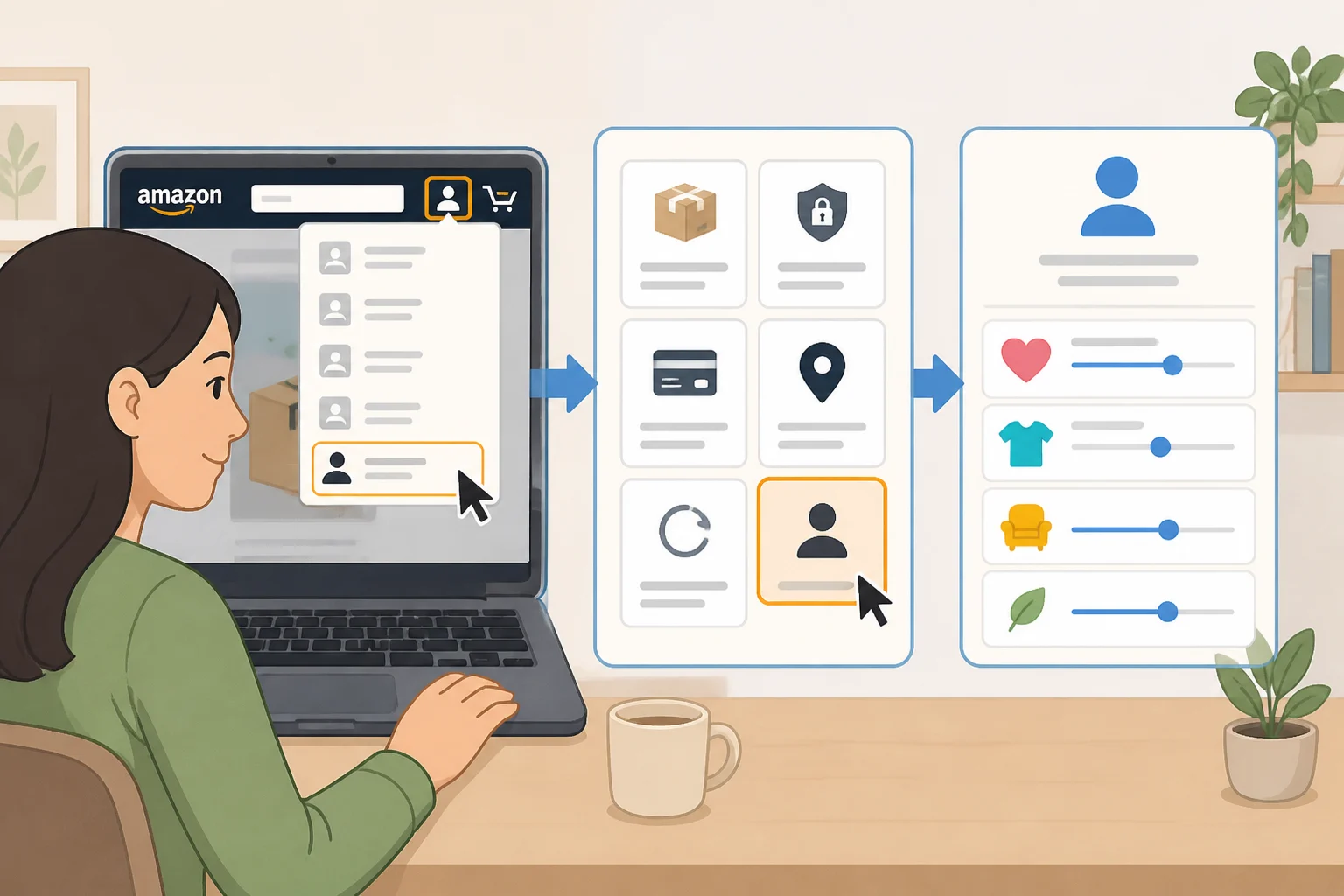
Finding the feature takes a few clicks. Select the account icon in the top-right corner of the Amazon site, scroll to "Your Account," and choose "Your Shopping preferences." From there, scroll further down and select "About You," Amazon's page for personalized shopping preferences and the traits it believes describe you, according to The Verge.
Each entry on the page is listed individually, and each one can be edited or deleted. That much is confirmed and straightforward. What happens after you edit or delete one is a separate question, and it's addressed further down.
Video of the Day
The labels: plausible patterns, implausible people
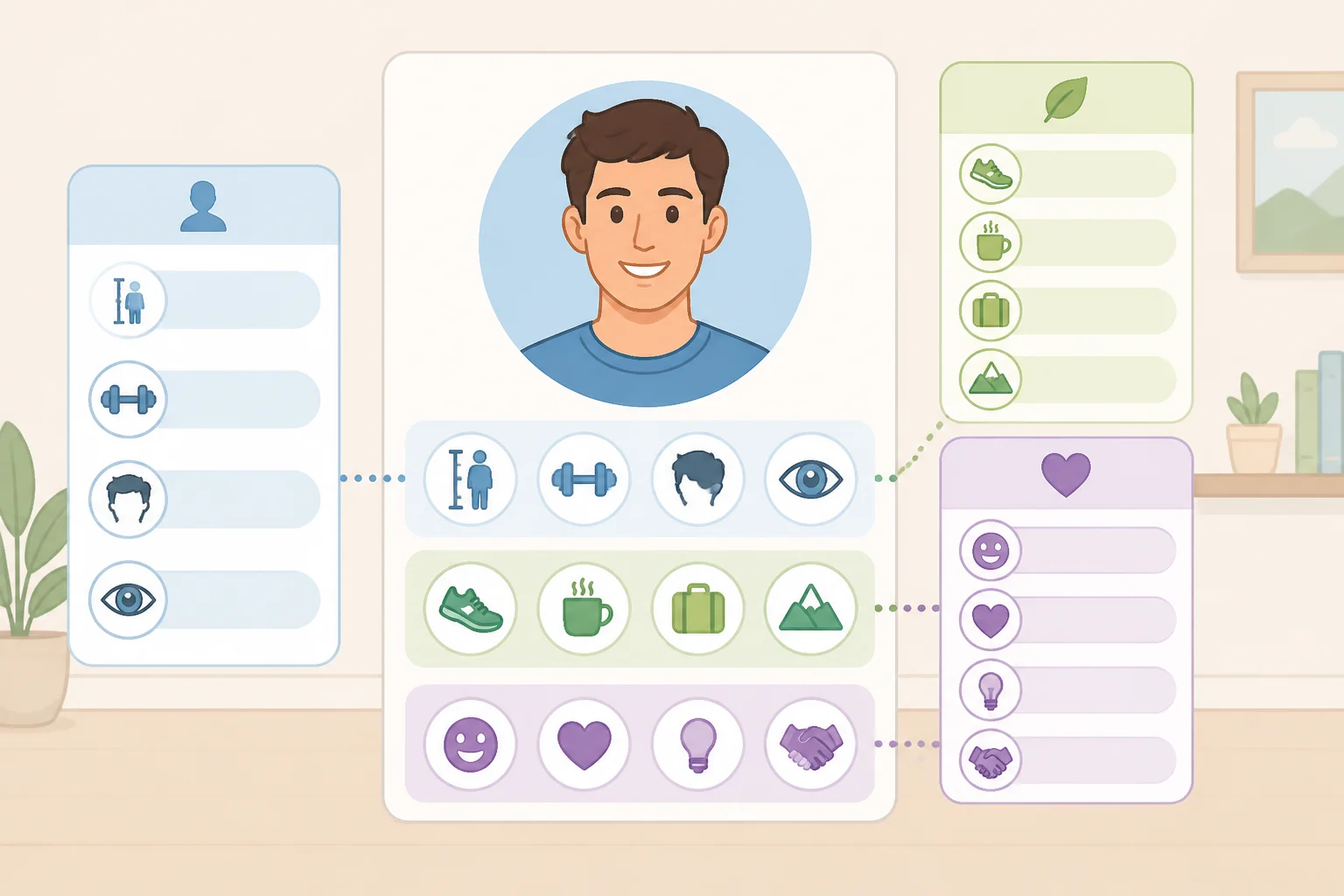
The examples that have circulated this week span several categories, not just one kind of guess. There are physical assumptions ("has flat buttocks"), lifestyle judgments ("cannot keep real plants alive"), personality claims ("doesn't trust people easily"), and oddly specific behavioral predictions, including one user whom Amazon believes "finds it hilarious when toys get stuck to ceiling tiles in the classroom." Others reported labels like "cusses when scared," "has no friends," and "treats cats as biological children," per The Verge.
Some of these are easier to imagine a path toward than others. Take "cannot keep real plants alive." It's not hard to picture a purchase history full of fertilizer, potting soil, and replacement houseplants feeding into something like that label, though there's no confirmation that's actually how any specific label got generated. "Has no friends" is a different animal entirely. There's no obvious shopping pattern that leads there; it reads like a sweeping judgment about someone's social life with no visible behavioral logic behind it at all.
That contrast matters more than the viral laughs do. Amazon isn't just sorting products into categories anymore. It's asserting things about a person's body, habits, and relationships, in plain English, on a settings page most customers never knew existed until this week. Whether the system actually has grounds for those assertions is a separate matter, and one the company hasn't addressed.
Why purchase data can support this kind of guessing at all

To understand how a system built on purchase history can land on something uncannily specific, it helps to look at how rich that kind of data actually is when collected at scale, independent of Amazon's own feature. A crowdsourced academic dataset published in 2024 captured more than 1.8 million purchases from 5,027 U.S. Amazon shoppers between 2018 and 2022, recording order date, product details, price, quantity, and shipping-address state for each transaction, all linked to each participant's own demographic and lifestyle survey answers (Open e-commerce 1.0, PubMed).
The researchers validated that dataset by comparing its aggregate spending patterns against Amazon's own publicly reported North America sales figures, and found the two were strongly correlated (Pearson r = 0.978), per the study. That's solid evidence that purchase records, in bulk, reflect real population-level spending behavior. It is not evidence that any single person's order history reliably predicts that person's personality, body type, or social life. The researchers were testing whether the dataset matched known spending trends across thousands of shoppers, not whether individual purchases forecast individual traits, and the study makes no claim either way on the latter.
The researchers also point out something worth sitting with: consumer-spending data used to be collected mainly through government surveys for public research. Companies like Amazon now gather comparable data through ordinary platform use at a volume that outpaces what public agencies have traditionally assembled (Open e-commerce 1.0). The raw material available for any kind of inference is genuinely substantial, even if nothing about its depth makes a specific inference about a specific shopper reliable.
That distinction is the hinge the whole About You phenomenon turns on. A profiling system drawing on an Amazon shopping data profile built from years of orders has plenty of real signal to work with, and that's exactly why it can produce something that lands, like a plant-killer label matching an actual plant-killer, right alongside something that lands nowhere at all, like a claim about someone's friendships. Both outputs can come from the same underlying process. Lots of real signal at scale explains why a system keeps guessing with confidence; it says nothing about whether any one guess is correct.
There's also a commercial wrinkle worth noting. A label doesn't need to be an accurate statement about a person to be useful for recommendation purposes. If a tag like "buys gifts for toddlers" nudges a shopper toward relevant products, it doesn't matter whether that shopper actually has kids, a niece, or a coworker with a baby shower coming up. The label can do its job for Amazon's recommendation engine while being wrong about the person's actual life. That's a much lower bar than what it would take to justify a label phrased as a fact about someone's body or social world, which is the form About You has chosen to put on screen.
What About You still doesn't explain
Several basic mechanics determine whether a label means anything at all, and none of them have been addressed by Amazon or by the reporting on this feature so far. Is a label tied to one individual, or to an account a household shares? Does it draw only from purchase history, or also from browsing, returns, and product reviews? How often does a label refresh? And if a label is deleted, does that stop it from regenerating off the same order history that produced it in the first place? The Verge confirms that labels exist and can be edited or deleted. It confirms nothing about how they're produced or whether deletion is permanent.
Some context from elsewhere in Amazon's business is worth bringing in here, carefully. It doesn't prove anything about how About You works, but it shows the company has, in at least one other part of its operation, turned behavioral signals into something advertisers pay for. Research auditing Amazon's Alexa smart-speaker platform found that voice-derived interest categories were used to target ads on Echo devices themselves, on the open web, and across other devices tied to the same account, with advertisers bidding as much as 30 times higher for some inferred personas (Your Echos are Heard).
The same research looked at disclosure, and the picture there is uneven. Of 450 Alexa skills audited, fewer than half even linked to a privacy policy, and among the policies researchers could actually download, most never mentioned Alexa or Amazon anywhere in the text. Only 10 clearly stated that Amazon might collect personal information through the interaction (Your Echos are Heard). That finding is specifically about the privacy policies written by third-party skill developers, not Amazon's own corporate disclosures. Still, it describes an ecosystem Amazon built and approved, where a lot of inference happened with little explanation offered to the people generating the data.
There's a broader industry concern worth noting too, with its limits stated plainly. FTC staff studying surveillance pricing examined documents from intermediary firms, the middlemen that help retailers set individualized prices, and found those firms worked with at least 250 clients selling goods or services, ranging from grocery chains to apparel retailers (FTC Surveillance Pricing Study). Amazon was not among the firms examined. Staff found that data including location, browsing activity, and shopping history can be used to tailor prices or promotions to individual shoppers, and illustrated the risk with a hypothetical, not a documented case: a shopper profiled as a new parent being shown pricier baby products first. That example exists to show why opaque inference matters across retail generally. It is not evidence that Amazon has used About You labels, or any other inference system, this way.
Put those threads together and the honest conclusion is a narrow one. A visible label, built by an unexplained process, sits inside a company that has, in at least one other product line, used inferred interest categories commercially with thin disclosure to the people being profiled. That combination is worth attention. It is not proof that About You feeds Amazon's recommendation ranking, its advertising systems, or any pricing decision. It's entirely possible these labels do nothing beyond occupying a settings page nobody checks. It's also possible some version of the same reasoning Amazon applies to Alexa data touches more than just this one screen. Nothing public right now settles it either way.
What you can actually control, and what you can't confirm
Three separate things get conflated here, and it's worth pulling them apart. First, editing or deleting a displayed label is something Amazon confirms you can do. Second, whether that action stops the underlying inference from simply regenerating off your existing order history is undocumented. Third, whether deleting a label touches the purchase data that produced it in any way is also undocumented (The Verge).
Given that, the honest advice looks less like a how-to and more like a list of caveats. Note or screenshot existing labels before deleting them, since there's no confirmation Amazon keeps a record a user could review later. Check Amazon's other advertising and personalization controls as a general privacy habit, not because there's any confirmed link between those settings and About You specifically; there isn't one on record. And don't assume that deleting a label removes the purchase history that generated it in the first place.
What's missing for this to count as genuine transparency is a short, specific list: disclosure of which data types feed a given label, some signal of how confident the system is before showing one, a stated refresh schedule, clarity on whether a label describes one person or an entire shared account, and a direct answer on whether deletion changes anything about recommendations, advertising, or future labels. Right now, the only verified action available to a customer is looking and editing. Treating that as meaningful control over the underlying profiling gives Amazon credit for more than has actually been shown.
The gap that still matters

Purchase histories, in aggregate, capture real and measurable behavior. The validated dataset above proves that much. What they don't do, based on anything Amazon or outside researchers have actually demonstrated, is reliably describe a single specific person's body, personality, or relationships. About You makes that leap anyway, in a flat declarative sentence, and shows it to millions of customers without a shred of surrounding context.
Having a label is not the same thing as that label being used to decide anything about you. Amazon has shown the first. Current reporting doesn't establish the second, in either direction, and it would be a mistake to assume the answer either way.
For About You to function as real transparency rather than a curiosity, Amazon would need to disclose which data sources produce a given label, how confident the system is before displaying one, how often labels refresh, whether a label is tied to an individual or a shared household account, and whether deleting one actually changes anything beyond the settings page. Until some version of that shows up in writing from Amazon, rather than pieced together by users comparing notes on Threads, "About You" works less as a transparency feature and more as a rare, unfiltered glimpse of how freely a retailer's algorithm will guess about a person, with almost no way for that person to check its work.