AnyPS5 PS5 Games on PC: What 100% Shader Coverage Means
The open-source AnyPS5 project announced last week that it has reached full decoder coverage of every AMD RDNA 1 and RDNA 2 shader instruction it tracks, a milestone in its attempt to run PS5 games on Windows and Linux PCs without a traditional emulator (Tom's Hardware). All 1,166 tracked instructions now show as implemented on the project's public progress tracker (Tom's Hardware).
The number sounds like a finish line. It isn't. AnyPS5's own compatibility list still names exactly one verified playable title, a modest 2D platformer called Dreaming Sarah (Tom's Hardware).
Rather than emulate PS5 hardware in real time, AnyPS5 relinks an already-extracted PS5 executable into a native Windows or Linux binary, pairing it with from-scratch replacements for the console's system libraries (Tom's Hardware). That design choice explains both why the shader milestone matters and why it's nowhere near the finish line for general compatibility.
Can AnyPS5 run PS5 games natively on PC?
Video of the Day
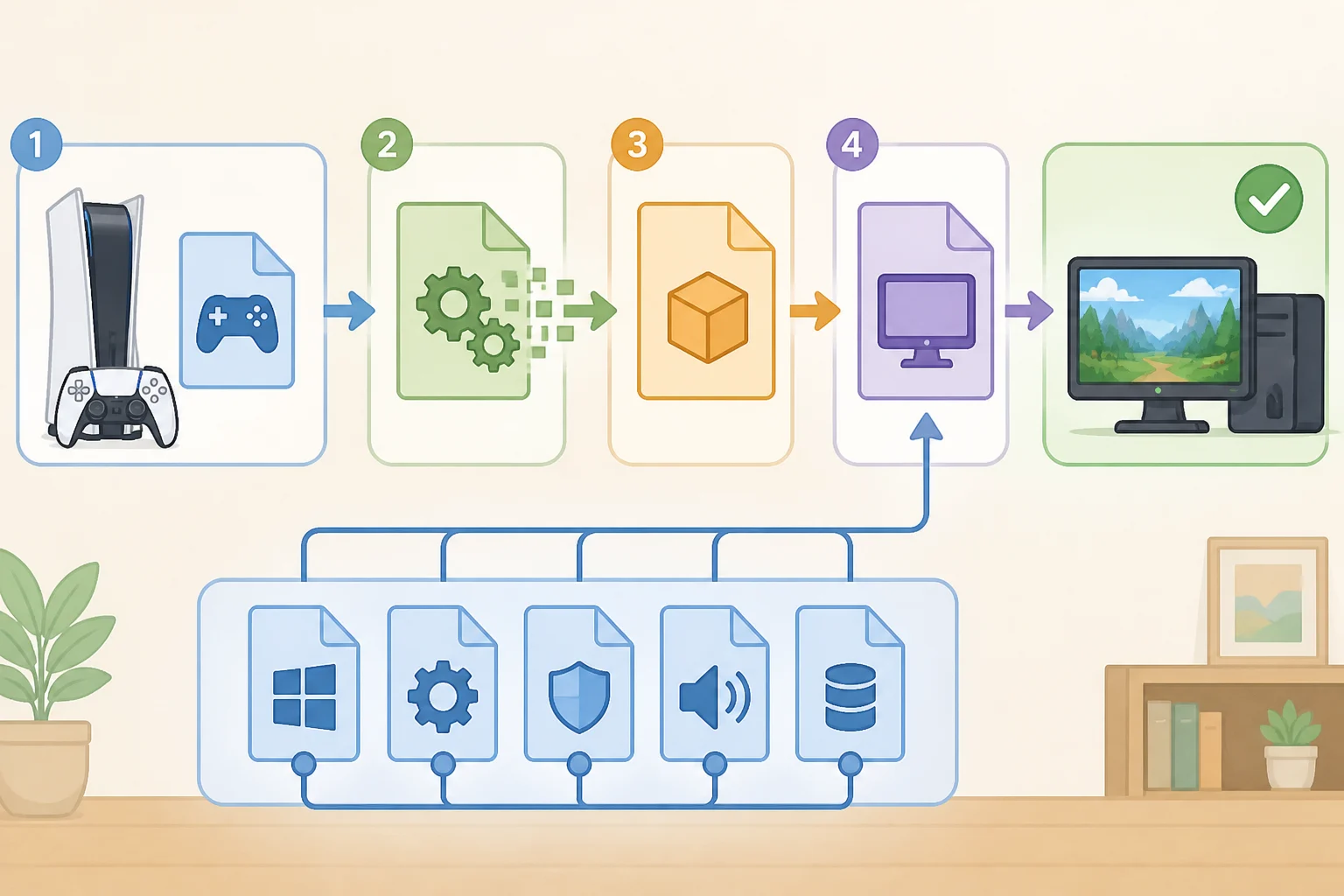
AnyPS5, an open-source PS5 PC compatibility layer, isn't a console simulator you boot up and slot a disc into. It takes a PS5 game's executable, a format related to ELF, and relinks it into a native x86-64 Windows PE or Linux ELF file (Tom's Hardware). There's no source code involved and nothing gets rebuilt from scratch; the existing machine code gets wired up to new, native implementations of the system functions the game expects to find (Tom's Hardware).
That approach works because the PS5's AMD Zen 2 processor shares the x86-64 instruction set with most modern PCs, so CPU code can often run directly on the host machine. For AMD-specific instructions running on Intel chips, the project ships a --to-intel conversion flag (Tom's Hardware).
Reporters covering the project have repeatedly reached for the same comparison: Valve's Proton, the layer that lets Windows games run on Linux by swapping out operating-system libraries rather than translating every CPU instruction on the fly (TechSpot; El Solitario). AnyPS5 applies that same logic to a game console, which El Solitario describes as apparently a first in public (El Solitario).
Graphics work on a similar principle. Shader programs written for the PS5's RDNA architecture get recompiled into SPIR-V, the intermediate format Vulkan uses, instead of running through a full hardware emulator (El Solitario). Because that conversion happens once, before the game runs, rather than continuously during gameplay, the approach carries the potential for less runtime overhead than traditional emulation (El Solitario).
Video of the Day
AnyPS5 shader instruction coverage hits 100%, but 'implemented' has a narrow meaning
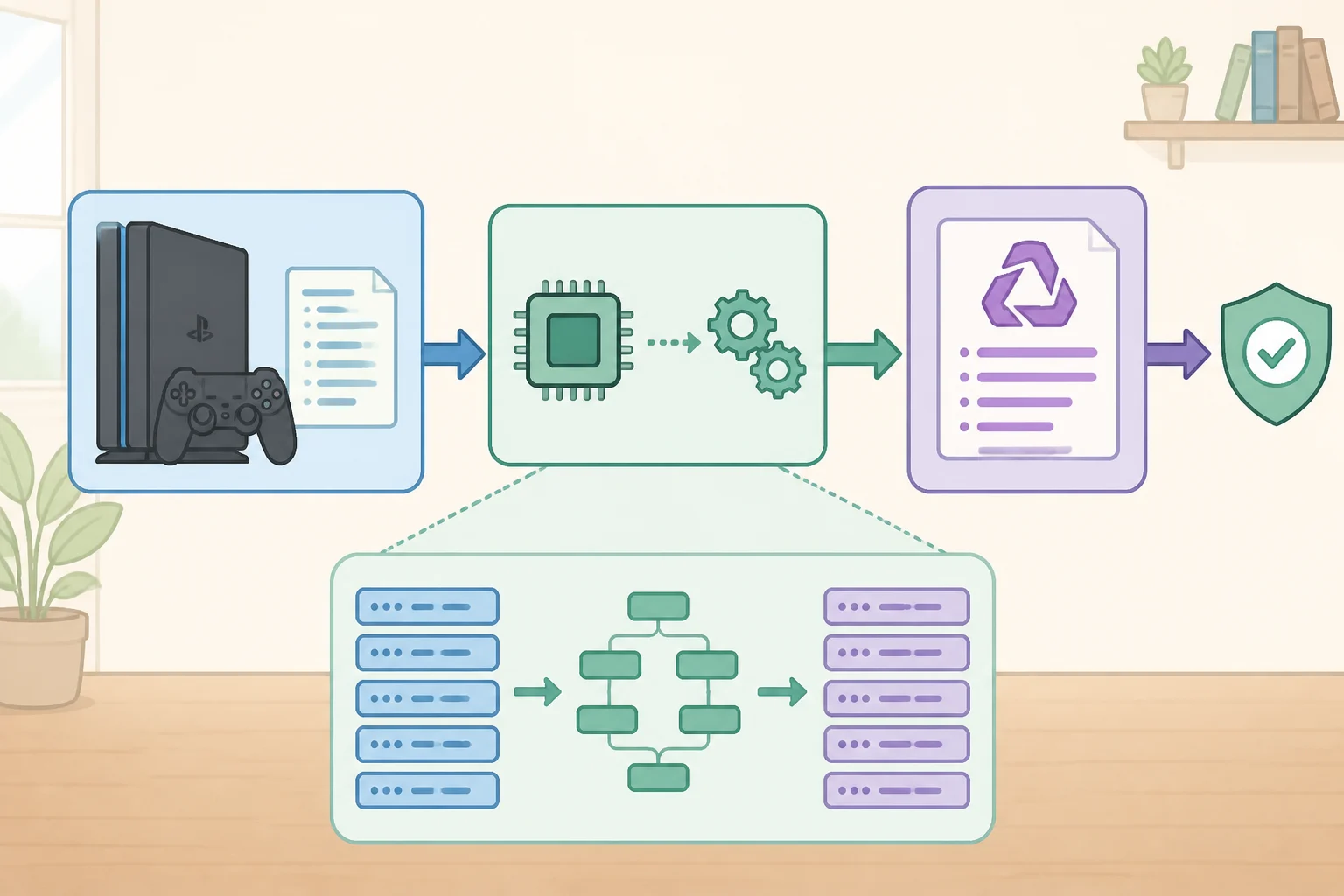
The headline figure, all 1,166 tracked RDNA shader instructions marked implemented, comes straight from AnyPS5's own progress tracker (Tom's Hardware).
"Implemented" has a specific, narrower meaning here than it might sound. It means the project's shader decoder recognizes an instruction and can translate it, not that every game using it will render correctly on screen (Tom's Hardware). Builds can run the generated SPIR-V through Khronos's Spirv-Tools to confirm the output is structurally valid, but that checks the format of the code, not whether a scene actually looks right or behaves correctly during play (El Solitario).
The bigger constraint sits one layer down. System-library coverage, the reimplemented PS5 operating-system functions a game actually calls while running, stands at 84.69%, or 2,578 of 3,044 functions currently declared in the codebase (Tom's Hardware; HotHardware). The full scope of PS5 system functions isn't known, so that denominator could still grow as more games get tested against the framework (HotHardware).
Shader coverage is genuine engineering progress. A missing system-library function can still stop a game cold before a single shader ever gets drawn.
The one confirmed game: Dreaming Sarah
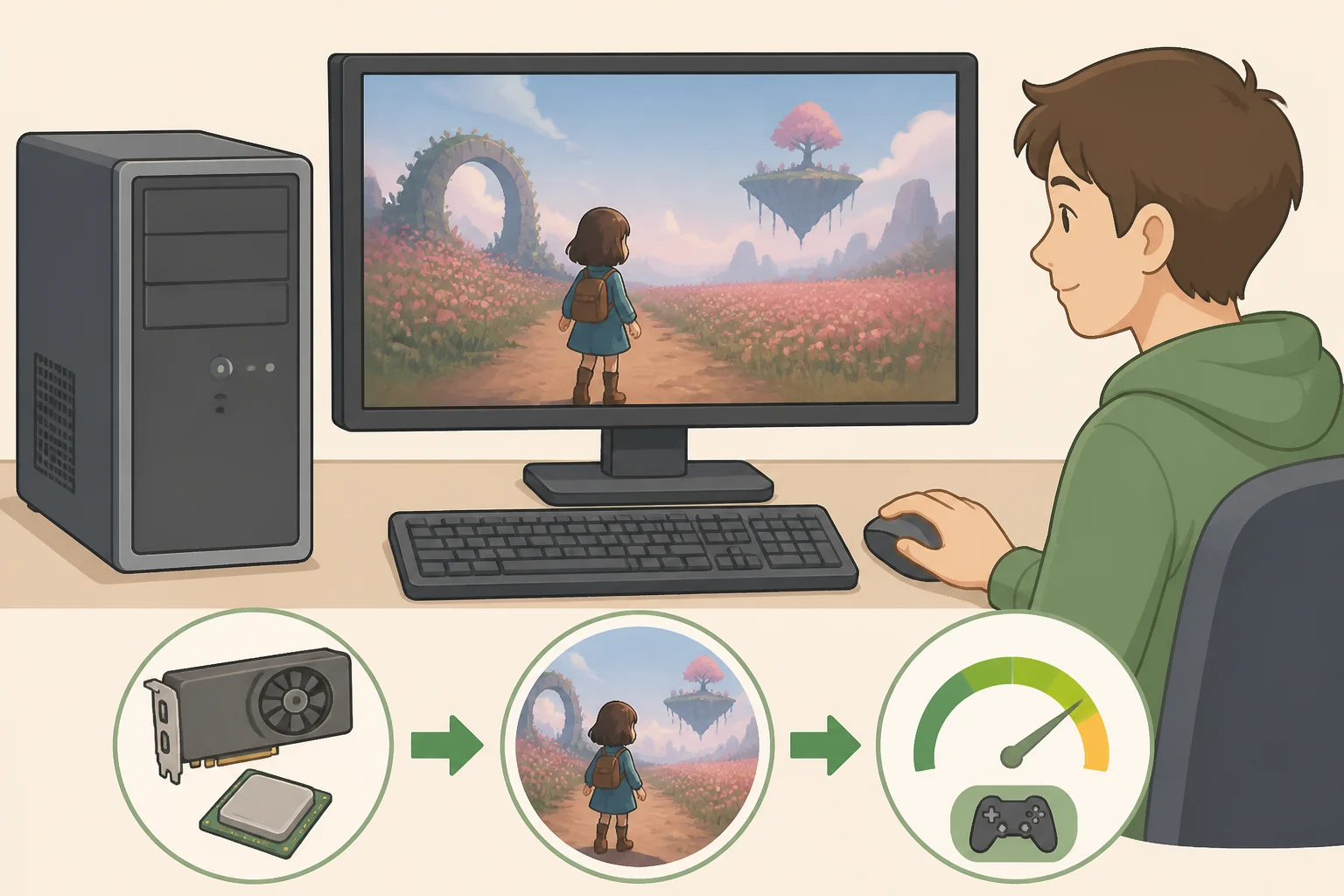
AnyPS5's compatibility list currently has a single entry. Dreaming Sarah, a simple 2D platformer, runs at a stable 60 fps on a GTX 1050 Ti paired with an Intel Core i5-7500, hardware that predates the PS5 by several years (TechSpot; Frontier Now).
On integrated graphics it still holds up: Frontier Now clocked it at 36 fps on an Intel HD 620 chip, while HotHardware recorded 35 fps testing around the same time (Frontier Now; HotHardware). Either figure points to the same thing: a seven-year-old laptop GPU running a PS5-exclusive game at a playable frame rate, which is a meaningful proof of concept for a project built around avoiding emulation overhead.
It's also the entire extent of the evidence right now. When a game calls a system-library function AnyPS5 hasn't reimplemented yet, the program doesn't limp along with approximated behavior. It throws a std::runtime_error and quits (El Solitario).
Interest has moved fast. The project's GitHub repository had drawn roughly 7,400 stars by Oct. 7, according to El Solitario; two days later, Frontier Now counted more than 19,000, alongside over 100 human contributors. Even so, it reportedly carries around 650 open issues, and reporting cautions that AAA titles are unlikely to boot at this stage (Frontier Now).
AnyPS5 also isn't a disc-ripping tool. Users have to supply an already-extracted game executable and its resources themselves; the project distributes no game files, firmware, or decryption keys (Tom's Hardware; El Solitario).
AnyPS5 vs KyTy PS5 and other PS5-on-PC projects
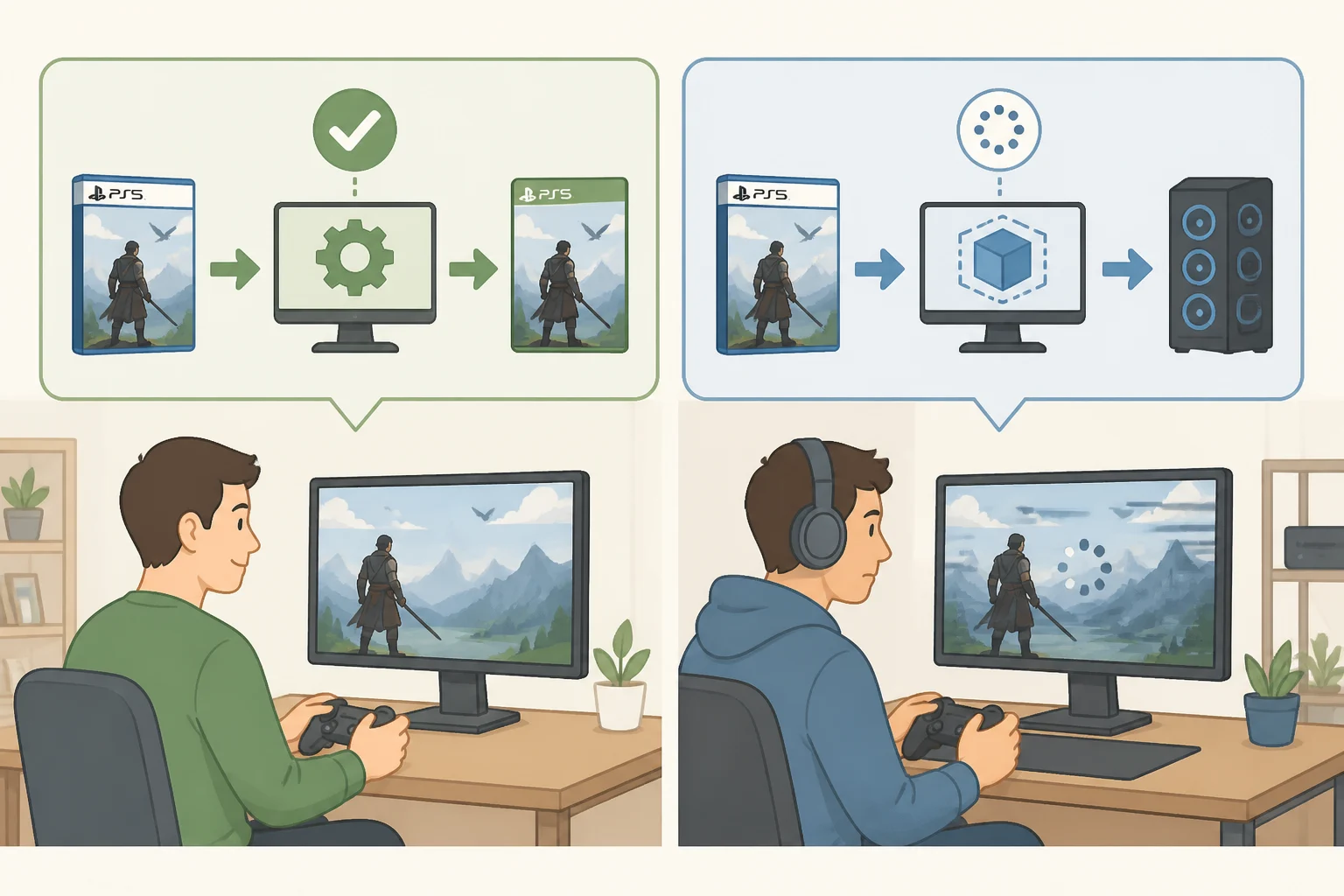
AnyPS5 explicitly sidesteps real-time CPU emulation, converting a binary once before it runs rather than interpreting instructions continuously during play (El Solitario). That puts it in a different category from the traditional emulators working the same problem from the opposite direction.
KyTy PS5, a more conventional emulator, has already demonstrated broader compatibility with commercial titles, including Grand Theft Auto V running at roughly 40 to 60 fps. That result required high-end PC hardware, and the emulator remains unstable and experimental (Tom's Hardware; HotHardware). A third project, SharpEmu, prioritizes emulation accuracy over speed and has booted Astro's Playroom on a Steam Deck at around 0.5 to 1 fps, far from playable but notable for getting PS5 software running on handheld hardware at all (Tom's Hardware).
AnyPS5 is released under the GPL-2.0 license, and its documentation frames the project's purpose around interoperability, research, preservation, and compatibility rather than as a shortcut around buying games or hardware (El Solitario; Frontier Now). Users are still required to source their own game files legally.
Platform support remains narrow. Only Windows and Linux builds exist today, macOS support depends on community contributions, and a v0.1.1 release with the relinker and system-library packages became available in late September (Frontier Now).
What happens next
Tom's Hardware describes the more likely long-term outcome of AnyPS5 as a framework for unofficial, native-style PC ports of individual games rather than a universal "insert disc and play" emulator. That's a meaningfully narrower ambition than replacing a console outright, and it's the framing the project's own documentation supports.
Whether that holds up depends on two moving targets: whether system-library coverage climbs enough to handle the function calls modern 3D games actually make, and whether any title beyond Dreaming Sarah earns a spot on the compatibility list in the months ahead. For now, the shader tracker reads 100%. Everything built on top of it is still a work in progress.