Why was Apple HomeView delayed? Release date explained
Apple HomeView, the company's new smart home display, opened for preorder last week and becomes available November 13, but the rollout comes with real limits buyers should know about first (Apple Newsroom, last week). The device is currently listed only in English-speaking countries, and in Europe that means the UK, not the wider EU (heise online, this week).
Why was Apple HomeView delayed for so long before reaching this point? In comments from The Verge reported by 9to5Mac, Apple executives said Siri AI's conversational ability and its handling of personal context were essential to making HomeView work at all, an explanation that lines up with earlier reporting about a March 2025 launch target that kept slipping, with hardware reportedly sitting finished for years while the software caught up (9to5Mac, this week).
What follows separates Apple's own framing from independent reporting on the delay, confirms the Apple HomeView release date and current availability, and digs into the question that matters most for prospective buyers: how much of HomeView's AI actually depends on a nearby iPhone.
Why was Apple HomeView delayed, according to Apple and prior reports?
Video of the Day
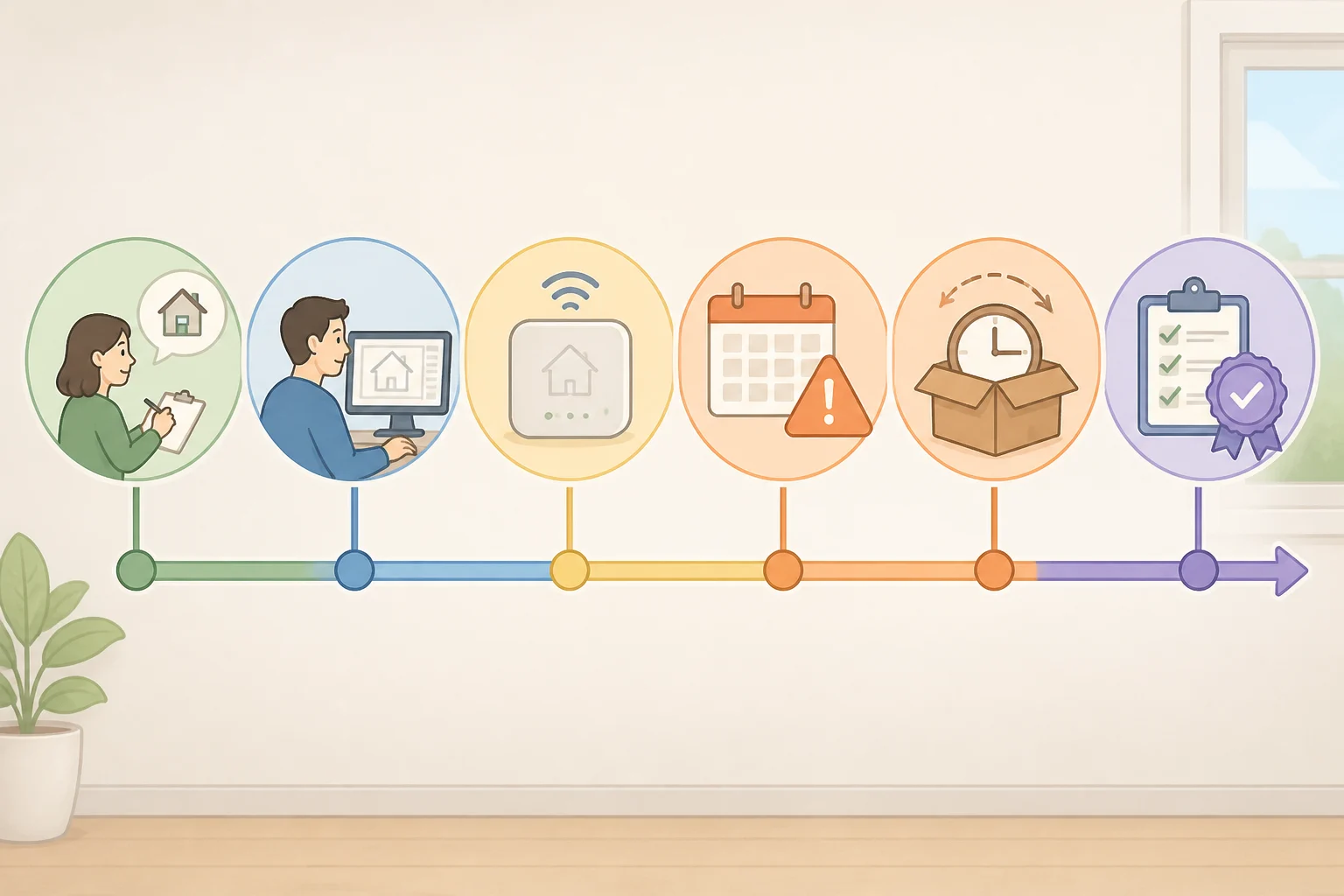
Mark Gurman first detailed the product that became HomeView in November 2024, reporting at the time that Apple was targeting a March 2025 launch, according to 9to5Mac's account of his reporting (9to5Mac, this week). That date slipped, and the product ultimately arrived more than a year after that reported target.
Gurman has repeatedly pointed to Siri AI, not the hardware itself, as the reason for those delays, the outlet notes. The hardware, by this account, was reportedly finished and ready well before Apple ever shipped it, which is the more unusual part of the story: a device sitting done while the software it depends on wasn't (9to5Mac, this week).
Documents filed with the FCC back up that timeline, at least on the hardware side. Testing on the device, listed under model number A3218, began October 14, 2024, and wasn't formally completed until January 15, 2026 (heise online, this week).
That gap is consistent with multiple delays, though the filing doesn't explain why testing took that long. The tested unit ran software version 18, while Apple currently lists HomeView Software Version 27, evidence that the tested hardware configuration predates the current software experience by multiple OS cycles (heise online, this week). That doesn't prove which specific Siri problem caused the wait, only that there was a significant one.
Apple's own executives frame the timing differently: not as a bug that eventually got fixed, but as a feature that simply didn't exist yet. Kaiann Drance, Apple's VP of product marketing for home, said Siri AI and the personal context it brings, what she called Apple's "privacy story," came together with hardware built specifically for the home. "With the magic of Siri AI, it comes together in a way that we haven't been able to deliver before," she said, in comments from The Verge reported by 9to5Mac (this week).
Lilian Rincon, Apple's VP of product marketing for AI, offered a similar explanation, calling Siri AI "core" to HomeView because of how capable and conversational it is. "It's great because you can just ask it to change the temperature on your thermostat in a very natural way," she said, adding that the natural-language shift is what lets any family member use the device, whether that's "my mother-in-law or the Gen Z who's in college," according to the same report.
What Apple hasn't said in its own announcement is which Siri AI features need a nearby iPhone to work, what account or software requirements that iPhone must meet, or how HomeView behaves if no eligible phone is in range (Apple Newsroom, last week). That's a separate question from why the launch took as long as it did, and it's the one most likely to shape how useful HomeView feels once it's actually in a home.
Video of the Day
Who can buy HomeView now, and where

Preorders opened last week, with availability beginning November 13 (Apple Newsroom, last week).
Apple's announcement identifies the launch date but does not, in the supplied material, list every supported market. Heise reports that HomeView is listed only in English-speaking countries at launch, with the UK the sole European market included; the EU isn't on the list yet (heise online, this week).
Siri AI was introduced with iOS 27 last month. 9to5Mac links the EU absence to Siri AI's regional availability, reasoning that a product built entirely around the assistant wouldn't launch somewhere the assistant itself isn't fully rolled out (9to5Mac, this week; heise online, this week). That's the outlets' interpretation of the timing, not a regional rollout schedule Apple has confirmed, so buyers outside the US, UK, and other English-speaking markets shouldn't assume a specific date for their own country. Check Apple's storefront directly rather than betting on a rollout tied to Siri AI's broader expansion.
The iPhone dependency Apple hasn't fully explained
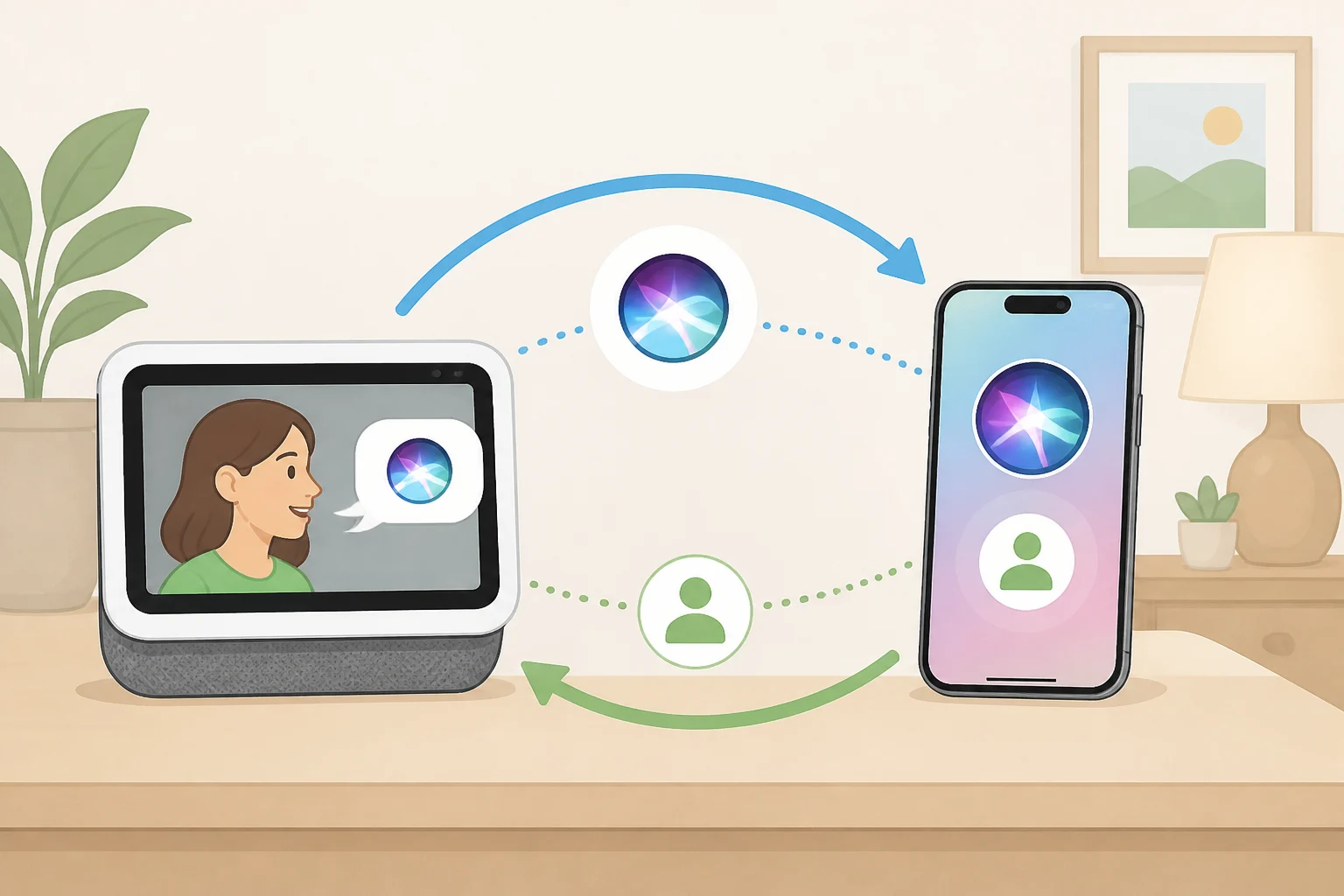
Apple's announcement promotes HomeView's ability to recognize up to six people in a household and tailor the experience to each one, a feature Apple highlights as central to the product (Apple Newsroom, last week). That multi-user personalization is also the feature most likely to depend on something Apple hasn't detailed yet: a nearby iPhone.
Macworld's reporting confirms that this iPhone-routing model already applies to other Apple products. The 2nd- and 3rd-generation Apple TV 4K boxes are getting Siri AI support this way, and the Apple Watch Series 12's Audio Intelligence feature, which summarizes conversations and rewinds the last 15 seconds of speech, runs on a paired iPhone rather than the watch itself (Macworld, this week). In both cases, the accessory sends more complex Siri AI requests to an iPhone that's nearby, signed into the same account, and unlocked recently.
Macworld's HomeView conclusion is different: a reasonable expectation based on Apple's existing architecture, not a confirmed requirement. The outlet says the setup "sounds a lot like how HomeView is going to work," and separately reports that HomeView may lean on a nearby iPhone to run audio and video apps that aren't installed on the device itself, similar to how CarPlay pulls apps from a connected phone (Macworld, this week). Apple hasn't published device-level requirements spelling out exactly how HomeView and iPhone are meant to work together (Apple Newsroom, last week).
Macworld draws a useful distinction for buyers here. Simple commands, like setting a timer or turning off a light, appear to process locally, while anything requiring personal context, like recognizing which of six household members is speaking, is the kind of request Apple's existing pattern routes to an iPhone instead (Macworld, this week).
What's still missing: which iPhone models qualify, how close the phone needs to be, and what HomeView can still do with no eligible iPhone in range. Until Apple publishes that information, or reviewers test the device without a phone nearby, that gap counts as an open question, not a confirmed limitation.
What to do before you preorder
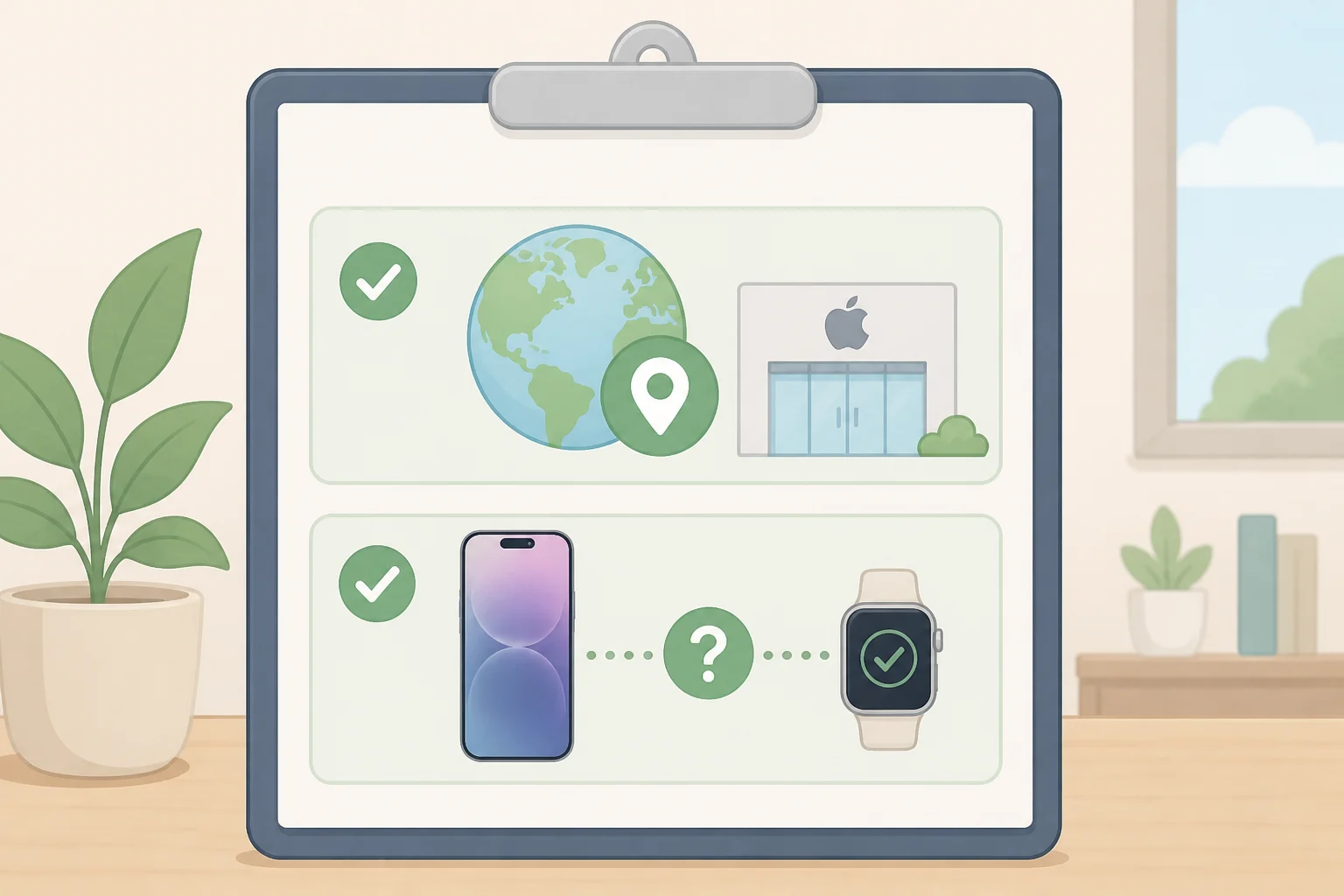
HomeView becomes available November 13 and remains listed for preorder only in English-speaking countries, with the UK the sole European market for now. Confirm your own country's listing directly on Apple's site rather than assuming a wider rollout will follow Siri AI's iOS 27 expansion on any particular schedule.
Buyers should not assume HomeView is fully standalone until Apple publishes its iPhone requirements. If its headline personalization features depend on a nearby, signed-in iPhone the way Apple's existing pattern with Apple TV 4K and Apple Watch Series 12 suggests, independent testing without a compatible phone in the room would show what the six-person personalization can and can't do on its own. Until then, treat that part of the pitch as unverified rather than settled.