Meta parental alerts for teen self-harm searches now extend to Facebook
Meta parental alerts for teen self-harm searches are no longer limited to Instagram. Meta announced on Thursday that Facebook search activity now triggers a parent notification when a teen "repeatedly" searches for suicide- or self-harm-related terms within a short window of time, according to Engadget and The Verge.
The feature folds into a parent-notification program Meta has been building out for most of this year. Instagram search alerts came first, launching earlier this year in February, and Meta AI chat alerts followed three months ago, in July, covering conversations across Facebook, Messenger, and Instagram, according to The Verge and ANSA. Thursday's update closes the gap between where the AI chat alerts already reached and where search-based detection stopped.
One limitation matters before anything else: these alerts go only to parents enrolled in Meta's parental supervision program, according to Fox61. The reporting reviewed here doesn't address what, if anything, happens for teen accounts without that setup.
Who receives Meta's teen self-harm search alerts
Video of the Day
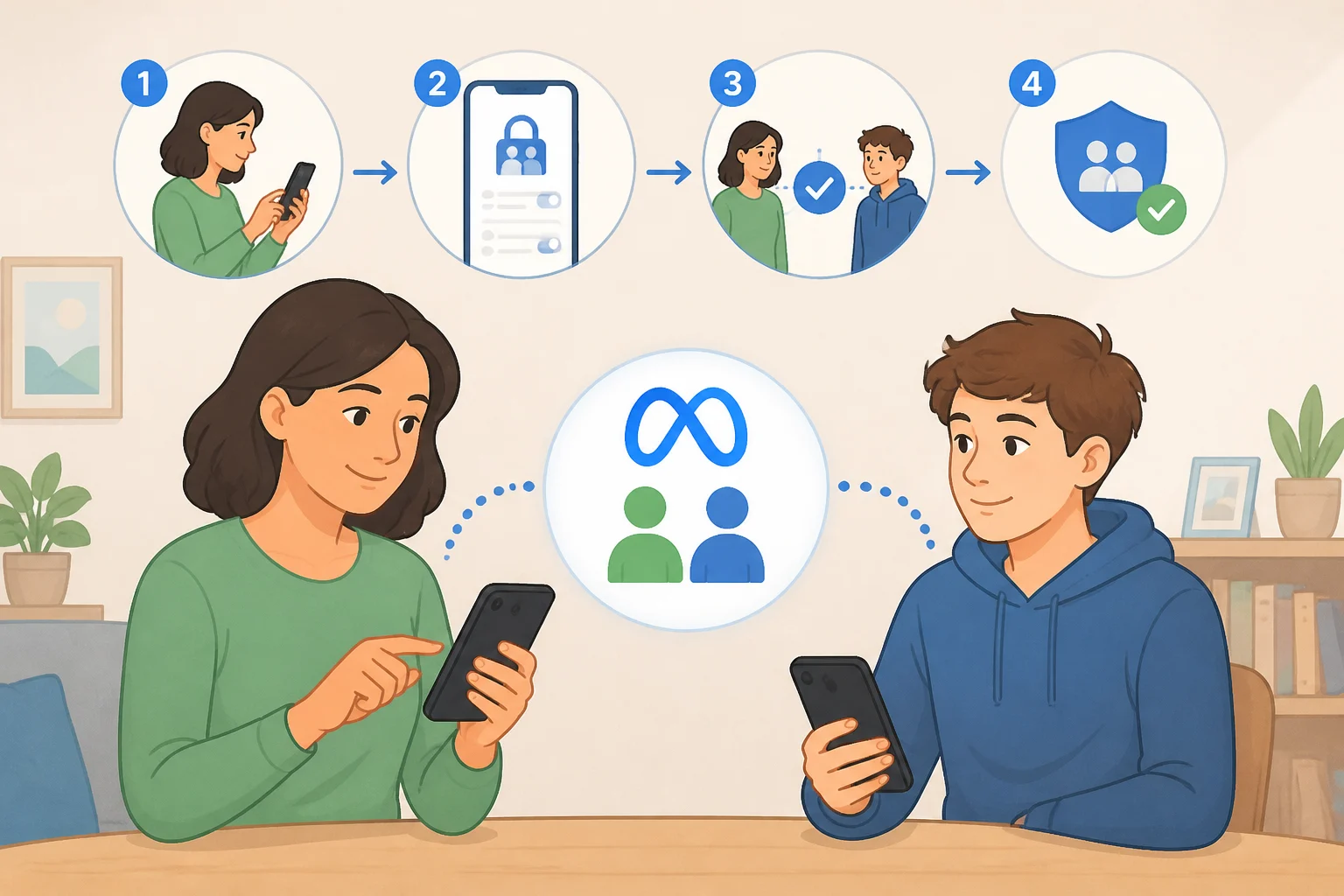
Eligibility comes down to enrollment, not platform. Meta ties these alerts to its parental supervision program, which runs through Teen Accounts, and parents who haven't linked supervision to a teen's profile won't get a notification when a search or AI chat raises a flag, per Fox61.
Teen Accounts cover more ground than the self-harm alert alone. They're also meant to limit a teen's exposure to sensitive content and interaction with adults, so this alert sits inside a broader supervision structure rather than working as a standalone setting, according to Engadget.
Meta describes the rollout as global, including Italy, and says it's available to parents already using its supervision tools, according to ANSA. None of the reporting reviewed for this article includes enrollment figures or a market-by-market breakdown of which alert type, search or AI chat, is actually live where. Parents who want to know whether this applies to their household need to check their own account's supervision settings rather than assume coverage based on the announcement alone.
Video of the Day
What triggers a notification
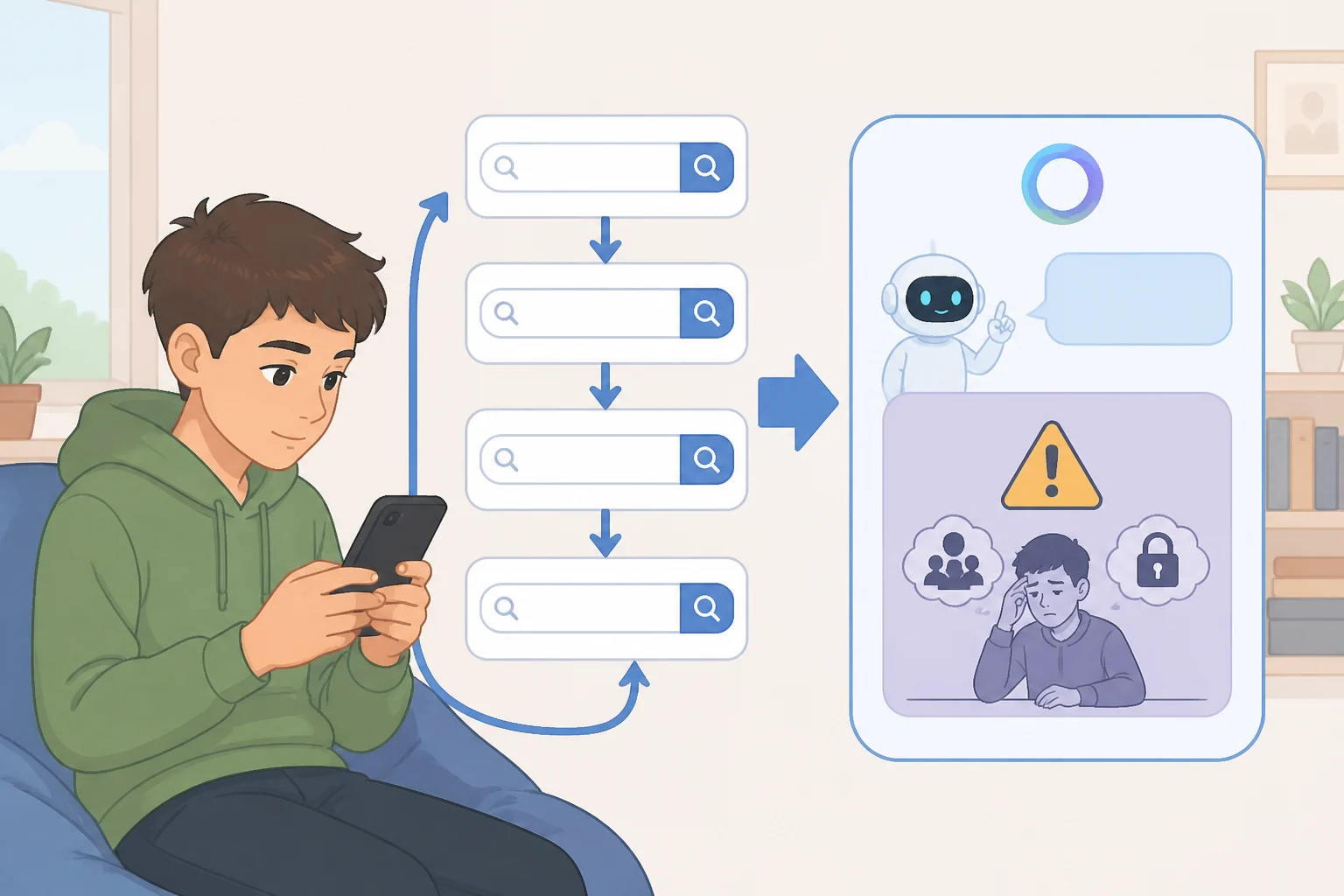
Two things can set off an alert. The first is a teen repeatedly searching Facebook or Instagram for suicide- or self-harm-related terms within a short stretch of time. The second is a conversation with Meta AI, on Facebook, Instagram, or Messenger, that "suggests" the teen may be at risk, according to Fox61.
Meta hasn't disclosed the thresholds behind either trigger: how many searches count as "repeatedly," what "short period of time" means, or how its AI decides a chat suggests risk. The company has previously said only that it set a threshold requiring "a few searches within a short period of time, while still erring on the side of caution," aiming to avoid sending alerts unnecessarily, per Engadget.
Meta also says it already blocks this kind of content from appearing in teen search results in the first place, pointing searches toward helplines instead, according to Fox61. That's Meta's description of its own system, not something verified by outside testing.
What parents can see, and what stays hidden

Once a threshold is crossed, parents get the alert through text, email, or WhatsApp, plus an in-app notification through the parent's own Instagram account, per Fox61 and Engadget.
What they don't get is specifics. The alert withholds the exact search terms or chat content, offering instead a prompt to talk with the teen and links to helpline resources, according to Engadget.
Supervision adds one more layer beyond the risk-specific alert: parents using Meta's supervision tools can view the general topics a teen discussed with Meta AI over the previous week, separate from any flagged conversation, according to ANSA. Meta has also said it's testing whether to alert emergency services directly when a Meta AI conversation suggests imminent suicide risk, per the same report. That's a testing-stage idea, not an active feature, and nothing in the reporting specifies a rollout date or how such a system would work.
What remains unknown
A Northeastern University study published four months ago tested 86 child-safety features across Instagram, TikTok, Snapchat, and YouTube and found that only 35 worked as advertised. Of the 51 that failed, nine couldn't be triggered at all, 34 were functionally broken (12 of those also buried deep in settings menus), and eight more were simply hard to find, according to Northeastern University.
That study didn't test Meta's Facebook search alerts or its AI-chat risk detection. It can't establish whether Meta's new system works as intended, but it's useful context for separating a company's announcement from independent proof of performance, per Northeastern University.
Lead researcher Laura Edelson's broader finding bears directly on how this feature is structured: safety tools tend to perform best when they're defaults rather than settings parents have to seek out and turn on, according to Northeastern University. Meta's alerts only reach families who've already opted into supervision, a different model from the defaults Edelson's research favors.
There's also a gap in what's publicly known about the AI-chat alerts that launched three months ago. The sources reviewed for this article don't include false-positive rates, missed-signal data, or any measure of how parents have responded since launch. That's a limitation of the available reporting, not evidence the system is failing, and the same gap applies to Thursday's Facebook expansion: no outside group has independently evaluated it yet.
What to do now

Review whether parental supervision is active on a teen's Facebook or Instagram account, and whether the contact information tied to that account (email, phone number, or WhatsApp) is current. Without an active supervision link, none of the alerts described here, search-triggered or AI-triggered, will reach a parent.
Treat an alert as what the reporting describes: a notification that a threshold was crossed, not a transcript of what was searched or said. It won't surface the specific terms or messages involved, only a prompt to start a conversation and helpline information. Meta hasn't disclosed its detection thresholds, and no independent group has tested how well this system performs. Until that changes, an alert is a reason to check in directly with a teen, not a stand-in for doing so.