How to Keep Animals Out of Your Garden, According to Experts
By the time most gardeners reach for a spray bottle or a plastic owl, they've already lost the season's first lettuce. The smarter move is understanding what the research actually supports and it isn't gadgets.
Suburban wildlife pressure is real, especially from deer and rabbits. White-tailed deer populations have risen dramatically in the eastern U.S. and expanded into residential areas, with adults consuming between 6 and 10 pounds of vegetation per day during peak feeding months, per Mississippi State Extension. Rabbits operate on a different scale but never stop: unlike many garden pests, eastern cottontails are active around the clock, every month of the year, UVM Extension notes.
If you're wondering how to keep animals out of your garden, the answer depends on which animal you're dealing with but extension advice converges on four tactics: physical barriers, targeted seasonal protection, smarter plant selection, and repellents used correctly. Start with fence specs, then time your protections to the season. Here's how.
Step 1: Build the right barrier for the animal you're dealing with
Video of the Day
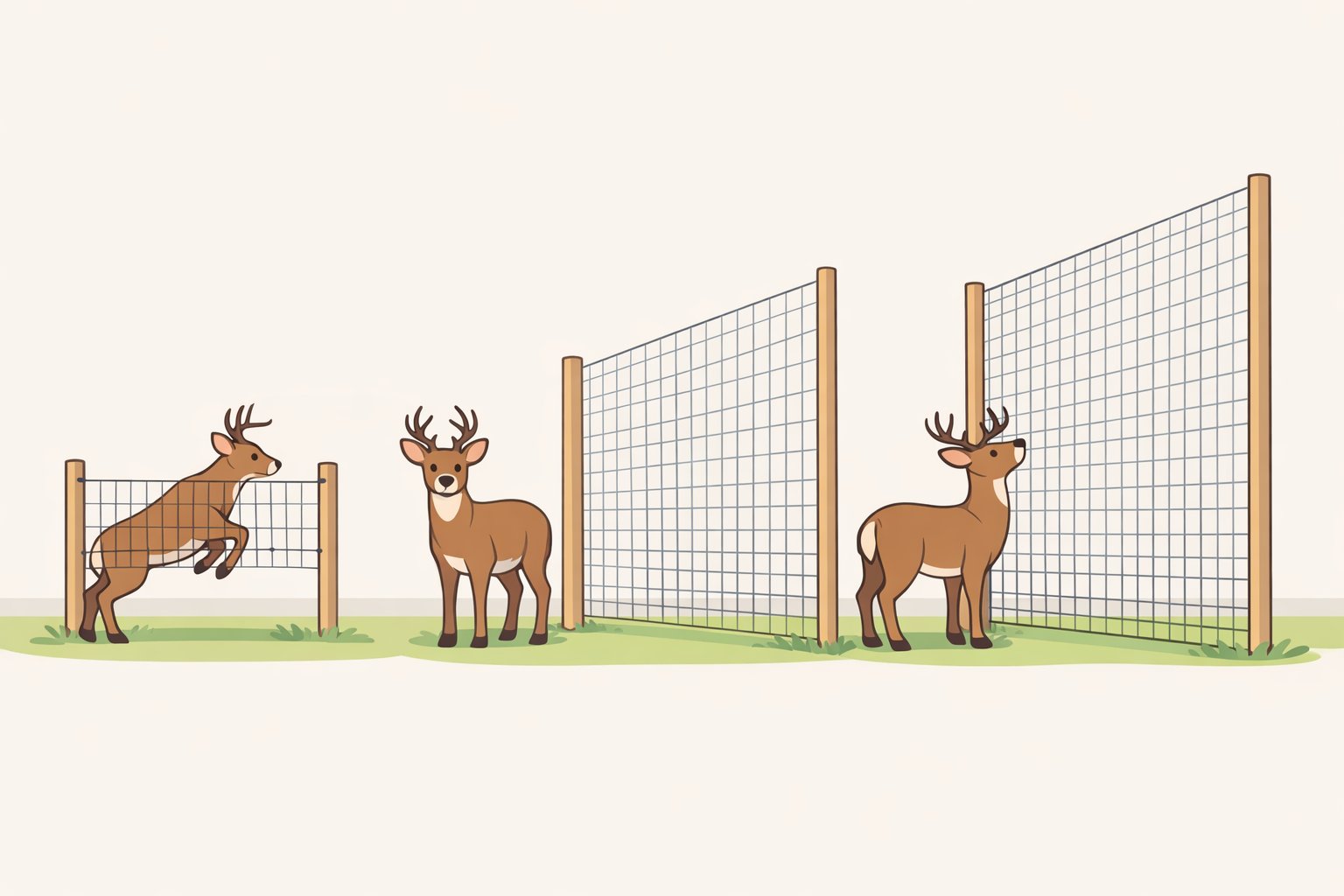
Exclusion is where extension specialists consistently start. The Alabama Cooperative Extension System describes it as the clearest preventive approach available the purpose is to stop wildlife from reaching plants before any damage occurs, rather than responding after the fact (ACES).
For rabbits: Use chicken wire or welded wire with openings no larger than one inch, standing at least two feet tall. The fence must be anchored. Pin it flush to the soil with U-shaped stakes, or bury it four inches underground rabbits will push under loose fencing without hesitation (UVM Extension). K-State's horticulture specialists echo the two-foot minimum and note that fencing is often the quickest and most straightforward control available (Kansas State Research and Extension). Where groundhogs are also a concern, Ohio State Master Gardeners recommend burying the fencing up to a foot deep for rabbits alone, four inches may be enough, but the deeper burial adds security against groundhogs (Ohio State Master Gardeners).
For deer: The bar is much higher. Mississippi State Extension calls fencing "by far" the most effective long-term solution, with eight feet the standard minimum height. Deer can clear ten feet but generally prefer not to. UC ANR specifies that a properly built and maintained fence of seven to eight feet provides the best control, and cautions that standard electric fences have not proven reliably effective only high-voltage systems, professionally installed and actively monitored, may help (UC ANR).
Not every garden can accommodate a perimeter fence. K-State acknowledges that fencing won't suit every garden's appearance (KSRE). For smaller plots or individual high-value plants, wire or plastic plant protectors and individual cages are a workable alternative. Once access is blocked, the next problem is knowing when plants are most vulnerable and that depends heavily on the time of year.
Video of the Day
Step 2: Protect vulnerable plants at the right time of year
Animal pressure isn't uniform across the calendar. Two windows matter most: new growth in spring, and exposed woody tissue in winter.
Rabbits are drawn most strongly to the juicy stems and buds of emerging plants, making spring the highest-risk period (UVM Extension). K-State confirms the pattern: young vegetables and flowers face their greatest rabbit pressure right after planting (KSRE). Deer feeding peaks through late spring, summer, and fall, when daily consumption reaches its highest levels, per Mississippi State Extension.
Winter introduces a separate and underappreciated threat. When other food runs out, rabbits shift to stripping bark and gnawing into the cambium layer of young trees and woody shrubs. A single winter of inadequate protection can destroy woody plants entirely (UVM Extension).
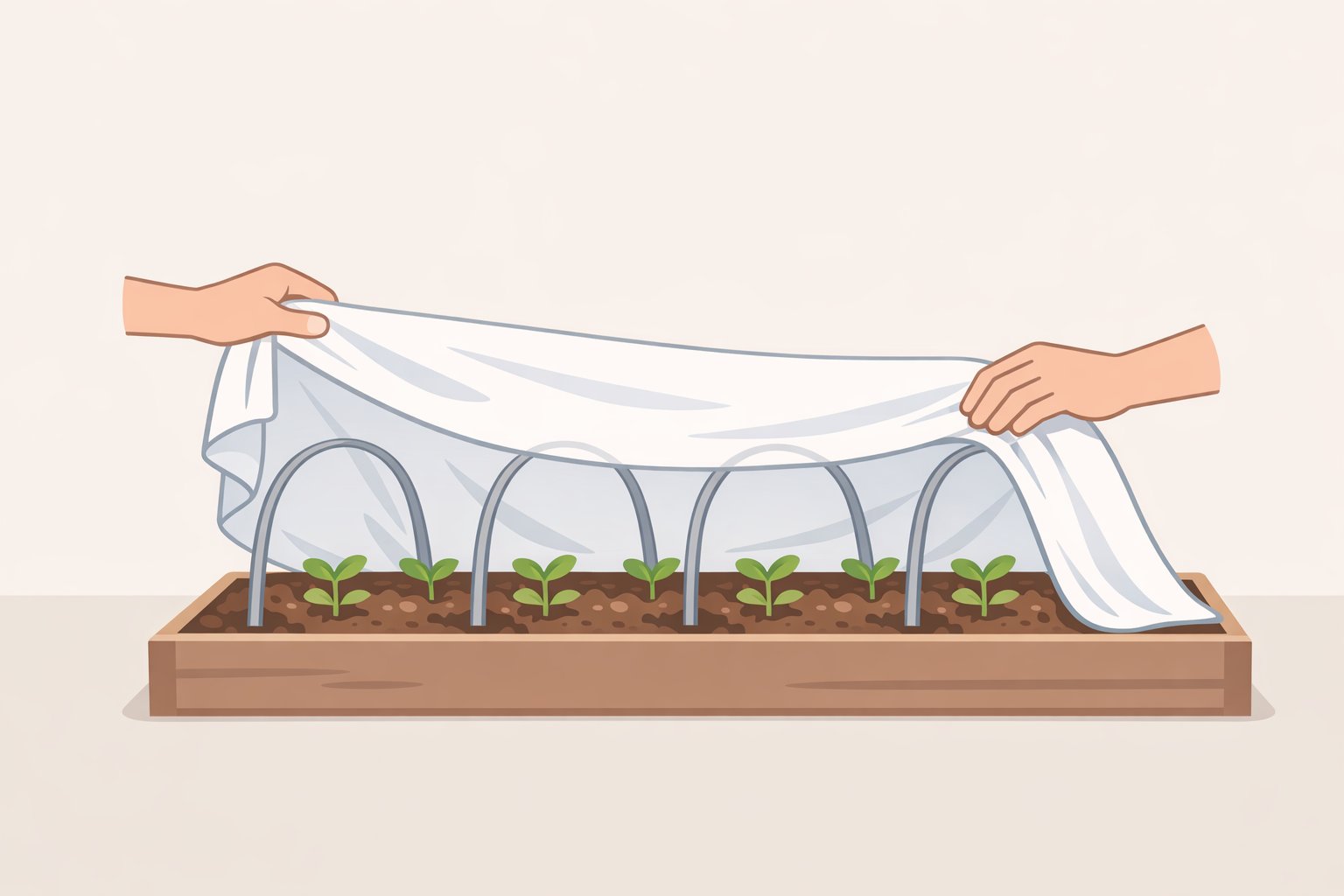
Spring, planting through establishment: Drape floating row cover over newly planted seedlings. It's a lightweight, breathable fabric that allows light, water, and air through while blocking wildlife access. K-State notes it also functions as an early-season frost buffer, which makes it genuinely useful beyond just animal protection (KSRE).
November through April: Install tree guards, hardware cloth cylinders, or wire cages around the trunks and lower branches of young trees and woody shrubs. These should stand at least three feet tall to account for snow accumulation rabbits browse at whatever height the snow surface gives them, which can be considerably higher than the ground in a hard winter (UVM Extension).
Plants that survive their most vulnerable phases are substantially better positioned for the rest of the season. Repellents can add a layer of protection on top of that but only if used correctly.
Step 3: Use repellents correctly and know their limits
Repellents are the first thing many gardeners try and the first thing they give up on. The research explains why: they're not ineffective in principle, but they fail almost every time they're used as a primary line of defense.
UVM Extension describes repellent and scare tactics for rabbits as "generally short-lived" (UVM Extension). Alabama Cooperative Extension adds that repellents may not work for every species or hold up over time (ACES). Deer adapt quickly to most noise-based deterrents propane cannons, electronic alarms making them ineffective within weeks, UC ANR notes.
That said, repellents can serve a supporting role when used with realistic expectations. Ohio State Master Gardeners distinguish two categories: perimeter repellents, which use predator scents or dried blood to trigger fear responses around a garden boundary, and contact repellents, which coat plant surfaces with capsicum, garlic, or mustard oils to make them unpalatable (Ohio State Master Gardeners). Combining both types in a layered program performs better than either alone.
A few rules that determine whether repellents actually work:
- Apply before first contact. Repellents work best before deer or rabbits first sample the target plant. Once they've established a taste for something, deterring them from it becomes considerably harder (Ohio State Master Gardeners).
- Reapply regularly. Deer repellents need fresh application every three to four weeks, and rain often shortens how long they last, per Mississippi State Extension.
- Rotate products. Animals habituate to a consistent scent or taste faster than to an alternating one (Ohio State Master Gardeners).
- Check the label before applying anything near food crops. Some repellents are toxic to humans or are not labeled for use on edible plants. K-State's extension specialists flag this explicitly it's not a minor caveat (KSRE).
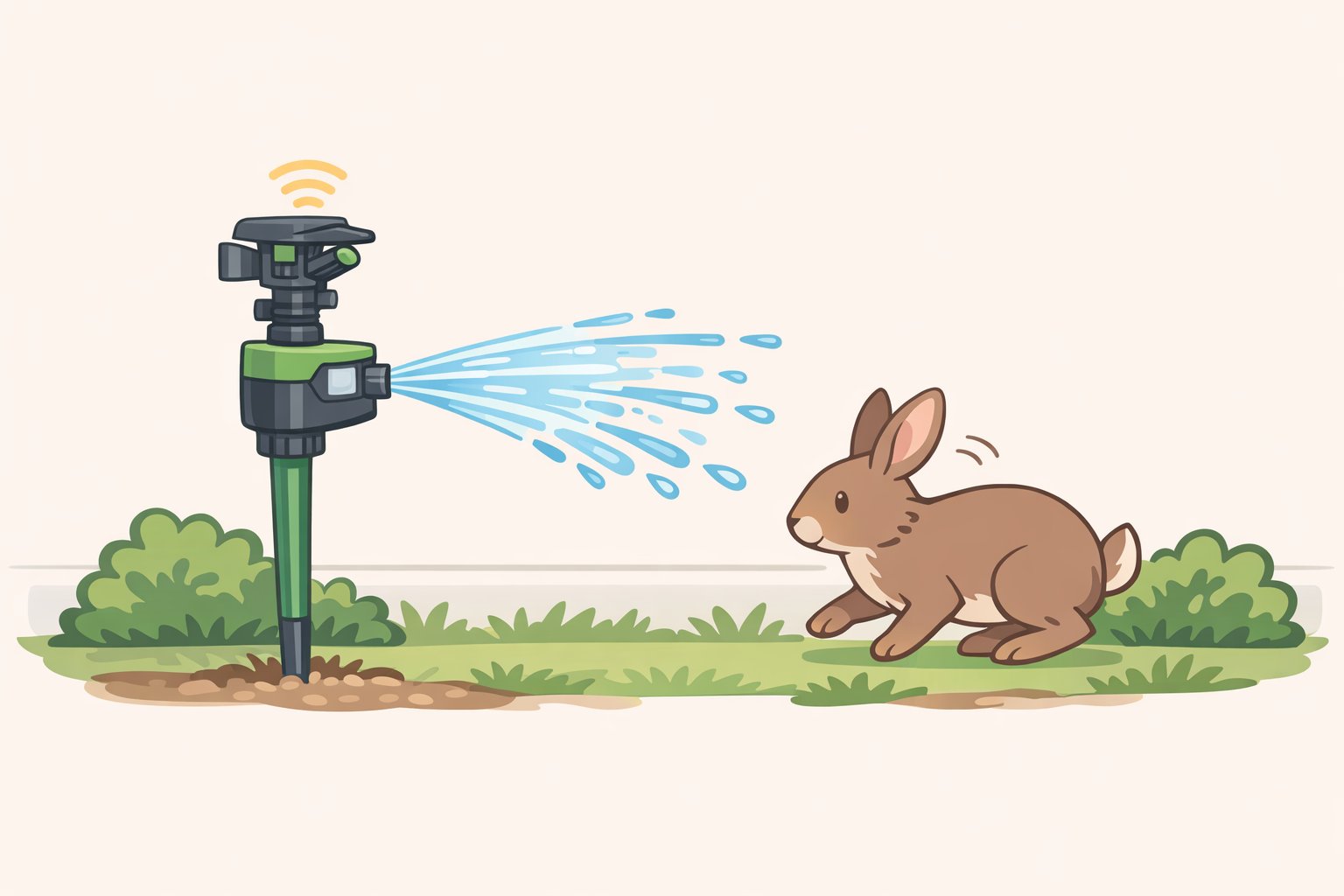
One device worth considering: a motion-activated sprinkler connected to a garden hose, which releases a short burst of water on movement. K-State recommends choosing a model rated for at least 1,000 square feet of coverage (KSRE). Like repellents, it works best as a complement to exclusion, not a substitute for it.
Step 4: Choose plants that reduce your garden's appeal to wildlife
Plant selection won't make a garden animal-proof on its own. Deer will feed on over 700 plant species, and hungry animals will eat plants they'd otherwise ignore, per Mississippi State Extension. Ohio State Master Gardeners note, with some dry accuracy, that not all deer consult the "deer-resistant" lists that gardeners rely on (Ohio State Master Gardeners). When food is scarce, deer eat most things, including many supposed deer-resistant species (UC ANR).
What plant choice does accomplish is reduce the probability of browsing when pressure is moderate, and help allocate a fencing budget more strategically.
For vegetable gardeners: K-State identifies crops that rabbits rarely bother, including potatoes, tomatoes, corn, squash, cucumbers, and some peppers (KSRE). These are reasonable anchors for a kitchen garden under heavy rabbit pressure. Plant them more freely and reserve the fine-mesh fencing for the crops rabbits target hardest.
For ornamental gardeners: Deer most often avoid plants with hairy, rough, or spiny textures and strongly aromatic foliage (Ohio State Master Gardeners). Plants observed to be rarely damaged by deer browsing based on Cornell University research cited by Mississippi State Extension include yarrow, daffodil, purple coneflower, sage, bee balm, foxglove, geranium, and ornamental alliums. Use these in exposed border areas. Save hostas, daylilies, and arborvitae all high on deer preference lists for spots where additional protection is available.
One underappreciated variable: rabbits prioritize security over even abundant food, UVM Extension notes. Reducing dense ground cover, brush piles, and low-growing shrubs near the garden can make the surrounding area feel less hospitable. Less cover means fewer rabbits treating the space as home territory.
The goal is management, not elimination
None of these four steps promises a wildlife-free garden. Suburban animals are here to stay and adapt faster than most deterrents do, as Ohio State Master Gardeners put it plainly. Build the right barrier first, then layer in seasonal timing, plant choices, and repellents as backup.
Don't skip the winter protection window. Set a calendar reminder in October. November through April is when rabbits shift to bark and woody growth, and the damage from a single unprotected winter can be permanent (UVM Extension). That's the one task most gardeners forget until they're looking at a dead shrub in March and wondering what happened.