Nintendo Switch 2 Battery Life Tested: Expect 2–3 Hours
Nintendo's official battery estimate for the Switch 2 spans 2 to 6.5 hours. For most players, that range is misleading in a specific way: Nintendo Switch 2 battery life in demanding handheld play consistently lands near the bottom of it, around 2.5 hours per charge, not the 4.5-hour midpoint the official figures imply. How long does the Nintendo Switch 2 battery last when you're running a graphically intensive title? Closer to two and a half hours than four.
That gap matters immediately, practically. If you're buying a Switch 2 to play Mario Kart World, Cyberpunk 2077, or anything that pushes the hardware, the number to plan around is 2 to 3 hours. Everything beyond that requires an outlet or a power bank. This piece explains what the tested numbers actually show, why the hardware behaves this way, and how to manage sessions when you're away from a charger.
What "2 to 6.5 hours" actually means in practice
Video of the Day
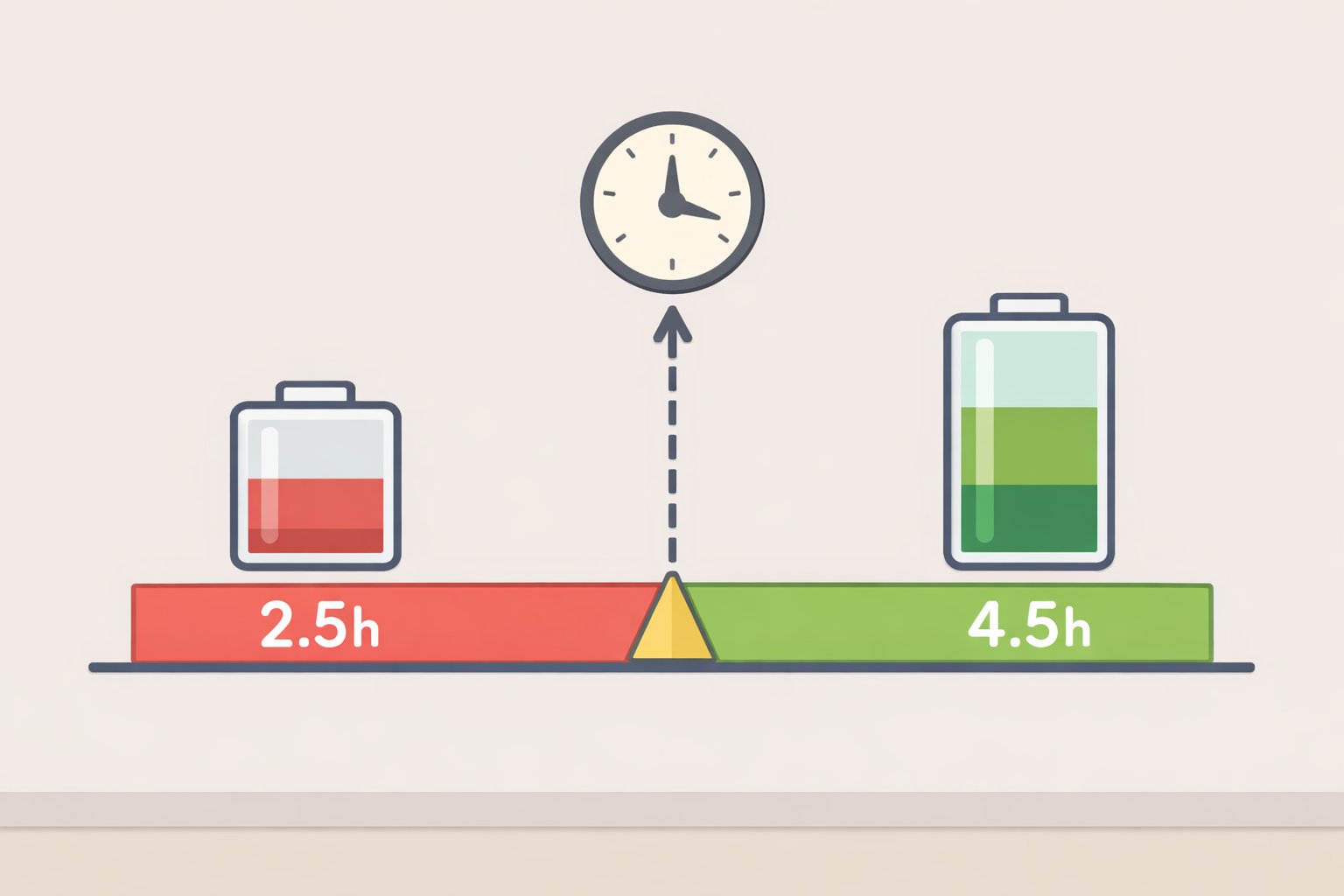
Nintendo's range is technically accurate. The company acknowledges some players might get just 2 hours, per SlashGear, while the 6.5-hour ceiling applies to lighter use conditions. The problem is that the spread is so wide it's almost not useful. A range that runs from 2 to 6.5 hours has a mathematical midpoint of 4.5 hours, as SlashGear noted, but that figure isn't a measured average. It's arithmetic applied to an unusually wide manufacturer estimate, and it doesn't describe what players running demanding titles will actually experience.
The most rigorous data point comes from Digital Foundry's hardware review, published last June. Running Mario Kart World and No Man's Sky in handheld mode, the team logged exactly 2.5 hours from a full charge to empty. That's a complete, measured discharge test under demanding conditions, which makes it the most reliable single benchmark currently available.
Nintendo Life ran a timed session with Mario Kart World and recorded just over 2 hours and 10 minutes. That's a single-game test, not a controlled lab discharge, but it confirms the lower bound for flagship software. Mario Kart World is the Switch 2's marquee launch title, so treating it as representative of demanding-game battery behavior is reasonable.
The picture broadens a bit with YouTube creator Open Surprise's comparison video, relayed by SlashGear. Across Mario Kart World, Hogwarts Legacy, Zelda: Tears of the Kingdom, and Cyberpunk 2077, the creator found the console generally delivered 2.5 to 3 hours of play. These are comparative YouTube tests, not full-discharge lab benchmarks, so treat the numbers as directional rather than definitive. They're consistent with Digital Foundry's measured result, which is the main thing worth noting.
At the upper end, Nintendo Life estimated the ceiling at around 5.5 hours, extrapolated from a 20-minute sample session rather than a complete rundown. That figure is a rough directional estimate for lighter use cases, not a tested result. Treat it accordingly.
The hierarchy of evidence here matters. Digital Foundry's full measured tests carry the most weight. Nintendo Life's timed Mario Kart session is solid but limited to one title. The 5.5-hour extrapolation and Open Surprise's YouTube testing are supporting context. For demanding games, the evidence consistently clusters around 2 to 3 hours, with 2.5 hours as the clearest reference point.
Video of the Day
Why the battery drains so fast: power draw and hardware limits
Short battery life for demanding Switch 2 games isn't a defect. It's a predictable outcome of the hardware design, and the math explains it cleanly.
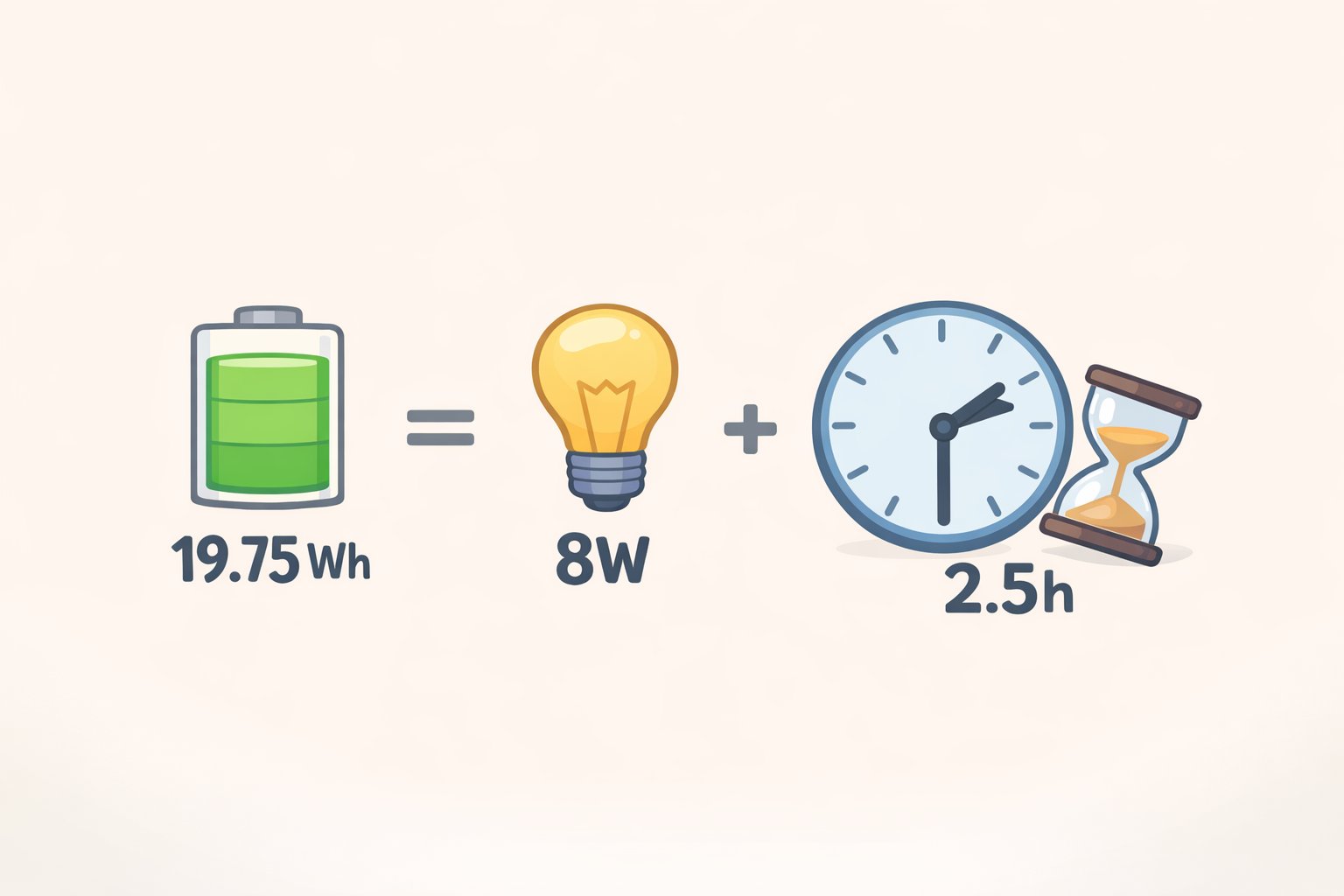
The Switch 2 carries a 19.75Wh battery, per Digital Foundry. Think of watt-hours as a fuel tank: 19.75Wh is a modest reserve for a device that can pull close to 10W under heavy load. In demanding handheld play, the system draws roughly 10 to 12 watts measured from the wall, which includes some power-supply inefficiency, according to Digital Foundry. Nintendo's own two-hour minimum implies the chip is effectively capped near 10W in worst-case handheld scenarios.
Digital Foundry's 2.5-hour result implies an average draw of just under 8W from the battery. Divide 19.75Wh by 8W and you get approximately 2.5 hours. The arithmetic fits the measured result almost exactly, which means the console is running about as efficiently as its specs allow, not burning through power carelessly.
That efficiency is the part worth pausing on. Despite skepticism about the older Samsung manufacturing process used in the Switch 2's chip, Digital Foundry called the verified power efficiency "a remarkable achievement" for Nintendo, Nvidia, and the Samsung process itself. The console is extracting close to the maximum performance its power budget permits. Short battery life is the tradeoff, not an engineering failure.
The Switch 2 does fall slightly short of the original Switch's endurance. Nintendo Life attributed this to significantly more powerful hardware in a chassis that didn't proportionally increase its battery capacity, noting that the Switch 2 sits broadly in line with other powerful handhelds like the Steam Deck and Asus ROG Ally. That's a general comparison, not a side-by-side benchmark, but it contextualizes the tradeoff. More capable hardware costs more power, and the battery didn't grow to match.
For players trying to calibrate expectations: the 2 to 3 hour window for demanding titles is a feature of this hardware configuration, not something firmware can meaningfully fix. The battery is the bottleneck, and it's a relatively modest one for the processing load the Switch 2 is handling.
Nintendo Switch 2 charging time and battery drain during sessions
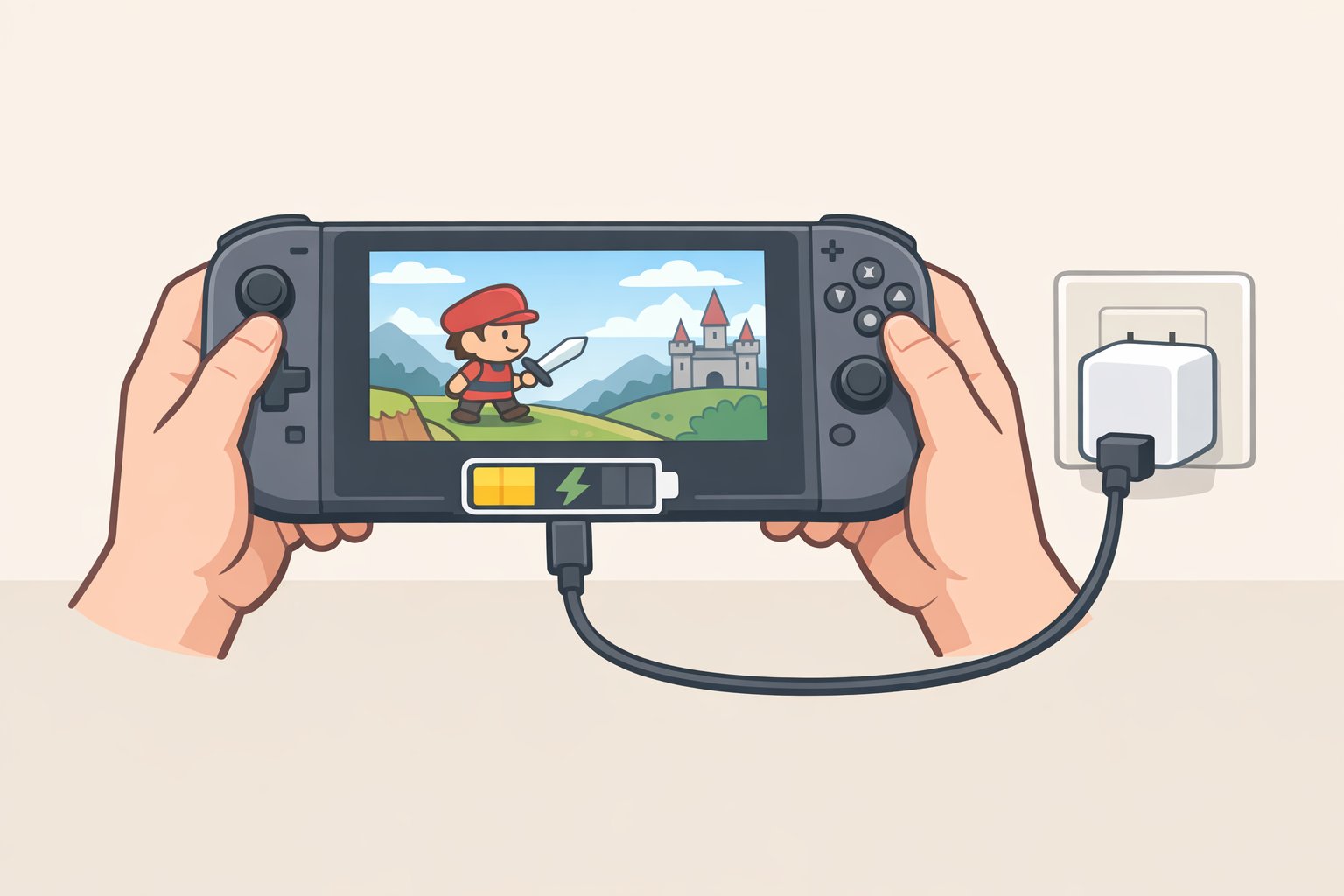
A full recharge from empty in Sleep Mode takes about three hours, per SlashGear. For demanding-game players, that ratio is effectively one-for-one: roughly three hours of play, three hours to recover. It's a clean mental model, if not an especially generous one.
Plugging in while actively playing in handheld mode changes the picture, but not dramatically. With a charger connected, the adapter draws around 25W total, simultaneously powering the session and charging the battery, according to Digital Foundry. The catch is that battery recovery in this configuration is, as Digital Foundry put it, "glacial." The charger prevents the battery from dying mid-session, but it won't meaningfully restore charge while demanding gameplay is running. Think of it as treading water rather than actually swimming to shore.
What this means for real planning: a two-hour flight with a full charge is tight, and any turbulence in the form of demanding rendering makes it tighter. An afternoon away from outlets without a backup power source is a gamble.
For longer stretches away from a charger, SlashGear recommends carrying a power bank with enough capacity to match or exceed the Switch 2's 5,220 mAh battery. At that capacity, a quality power bank can provide roughly one additional full charge, which doubles the available session time. For heavy users, that's not an optional accessory. It's the difference between a device that works all day and one that needs babysitting.
The charging math also reveals something about how to structure gaming sessions. If demanding play exhausts the battery in 2.5 hours and a full recovery takes three hours in Sleep Mode, the Switch 2 is fundamentally a one-session-per-charge device under heavy use. Plan around one demanding session per outing, and the hardware delivers exactly what it promises. Expect more without a power source, and the battery will disappoint.
One thing to check if your battery seems worse than expected
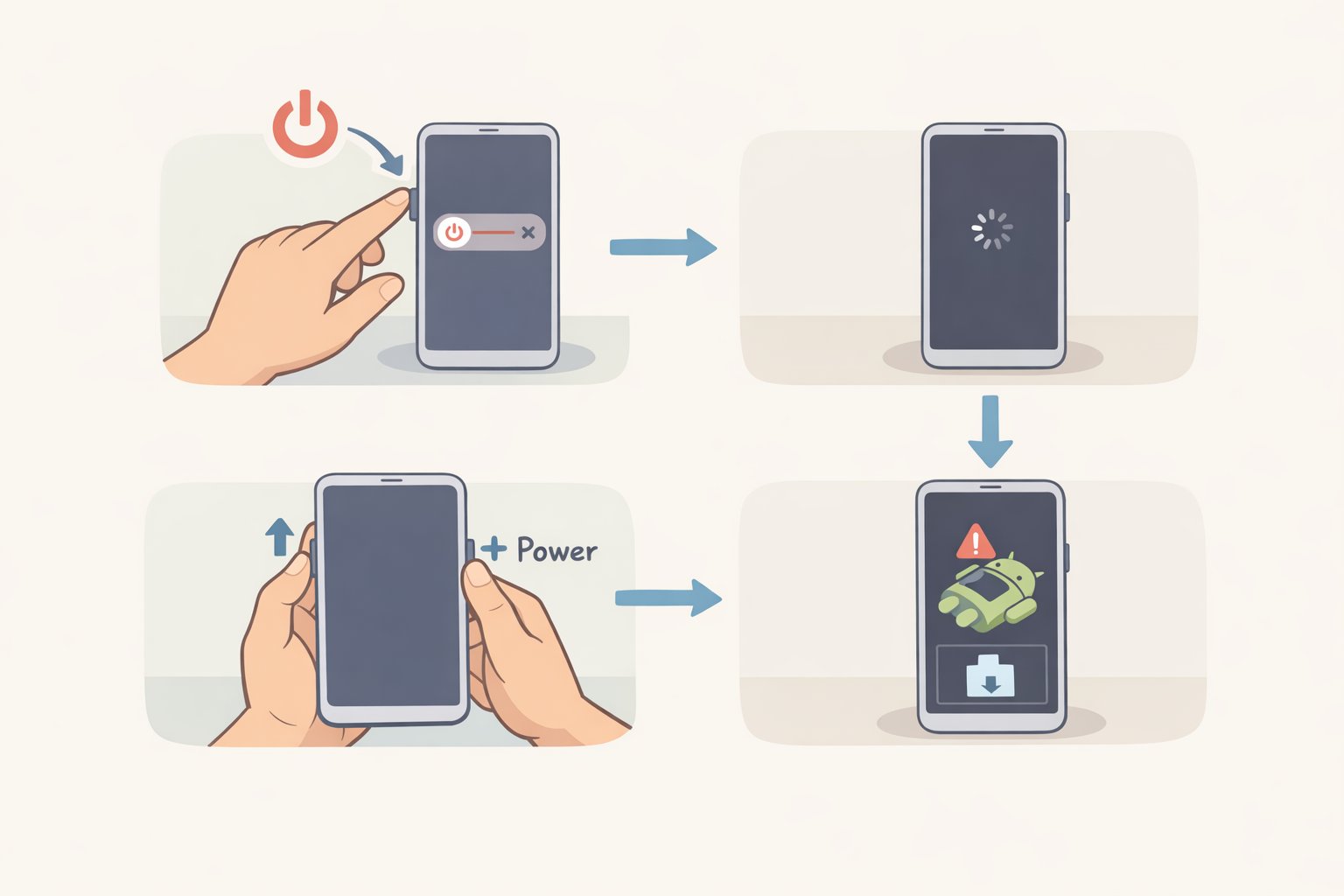
Before assuming the hardware is underperforming, it's worth ruling out a software display issue. Nintendo identified a bug where the Switch 2's battery indicator can show a lower charge level than the device actually holds, per SlashGear. This is a meter accuracy problem, not a battery capacity problem. A player who sees the bar drop faster than expected may be reading a miscalibrated display rather than experiencing genuinely worse battery life.
The fix: update the system software, power off the console, then enter Recovery Mode by holding both volume buttons and pressing the power button once. Press power again to turn the device off, then restart normally and use it as usual to check whether the charge display is now accurate, as SlashGear walked through. The reset recalibrates the indicator rather than restoring battery capacity, so the result is a more accurate reading, not a more capable battery.
There's a separate, longer-term consideration that doesn't involve any bug. Like every lithium-ion device, the Switch 2 battery will hold progressively less charge as it ages, per SlashGear. The 2.5-hour benchmarks from Digital Foundry and Nintendo Life reflect early-life battery health. Real-world runtime will shorten over months and years of regular use. That's not a design flaw specific to Nintendo; it's standard lithium-ion degradation. The implication is practical: the tested numbers represent a ceiling that only declines over time, which makes building consistent habits around power access more useful than waiting until degradation becomes noticeable.
If the battery meter reset doesn't resolve the issue and runtime remains significantly below the 2 to 3-hour window for demanding games, that's worth investigating through Nintendo support. But for most users reporting unexpectedly short sessions, the display bug is the first thing to check.
What to do with all of this
The number that matters for demanding handheld play is 2 to 3 hours per charge. Digital Foundry's 2.5-hour measured result is the most reliable single data point, corroborated by Nintendo Life's timed testing and the broader comparative data relayed by SlashGear. Nintendo's 6.5-hour ceiling is real but describes lighter use conditions most players running flagship software won't encounter.
The decision point is simple. A session under two hours from an outlet: charge beforehand and you're fine. Two to four hours away: bring the charger and accept that active charging slows drain without restoring charge meaningfully. More than four hours away from any power source: a power bank sized to the Switch 2's 5,220 mAh battery is the only reliable option, per SlashGear.
Nintendo Life noted hopes that updated hardware models might bring improved battery life down the line, though nothing has been confirmed. For now, the Switch 2 is a one-demanding-session-per-charge device. That's not a reason to avoid it. It's just what it is, and planning around it takes about thirty seconds once you know the number.