How Robot Vacuums Are Tested: Cleaning vs. Obstacle Avoidance
The 3i S10 Ultra is marketed with a specific claim: "advanced AI algorithms that achieve perfect obstacle avoidance." In CNET's Louisville lab, it ran over all six obstacles placed in its path. Every single one.
That result isn't an outlier. It's a window into something the lab's structured robot vacuum testing revealed across 24 models: the robots that clean best tend to avoid hazards least reliably, and the ones that dodge obstacles most consistently tend to leave more dirt behind. Understanding why that trade-off exists starts with understanding exactly how the tests work.
CNET rebuilt its testing procedures in late 2025, constructed a test room to standards set by the International Electrotechnical Commission (the body that writes vacuum testing protocols for manufacturers), and has since run 47 models through the new framework, per CNET. The original 24-model batch produced the comparative analysis discussed here. Among those 24 machines, only 9 cleared even a minimal combined bar: avoiding at least three of six obstacles while posting 40% or higher average debris pickup, according to CNET.
Robot vacuum cleaning performance tests: sand, carpet, and repeat runs
Video of the Day
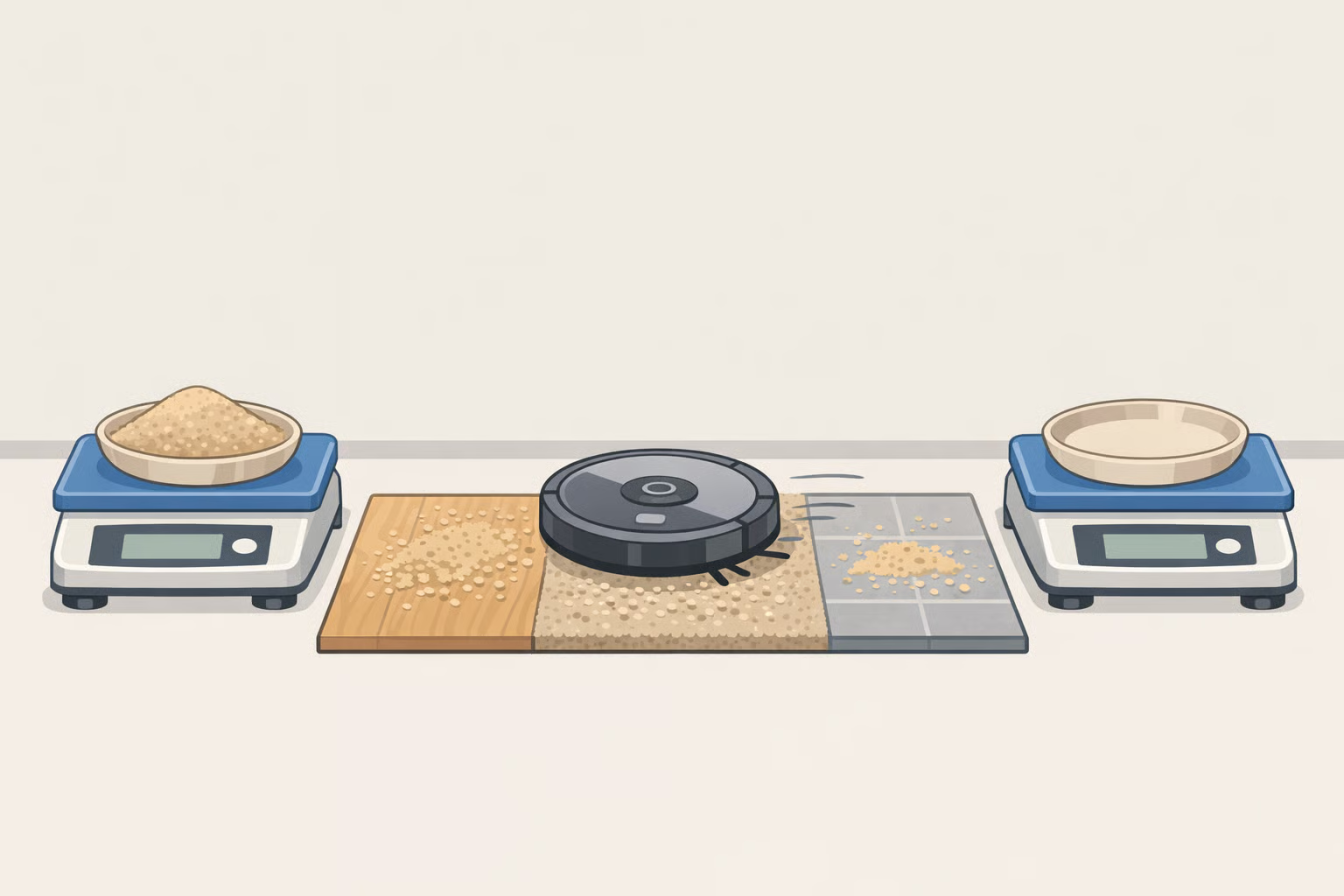
The lab uses play sand as a stand-in for fine household particles. Engineers scatter a controlled amount across three floor panels hardwood, low-pile carpet, and midpile carpet then weigh each panel with a precision scale before and after every pass to calculate a pickup percentage. Each robot runs the test five times per surface, and any result that lands roughly two standard deviations outside the average triggers a retest, per CNET. The five-run average keeps a single lucky or unlucky pass from distorting a model's score.
Hardwood is the easy test. Most top picks exceed 80% pickup on bare surfaces. Midpile carpet is where real separation happens: among the models CNET has scored under its current framework, the Mova V50 Ultra Complete leads midpile carpet pickup at 47.54%, a figure CNET noted early this year was 86% better than the runner-up on that surface. The weakest performers overall score as low as 20% average pickup across all floor types, per CNET.
Pet hair gets separate treatment. Before-and-after photos substitute for weight measurements, and robots that successfully clear hair earn a 0.5-point scoring bonus. Navigation is tracked separately again: an overhead camera records each run, and video analysis software calculates the percentage of accessible room the robot visited across three standard passes, generating a color-coded heat map showing where the machine passed frequently and where it skipped, per CNET.
A home test tells you how one robot behaved once, in one room. Five averaged runs on three surface types, with statistical outlier detection, produces something closer to an actual capability profile. That methodological rigor is also what makes the cleaning-versus-avoidance finding hard to explain away.
Video of the Day
Robot vacuum navigation and obstacle avoidance tests: the six-item course
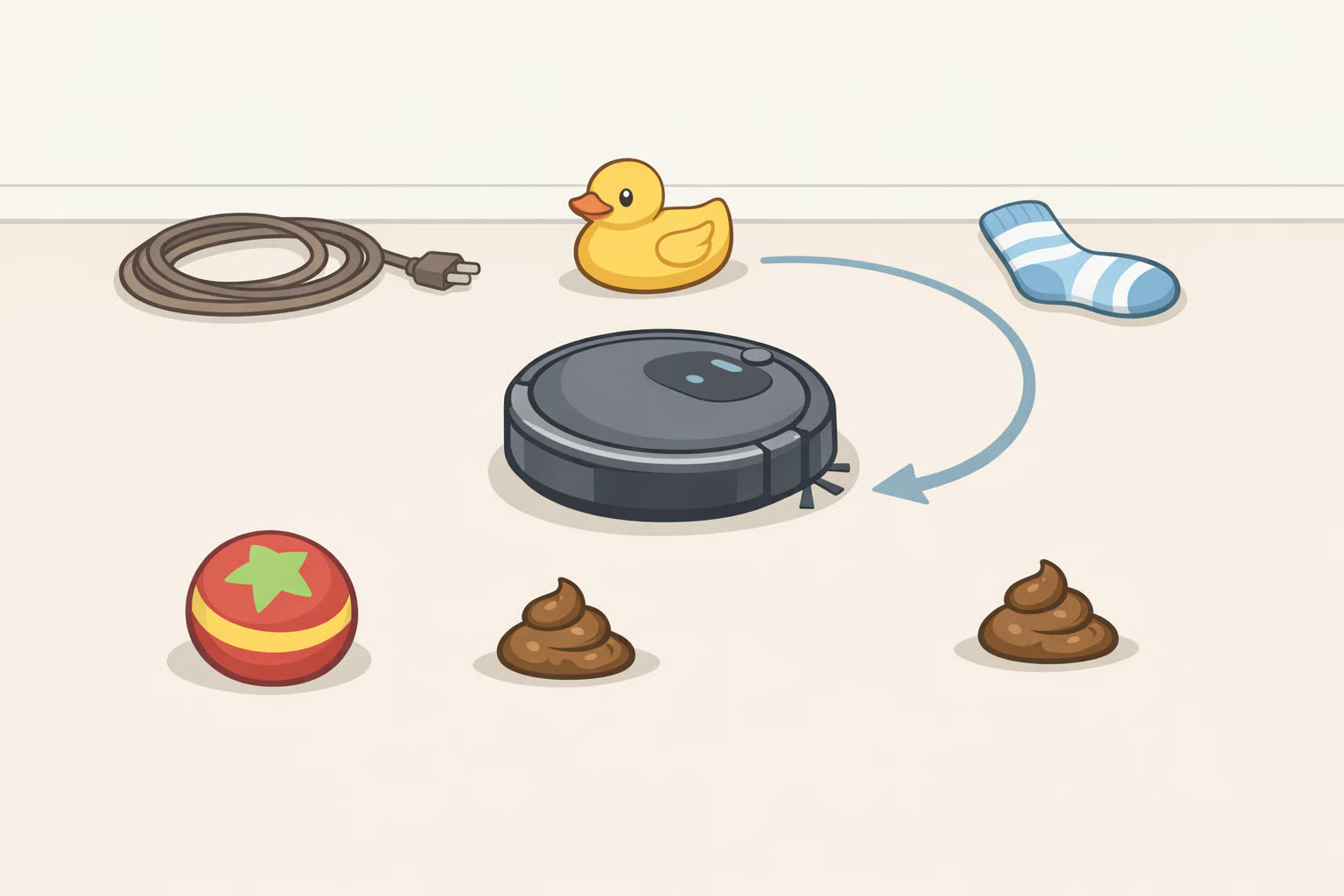
Avoidance testing uses six items placed at specific positions: three simulated pet-waste scenarios at 360°, 180°, and 90° approach angles, plus a lamp cord, a pet toy, and a sock. Each configuration is tested three times per robot and averaged, per CNET. The angle distinctions are deliberate: the 360° waste sits in the middle of the room, giving the robot the widest possible routing options. The 90° placement sits in a corner, which means a robot that successfully avoids it must sacrifice cleaning that area entirely.
The gap between what manufacturers promise and what the lab found is substantial. Seven models scored 0 out of 6 on avoidance, per CNET. The 3i S10 Ultra, with its "perfect obstacle avoidance" marketing, was among them. The Eureka J15 Pro Ultra cleared zero obstacles too, and also posted the lowest cleaning score in the batch just 1.74% on midpile carpet.
High avoidance scores didn't guarantee safety either. The SwitchBot S20 Auto-Fill and Drain avoided five of six obstacles, the best result in the group, yet still experienced a critical failure when simulated 180° pet waste wrapped around its wheel. The 3i S10 Ultra ran over its own base-station cord. These aren't contrived scenarios; they're precisely the kind of thing an unsupervised robot encounters in a real home, per CNET.
What the data actually shows: why strong cleaners tend to be poor avoiders
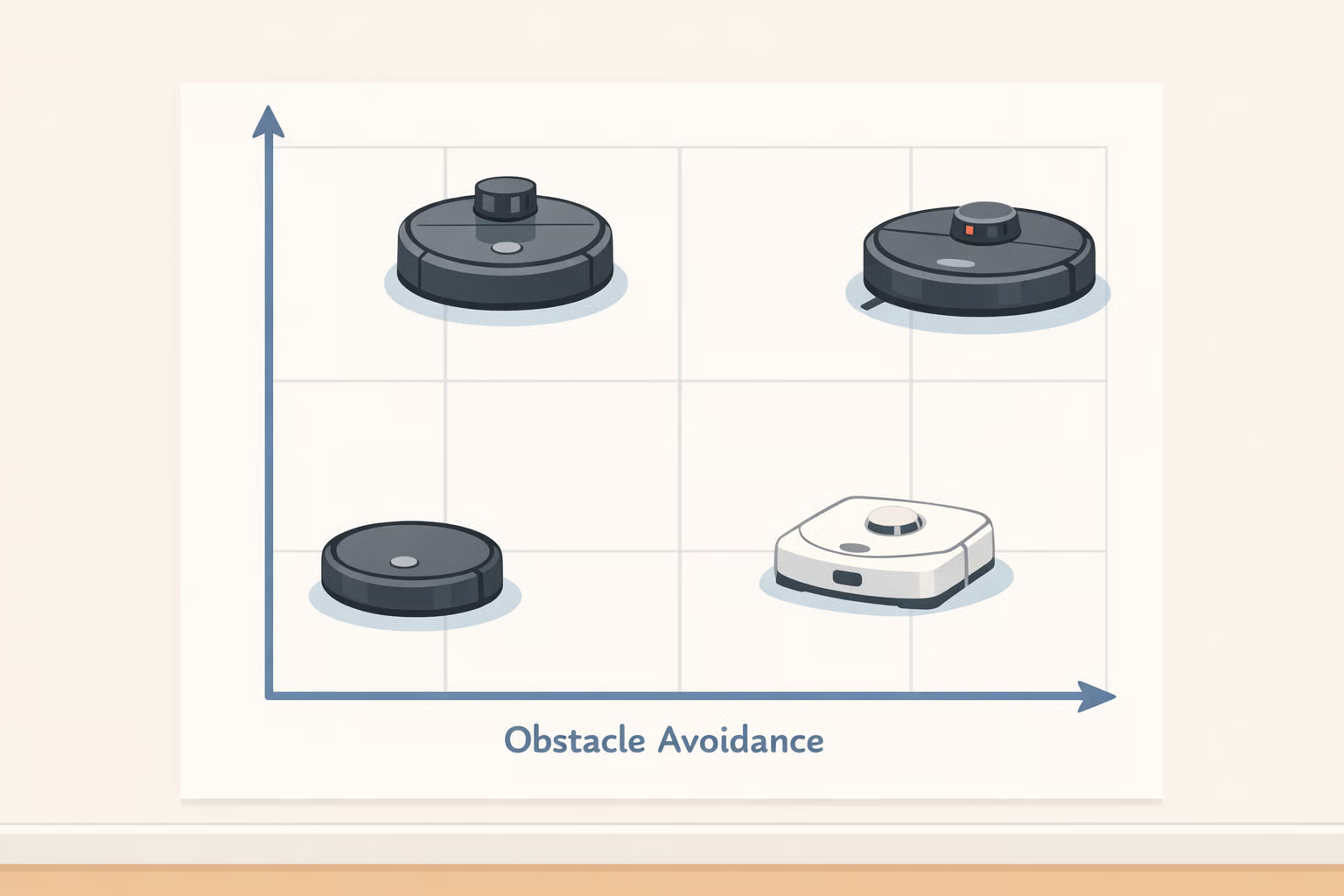
The pattern across the 24-model analysis was consistent enough that it's worth stating plainly: the best cleaning performers clustered near the bottom on obstacle avoidance. The Mova V50 Ultra Complete led pickup at 65.14% average and avoided three of six obstacles. The Dreame X50 Ultra posted 58.64% average pickup and also avoided three. The Roomba 205 DustCompactor, which recorded the highest hardwood score of any model tested at 99.27%, avoided just one, per CNET.
The engineering explanation comes from Adrian Dunkley, a scientific researcher in AI and applied physics and founder of StarApple AI, quoted in CNET earlier this year: "Strong cleaning requires high suction, fast movement and close contact with the floor. Avoidance requires slower motion, distance and frequent sensor checks. When a robot prioritizes cleaning, it has less time to recognize and react to objects. When it slows down to avoid them, cleaning effectiveness drops." Dunkley added that faster movement and aggressive suction reduce the time available for obstacle checks and that from a software perspective, the trade-off is deliberate: avoidance thresholds get relaxed to improve cleaning output.
One manufacturer makes that trade-off explicit in its own app. The Noesis Florio's pet mode enhances hair removal but warns users it "may reduce the robot's obstacle avoidance capability," per CNET. That's a candid admission of something the lab data shows across most of the market, whether manufacturers acknowledge it or not.
The pattern isn't without exceptions. The Dreame D10S Ultra managed 62.32% average pickup while avoiding four of six obstacles a notably better avoidance result than most high-performing cleaners at that pickup level. The trade-off is a strong tendency, not a law.
The closest thing to a genuine compromise in the 24-model data set was the Yeedi M14 Plus: five of six obstacles avoided and 50.03% average pickup, the only model among the top avoiders to break 50% on cleaning. It also costs $600 at full price, compared with $1,399 for the Mova V50, per CNET.
Which axis matters depends entirely on the home. If pets have accidents indoors and the vacuum runs unsupervised, avoidance should drive the decision a robot that spreads pet waste is a worse outcome than one that misses some carpet grit. For mostly bare floors in a tidy space, raw pickup power is the better priority, with the understanding that cords and small objects need to be cleared before each run. For carpeted homes with regular clutter, no current machine does both at a high level; the Yeedi M14 Plus is the best-documented compromise in the current data set, not a model that excels at either extreme.
What the lab framework tells buyers that marketing can't
The testing framework now covers 47 models and is still expanding, per CNET. The procedures are continuously refined. Lab award winners as of this week the Roborock Saros 20 for coverage, the iRobot Roomba Combo 10 Max for average dust pickup, the Mova V50 Ultra Complete for carpet performance each excel on specific, measurable axes, not across the board.
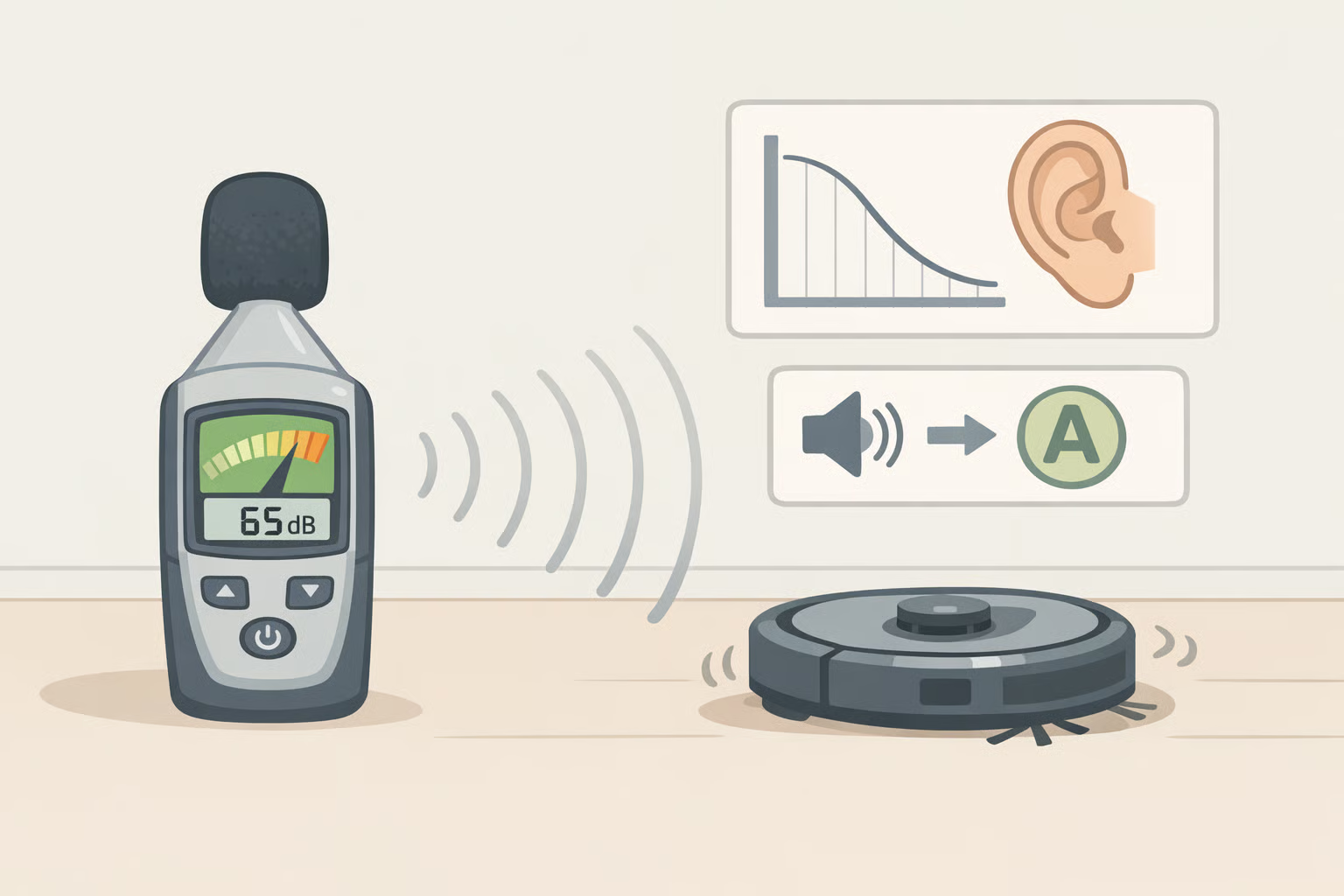
One additional metric worth noting as the framework matures: CNET measures each robot with a calibrated sound-level meter and derives a hearing-weighted average (LAeq). Models registering above 60 dB receive a half-point scoring deduction. The loudest machine tested was roughly ten times as loud as the quietest when decibel differences are converted to perceived intensity a meaningful gap for a device that runs autonomously while the household goes about its day, per CNET.
Whether the cleaning-versus-avoidance trade-off holds as the tested sample grows is the question this methodology is now positioned to answer at scale. For buyers, that's useful context: any "best robot vacuum" ranking is a snapshot of a moving target. The framework for evaluating what best actually means is more durable than any individual winner.