Why PlayStation Ending Physical Games Hands Competitors a Clear Edge
Sony confirmed this week that PlayStation ending physical games is now a matter of official policy: disc production for all new titles stops in January 2028, after which every new release will be available only through the PlayStation Store or at retailers in digital format, per the official PlayStation Blog. Within hours, a 2013 PlayStation promotional clip was back in circulation a Sony employee demonstrating how to "share" a PS4 game by handing a disc to another person. The clip was widely understood at the time as a direct jab at Microsoft's proposed digital-restriction scheme for the Xbox One. It is now being circulated against Sony itself.
That kind of reversal is the specific brand vulnerability competitors notice. The announcement did not just upset collectors. It handed rivals, critics, and adjacent companies a rhetorical opening built entirely from Sony's own words and record which is why the backlash has moved well beyond gaming forums and into broader coverage of ownership, pricing power, and game preservation.
Why PlayStation ending physical games has reopened old ownership fights
Video of the Day
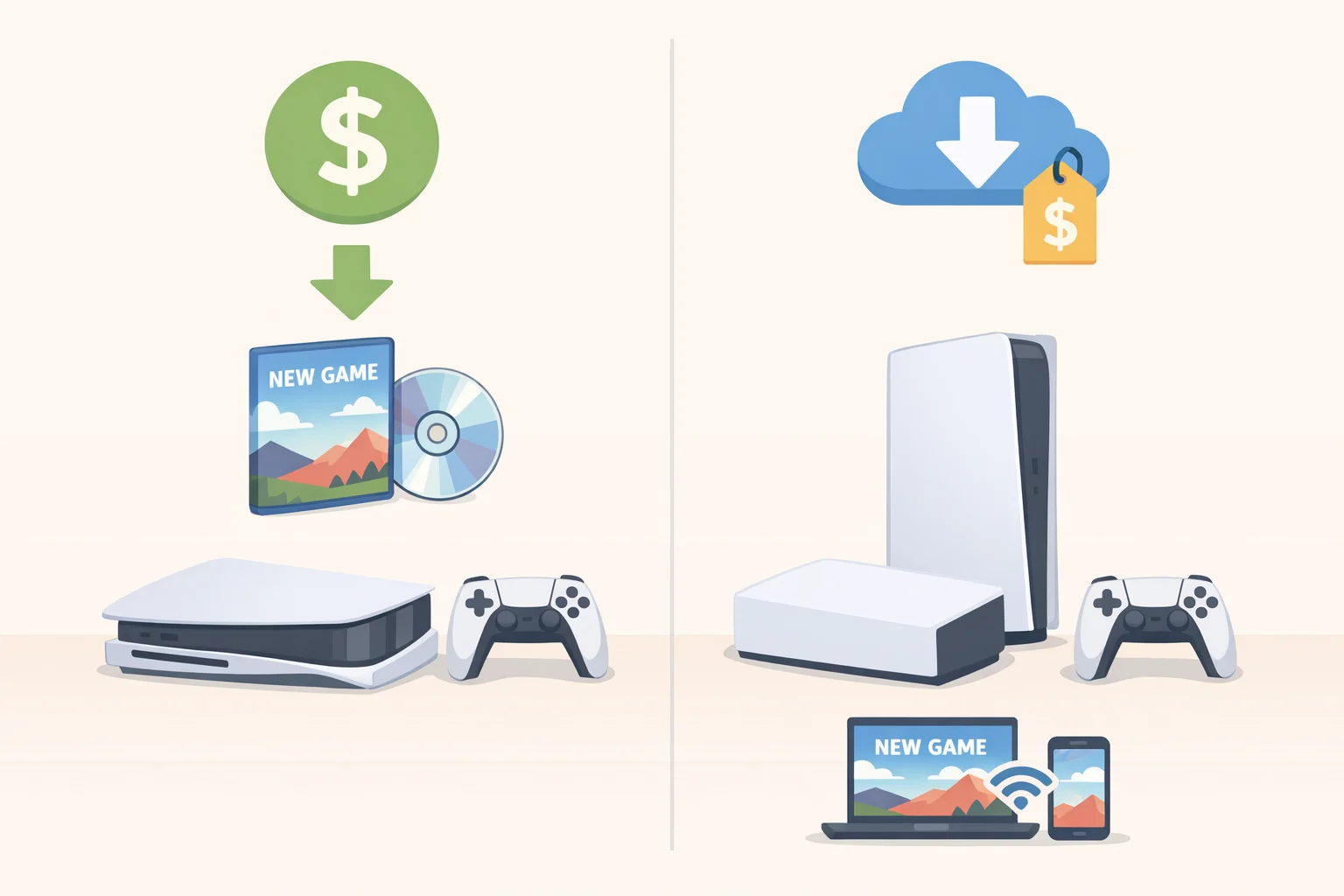
Sony spent the PS4 generation positioning itself as the consumer-friendly alternative to Microsoft's more restrictive approach. That positioning is now vacant, and others are moving into it.
Sony ending game discs looks especially pointed given its decade-old public championing of physical ownership and resale rights commitments Gizmodo documented this week as the primary fuel for current criticism. The issue is not that Sony changed course. It's that the company changed course while holding a decade of public receipts, and critics are using them.
Nintendo's response cost nothing. Its latest financial report simply states the company is "not in the position to go digital only quite yet," cited by Gizmodo. Nintendo named no one. It didn't need to. One line from a routine financial filing quietly claims the consumer-friendly ground Sony is leaving behind zero aggression required when a competitor does the work for you.
The hardware pricing makes the trajectory impossible to miss. The PS5 Slim and PS5 Pro both require a separate $80 disc drive attachment, and after recent price hikes the top-end PlayStation reaches $980 for a configuration that still plays discs, per Gizmodo. Sony has been financially steering players away from physical media for years. January 2028 is when it stops being a nudge.
Video of the Day
The trust problem Sony cannot currently answer
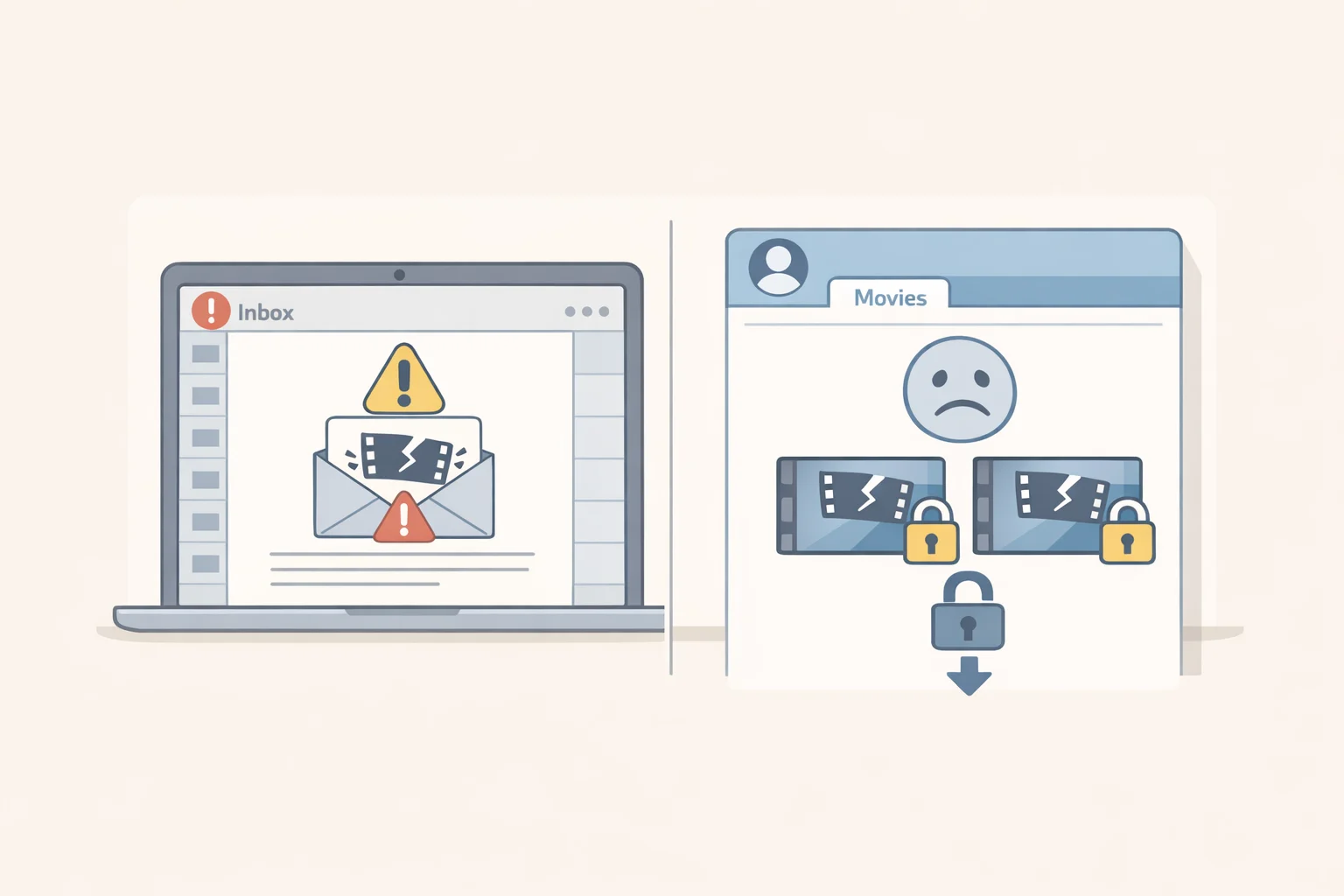
The backlash is sticking because the timing provided concrete evidence, not just talking points.
Users reported receiving emails last week informing them that, starting September 1, they would lose access to 551 purchased movies including Total Recall and Terminator 2: Judgment Day due to a licensing dispute with distributor StudioCanal. No refund mechanism was announced, per Polygon. This was the same week Sony announced the disc cutoff.
That sequence is the structural argument critics are making. Digital purchases on the PlayStation Store are licenses, not ownership. The platform retains the right to revoke access at any time, a legal reality a disc on a shelf does not share, as Polygon explains. Sony has also begun experimenting with differentiated pricing for different users so far limited to discounts, but the mechanism runs in both directions. Removing physical retail eliminates the price ceiling that used and discounted discs currently impose on the digital market, per Polygon.
Alongside the disc announcement, Sony confirmed it is sunsetting the PlayStation 3 and PlayStation Vita storefronts a move it attempted in 2021, then reversed after significant fan pushback, per Polygon. Revived storefront closures, purchased movies being revoked, and a disc cutoff all in the same week: that sequence gives critics' arguments weight that pure outrage would not carry on its own. The ask for trust in a PlayStation digital-only future lands against a live record of access being removed.
No one has a preservation plan
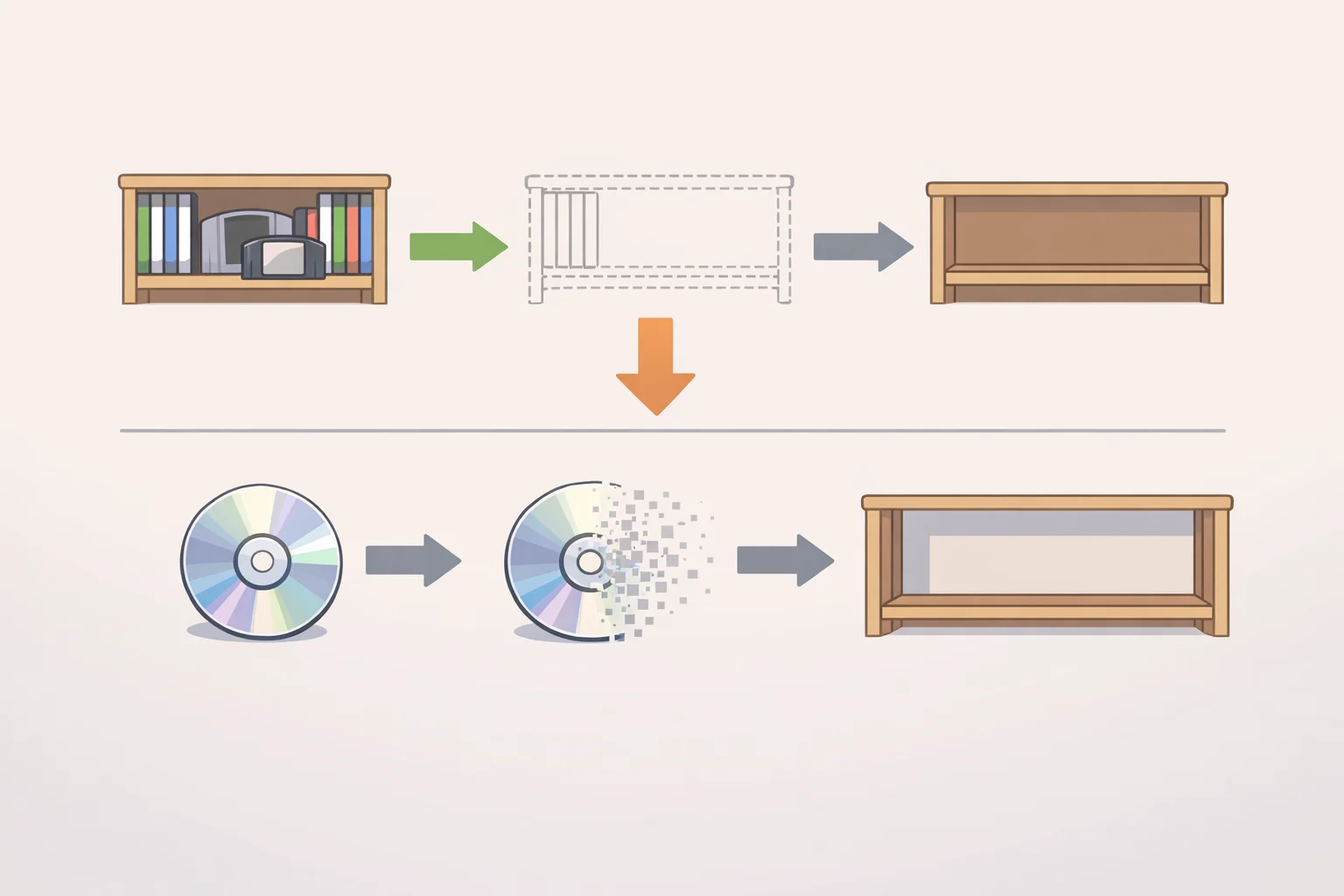
The ownership concerns are the main story. The preservation consequences are the longer tail and they are not minor.
Nine out of ten classic video games are already commercially unavailable, a gap partly attributable to publishers, including Sony, failing to make older titles digitally accessible, according to a 2023 Video Game History Foundation report cited by Gizmodo. Physical discs have served as the informal backup for that failure. Sony is removing that fallback for every title released after January 2028.
Frank Cifaldi, the Video Game History Foundation's director, responded to the announcement directly. "As the director of a historical video game preservation institution, and someone who has dedicated his entire adult life to this cause, this is accurate," he wrote, agreeing with a Bluesky post that called piracy the only extant form of game preservation available right now. "We have attempted to work with the industry's trade organization to find a legal path forward, but they refuse to offer a meaningful alternative," per Arcader.
There is no PlayStation equivalent of GOG, no DRM-free access guarantee, and preservation critics say Sony has offered no formal plan for what happens to purchased libraries if a future storefront closes, Arcader noted. Sony's business case for the shift is coherent. Its preservation case has not been made.
What the data explains and what it doesn't
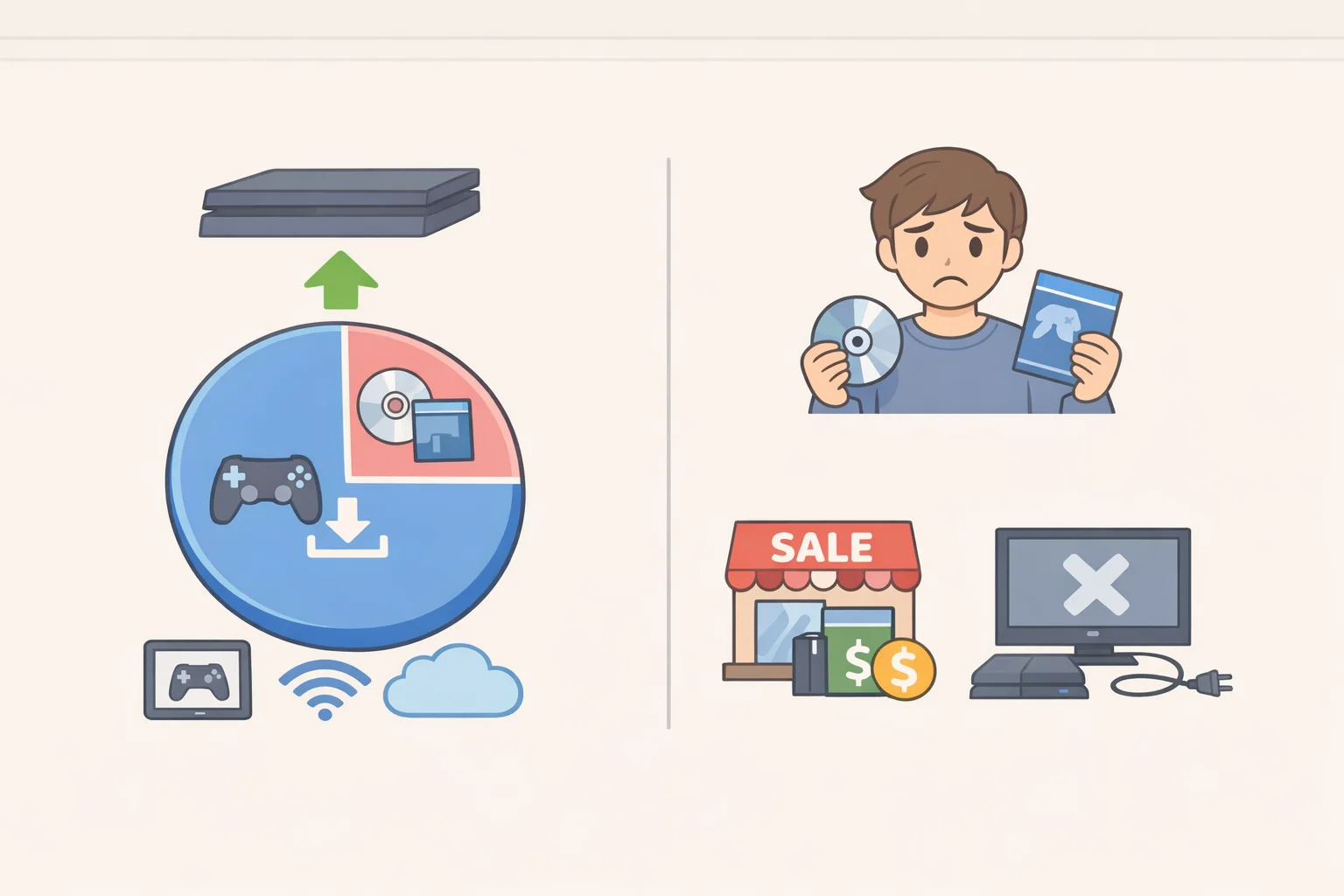
Sony's numbers are not in dispute. Digital purchases accounted for 78% of game sales through March 31 of this year, up from just 13% at the PS4 launch in 2013, per Ampere and Sony's annual report via Gizmodo. Physical discs represented less than 5% of Sony's 2.64 trillion yen in game software revenue last fiscal year, per Kyodo News. "This is a natural direction for Sony Interactive Entertainment to adapt to consumer trends as the general preference for digital media significantly outpaces physical discs," said Sid Shuman, Sony's senior director of content communications, per Kyodo News.
The data explains the business decision. It does not explain what Sony is offering players in place of what physical ownership quietly provided: resale value, lending rights, offline permanence, and a secondhand market that kept digital pricing honest.
Games already announced for disc release before January 2028 remain unaffected, per the PlayStation Blog, giving Sony roughly 18 months before the shift becomes fully irreversible. Whether it uses that window to address the ownership and preservation gaps is a different question. What it cannot walk back is announcing a digital-only future in the same week it revoked 551 purchased movies and revived a storefront shutdown its own users had already rejected once. Rivals who want to draw that contrast have everything they need.