Social Media Age Limit Survey: Why Lawmakers Are Split on Teen Bans
A survey headline cited by the New York Attorney General's office claims most Americans want kids off social media before 16. The methodology, sample size, and question wording are not included in the press release, so the finding cannot be independently assessed. What is clearer is the direction of travel: public pressure for tighter rules is growing, and governments on three continents are now writing laws in response. The harder question is what those laws are actually trying to fix.
That question is dividing legislators more than the polling suggests. Two distinct policy models have emerged: age-based account bans that block younger teens from platforms entirely, and design-based restrictions that let teens stay on social media but strip out the features researchers associate with harm. Which approach a government chooses reflects a theory of the problem, and the theories are not the same.
The stakes are practical. Age bans hinge on age verification systems that, so far, have no national standard in the U.S. and vary state by state. Design restrictions move slowly through rulemaking and may take years to reach enforcement. Neither model has outcome data yet. Both are being tested simultaneously, which means the next few years will function as an uncontrolled policy trial.
What the social media age limit survey data actually shows
Video of the Day
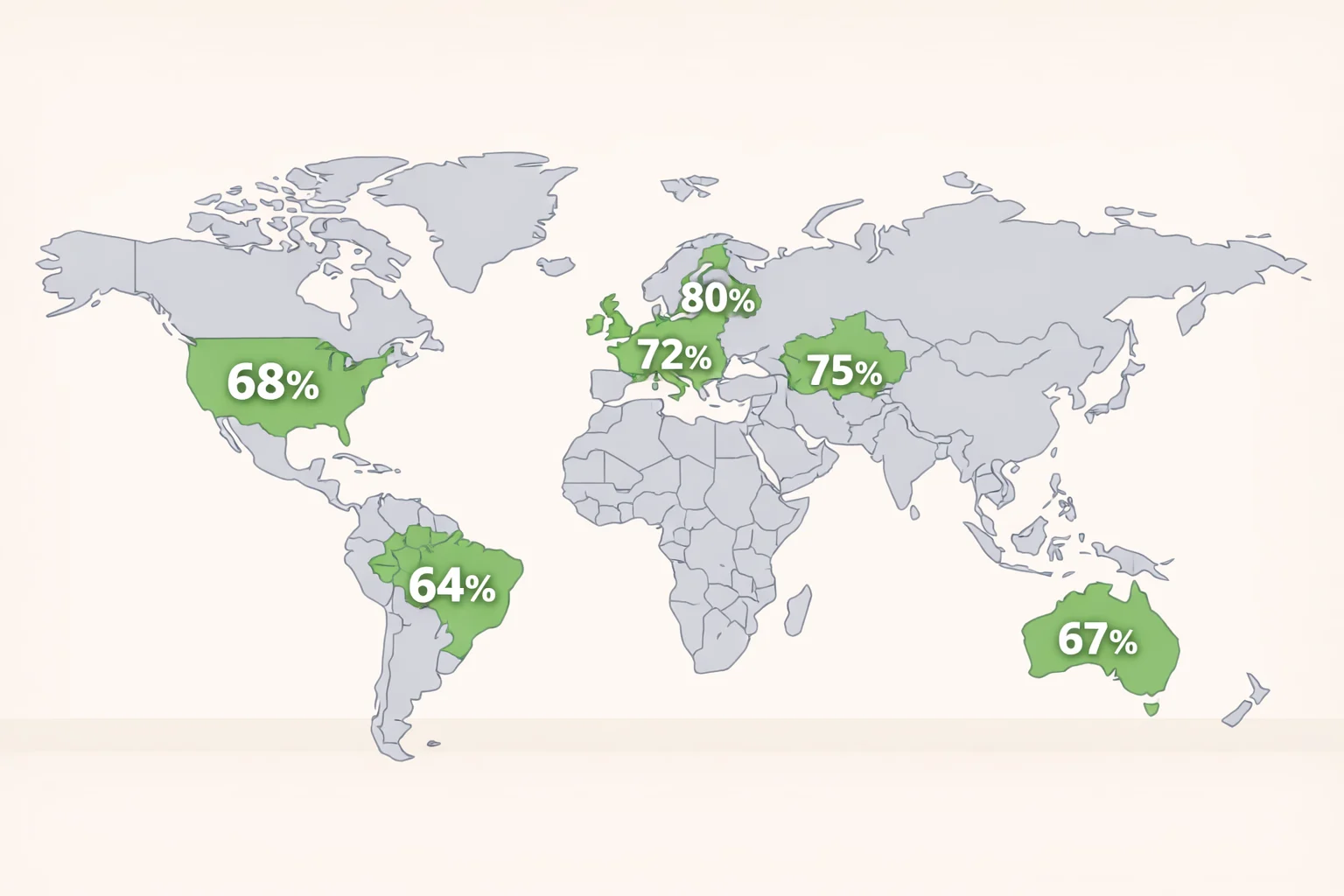
The international signal on public opinion is stronger than any single national poll. Across 30 countries, 65% of respondents support banning children under 14 from social media, with majorities in 29 of those countries, according to Brookings last December. Germany was the lone outlier. That figure is worth noting carefully: the threshold in that poll was under-14, not under-16. The U.S. debate is mostly running at a higher cutoff, and the two findings point in the same direction without measuring the same thing.
The mental-health data that fuels these proposals is real but more complicated than the advocacy framing suggests. Up to 95% of U.S. teens aged 13-17 report using at least one platform, and about one in three uses social media "almost constantly," according to HHS. The access question has effectively answered itself. What matters is what happens during those hours.
The strongest evidence focuses on intensity of use. Children and adolescents who spend more than three hours a day on social media face double the risk of depression and anxiety symptoms, and the average teen logs around 3.5 hours daily, HHS data shows. Separately, 46% of adolescents aged 13-17 say social media makes them feel worse about their body image. The Surgeon General's office is explicit about the limits of what can be concluded: "We have gaps in our full understanding of the mental health impacts posed by social media but at this point cannot conclude it is sufficiently safe for children and adolescents," the HHS page states. The science is serious. It is not settled.
New York's SAFE for Kids Act, signed into law in June 2024, takes that uncertainty and acts on it anyway. The law targets algorithmically personalized feeds and late-night notifications, which the NY AG's office links to depression, anxiety, eating disorders, and sleep disruption in children and teens. That is an advocacy source making a causal claim. It reflects the same logic the HHS data supports directionally, even if the evidentiary chain from "algorithmic feed" to "eating disorder" is longer than the press release implies.
Video of the Day
Two policy models, two theories of what causes the harm
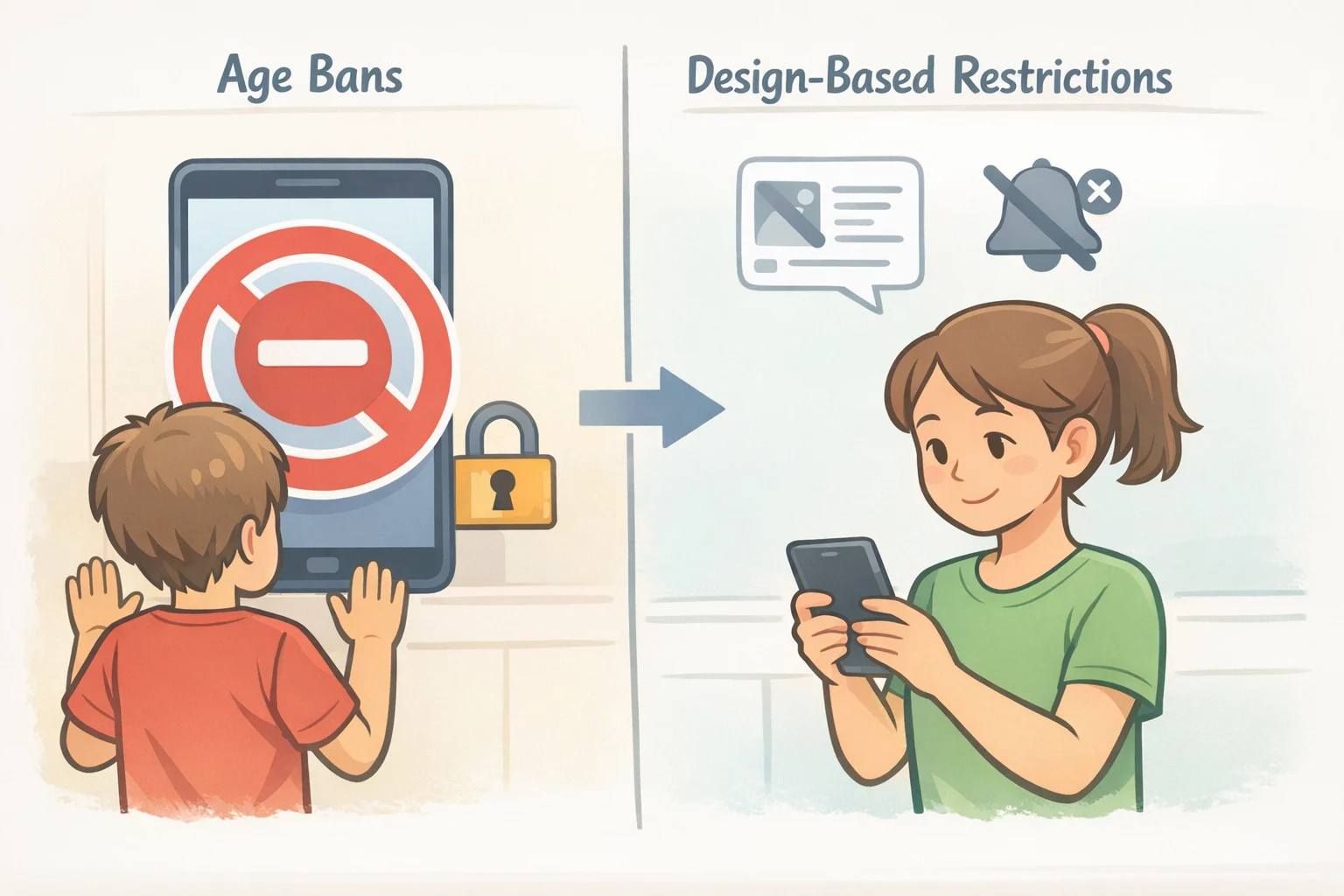
Australia moved first among national governments. Its ban on social media accounts for children under 16 took effect in December 2025, though officials confirmed the rollout would be phased rather than immediate, Brookings reported last December. Denmark is advancing an under-15 rule, with a parental-consent exception for children as young as 13. U.K. regulators have signaled openness to age-restricted bans or time-limit alternatives. The underlying premise is straightforward: block account creation, and the platform's design features cannot reach younger users at all.
U.S. federal proposals split between thresholds and tactics. The Kids Off Social Media Act would bar children under 13 from holding accounts and prohibit algorithmic content recommendations for anyone under 17, a hybrid approach that targets both access and design. A separate bill, the RESET Act, would raise the no-account floor to 16. KOSMA was reintroduced earlier this year with bipartisan Senate support and backing from the American Federation of Teachers and the American Academy of Child and Adolescent Psychiatry, Brookings noted.
New York went a structurally different direction. The SAFE for Kids Act imposes no account ban. Instead, platforms must disable algorithmically personalized feeds and block notifications between midnight and 6 a.m. for users under 18, unless parents explicitly opt in. The rules apply to platforms where users spend at least 20% of their time on algorithmically driven feeds. Violations carry civil penalties of up to $5,000 per infraction, per the NY AG's office.
The difference between these approaches is not just tactical. Age-ban proposals rest on the assumption that harm starts with access. Design-based regulation assumes harm is an engineering problem: that the same teenagers can use the platforms safely if you remove the features optimized for compulsive engagement. Those are genuinely different diagnoses of the same symptom, and the evidence has not cleanly resolved which one is correct.
Why enforcement is the weak link in both models
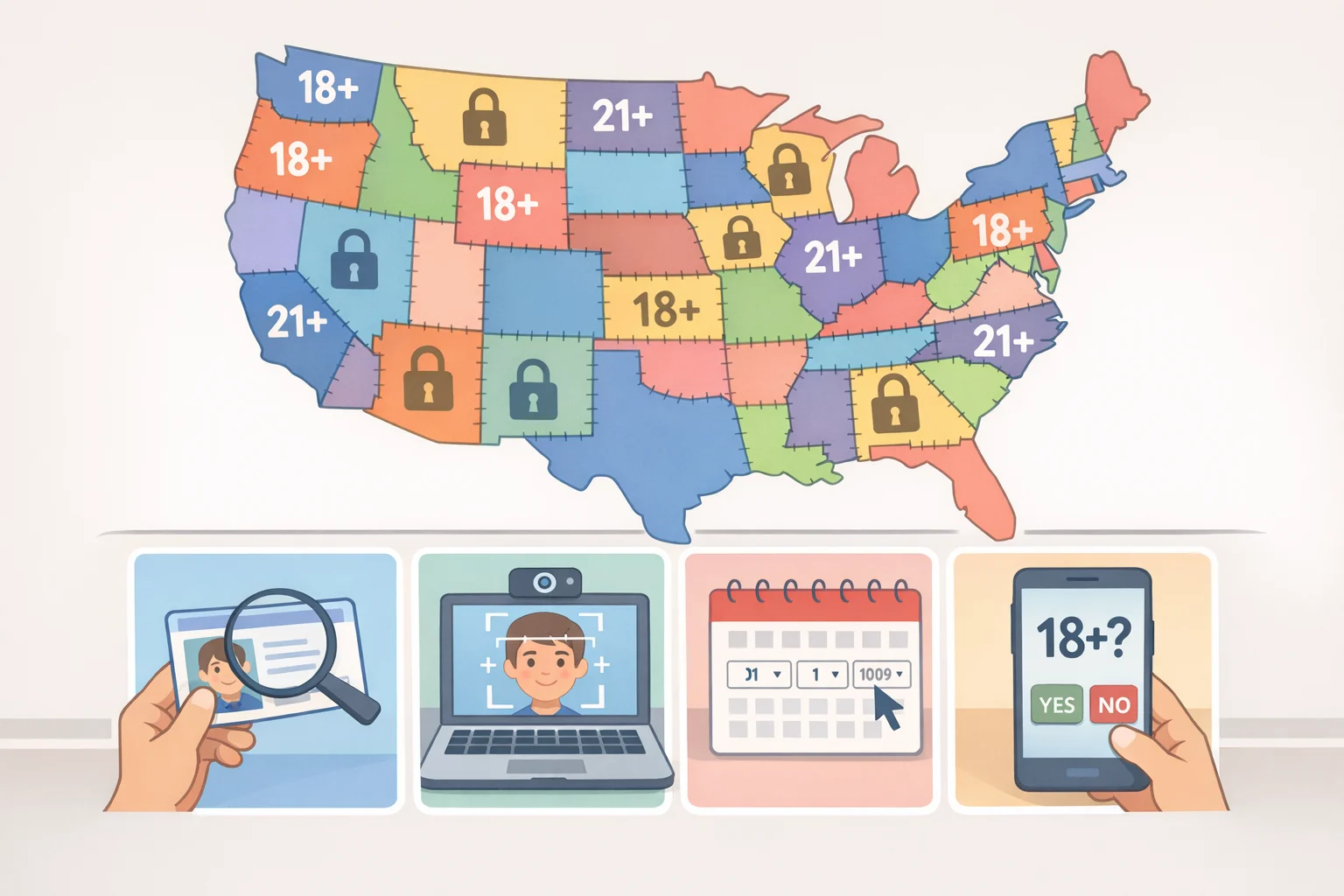
Age verification is where both models run into the same wall. A Brookings review of five state-level laws found that four required some form of age verification before platform access, but methods varied widely and no national standard exists. Arkansas mandated a third-party vendor and specified three acceptable approaches; other states left platforms to define their own methods. Any age ban is exactly as strong as the verification behind it, and right now that infrastructure is inconsistent at best.
Australia's rollout illustrates the distance between legislation and implementation. eSafety Commissioner Julie Inman Grant acknowledged that the rules would not take effect uniformly and described the law's value in modest terms: the ban would at least "introduce some friction in a system that has previously had none," Brookings reported. That framing is honest. It is also a significant step back from the original policy promise.
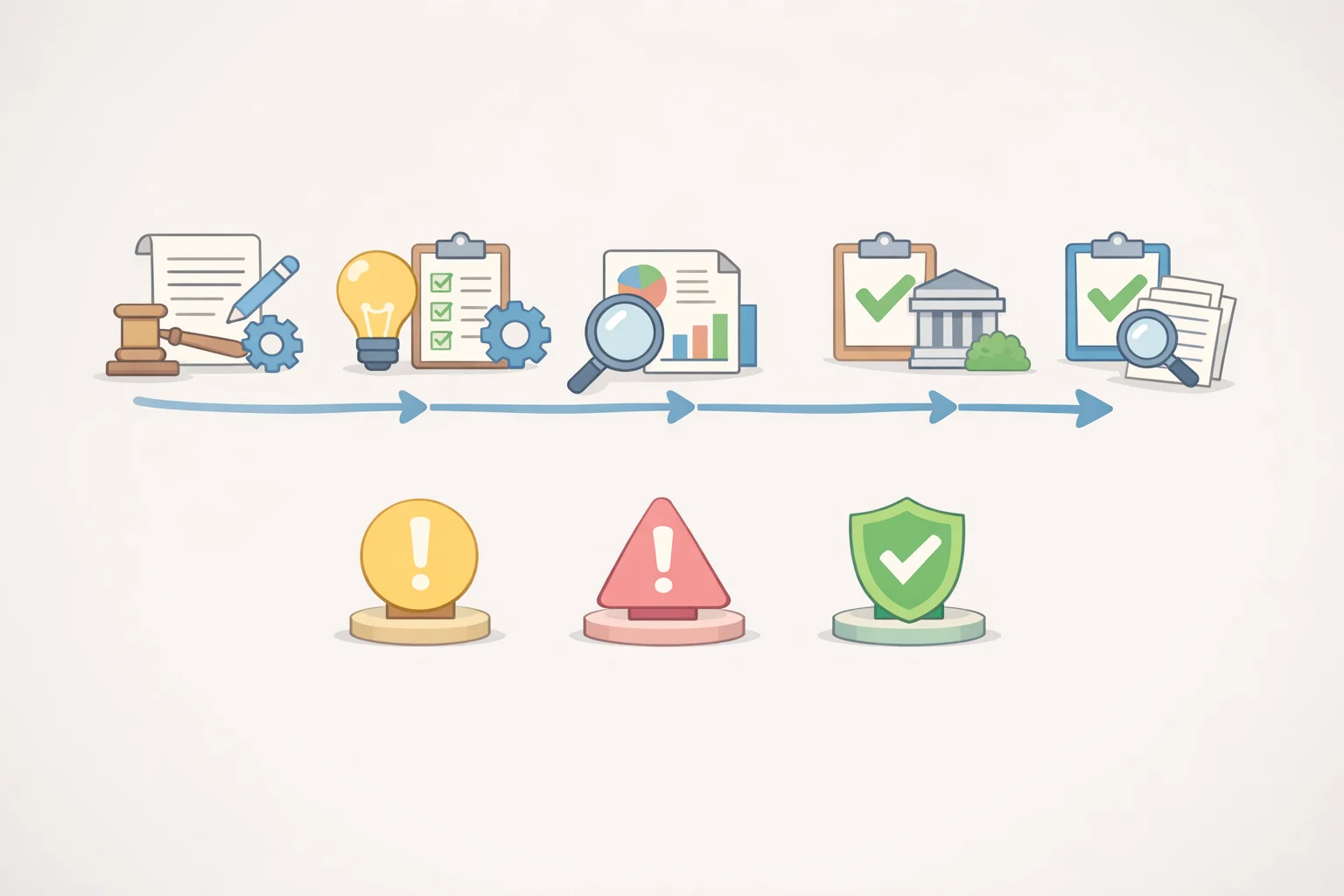
New York's timeline shows that design-based regulation has its own implementation drag. The SAFE for Kids Act was signed in June 2024. The AG's office issued an advance notice of proposed rulemaking in August 2024, followed by a 60-day public comment period. Proposed rules were released in September 2025, opening a second comment period that closed in December 2025. After that, the AG's office has up to one year to finalize rules, followed by an additional 180-day window before enforcement begins, per the NY AG's office. From signing to enforcement could be the better part of three years.
Youth voices have added a concern that neither model has fully answered. Elena Mitrevska, an 18-year-old member of Australia's eSafety Youth Council, described efforts to remove young people from entire online spaces as "really disingenuous," arguing that regulators should target specific harms rather than block access wholesale, Brookings noted. The concern is not just philosophical. A teenager determined to get around an age ban has options: a parent's account details, a VPN, a platform with looser controls and no regulatory attention.
What comes next
Public pressure for stricter rules on kids and social media has built into genuine legislative momentum. Whether that momentum produces outcomes depends on the verification problem, which no government has solved at scale.
The two experiments running now, Australia's access ban and New York's design restrictions, will eventually produce evidence. What researchers need to determine is whether removing under-16s from platforms reduces harm, or whether the same harms follow them to less-regulated alternatives, a risk Brookings analysis of the Australian rollout identified as genuine. The more immediate signal will come from New York: whether the AG's office finalizes rules on schedule, what compliance looks like in practice, and whether the design-restriction model survives legal challenge.
Age verification is the bottleneck. Until a reliable, standardized method exists, both bans and design restrictions have a compliance ceiling. That infrastructure gap, more than public opinion or political will, is the most likely determinant of whether any of these laws produce the outcomes they promise.