Do you own digital PlayStation games? 3 rights you're missing
When you click "buy" on the PlayStation Store, you get a non-transferable license to access a game. Not the game. The license can be revoked if your PSN account is suspended, if Sony's authentication infrastructure changes, or if the publisher's own licensing arrangement with Sony lapses. Sony's reported plan to go fully digital by 2028, with even physical retail boxes containing download codes rather than discs, per Above the Law this week, didn't create this problem. It just eliminates the last practical workaround most players had.
Physical discs gave players something concrete: a transferable copy they could resell, lend, or hold onto after a publisher moved on. Digital storefronts preserved the language of purchase while stripping most of those rights away. The argument here is not that owning a disc was a perfect solution server dependence eroded that protection too, and always-online games can die on disc just as easily as they die in a library. But digital purchases remove what remained more completely, and the law is squarely on Sony's side when they do it.
Do you actually own PS5 digital games? Three rights you don't get
Video of the Day
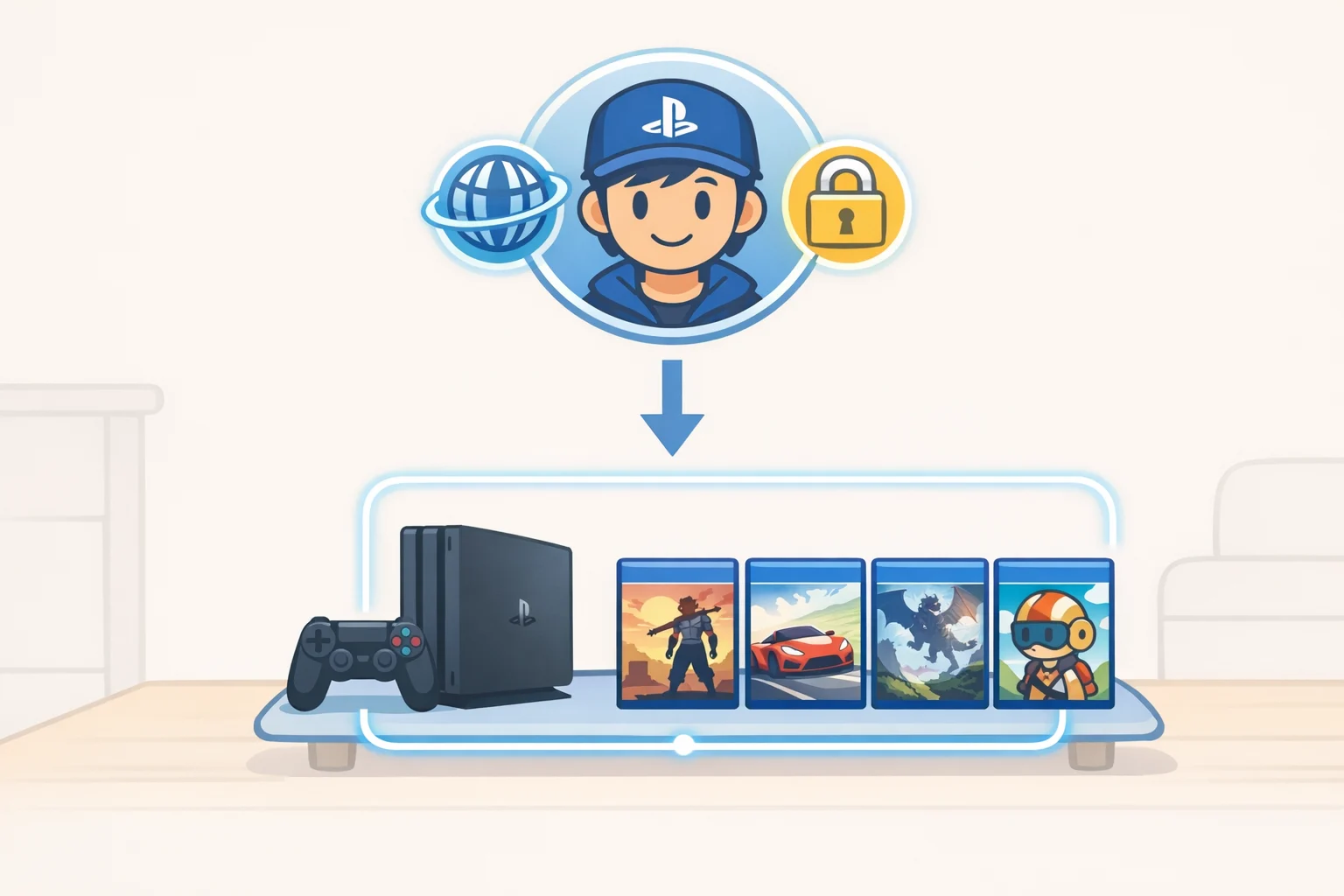
Start with the concrete losses before getting into the legal mechanics.
You cannot legally resell a digital game purchased in the United States. Every major storefront, including the PlayStation Store, prohibits transfer or resale through its EULA, and LegalClarity noted earlier this year that U.S. law does not extend first-sale protections to licensed digital copies. That used game market, where you could get $30 back on a $70 title you finished in a weekend, is simply gone.
Your digital library is tethered to your PSN account. PlayStation's "Console Sharing and Offline Play" feature lets you share your library with a single console, which LegalClarity correctly characterizes as a convenience feature, not an ownership protection. Sony can change or restrict it at any time. You have no contractual right to it persisting.
The third risk is access termination. The FTC warned consumers two years ago that a digital "purchase" may deliver access only for as long as your account exists, the platform stays in business, or the seller retains its own underlying rights none of which the buyer controls. The terms governing all of this are buried in fine print that sellers can change unilaterally.
Three rights that came standard with a physical game resell it, lend it, keep it after the publisher moves on are gone with a digital purchase. This is not a doomsday scenario. It is the baseline legal reality every time someone clicks "buy" on the PlayStation Store today. What changes in an all-digital future is not the legal structure, but the disappearance of the physical alternative that let players sidestep it.
Digital distribution is genuinely convenient. Instant downloads, no disc management, a library accessible across consoles through account sharing these are real benefits. But convenience and ownership are different things, and the industry has done a systematic job of conflating them.
Video of the Day
How the law built this
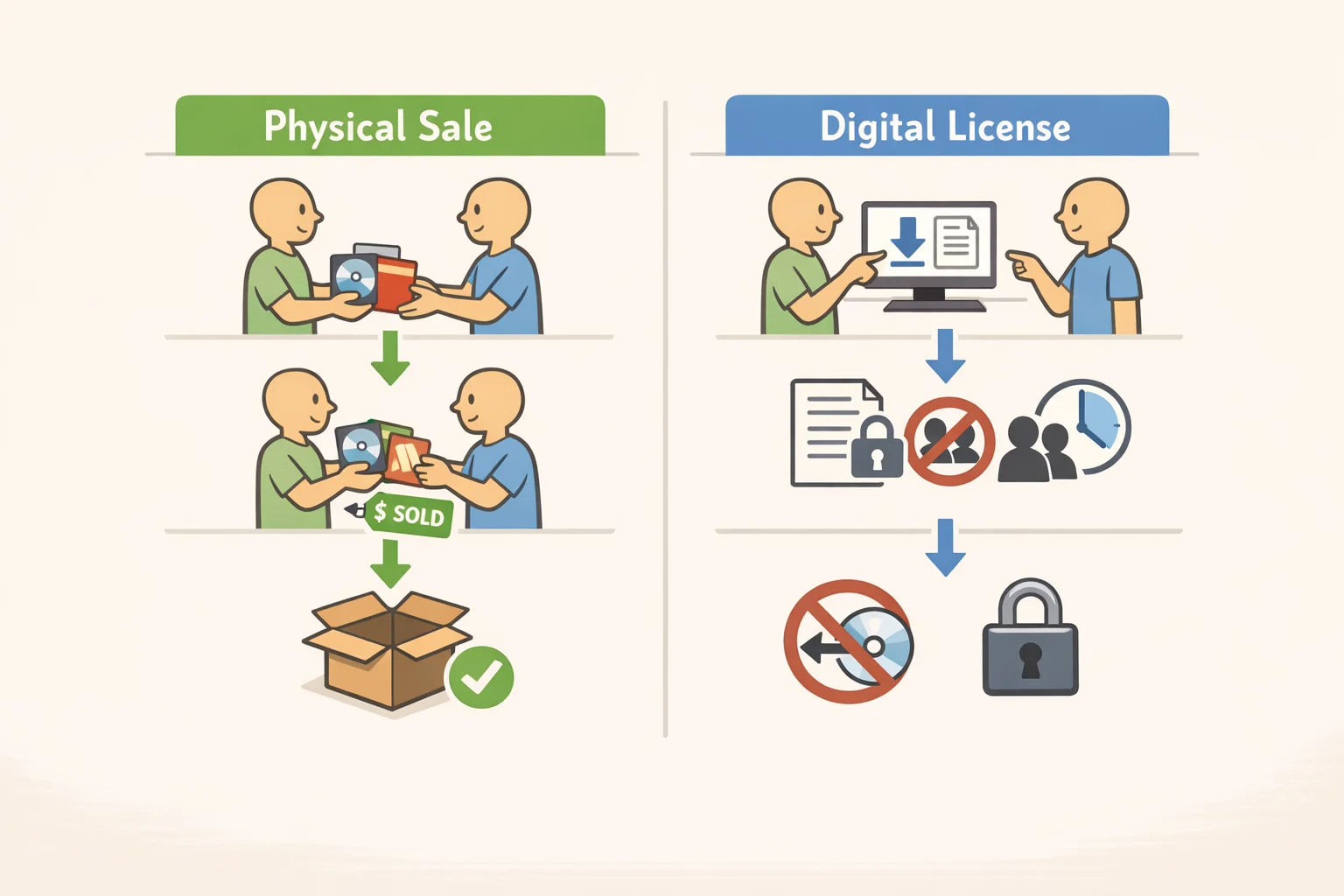
The legal architecture that makes all of this possible was not designed to deceive consumers. It functions that way anyway.
The Ninth Circuit's Vernor v. Autodesk decision in 2010 established the controlling test: a transaction qualifies as a license rather than a sale if the copyright holder calls it a license, restricts transfer rights, and imposes use restrictions. As The Vanishing Ownership documented late last year, every major game platform satisfies all three criteria. Standard EULA language is explicit on the point: users are told they are receiving a license to access the platform and games, not a transfer of title or ownership interest a formulation the Texas A&M Journal of Property Law examined in detail earlier this year.
The practical problem is that almost nobody reads these agreements. An NYU study, cited in that same Texas A&M research, found only one to two consumers per thousand accessed license agreements before accepting them, spending an average of 30 seconds when they did. Courts have nonetheless held these agreements enforceable under a "reasonably prudent internet user" standard meaning the law presumes you understood what you were agreeing to, even if you never read it.
The first-sale doctrine, codified under 17 U.S.C. § 109(a), is what gave physical buyers the right to resell a lawfully purchased copy. It does not apply to digital licenses. Courts have consistently ruled that digital delivery constitutes reproduction rather than distribution, according to The Vanishing Ownership, closing the resale door entirely. Publishers use purchase language because it works commercially. Courts validate the underlying contracts because they are technically presented before the transaction completes. The result is a system in which consumers carry the full financial cost of a purchase while holding none of the property rights traditionally associated with one. Sony is not breaking any laws. That is precisely the problem.
When access actually disappears: The Crew, 2K Sports, and what it means for PS5 owners
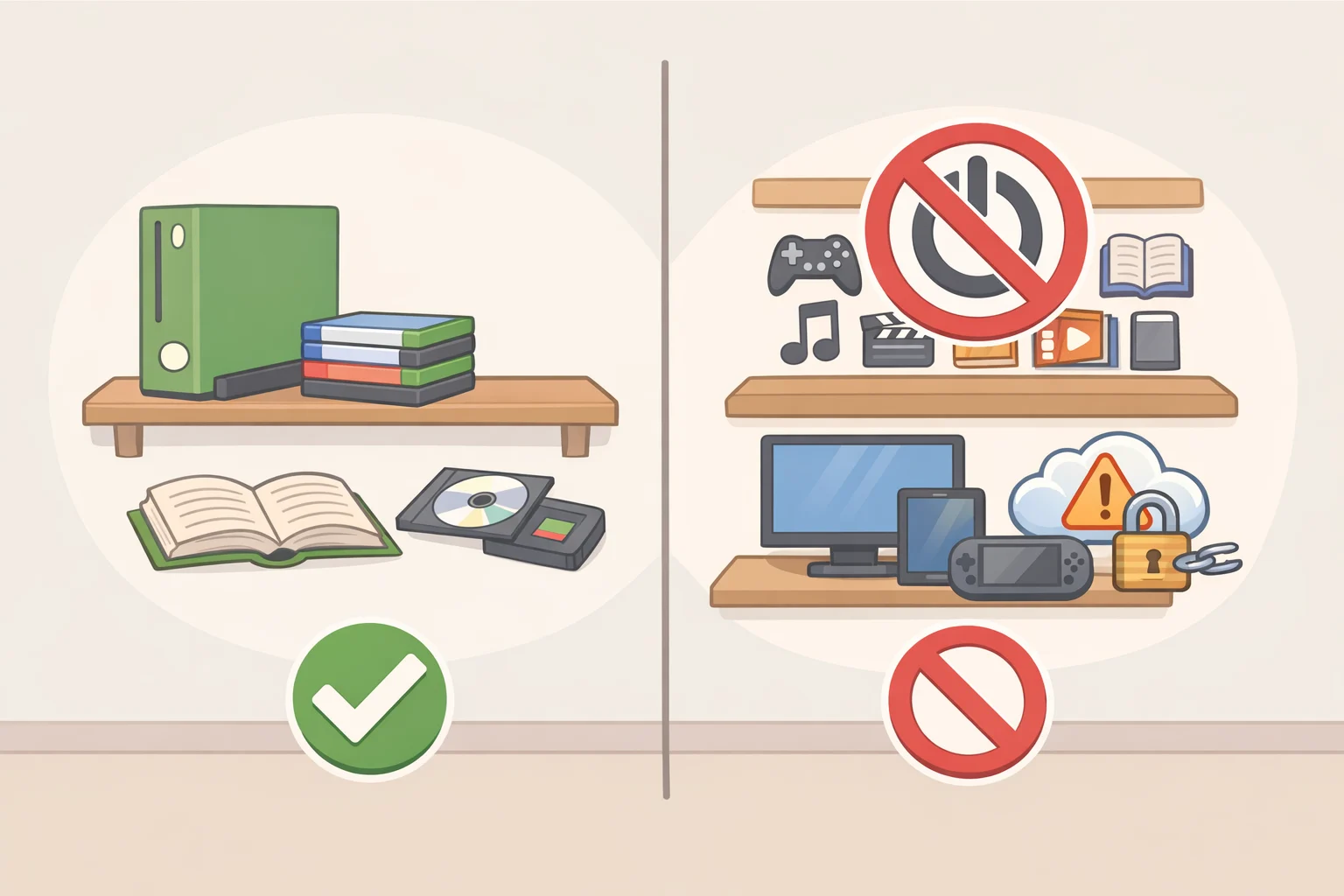
Structural risk is one thing. Documented harm is another.
Ubisoft shut down servers for The Crew in March 2024. Physical disc owners inserted their discs and got error screens; digital buyers had the game removed from their libraries entirely, with no record that they had ever owned it and no offline version released, as documented by the UNC Journal of Law & Technology and LegalClarity earlier this year. Ubisoft has since released multiple sequels. The original remains unplayable.
The case also illustrates the limit of the physical-media argument honestly: server dependence can kill an always-online game for disc owners too. But digital buyers in that scenario lost more completely. No disc to hold, no error screen to photograph, no evidence in the library the purchase ever happened. The difference is not theoretical.
2K Games provides the sports title version of the same problem. Each year a new edition ships; older versions get their servers retired, terminating online functionality and, with it, every in-game purchase upgrades and virtual currency players spent real money on that do not carry over to the next year's edition. The UNC Journal of Law & Technology notes that when publishers retire games, in-game spending totaling hundreds to thousands of dollars can vanish with the servers. 2K has retired titles as quickly as two years after their original release.
The scale of the broader problem is significant. Roughly 60 games reached end-of-life in 2023 alone, joining more than 600 titles that are now either completely dead or kept alive only by fan preservation efforts, per that same UNC research. Running game servers can cost hundreds of thousands of dollars per month. When revenue no longer justifies the expense, publishers shut them down. That is a legitimate business decision. It is made possible by the license structure consumers agreed to without reading it. In a fully digital PlayStation ecosystem, every always-online title faces the same basic risk The Crew made concrete.
California started something, but PS5 players need more than a disclosure
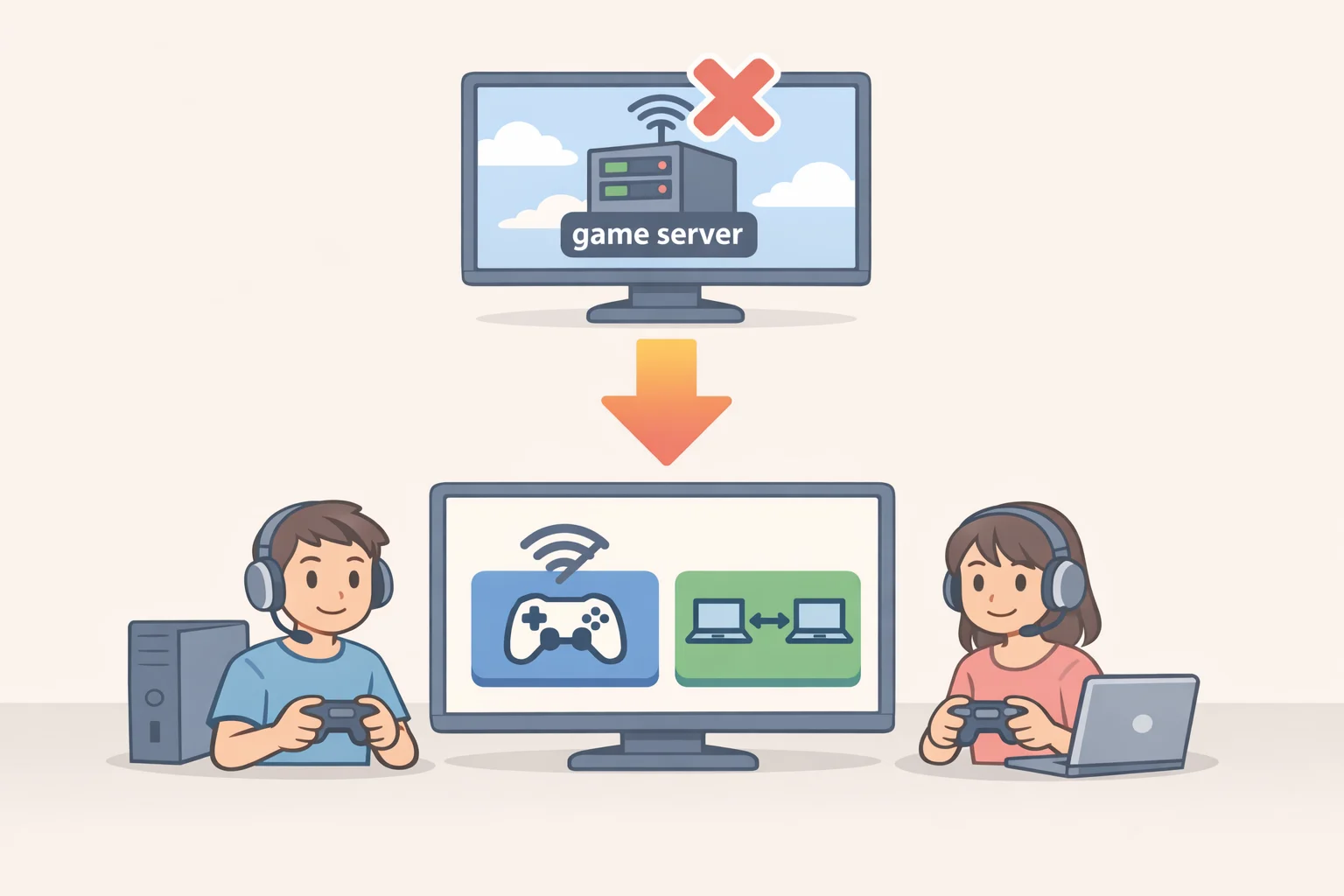
California's AB 2624, codified as Section 17500.6 of the California Business and Professions Code and in effect since January 1, 2025, is the first state law to regulate how digital media licenses can be advertised. It prohibits sellers from using terms like "buy" or "purchase" without explicitly disclosing the license nature of the transaction, with penalties of up to $2,500 per violation, according to the Texas A&M Journal of Property Law. That is a real step forward.
It is also insufficient. Telling consumers they hold a license rather than ownership does not prevent that license from being revoked, does not preserve access after server shutdowns, and does not restore a single right players have already lost. California's disclosure law changes what Sony is required to say. It does not change what Sony is permitted to do.
The most concrete structural reform under serious academic discussion is a preservation patch mandate: a statutory requirement that publishers release an offline or peer-to-peer playable version of any game upon server closure. The UNC Journal of Law & Technology argues this would give buyers durable access without requiring publishers to maintain infrastructure indefinitely. Publishers shut down servers when costs outpace revenue a preservation patch addresses that economics problem directly. The game becomes playable without ongoing server costs, which is a different proposition entirely from requiring Sony to run servers forever.
Until something like that becomes law, PlayStation players buying digital titles should treat every purchase as a rental with an indefinite but not guaranteed term. For games with heavy online or always-online requirements, the risk is highest. Those are the titles most likely to follow The Crew's path. Physical discs, where still available, provide meaningful if imperfect protection: the right to resell, a copy that persists after Sony's storefront changes, and some insulation from account-level issues provided the game can run without live-service dependence, which not all of them can.
Once physical media is gone from the PS5 ecosystem, those options disappear with it. Watch for whether California-style disclosure requirements spread to other states, and whether the preservation patch idea moves from academic journals into actual legislation. Neither development is guaranteed. Both would matter considerably more than anything Sony is likely to put in a press release.