Garmin CIRQA Smart Band: What the 0 Price Leak Reveals
A retail listing document has surfaced placing Garmin's unannounced CIRQA Smart Band at $100–$150, according to the leak. Garmin has not confirmed the device exists. But if the price holds, it would mark the first time Garmin has positioned a health-tracking wearable inside the tier where Fitbit and Xiaomi have operated for years, a segment the company has conspicuously avoided until now.
The price is the signal. What the device actually does with Garmin Connect is the story.
What the leak establishes
Video of the Day
The retail listing document names the device, names the price range, and puts it far enough into the retail pipeline to appear in product documentation. That's the full extent of what's confirmed. No sensor specifications, no feature list, no launch date, no official Garmin statement.
What the leak makes possible is a specific and answerable question: at $100–$150, can Garmin offer enough to justify choosing a CIRQA over devices that have been winning at this price for years? The answer is almost entirely a software question, and it comes down to one platform.
Garmin Connect is what separates Garmin wearables from comparable hardware at lower prices. The platform delivers sleep-stage breakdowns, Body Battery energy monitoring, and training readiness assessments, as documented on the Garmin Connect platform. These aren't features you find at this price tier from the competition. They're the entire argument for paying more than a Xiaomi band costs. A CIRQA with full Connect access is a different product from everything else in this segment. A CIRQA with restricted Connect access is another entry in a bracket that's already crowded and cheap.
That distinction is not established by the leak. It's the open question the leak creates, and it's the one Garmin's announcement will need to answer directly.
Video of the Day
Why Garmin hasn't been here before
Garmin's wearables business was built around a specific buyer: endurance athletes and serious health monitors who expected to spend $250 or more and got premium GPS accuracy and sensor depth in return. That concentration was deliberate. Competing on price against manufacturers whose cost structures are built for sub-$100 hardware is a fight with a bad expected outcome for a company selling on data quality.
The strategy held while the premium segment kept growing. Garmin's own investor filings show the wearables segment has sustained meaningful year-over-year growth, per Garmin investor relations. Ceding the mid-range to Fitbit and Xiaomi was the margin-rational call when the premium end was expanding and the low end was a race to the bottom.
What shifts the calculation is pressure from two directions at once. At the low end, Xiaomi's Smart Band line has pushed capable health tracking under $70, making pure price competition unattractive for any incumbent. At the mid-range, Fitbit's Charge 6 holds its position with Google Health integration as the software differentiator for buyers inside that ecosystem, according to Fitbit's product listings. The gap between $70 and $150 is now occupied by two competitors with established install bases, software moats, and years of pricing refinement.
The window to enter that segment on platform quality rather than price is narrowing. Google's continued investment in Fitbit's software integration deepens the Charge 6's value proposition every year. If Garmin wants to claim the health-data-quality argument in this tier, it needs to show up before that argument becomes harder to make.
The hardware case, and where it runs out
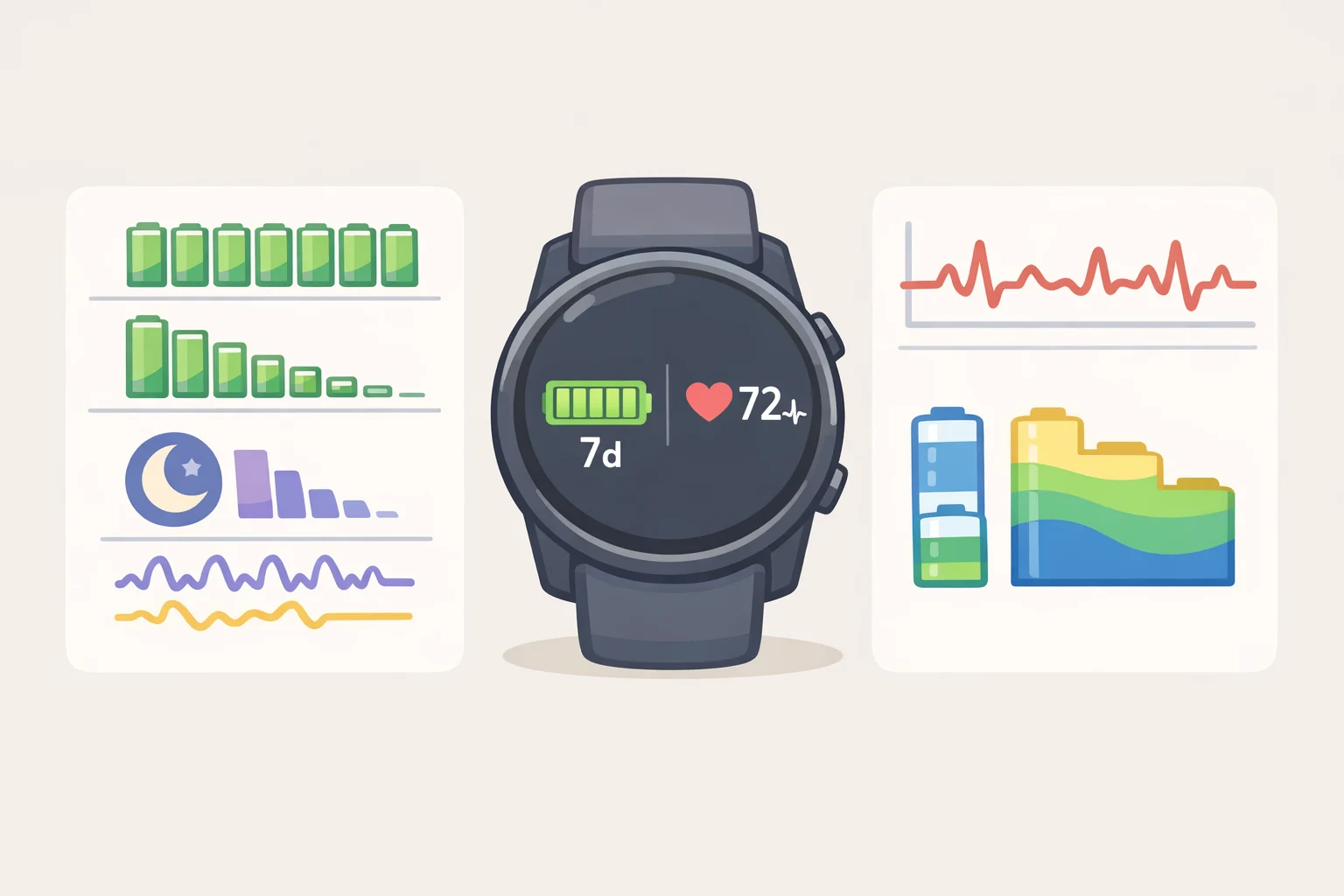
The CIRQA's reported specs, seven-plus days of battery life and continuous heart rate monitoring alongside sleep tracking, put it in rough parity with Fitbit's comparable hardware at this price point. Battery life is a narrow edge in one category. The rest is a draw.
Hardware parity at $130 is not a competitive case. It's the table stakes for being considered. Every capable device in this tier offers a week of battery life and heart rate monitoring. That's the floor, not the ceiling. Garmin's actual edge, if it has one at $130, comes from what the device does with the data it collects, not how long it can run while collecting it.
This is precisely where Garmin Connect either makes the CIRQA worth buying or doesn't. Sleep-stage breakdowns and Body Battery scores require continuous sensor data and platform-side processing, as the Garmin Connect platform documents. Training readiness assessments synthesize sleep quality, recovery metrics, and activity load into a single daily score. None of that exists in Fitbit's platform at this price, and Xiaomi's ecosystem isn't in the same category. If the CIRQA ships with full access to those features, the hardware specs stop mattering very much. The question becomes whether the data is accurate and whether the platform is worth living in long term.
Garmin has history here that cuts both ways. Its higher-tier devices have a strong reputation for sensor accuracy. Its lower-cost entries have drawn criticism for underdelivering on the platform experience relative to what buyers expected from the Garmin name. The vívosmart 5 generated consistent feedback that it didn't match the Connect experience on pricier devices, according to contemporaneous reviews. Whether the CIRQA follows that pattern or breaks it is unknowable before the announcement, but it's the precedent Garmin will be measured against.
What full Connect access would mean for Fitbit
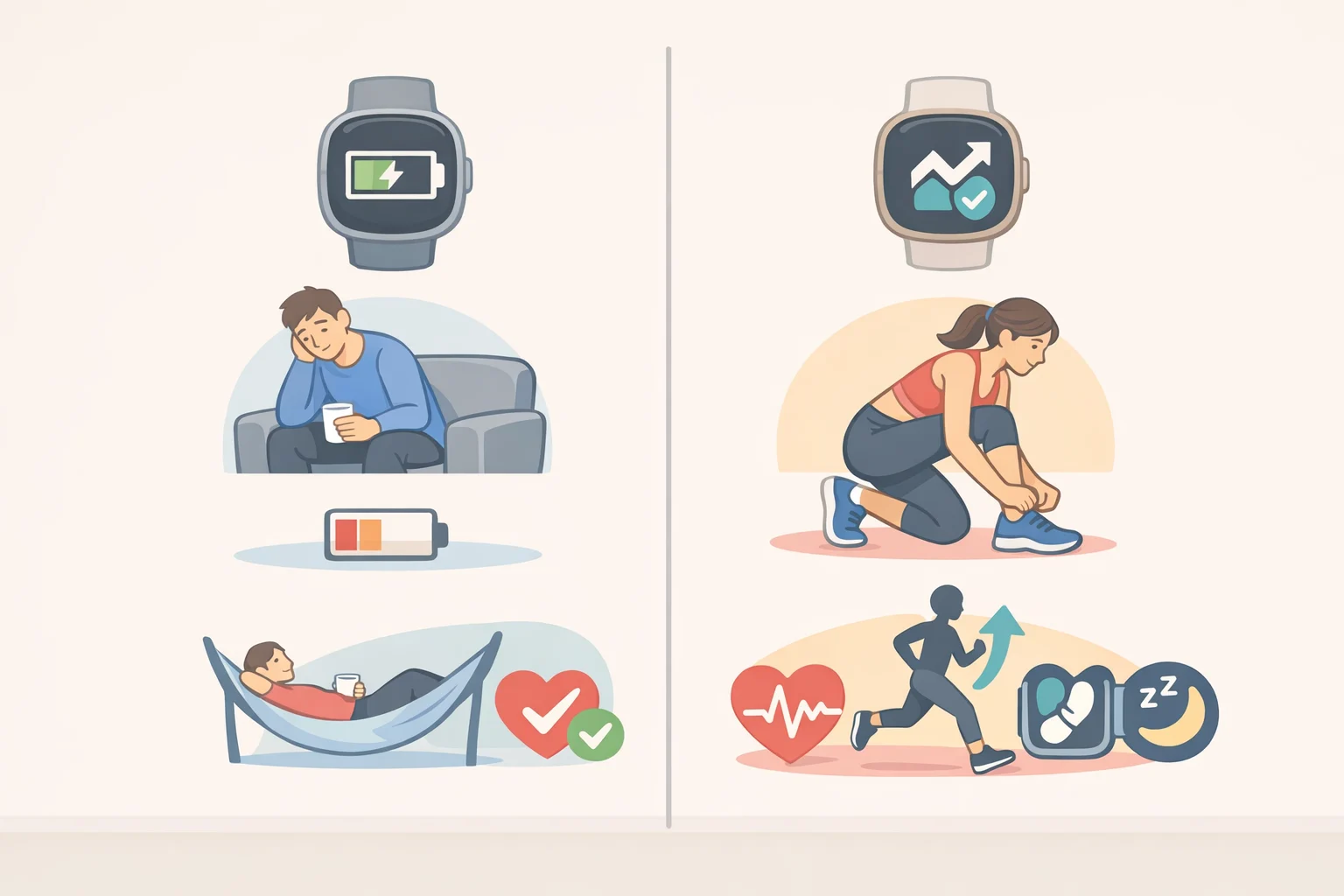
Fitbit's mid-range position depends on a buyer who has never had a credible Garmin alternative. That buyer wants real health data, doesn't want to spend $200 on a smartwatch, and chose Fitbit because it was the best available answer to a question Garmin wasn't answering.
A $130 CIRQA with full Connect access changes that conversation. Not by matching Google Health integration, Garmin can't and won't try, but by offering a different and arguably deeper health-data argument. Platform breadth and data granularity are different purchase drivers. Fitbit's Google integration matters most to buyers already inside that ecosystem. Body Battery and training readiness matter most to buyers who want their wearable to tell them something actionable about their health, not just sync to a calendar.
Whether that buyer exists in sufficient numbers to move market share is speculation until there's sales data. What isn't speculation is that Garmin has never given that buyer a real option at this price. If the CIRQA launches with full Connect access, it does, for the first time.
What the announcement needs to answer

The leak establishes a price range. The announcement will need to do considerably more before any confident assessment is possible.
The most consequential disclosure is feature scope. Does the CIRQA ship with full Garmin Connect access, including Body Battery, sleep staging, and training readiness? Or is Connect access tiered, with core analytical features held back for higher-priced devices? Watch the announcement language carefully here. Broad references to "Garmin Connect compatibility" without specifying which features are included should be read as a non-answer. An announcement that leads with price and battery life without addressing Connect feature depth specifically is telling you something about what the device doesn't have.
Sensor specifications matter second. Heart rate accuracy in sleep tracking and during elevated activity is where entry-level hardware most often diverges from its claims. Claimed battery figures and real-world performance under typical use conditions also tend to diverge, and a seven-day claim measured under controlled low-use conditions is a different product from a seven-day claim that holds under continuous heart rate monitoring and sleep tracking.
Final pricing within the $100–$150 range matters more than it might seem. A $109 device and a $149 device are both technically within the leaked range, but they sit in different parts of the buyer's mental price bracket. At $109, the CIRQA undercuts the Fitbit Charge 6 meaningfully, according to Fitbit's product listings. At $149, it's a wash on price, and the platform argument has to carry the entire decision.
Timeline remains genuinely unknown. A device appearing in retail documentation is past early development, but retail listing documents surface at different stages depending on the retailer and the product. No specific launch window is supportable from current information.
The short version
The CIRQA isn't available, and nothing about it is final. The leaked price is the only confirmed data point, and it's a leak. But the analytical frame the leak creates is durable regardless of whether the final device lands at $109 or $149: Garmin Connect access is the variable that determines whether the CIRQA is a meaningful market entry or an unremarkable addition to a crowded tier.
At launch, read the Connect feature list before anything else. If full access is confirmed, Garmin is in this segment for real, competing on platform depth against hardware incumbents who've had the space to themselves for years. If access is restricted or vague, the CIRQA is a cheaper Garmin band in a segment where cheaper has never been Garmin's strong suit. The price opens the door. The software decides what's on the other side.