Bite Light Flashlight: How a New Patent Formalizes a Common Workaround
Anyone who has ever clenched a cylindrical flashlight between their teeth while both hands were buried in an engine bay or crawl space has already invented, in rough form, the bite light flashlight. A U.S. patent application filed in May 2024 takes that improvised habit and tries to engineer it into something purpose-built: a flashlight you hold in your mouth.
The device is a flat, mouth-held task light shaped, cushioned, and contoured to sit between a user's lips and teeth, aiming a beam wherever the head turns while both hands stay free. The patent application, published in late 2025, places the device explicitly within "the field of hands-free flashlight devices."
One clarification before going further. No confirmed retail product, brand name, or market availability has been established from available sources. What exists is a design concept, specific enough in its engineering choices to reveal a great deal about intended use and likely user, but still a concept. Everything below is grounded entirely in that single patent filing.
The device is worth understanding precisely because it formalizes a real behavior rather than inventing a new one. The engineering choices the designers made around that behavior, and where the concept still leaves questions open, tell you both what the tool is trying to solve and how seriously to take the solution.
What the bite light flashlight patent actually claims: form factor and mouth-specific features
Video of the Day
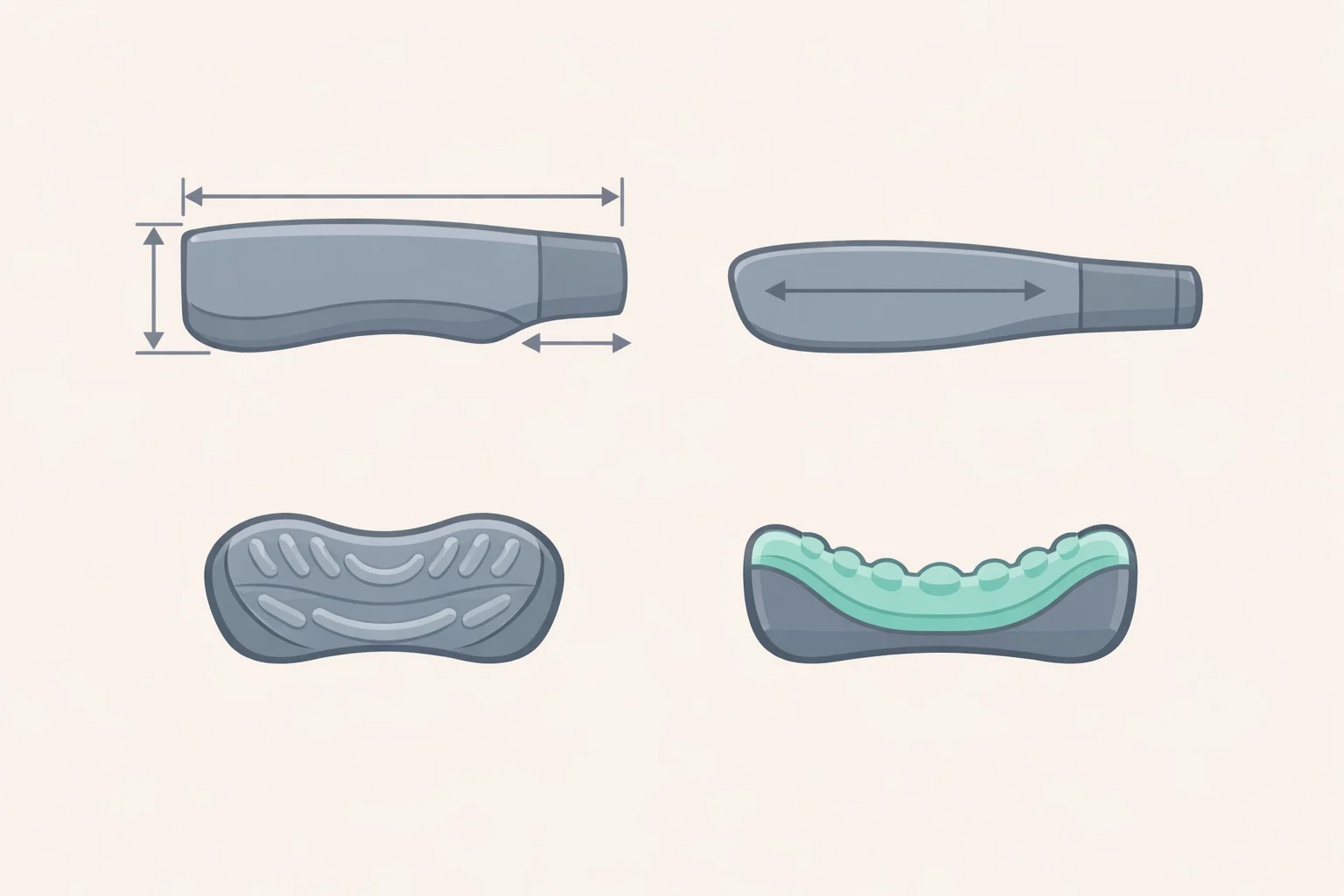
The defining characteristic is the housing shape, not the light source. The housing is long, flat, and asymmetric, wider on top than bottom, engineered to match the geometry of a human mouth rather than a human hand. The top side measures roughly 1 to 2 inches and the bottom side roughly half an inch to 1 inch, according to the patent filing. No grip-optimized flashlight shares that profile.
Compare that to adjacent tools. A headlamp wraps around the skull and works well for sustained tasks. A penlight is cylindrical and handheld. A magnetic work light clips to a surface. The bite light occupies a narrower gap: a user who needs a directed beam, has both hands occupied, and is not wearing a headlamp.
The silicone outer layer is specified to provide "a soft area for a user's mouth, teeth, and lips during use," with grooves on the sides designed to intersect with the lips and a small dimple on the bottom face where the tongue rests, per the patent. Those surface details have no function except oral retention. They are the clearest evidence that this is a designed tool rather than a repurposed one.
The patent's core claim is a "novel method of comfortably holding a flashlight in a user's mouth," which reads as an acknowledgment that improvised mouth-holding with a standard cylindrical flashlight is common enough to deserve a better solution. The housing is also specified in fluorescent colors, per the patent, a practical choice for a tool that gets set down on cluttered work surfaces and needs to be found quickly.
Video of the Day
How it works: the use sequence and hardware
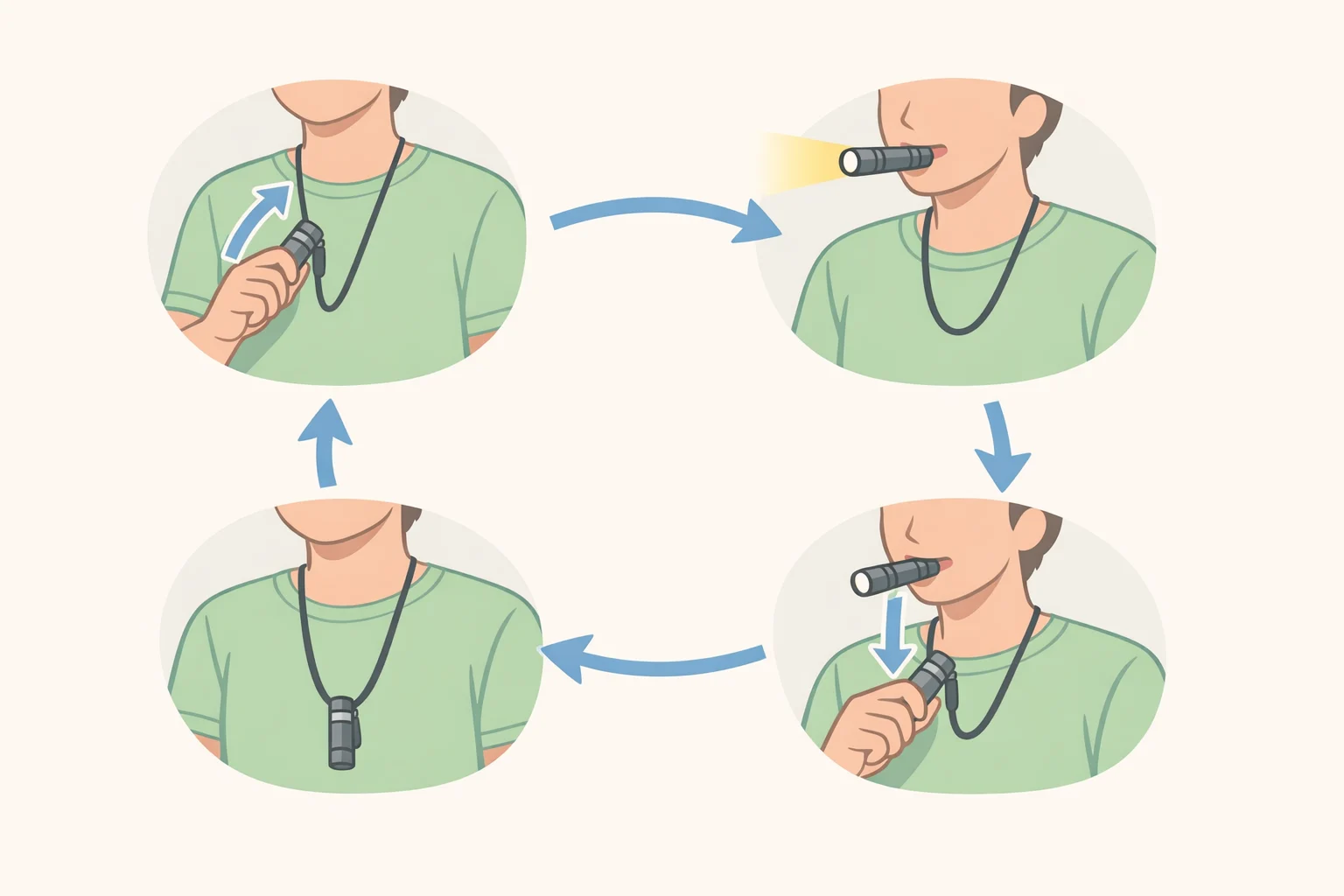
The patent lays out a clear operational sequence. The device hangs around the user's neck on a lanyard when not in use. When a task requires hands-free light, the user presses the power button, raises the device to their mouth, bites down, and the beam points wherever the head turns. When the moment passes, it drops back to the chest. That lanyard-to-mouth-to-lanyard cycle is the core user experience, and it implies repeated, task-integrated use rather than a one-time deployment.
Light output comes from four LEDs set into the top face of the housing, producing an estimated 40 to 60 lumens in the preferred embodiment, per the patent. That is enough to illuminate a connector, fitting, or terminal at close range, but modest compared to a dedicated work flashlight. The stated target is close-quarters task lighting, not broad area illumination.
Power comes in two configurations: a rechargeable internal battery with a USB port that automatically closes when the charging cable is unplugged, or a standard replaceable battery for users who prefer not to manage charging between jobs. Both options are specified in the patent. The self-sealing USB port is a detail that makes sense in the context of the waterproof housing construction, though real-world waterproof integrity is not independently verified.
A magnetic strip on the housing lets the device snap onto a metal surface when the user wants a momentary hands-free option without putting it in their mouth, per the patent. That is a secondary mode, useful for tool chests or vehicle frames, but the mouth-hold is what the patent is built around.
What the patent does not establish is equally important. Comfort over extended use is asserted as a design goal, not demonstrated by user testing. Battery life, beam pattern, charging time, weight, and drop resistance go unspecified. These are statements of design intent, not verified performance figures.
Evaluating the hands-free flashlight: who it's for, and what to ask before buying
What the design implies about the intended user
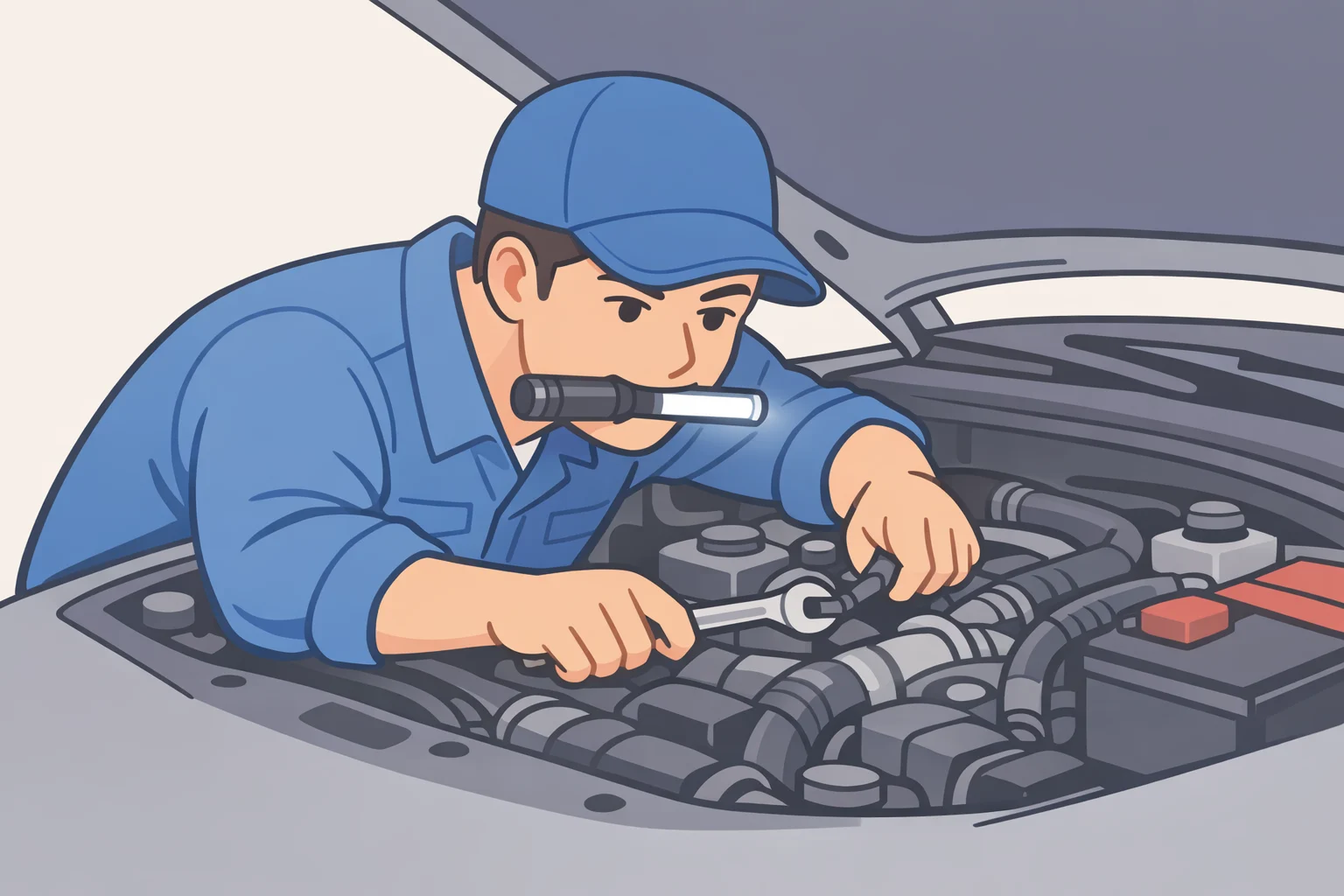
Read the hardware choices together and a user profile emerges. Neck lanyard for immediate access. Magnetic storage for metal work surfaces. Waterproof plastic-and-silicone construction for wet or dirty conditions. That combination points toward people who regularly work in confined, dark spaces with both hands occupied: mechanics, electricians, plumbers, HVAC technicians, serious DIYers who currently improvise by biting a regular cylindrical flashlight.
The lanyard is engineered for rapid neck-to-mouth-to-neck transitions, an access pattern that only makes sense if the device goes in and out of the mouth frequently during a task, per the patent. The magnetic storage is specified for placement on metal surfaces "when not in use," pointing toward workshop, garage, and vehicle environments rather than outdoor or carry contexts. Neither detail is incidental. Together they sketch a tool built for trade use, not occasional consumer deployment.
Where it fits, and where it doesn't
A headlamp solves the hands-free problem more comfortably for tasks that span more than a few minutes or require significant head mobility. The mouth-held flashlight's argument is a narrower one: close-quarters situations where a headlamp is unavailable or impractical. That's a real gap, just a specific one.
The honest tradeoffs
Lumens. Forty to sixty is workable for a fitting or terminal at close range, per the patent. Scanning a dark room or reading across a workspace is a different requirement, and 40 to 60 won't cover it. Users who need higher output should look elsewhere.
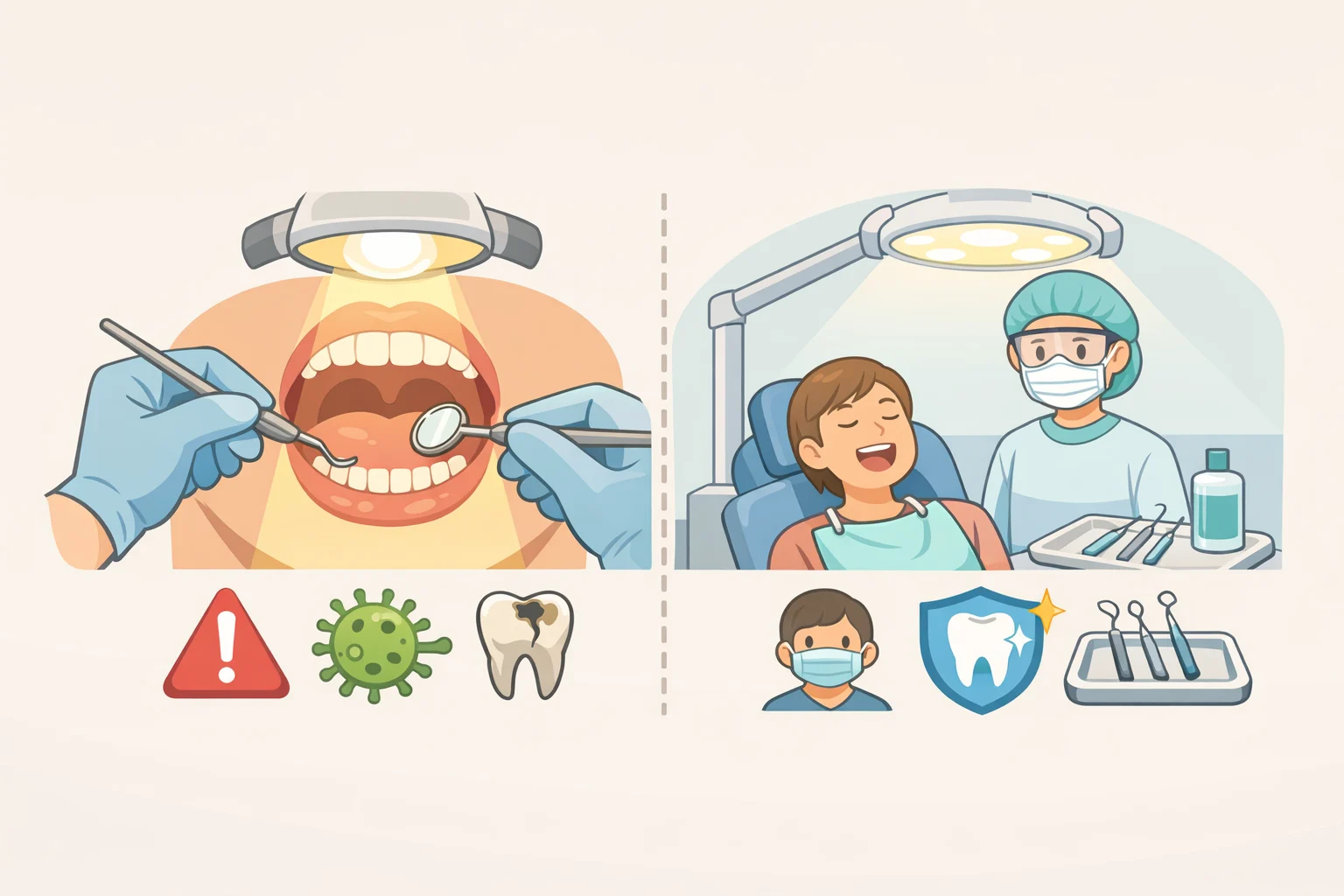
Hygiene and safety. The patent does not address oral material certification, jaw fatigue during extended use, or contamination risk in dirty work environments. A mechanic reaching into a greasy engine bay, then putting this device in their mouth, faces a hygiene question the patent simply doesn't answer, and no independent source has addressed it either. Anyone evaluating this for professional use should want those answers before relying on it.
The comfort claim. Silicone is a reasonable material for oral contact, and the tongue dimple and lip-retention grooves reflect genuine ergonomic thinking, per the patent. But "comfortable" remains a design goal as of the filing. There is no user testing behind it.
Practical synthesis
If you routinely do close-up manual work where a headlamp is unavailable or impractical, and you already catch yourself biting a flashlight, this concept is engineered for exactly that situation. If your primary need is longer-duration or broader-area lighting, a slim headlamp is a more versatile solution with an established track record.
If this device ever reaches retail, the questions worth asking are specific: What materials certification covers oral contact? How long does the battery last at full brightness? Has anyone actually worn it for 20 minutes under a sink or inside a panel box?
A real problem, a concept-stage solution
The bite light flashlight is a credible design response to a behavior that predates it by decades. The asymmetric housing, silicone construction, tongue dimple, and lip-retention grooves show a genuine attempt to solve the mouth-hold problem rather than approximate it. The self-sealing USB port and waterproof construction reflect priorities consistent with the workshop environments the design targets.
What the patent establishes is internal consistency and practical motivation. What it does not establish is real-world comfort over time, verified performance specifications, oral safety certification, or whether the concept has moved from filing to any shipping product. Both rechargeable and replaceable-battery configurations are specified, which shows the designers thought about how different users work, a reasonable sign of practical intent if not proof of execution.
If a product based on this design reaches the market, the most useful thing reviewers and buyers can do is test the questions the patent leaves open: comfort through a 30-minute session, hygiene in a greasy shop, and whether 40 to 60 lumens is genuinely enough for the specific jobs this tool targets. The problem is real. Whether this form factor is the right answer remains open.