Swimming Headphones vs Regular Headphones: Key Differences
Drop a pair of AirPods into a pool and two things happen simultaneously. The water threatens the hardware, sure, but the Bluetooth signal dies before any physical damage occurs. That's not a product flaw. It's physics, and it's why the comparison of swimming headphones vs regular headphones isn't really a comparison at all. They solve different problems using fundamentally different technology.
Water defeats two core assumptions that every regular headphone is built on: wireless audio transmission via Bluetooth, and sound delivery through air vibrating inside the ear canal. Both break down the moment you submerge. The distinctions between swim-specific devices and standard headphones run deeper than waterproofing: they extend to how audio reaches the listener at all, as Engadget explained today.
Swimming headphones vs regular headphones: the two differences that matter
Video of the Day
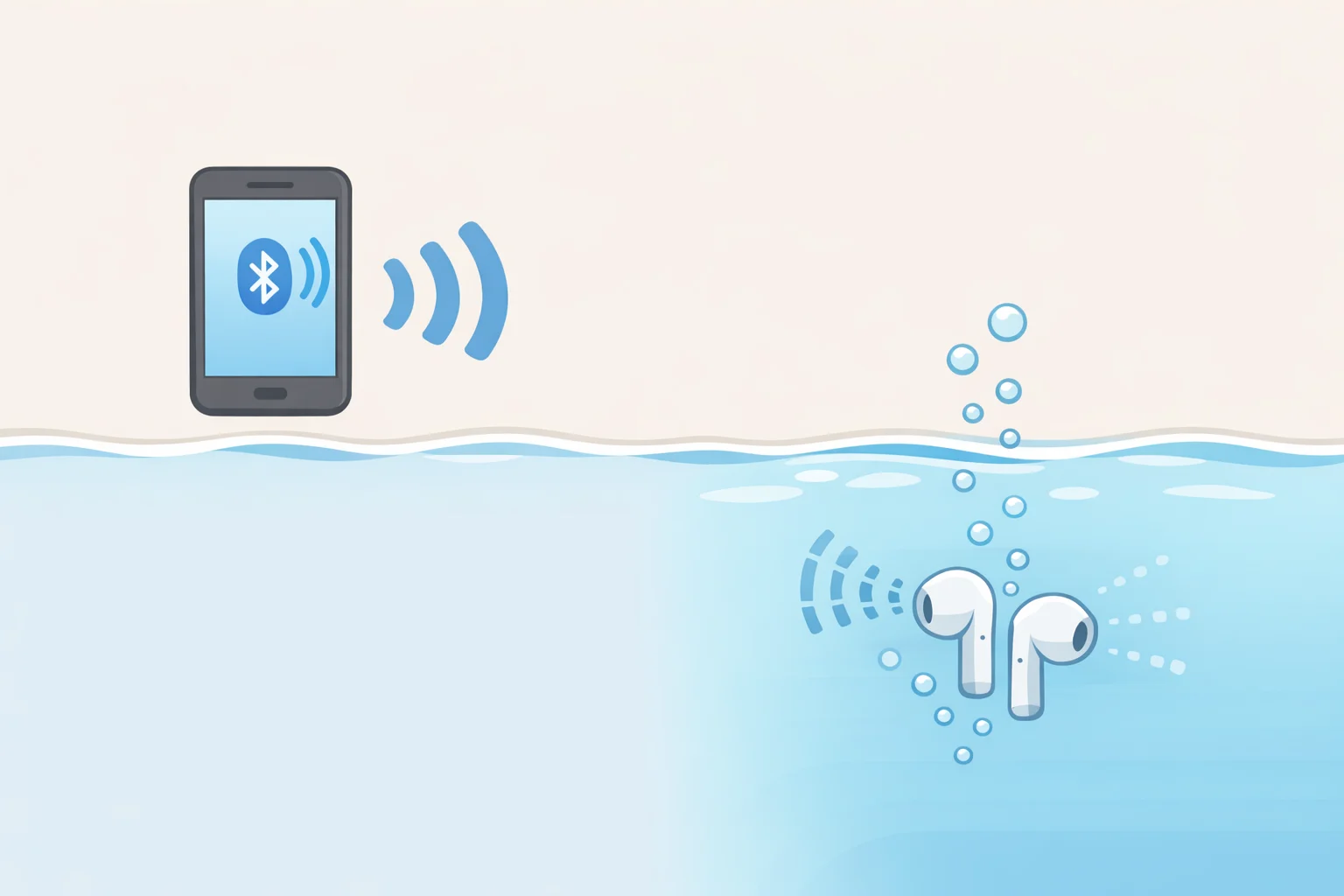
Bluetooth operates at 2.4 GHz. At that frequency, water attenuates the signal by roughly 80 dB per metre of submersion, meaning the connection between a phone sitting on the pool deck and an earbud a few centimetres below the surface simply cannot survive. This is a physics constraint, not a hardware limitation, as both Beach Side Reader and NewForTech confirm. Better Bluetooth chips don't fix it.
That distinction matters, because it's entirely separate from waterproofing. A device rated for full submersion can be completely watertight and still lose its wireless connection the moment it goes under. Waterproofing protects the components; it does nothing for the signal.
Because live streaming is impossible underwater, many swim-specific models solve this with built-in storage, a feature that remains rare in regular headphones but is increasingly standard in this category, Engadget notes. Music plays from the device itself, loaded before the session begins.
The Shokz OpenSwim Pro is a useful illustration. It holds up to 32GB of audio files, or roughly 8,000 songs at standard quality, with transfer handled via drag-and-drop over a magnetic data cable. Underwater, only onboard MP3 playback functions; the device automatically drops its Bluetooth connection when submerged and resumes it when the swimmer surfaces. Critically, tracks from Spotify, Apple Music, or Tidal cannot be loaded onto the device only files the listener owns outright, in formats like MP3, FLAC, WAV, and AAC, can be transferred.
Onboard storage isn't a retro quirk. It's the only available answer to a hard physics problem swimming headphones are, in part, a revival of the standalone MP3 player, repackaged for an environment where streaming cannot function.
Video of the Day
How bone conduction swimming headphones work and why the design looks so different
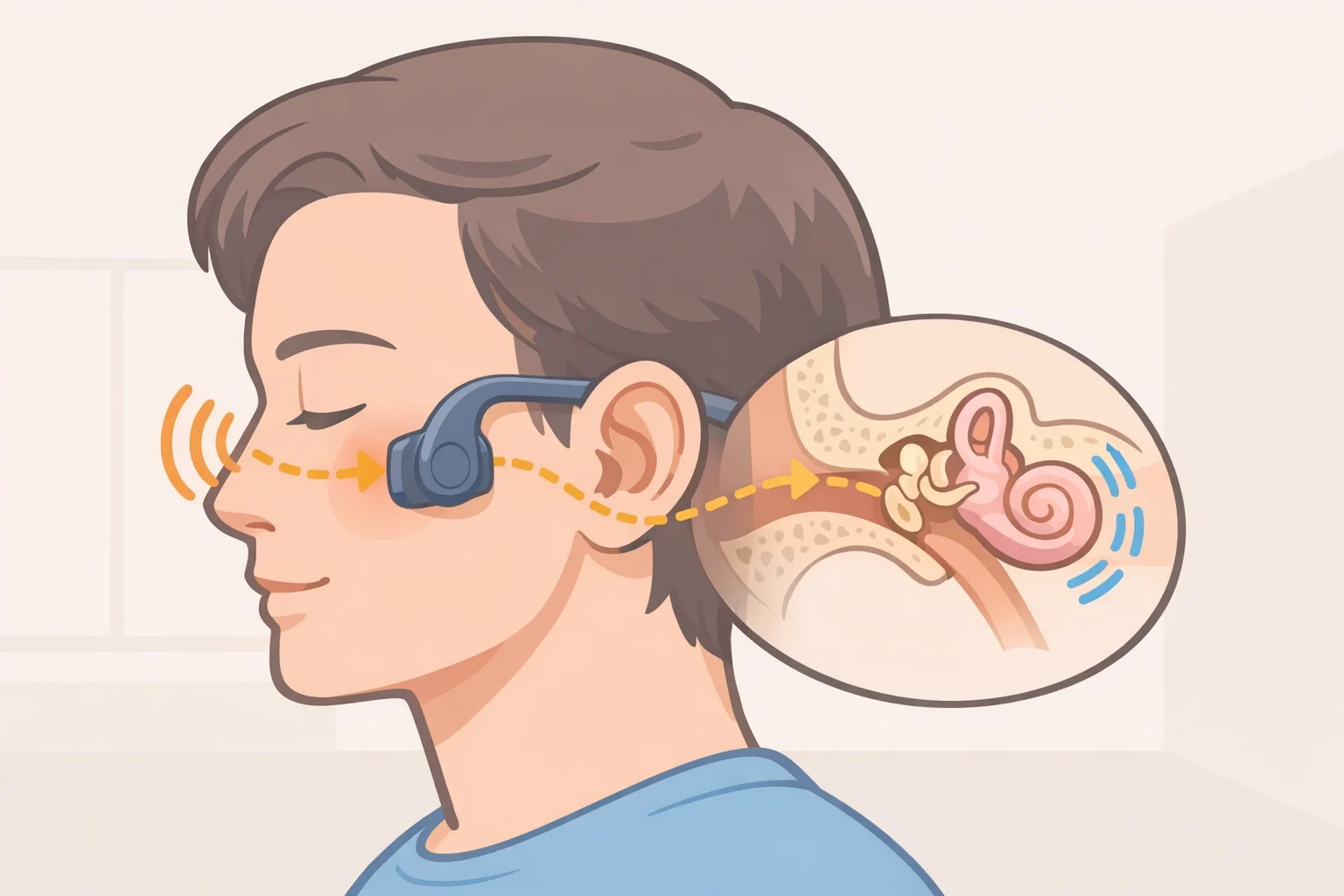
The unfamiliar appearance of swimming headphones small pads pressed against the cheekbones, ear canals left completely open follows directly from how audio physics changes underwater.
Standard headphones produce sound by moving air inside or near the ear canal, which vibrates the eardrum. That eardrum vibration is how the inner ear receives the signal. Bone conduction takes a different route entirely: it converts audio into mechanical vibrations that travel through the cheekbones directly to the cochlea, bypassing the eardrum. Think of the ear canal as a pipe that sound normally travels through. Bone conduction routes the signal through the walls of the building instead the pipe becomes irrelevant. VCOM, citing research linked to the National Institute on Deafness and Other Communication Disorders, confirms that the sound path remains consistent whether the listener is above or below the surface.
Canal-fit earbuds, by contrast, depend on a sealed air pocket between the driver and the eardrum. That seal is what produces bass response and volume. When water floods the canal or breaks the seal which happens readily during swimming bass collapses, perceived volume drops sharply, and the swimmer typically reaches up to reseat the bud mid-stroke, Beach Side Reader notes.
Bone conduction dominates this category for exactly that reason. Engadget reports that the vast majority of swimming headphones use it, with canal-fit designs remaining a smaller part of the market. The open-ear design also carries a practical safety advantage: the ear canal stays unoccluded, preserving full environmental awareness. For open-water swimmers and triathletes, with boat traffic, other swimmers, and course markers in play, blocking the ears is a real situational cost that bone conduction avoids, as Beach Side Reader points out.
Waterproof headphones for swimming: what IP ratings actually mean
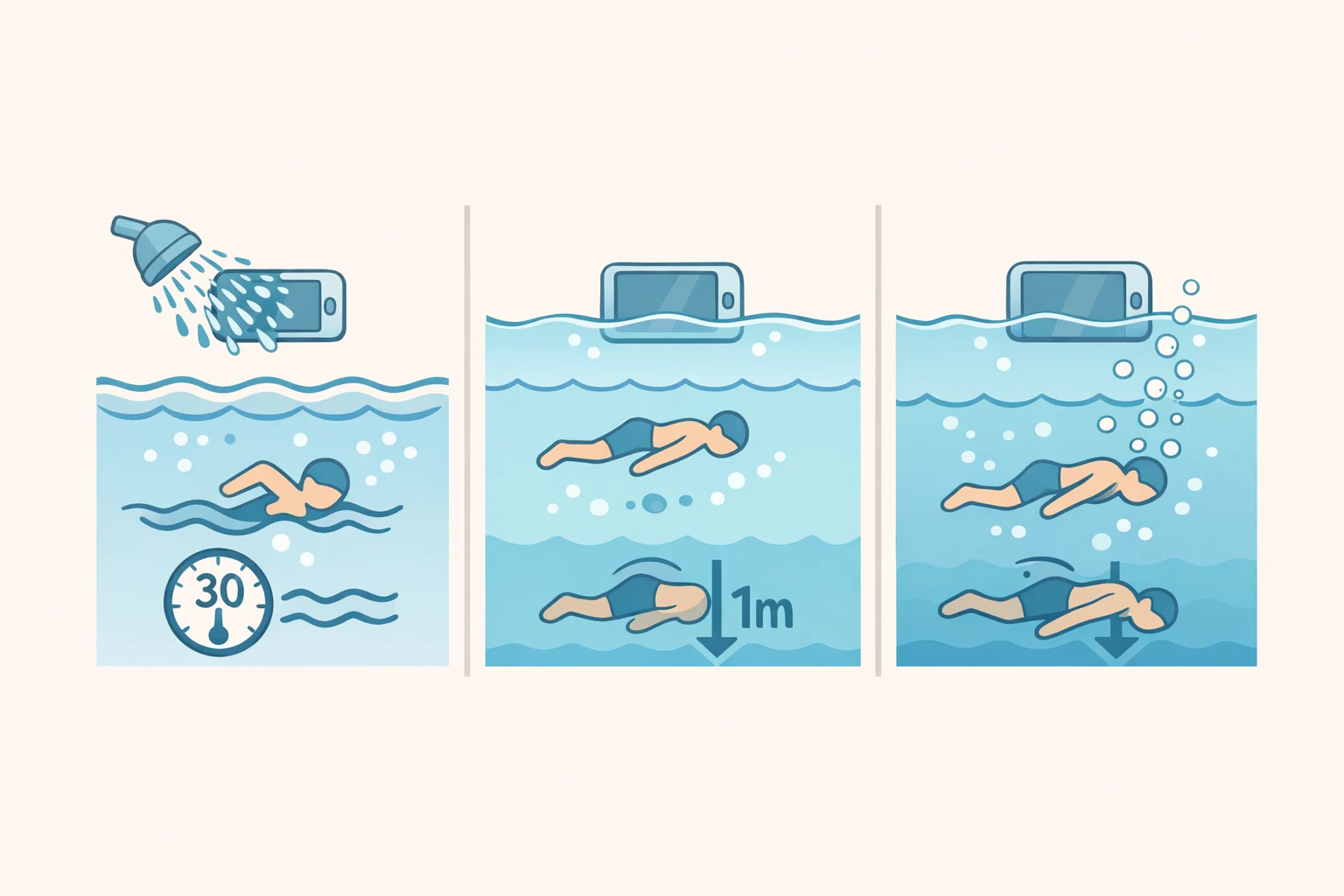
"Waterproof" is a marketing claim. IP ratings are a standard, and they're worth understanding before buying anything in this category.
IP stands for Ingress Protection. Each rating carries two digits: the first covers dust resistance, largely irrelevant for pool use; the second covers water resistance. When shopping for swimming headphones, the second digit is the only one that matters, per Engadget. Ratings at 6 and below handle sweat and rain. Anything below IPX7 is unsuitable for swimming regardless of how it's marketed.
IPX7 certifies submersion to one metre for 30 minutes workable for casual use, but borderline for longer or more aggressive sessions. IP68 or IPX8 is the more reliable target for regular pool use, covering full submersion at greater depth and extended duration under manufacturer-specified conditions, per Beach Side Reader.
Physical design shapes real-world reliability as much as any rating. Swim-specific frames use wraparound nickel-titanium alloy to maintain a low profile flush against the head, staying secure through tumble turns, butterfly stroke, and goggle fit conditions that standard sport headphones are not built to handle, as both Everyday Listening and NewForTech noted in their Shokz OpenSwim Pro reviews. One reviewer at Everyday Listening held the headset secure throughout a two-hour training session without adjustment, but noted it would sink if dislodged a reminder that IP68 sealing and secure fit are related but distinct concerns.
The tradeoffs: what swimmers give up, and what they gain
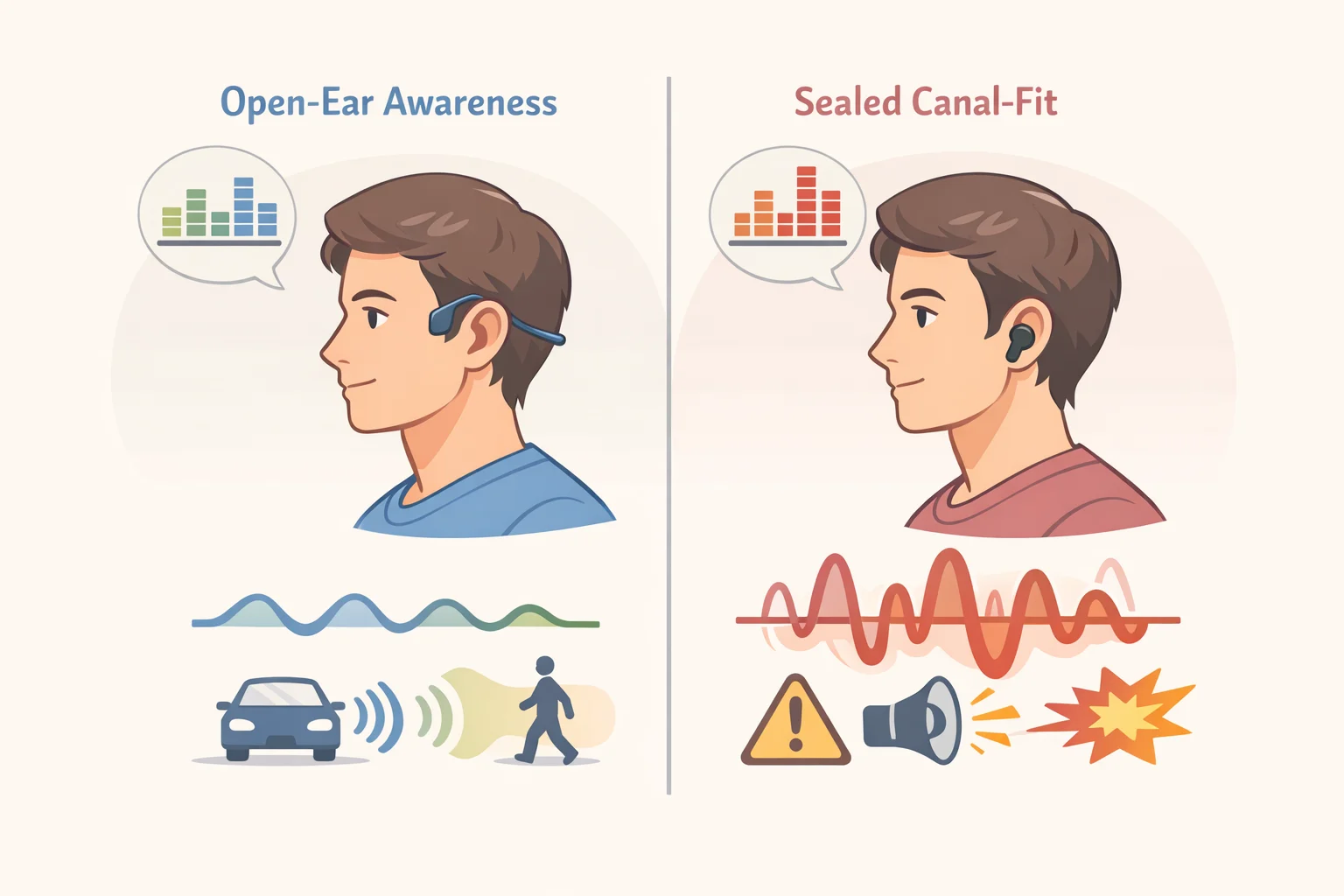
Bone conduction is optimized for environments where standard audio fails, not for audiophile-level performance, as VCOM puts it. The most consistent criticism is bass response: bone conduction transmits mid and high frequencies more effectively than low ones, and even well-regarded devices draw reviewer criticism for it. Everyday Listening listed "minimal bass" as an explicit con in its OpenSwim Pro review.
Canal-fit designs can deliver fuller, richer audio but only when the seal holds. That depends on individual ear shape, tip size, and movement intensity. Beach Side Reader is direct about the tradeoff: for steady aerobic lap swimming, either design can work; for high-intensity intervals, aggressive head movement, or swimmers whose canals don't hold a seal reliably, bone conduction is the more consistently usable option. Swimmers who prioritize bass-heavy audio and have found tips that survive an entire workout without reseating may still prefer canal-fit it's a reasonable choice when the fit is right, and a liability when it isn't.
At higher volumes, bone conduction's reliance on physical vibration can produce noticeable buzzing against the cheekbones. Manufacturers address this through angled transducers or adjustable positioning, though Engadget notes these are largely proprietary claims without independent validation treat them as manufacturer assertions until proven otherwise.
There's also the occlusion effect. When water seals around the ear during swimming, it amplifies lower frequencies in ways that can feel overpowering. Some swimming headphones counter this with swim-specific EQ modes that boost harder-to-hear frequencies and compensate for that amplification, Engadget reports. One practical detail worth knowing: because bone conduction doesn't depend on the ear canal at all, swimmers can wear earplugs alongside their headphones to reduce water pressure and ambient pool noise without affecting sound quality Everyday Listening notes the OpenSwim Pro ships with a pair for exactly this purpose.
In practical terms, the decision looks like this:
- Pool laps at steady effort: either type can work; try canal-fit if sound quality matters
- Interval training or butterfly stroke: bone conduction holds up more reliably
- Open water or triathlon: bone conduction, for the environmental awareness
- Bass-first listeners: canal-fit, if the fit holds accept that it may not
Where this leaves the category
The remaining friction point is the playlist loading step. Consumer swim headphones depend on local file playback underwater, which means loading music before getting in and working around streaming-service DRM. That's a real inconvenience, and it's not a design choice anyone made voluntarily it's a direct consequence of the signal physics described above.
What would need to change for swimming headphones to behave more like normal wireless headphones? A low-frequency wireless protocol capable of penetrating water at consumer-device distances. No such standard currently exists in the market. Until it does, swimmers will keep loading playlists manually before they get in. For a category that has otherwise matured considerably the Shokz OpenSwim Pro packs IP68 waterproofing, 32GB of onboard storage, Bluetooth 5.4, and a 27.3g frame into a device that functions as a full wireless headphone on land and a standalone player in the pool that pre-swim file transfer is the one step that still marks the experience as different from everything else in your ears.