GOKO M6 robotic lawn mower: claims vs. independent testing
GOKO used spoga+gafa 2026 to show off the GOKO M6 robotic lawn mower, pitching it at yards that typically defeat the category: slopes, rough terrain, and thick grass (GOKO blog, 5 weeks ago). The pitch leans on hardware that's unusual for a consumer mower: four-wheel drive, adaptive suspension, and a claimed 42-degree, 90 percent grade climb (Access Newswire, 11 weeks ago). GOKO is the consumer brand of Robot++, which says it has spent more than a decade building robots for hazardous surface work in other industries (GOKO blog, 5 weeks ago).
None of that has been tested by anyone outside the company. GOKO announced roughly 11 weeks ago that the M6 would debut on Kickstarter in mid-May 2026, with global shipping to follow once the campaign wrapped (Access Newswire, 11 weeks ago). That release describes plans, not a confirmed outcome. Nothing reviewed for this article says whether the campaign actually closed, whether it succeeded, or whether units have started shipping, and none of the available materials list a retail price.
Nearly everything published about the GOKO M6 robotic lawn mower so far comes from GOKO itself. This article separates the specific hardware claims from the marketing framing around them, and flags what remains outside the public record.
A launch pitch, not yet a reviewed product
Video of the Day

The M6 is GOKO's first mower, and the company describes it as its flagship product, marking the brand's move from industrial robotics into home lawn care (GOKO blog, 5 weeks ago). The materials reviewed for this article consist of press releases, a Kickstarter launch announcement, and GOKO's own website. None of it includes third-party lab or field testing (Access Newswire, 11 weeks ago; GOKO, 6 weeks ago).
GOKO frames the M6 as a break from "fragile backyard novelties" toward "heavy-duty outdoor automation," aiming it at large, sloped, obstacle-heavy properties rather than flat suburban lawns (GOKO, 6 weeks ago). The company's site also carries testimonials, including one calling it "the most capable AWD mower I've seen." That material doesn't identify the reviewer, the outlet, or the testing conditions behind the quote (GOKO, 6 weeks ago).
Video of the Day
GOKO M6 robotic lawn mower: the published hardware claims
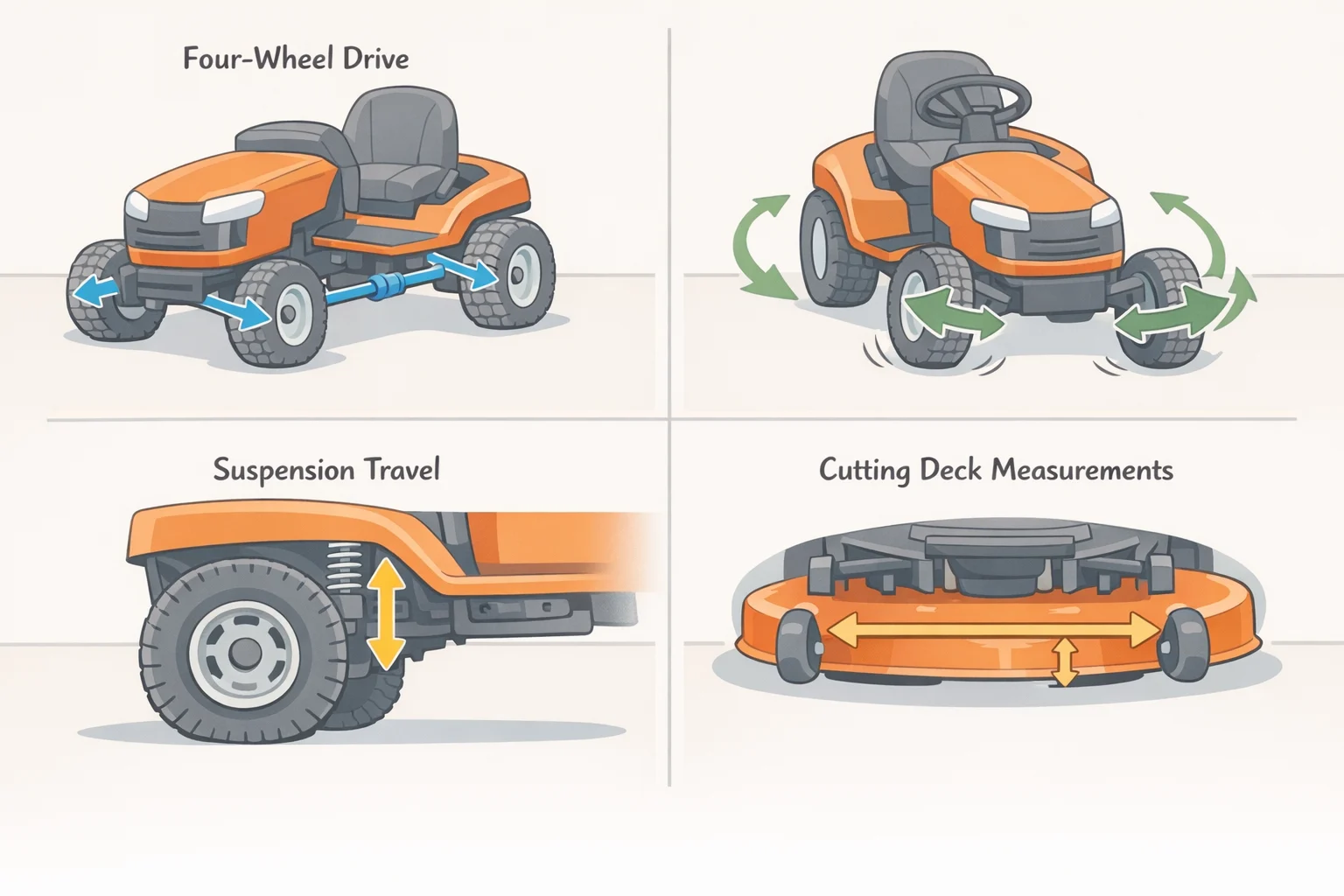
GOKO says the M6's four-wheel drive, paired with independent front-wheel active steering, lets it climb inclines and turn tightly without tearing up turf (Access Newswire, 11 weeks ago). The company also says adaptive suspension lets the mower ride over roots and ruts without losing traction, keeping cuts even on ground that would trip up a two-wheel-drive machine (Access Newswire, 11 weeks ago).
On the cutting side, GOKO lists a 42-centimeter, or 16.5-inch, deck with adjustable height between 25 and 100 millimeters, and two swappable blade systems: razor discs for routine trimming and rotary mulching blades for thicker growth (Access Newswire, 11 weeks ago). These figures are specific and traceable to GOKO's own releases. They're also, so far, entirely company-supplied; nothing in the reviewed materials shows how the mower performs on an actual slope, in actual mud, against an actual root.
Mapping range isn't mowing range
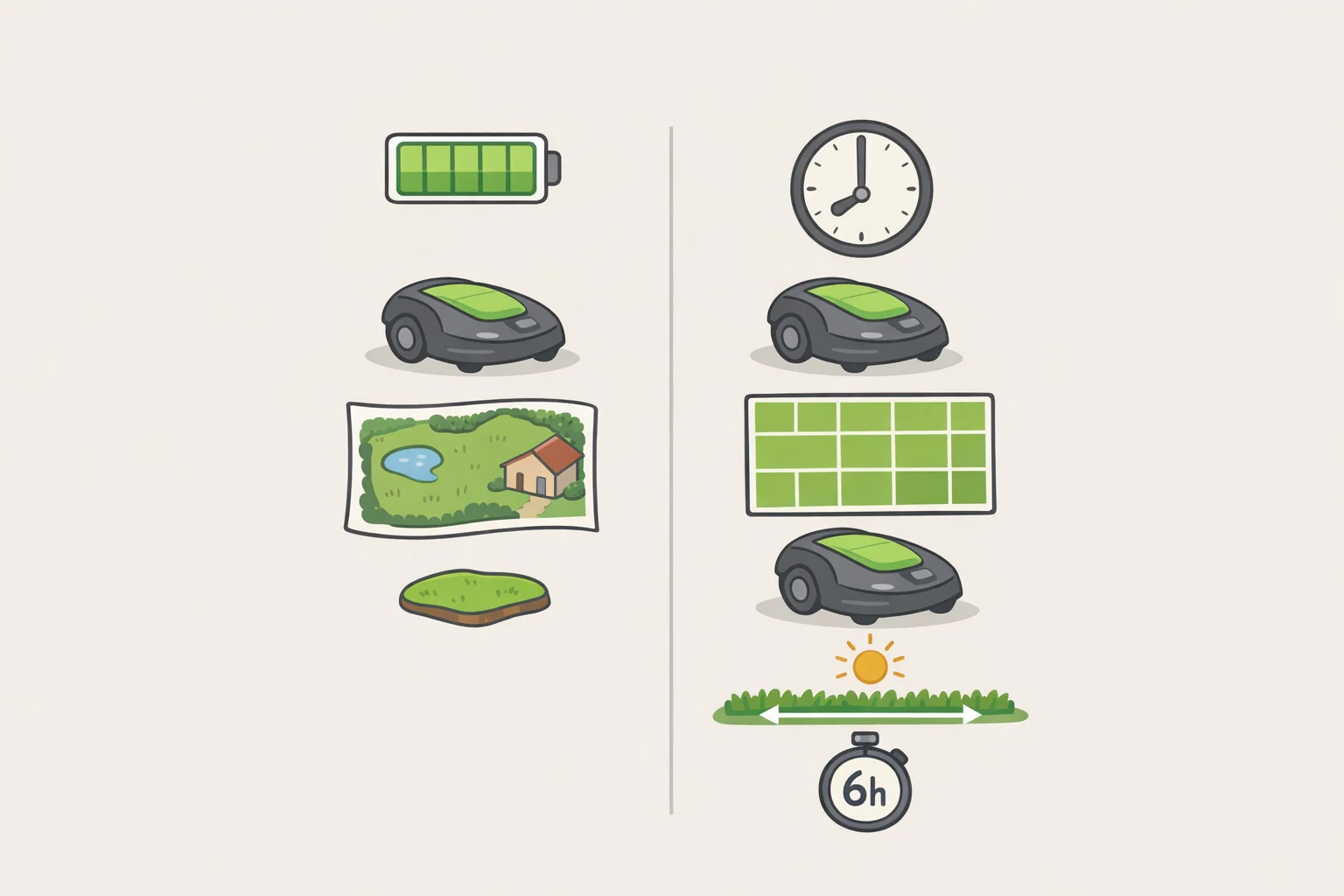
GOKO's coverage claims arrive in layers that are easy to conflate. The standard battery covers up to 2,000 square meters per charge; a dual-battery, or expandable, configuration extends that to roughly 4,000 square meters, about one acre, per charge; and that same expandable setup is separately said to enable up to 8,000 square meters, or two acres, of mowing per day, a different metric entirely from per-charge range (GOKO blog, 5 weeks ago; Access Newswire, 11 weeks ago).
GOKO also says its CyberNav navigation system can map up to 15 acres across unlimited zones, a figure that describes how much property the mower can remember and navigate, not how much it can cut in a day (Access Newswire, 11 weeks ago). A 15-acre mapping capacity and a 2-acre daily mowing capacity are separate claims, and marketing copy tends to run them together.
Runtime is listed at up to 360 minutes (Access Newswire, 11 weeks ago). Combined with the acreage figures, that implies assumptions about grass height, terrain, and battery configuration that GOKO doesn't spell out. None of the reviewed materials include independent measurements of these figures under steep slopes, wet grass, or a battery nearing the end of its charge cycle, and GOKO hasn't addressed that gap.
Navigation and safety: what's described, what's unverified

Instead of a buried boundary wire, GOKO says the M6 relies on CyberNav Fusion Navigation, a blend of RTK positioning, VSLAM, IMU data, and wheel odometry, along with four QuadVision cameras the company says can recognize more than 200 object types, including people and pets (GOKO blog, 5 weeks ago; Access Newswire, 11 weeks ago). GOKO's published feature list doesn't mention LiDAR at all.
That's a relevant gap given how the sensor is discussed elsewhere in the industry. Orbbec, a LiDAR component supplier with an obvious commercial stake in the comparison, argues that LiDAR provides direct distance measurement that can improve obstacle detection and localization in variable outdoor lighting (Orbbec, 5 weeks ago). That's context worth asking GOKO about. It isn't evidence that a camera-and-RTK system underperforms; Orbbec sells LiDAR hardware, not independent mower evaluations.
Orbbec also describes what compliance testing under IEC 60335-2-107 generally requires: documented obstacle-detection distances, defined emergency-stop response times, and, in what it calls "strong architectures," mechanical bumpers and IMUs layered on as redundant fail-safes (Orbbec, 5 weeks ago). That's a general description of the compliance bar for the category, not a claim about what the M6 does or doesn't have.
On certification specifically: an established European safety standard for robotic battery mowers, EN 50636-2-107:2015, already covers machines rated under 75 volts DC. A 2026 draft amendment to that standard, FprA4:2026, is listed as "Not Published" in a catalog entry from roughly two weeks ago, meaning the newest revision hasn't been finalized (iTeh standards catalog, 2 weeks ago). The GOKO materials reviewed for this article don't state a compliance or test status against EN 50636-2-107 or IEC 60335-2-107.
What's confirmed and what isn't
The specs GOKO has published are consistent across its own releases: a 42-degree grade rating, a 16.5-inch cutting deck, coverage figures up to two acres a day, and a sensor stack built around cameras, RTK, and inertial data rather than a boundary wire (GOKO blog, 5 weeks ago; Access Newswire, 11 weeks ago). No outside lab or reviewer has put a number on any of it yet. There's no published third-party measurement of slope traction, obstacle-detection range, or stopping distance, and no stated safety-certification status against the relevant EN or IEC benchmarks (iTeh standards catalog, 2 weeks ago; Orbbec, 5 weeks ago).
Several practical questions remain open as of this week: whether the Kickstarter campaign GOKO announced for mid-May 2026 actually closed and succeeded, what final retail pricing looks like, which battery configuration ships in the base package, and whether GOKO will publish safety-certification documentation before units reach customers. None of those questions are answered in the materials reviewed for this piece. They're also the ones that will decide whether the M6's spec sheet holds up once it meets a real yard, root and all.