Casio CRW-H001M-8 Smart Ring Watch: A Cheaper Oura Rival
Casio has added real health sensors to its novelty finger-watch. The Casio CRW-H001M-8 smart ring watch is the company's first ring watch built with sensors for heart rate, blood oxygen, body temperature, and sleep, according to The Gadgeteer and Engadget.
That's a real shift from where this product line started. Casio's original CRW-001, which launched in December 2024, tracked no health data at all (The Gadgeteer; Casio). It was a 50th-anniversary novelty built to look like a shrunken digital watch, nothing more.
The timing also lines up with where the wearables market is heading. Smart ring shipments are on pace to grow 49% this year, compared with an estimated 6% gain for smartwatches, according to IDC data cited by the Los Angeles Times earlier this year. Oura, the brand that popularized the category, is the obvious reference point for any ring that suddenly starts reading vital signs. Casio's China price undercuts Oura's cost significantly, though the comparison comes with caveats worth working through.
Still a Casio: the display that sets it apart
Video of the Day
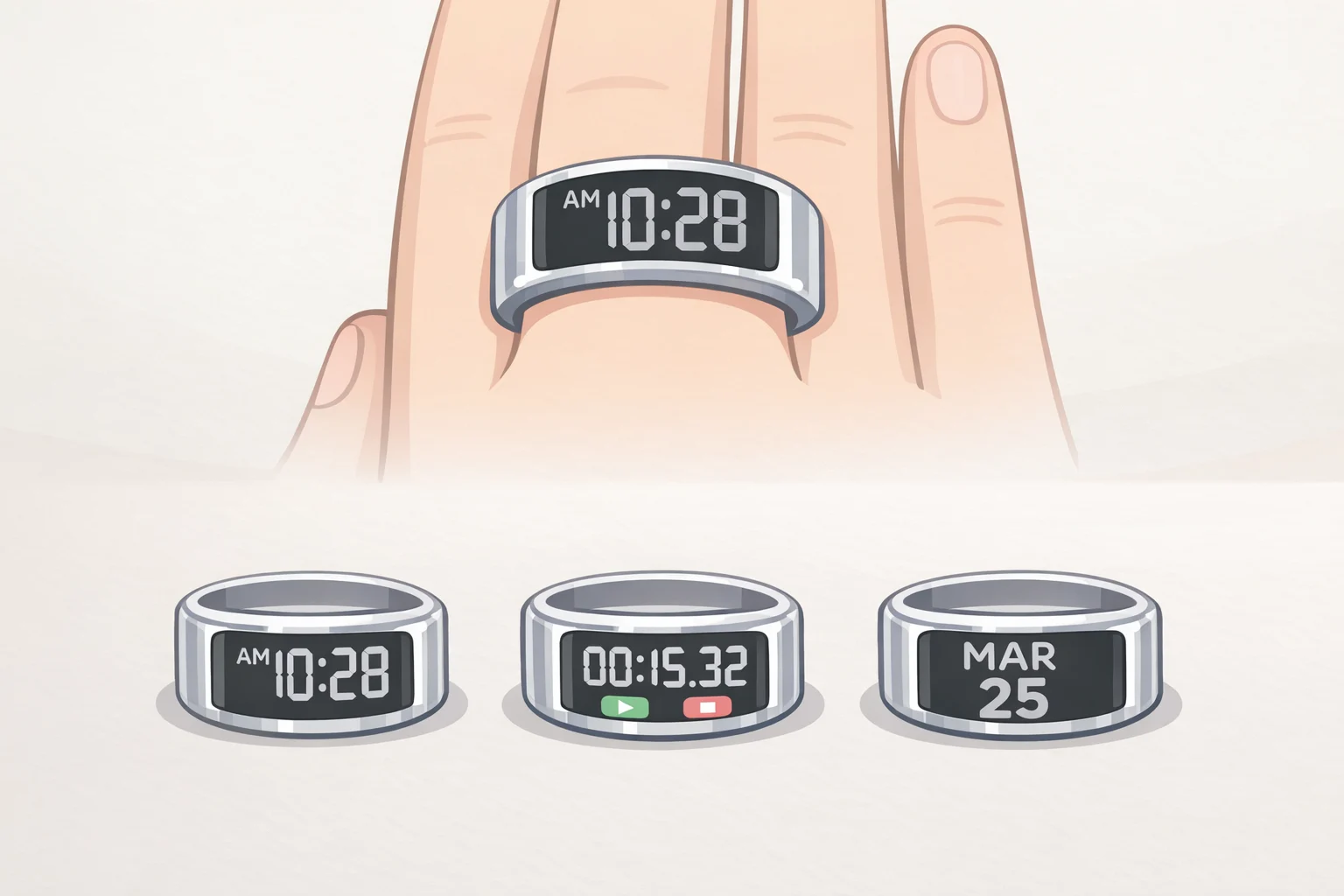
Unlike Oura's blank titanium band, the CRW-H001M-8 keeps a functional digital face complete with a clock, a stopwatch, and a calendar, and looks like a miniature version of a classic Casio digital watch (Engadget).
The watch functions carried over from Casio's earlier ring watches include world time, a second time zone, a 1/100-second stopwatch, an automatic calendar, an hourly time flash, and both 12- and 24-hour display modes, with accuracy rated within 30 seconds a month (The Gadgeteer). New vibration alerts, added for this model, cover incoming calls, messages, alarms, calendar reminders, and health anomaly notifications (The Gadgeteer). That combination pushes the ring closer to a tiny smartwatch than a typical featureless fitness band.
The lineage behind it is longer than it looks. Casio spent 19 months turning what started as an anniversary stunt into an actual product platform, adding a gold edition, a G-SHOCK Nano version, and a J Balvin collaboration before arriving at this health-focused model (The Gadgeteer). Casio released that G-SHOCK variant, called the DWN-5600, in October 2025. It packed 200-meter water resistance and the brand's shock-resistant construction into a case measuring roughly 23.4 by 20 by 7.5 millimeters, about a tenth the size of a standard G-SHOCK, and kept a six-digit LCD, dual time zones, a stopwatch, and a calendar (Casio).
Video of the Day
Health tracking: what Casio says the sensors do
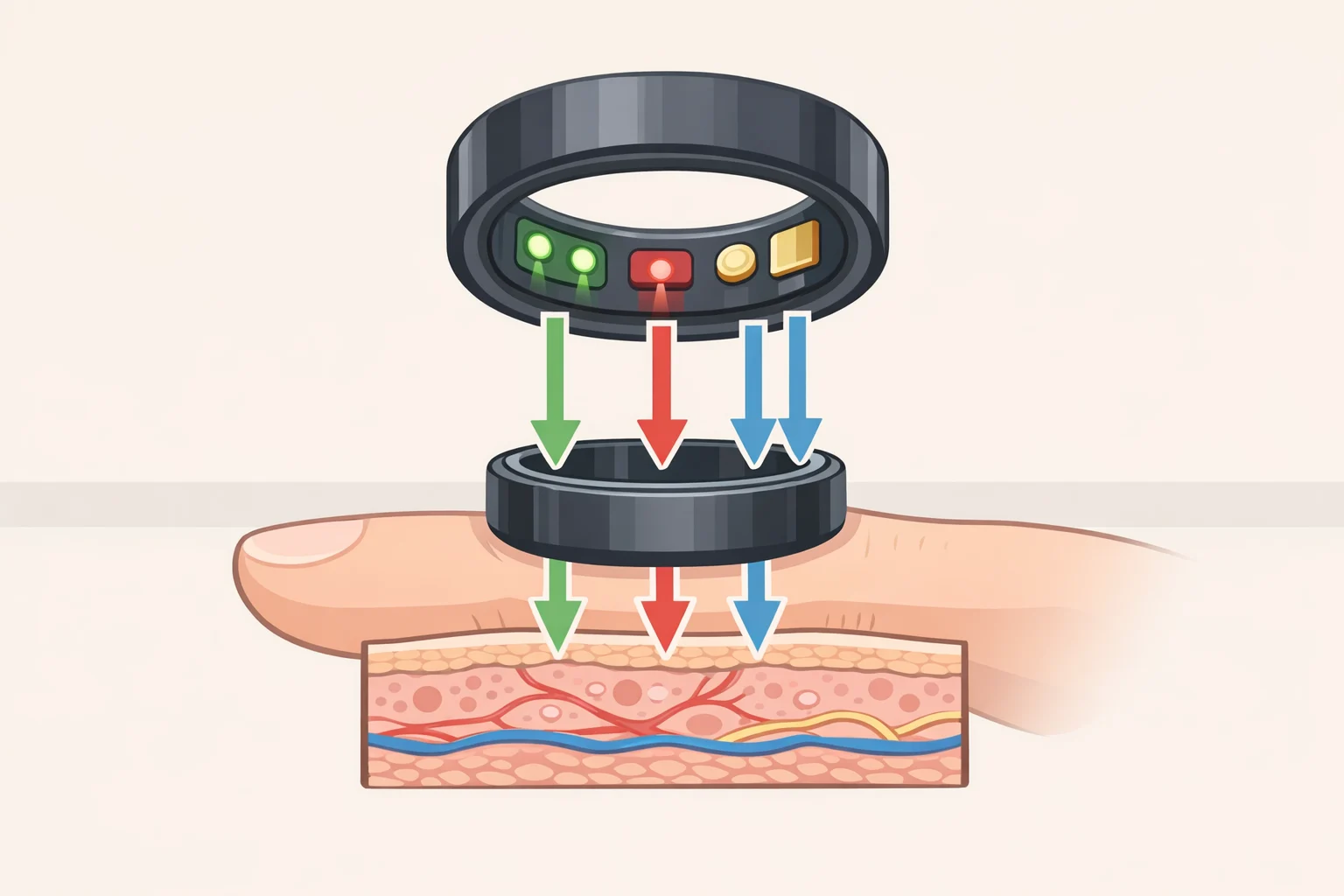
Casio says the ring reads heart rate, blood oxygen, body temperature, and sleep, all from sensors built into its inner surface (Engadget). The published spec sheet also lists menstrual-cycle management, step counts, calorie estimates, training logs, and dedicated modes for walking, running, and cycling (The Gadgeteer).
All of that data syncs over Bluetooth to a companion app called AIZO Ring, which Casio says works with Android 7.0 and newer, iOS 13 and newer, and HarmonyOS (The Gadgeteer). Casio frames all of this as general fitness and wellness data rather than for medical use (The Gadgeteer), a distinction worth remembering before treating any single reading as clinical.
The announcement itself doesn't include independent testing results. How the heart rate or blood oxygen sensors perform against a pulse oximeter, or how the sleep algorithm compares with a lab study, isn't something the supplied reporting addresses one way or the other.
Fit, weight, and the sleep-tracking tradeoff
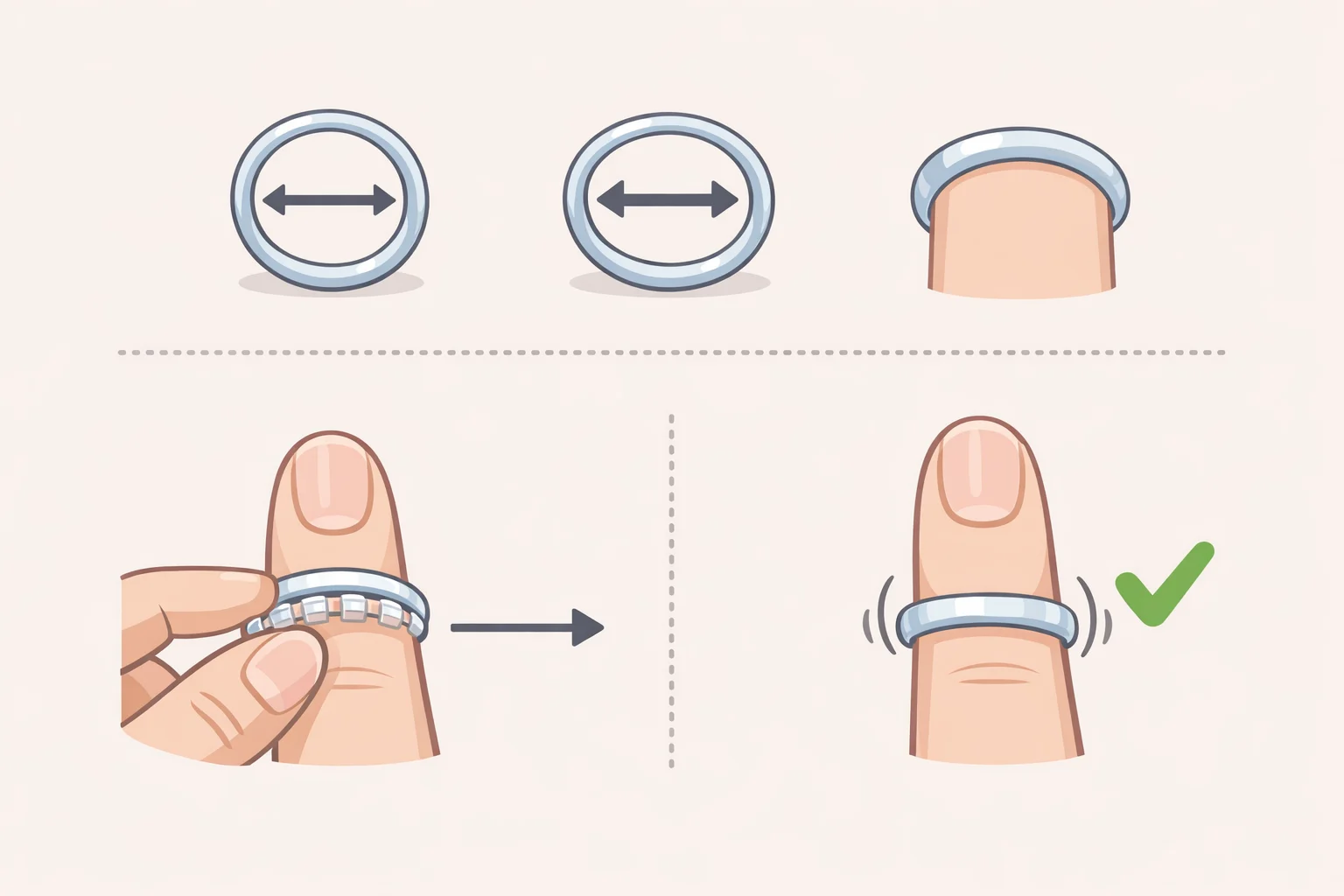
Sizing was the weak point of the original ring. Casio built that version in a single size, fitted for a size-22 finger, and shipped plastic spacers so people with smaller fingers could wear it at all (The Gadgeteer).
The CRW-H001M-8 drops the spacers entirely and ships in three actual sizes: 19.3mm, 20.1mm, and 20.9mm inner diameter, corresponding to US ring sizes 9, 10, and 11 (The Gadgeteer). The Gadgeteer suggests that change is probably a function of the new sensors rather than a simple design refresh, since optical sensors need direct skin contact and a plastic spacer between sensor and finger would likely compromise the reading (The Gadgeteer).
That sensor package adds bulk. At 19 grams, the new ring sits well outside the 2- to 4-gram range typical of smart rings, per The Gadgeteer's own comparison; the outlet weighed a RingConn Gen 3 in size 10 at 2.7 grams, which puts the Casio at roughly seven times the weight of that model (The Gadgeteer). It's also heavier than its own predecessor, which weighed 16 grams despite nearly identical external dimensions (The Gadgeteer).
Sleep tracking only works if the ring stays on overnight, a point The Gadgeteer raises directly about this model (The Gadgeteer). Whether 19 grams is comfortable enough for months of nightly wear isn't something the announcement or the available reporting settles. It's the open question sitting underneath the sleep-tracking pitch, not a documented failure.
Casio CRW-H001M-8 price and features vs. Oura Ring
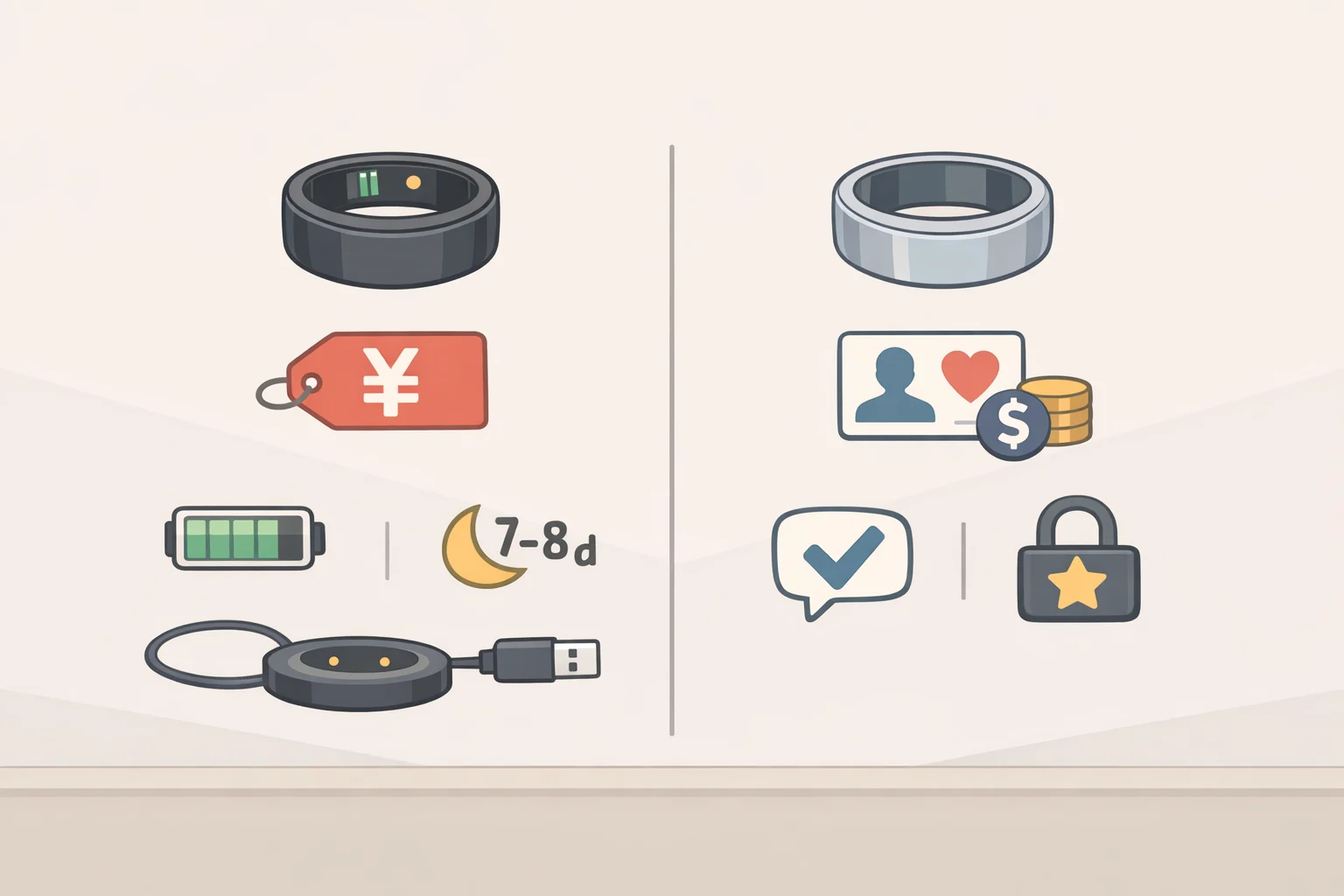
Casio is launching the ring in mainland China first, priced at 1,990 yuan, which converts to roughly $294 including local taxes (The Gadgeteer; Engadget). That figure is a currency conversion, not a US retail price; Casio hasn't announced sales anywhere outside China. It ships in silver only, inside a presentation box (The Gadgeteer).
Battery life is rated at four to six days for the smart-tracking module and 25 days on standby, while the separate watch battery is rated for around two years; charging happens through a magnetic pogo-pin USB connector (The Gadgeteer; Engadget). There's no confirmed timeline for an international launch, and Casio says sales and after-sales support are limited to China for now (The Gadgeteer).
Set against Oura, the price gap looks significant on paper. The Oura Ring 5 currently costs between $399 and $499 depending on finish, and Oura charges a membership fee, either $5.99 a month or $69.99 a year, to unlock full use of its app (The Gadgeteer). Add an annual membership to the ring price and a first year with Oura runs somewhere between roughly $469 and $569, depending on which finish a buyer picks, well above Casio's announced China price with no subscription attached.
That comparison is worth flagging with a caveat: it rests on published specs, not side-by-side testing, and Casio's price applies only inside China for now. For scale, Casio's original novelty ring retailed for about $120 in the US, per an early hands-on review from aBlogtoWatch, so the health-tracking version costs more than double that even before any international pricing gets announced.
What happens next
Casio has moved this ring watch well past its novelty origins, layering health sensors onto a lineup that already included a gold edition, a G-SHOCK Nano spinoff, and a J Balvin collaboration (The Gadgeteer). Its pitch, a working digital watch face plus a sub-$300 China price with no mandatory subscription, gives it a genuinely different profile from Oura's ring.
But the comparison stops at the spec sheet. Casio has announced the features; the supplied reporting doesn't yet include independent testing of sensor accuracy, app quality, or comfort during extended wear (The Gadgeteer). Its prospects outside China will depend in part on whether Casio brings it to other markets, and on what independent reviewers find once they actually strap one on overnight.