Are Expensive Phone Cases Worth It? What Price Buys
You can buy a highly protective phone case for about $20, and price alone does not reliably predict drop performance (Engadget). So are expensive phone cases worth it, or is the extra money paying for something that has nothing to do with keeping your phone alive? Usually, no. Expensive cases don't automatically protect better, but they can justify their price through thinness, added features, materials, or warranty support.
Consumer Reports' testing lead, Rich Fisco, put it plainly in a 2022 interview with the outlet: most cases have the basics covered, and the majority Consumer Reports recommended at the time cost $30 or less (Consumer Reports). No case makes a phone indestructible, either. Fisco was blunt about that too: "No phone is 100 percent safe against breakage" (Consumer Reports). In that same 2022 article, Consumer Reports cited flagship phone prices of $800 to $1,500 as the reason shoppers feel pressure to overspend on protection, even though that's the wrong first question to ask (Consumer Reports).
The rest of this piece breaks down how protection actually works, which trade-offs premium materials genuinely solve, how to read a "military-grade" label, and how to match your spending to your actual risk instead of a marketing badge.
Do expensive phone cases protect better?
Video of the Day
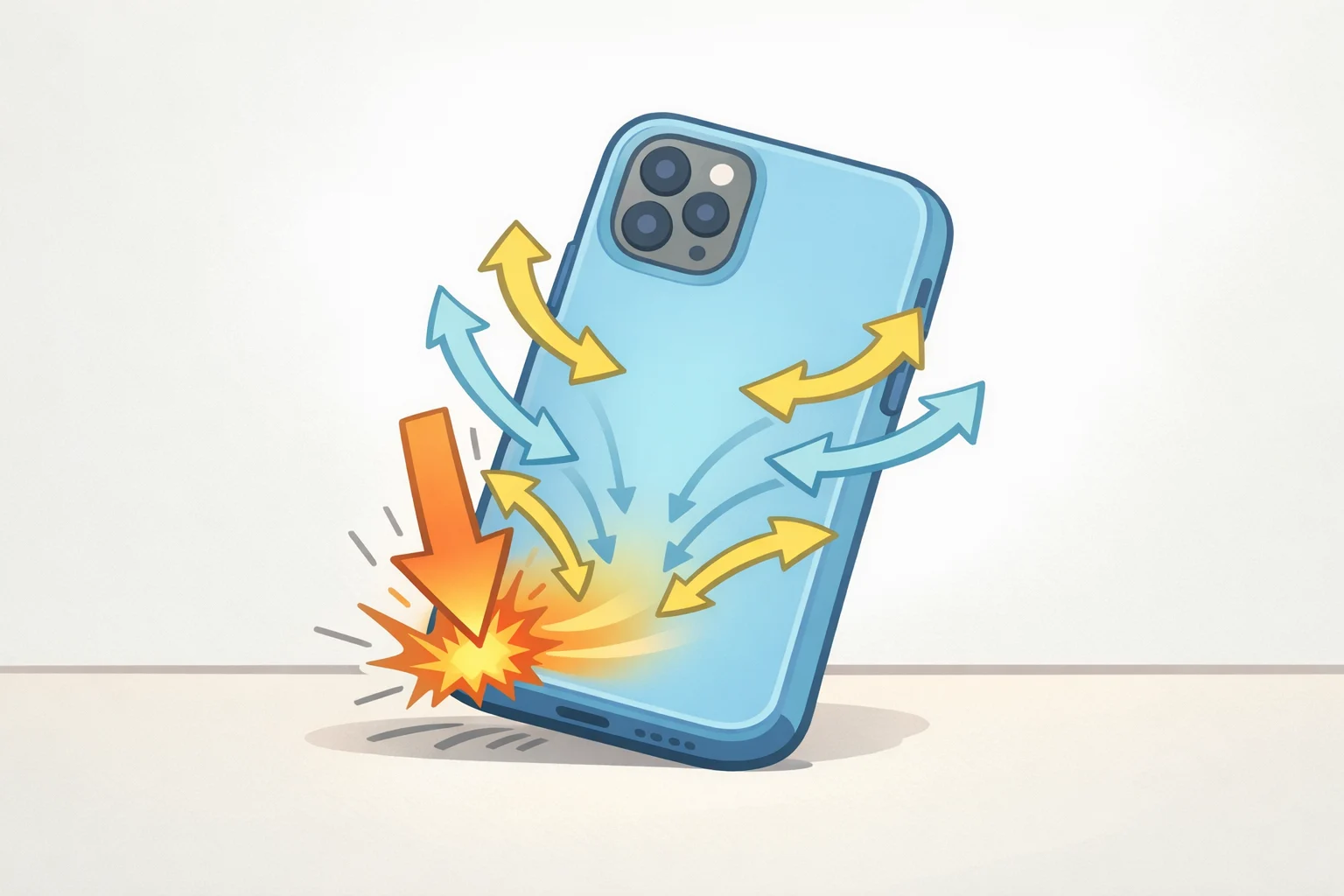
A good case works something like a bike helmet. It absorbs the energy of an impact and spreads it across a wider surface instead of letting that force concentrate in one small spot (Engadget). That single mechanical idea explains most of what separates a case that works from one that doesn't.
The features that matter most are unglamorous: a raised lip around the screen and camera housing, tight tolerances against the phone's body, and padded corners with small air gaps that keep an impact from concentrating into one point (Consumer Reports; Engadget). None of that requires exotic materials. It requires design discipline.
Fully rigid materials like wood or metal can look expensive and resist surface scratches, but they leave little material available to absorb a fall, so more of the impact force transfers straight into the phone (Engadget).
Grip matters more than people assume. Speck's executive vice president of design, Bryan Hynecek, says a bulky case doesn't automatically add protection, and a slim case can work just as well if it fits snugly (Consumer Reports). Vincent Tse, who has tested more than 200 iPhone cases for the YouTube channel Excessorize Me, adds that grip has become especially important as phones adopt glossy glass finishes and shiny metal edges (Consumer Reports). A case that's easy to hold in the first place cuts down on the number of drops that happen at all, which matters just as much as how well it survives the ones that do.
Video of the Day
Cheap vs. expensive phone cases: the trade-offs that actually justify higher prices
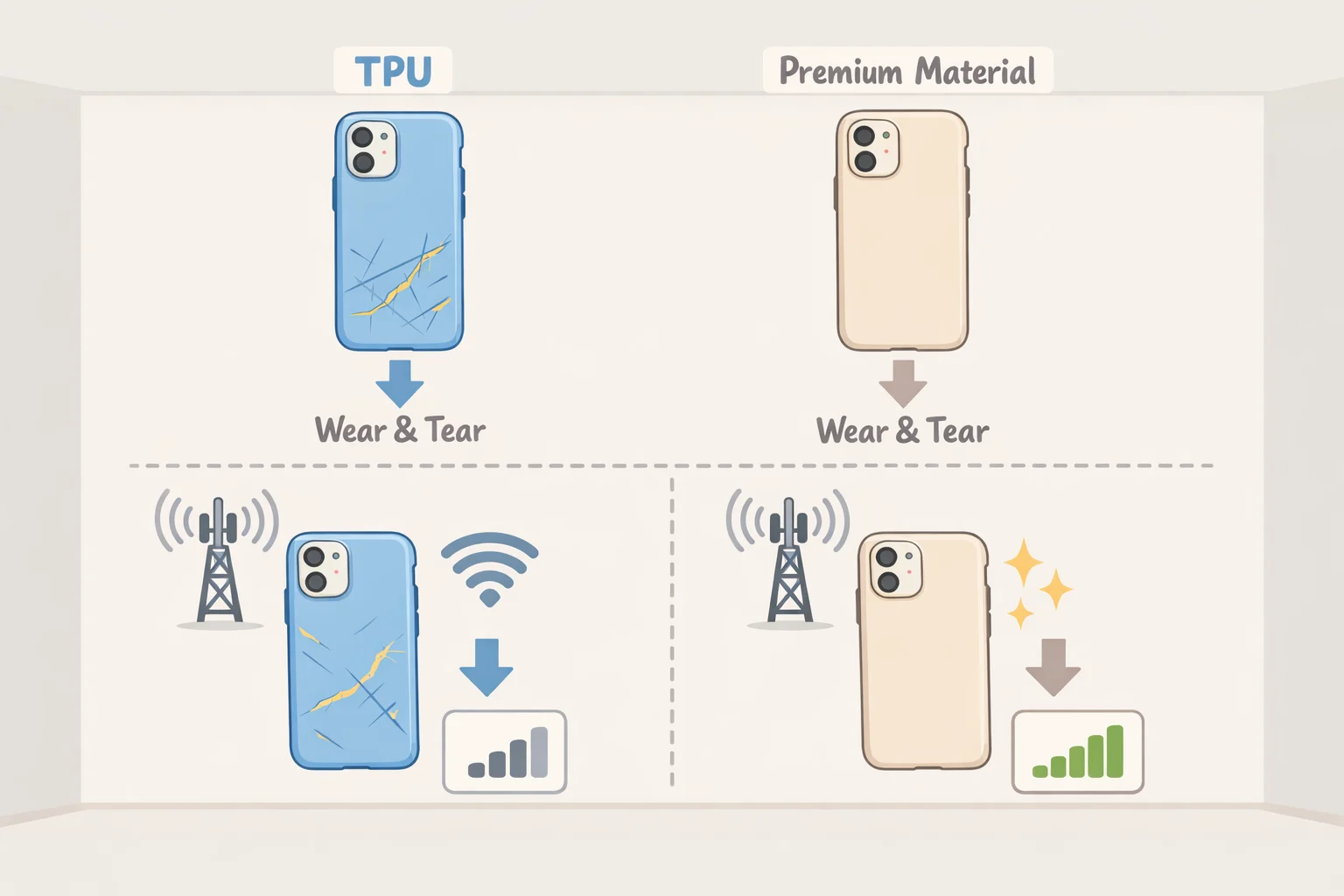
TPU (thermoplastic polyurethane) dominates the $10 to $30 range for a simple reason: it's flexible, cheap to produce, and grips surfaces reasonably well, according to Benks, a phone case manufacturer authorized by DuPont to use Kevlar fiber (Benks). It's the default material because it does the core job without asking you to pay for it.
Its real weakness isn't drop survival. It's how the case looks a year later. Benks says most TPU cases begin yellowing within 3 to 6 months of sun and light exposure, and clear cases in particular often need replacing within 6 to 12 months purely for appearance (Benks). That's manufacturer-reported guidance rather than independent lab testing.
Premium materials tend to solve secondary problems rather than deliver categorically safer drops. Benks' own ArmorAir case, built from 600-denier aramid fiber, reaches a 0.6mm profile, thinner than most wallets, while remaining non-conductive, so the company says it doesn't interfere with wireless charging, Wi-Fi, or GPS (Benks). That's a specific product's engineering limit, not a blanket property of every aramid case on the market.
Carbon fiber cuts the other way. It's electrically conductive, and Benks, whose business is selling aramid cases as an alternative, reports that carbon fiber cases can reduce Wi-Fi signal by 40 to 60 percent with comparable losses on 5G and GPS (Benks). That's a striking number from a source with an obvious commercial interest in steering buyers away from a competing material, so treat it as a claim worth further scrutiny rather than settled fact.
Hybrid designs, which pair a rigid shell with a flexible TPU frame, are what Benks recommends for the most complete drop coverage, which is why thicker hybrid cases tend to come up for people who drop their phones often in physically demanding settings like job sites or outdoor sports (Benks). That's the manufacturer's own framing, not an independent head-to-head test against other constructions.
The honest reason cases cost more usually isn't safer drops. It's thinness, signal compatibility, and how the case looks a year in, based on Benks' own account of the trade-offs between materials (Benks).
What "military-grade" labels actually prove
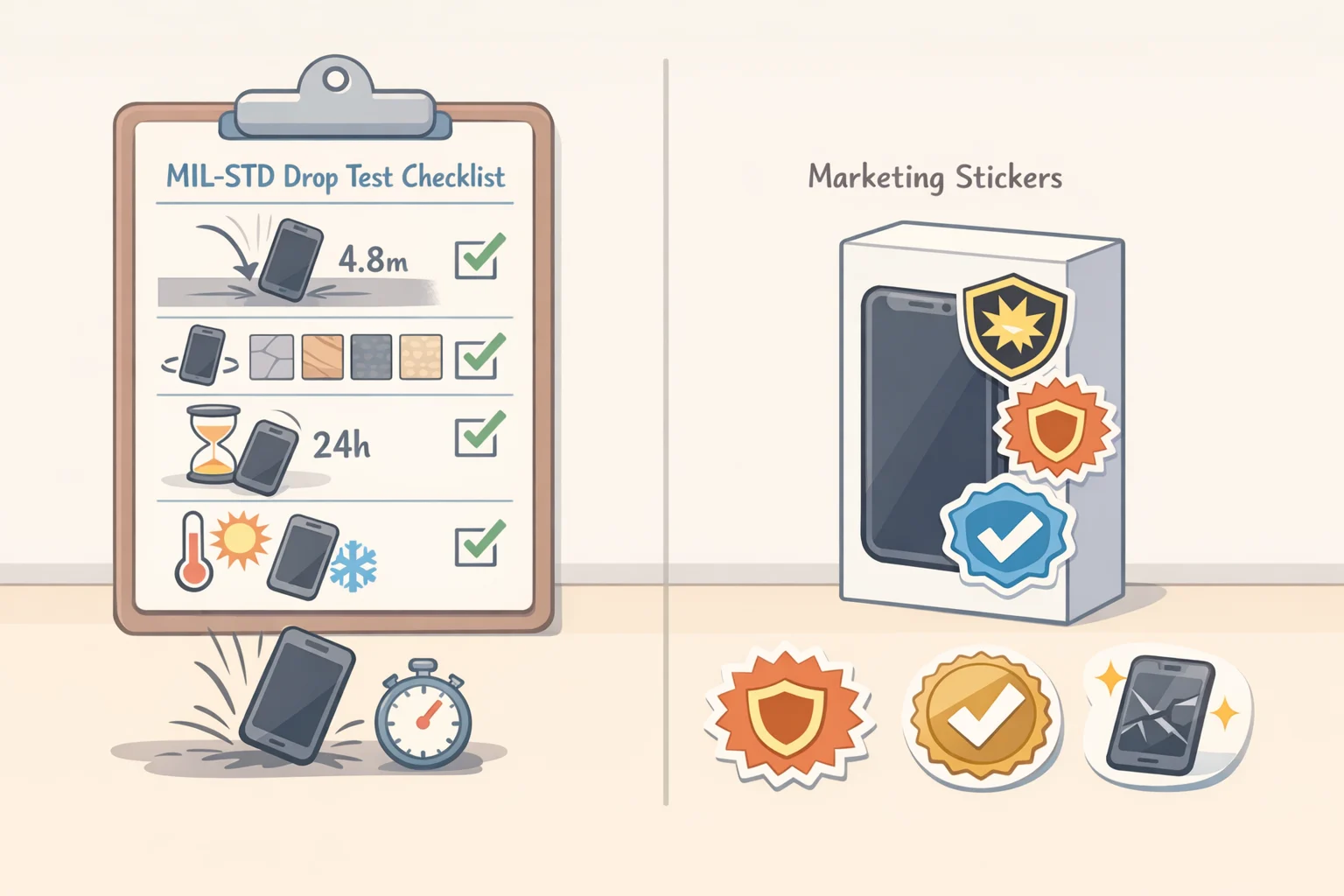
Some drop-test standards are real and specific. The commonly cited MIL-STD-810G Transit Drop Test involves 26 drops from four feet at varying angles, and the newer 810H standard raises the bar to a five-foot drop onto concrete backed by steel (SlashGear). Those are defined protocols with numbers attached to them, not vague marketing copy, though citing the name doesn't by itself prove a given case went through it.
What they don't establish is independence. Manufacturers may administer these tests on their own products, may use multiple samples across the 26 drops rather than one case surviving all of them, and the label does not necessarily mean the case was tested independently or by the military (SlashGear; Consumer Reports). A "military-grade" sticker with no cited standard behind it proves very little.
Consumer Reports' own reporting backs this up. Journalist Michael Crider told the outlet that "military grade" as a measure of toughness "is iffy at best," since it usually points back to the MIL-STD 810G series, a standard broad enough to be "almost useless as a label" on its own (Consumer Reports).
Warranty terms are where premium pricing is easier to defend, though the specifics that follow come from Consumer Reports' 2022 reporting and are worth confirming against current manufacturer pages before you rely on them. At the time, OtterBox offered a 7-year replacement warranty and Speck a limited lifetime warranty, though coverage varied by plan, with some covering only manufacturing defects. Casetify's shorter six-month warranty covered general wear and tear as well, a broader promise than a defects-only policy even if it ran for less time (Consumer Reports).
dbrand has shown what that kind of guarantee looks like in practice. The company promised free replacements for its clear Ghost line if the cases yellowed, and when an earlier design scratched too easily, it reissued a redesigned version to customers at no cost (Engadget). A generous, specific warranty transfers risk back to the manufacturer, and that's worth paying for in a way a badge on the packaging isn't.
Who should actually pay more
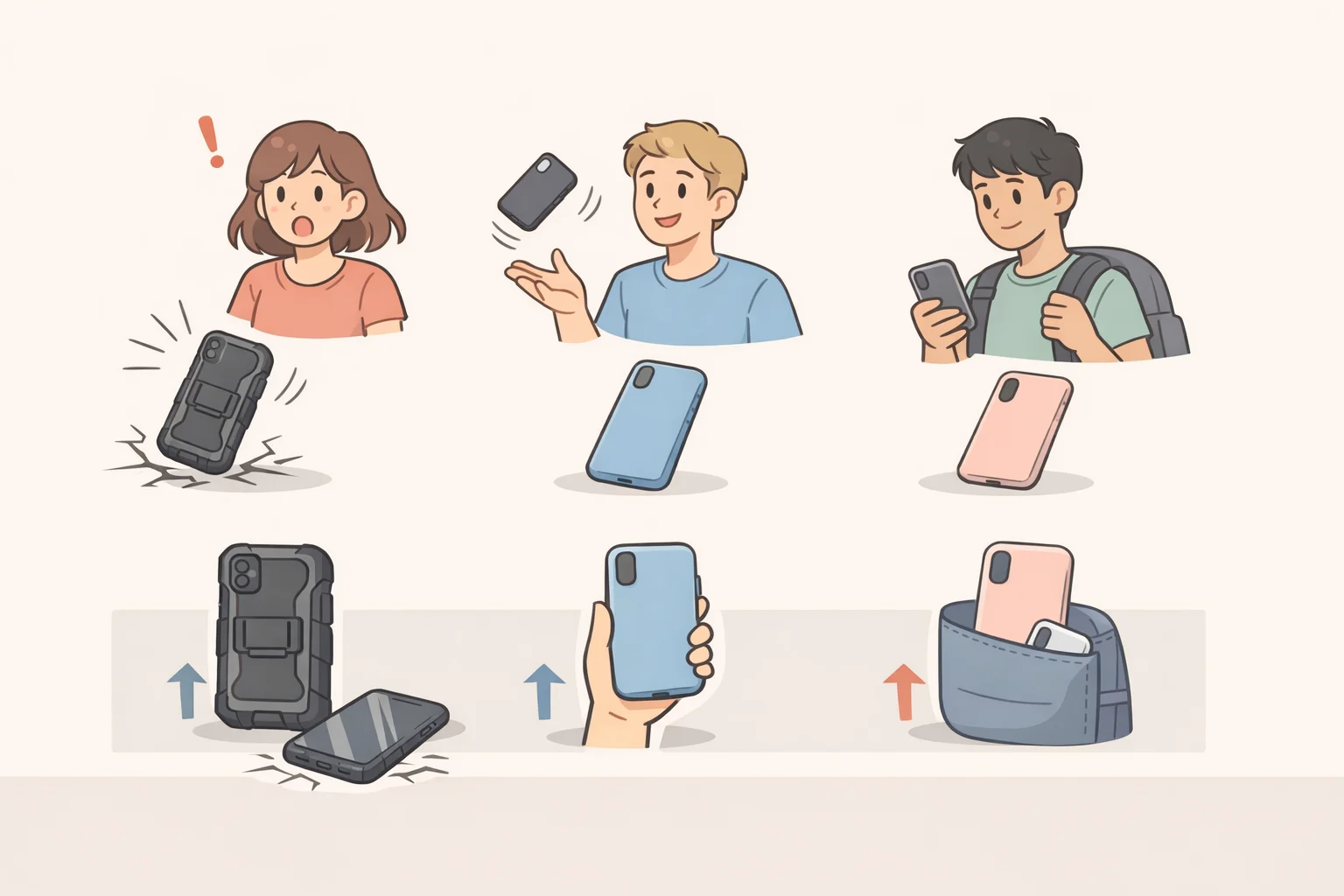
Most buying decisions fall into one of three profiles, and matching yourself to the right one is more useful than chasing a higher price point.
The everyday user. A $20 to $30 TPU or hybrid case with raised lips, cushioned corners, and a snug fit can handle routine drops reasonably well (Engadget; Consumer Reports). The available sources do not show that expensive materials are required for routine drop protection.
The frequent dropper. Anyone who works construction, does frequent outdoor sports, or otherwise drops a phone often in unpredictable conditions should look at thicker, reinforced hybrid construction. For rugged phone case protection, prioritize reinforced corners and a flexible shock-absorbing frame over a slim profile (Benks). That's a manufacturer recommendation, not a head-to-head test, but it fits the same mechanical logic covered above: a rigid outer shell for structure, a flexible frame to actually absorb the hit.
The thin-case user. Aramid fiber is worth the premium if minimal bulk and signal compatibility matter more than saving money. Benks says its non-conductive aramid cases don't interfere with wireless charging, 5G, or NFC, but that claim comes from the material's manufacturer, not an independent lab, so it's worth confirming against your specific phone and accessory combination before you buy (Benks).
Sometimes the case adds a feature you can't get elsewhere, and that alone can justify the price outside any of the three profiles above. The $60 Pitaka 600D is less protective than rivals like Spigen or dbrand, but it uses NFC to add a row of customizable physical shortcut buttons to the side of an Android phone, something cheaper cases simply don't offer (Engadget).
If impact protection and radio performance are your priorities, don't assume leather or carbon fiber is the best choice. Benks notes that leather doesn't flex meaningfully on impact, so drop energy transfers straight to the phone, and the company's own testing links carbon fiber's conductivity to reduced Wi-Fi and NFC performance (Benks). Both are reasonable trade-offs to make with eyes open, especially if the look matters more to you than the downside, but they shouldn't be mistaken for premium protection.
Pay more for a named feature, independently meaningful evidence, or a warranty you'll actually use. Don't pay more just because the box says "premium."
Before you buy
A few things are still worth checking before checkout, beyond the fit and cushioning already covered above:
- The named test standard and drop height, if one is cited on the box
- A magnetic ring if you rely on MagSafe-style wireless accessories, keeping in mind that not all magnets perform the same way (Engadget)
- The warranty's actual exclusions: manufacturing defects only, or wear and tear too
The sources here do not provide a standardized, independent comparison across price tiers. Until that changes, treat price as payment for a specific feature, material, or warranty, not as proof of survivability, and buy based on how you actually use your phone.