2026 Lexus RZ review: the $59,000 flagship undercuts its own fix
Every automaker eventually faces the same test: fix the flaws critics flagged, then don't undo the fix with the next flagship trim. Lexus mostly passed that test with the redesigned 2026 RZ, then nearly failed it with one specific trim built to show the car off. This 2026 Lexus RZ review looks at what actually changed, what didn't, and why the priciest version of the car reopens the exact problem Lexus just spent three model years closing.
When the RZ launched in 2023, it landed to underwhelming reviews, according to TractionLife. The complaints were specific: thin range, slow charging, modest power for the price. The redesigned 2026 lineup answers most of that directly. Battery capacity grew, charging got meaningfully faster, and the range-topping RZ 550e now claims a 4.1-second sprint to 60 mph, according to Capital One.
The catch: that same flagship trim, with 402 horsepower and F Sport styling, delivers just 229 miles of range, the lowest figure anywhere in the lineup, according to Ars Technica. It starts around $58,295 before options, more than $10,000 above the base RZ 350e, which is rated for up to 301 miles. Lexus solved the RZ's range problem. Then it built a $59,000 trim that brings the problem right back.
2026 Lexus RZ 450e review: how big the upgrade really is
Video of the Day
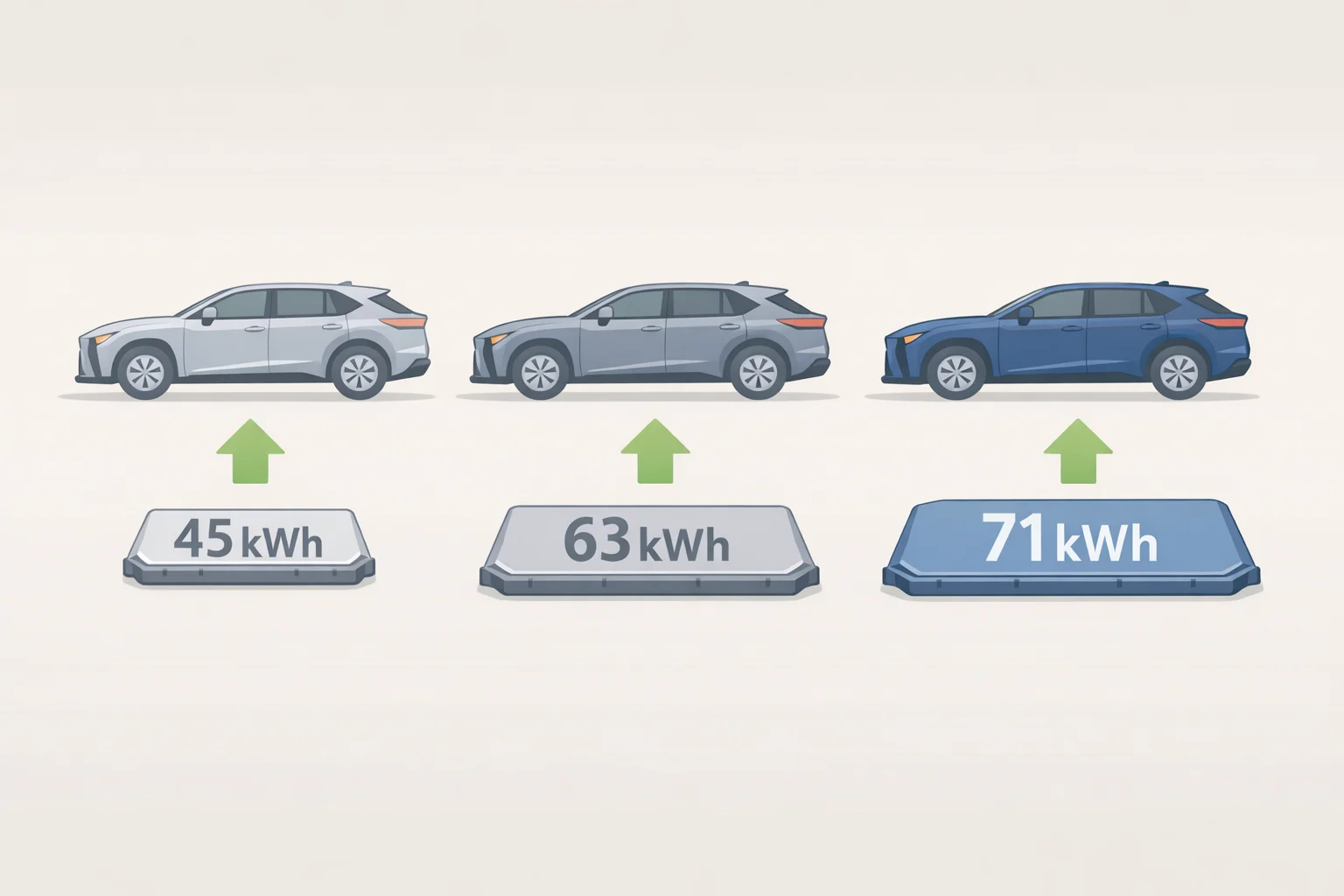
Start with the number that mattered most to critics of the original car: battery size. TractionLife tested a Canadian-market RZ 450e Executive this week and found its pack grew from 63.4 kWh to 76.96 kWh, lifting the test car's range on 20-inch wheels from 196 miles to 258 miles. That's a Canadian-spec figure on a loaded trim, and it doesn't map one-to-one onto U.S. ratings, but it shows the scale of the change.
In the U.S. lineup, the split runs slightly differently. Capital One and Ars Technica both cite 75 kWh packs for the 350e and 450e, with a slightly larger 77 kWh pack reserved for the 550e, one of the few real battery advantages that trim holds over the rest of the range. The base 350e is rated for up to 301 miles, and the lineup overall spans 257 to 301 miles, according to USA Today and Capital One.
Charging improved on a similar scale. Home AC charging jumped to 11 kW from roughly 7 kW, and a new NACS port relocated to the front-right fender lets the RZ plug straight into Tesla Superchargers, with a claimed 10-to-80% DC charge in about 30 minutes, according to Capital One and Ars Technica. Power climbed too: the 450e now makes 313 horsepower, according to TractionLife, while the new 550e produces 402 horsepower alongside that 4.1-second 0-to-60 claim, according to Capital One.
TractionLife's real-world numbers back up the paper gains. Over a longer test stretch, the 450e averaged around 17 kWh per 100 km, better than its own official 19 kWh/100km rating, and closer to 13 kWh/100km during a week of mostly city driving. None of this is cosmetic. Battery capacity, charging speed, and output were the three things reviewers flagged most often about the original RZ, and Lexus moved the needle on all three. That's exactly what makes the 550e's range shortfall stand out. It isn't a lineup-wide problem anymore. It's a decision made for one trim.
Video of the Day
2026 Lexus RZ price and trim levels: where the value breaks down
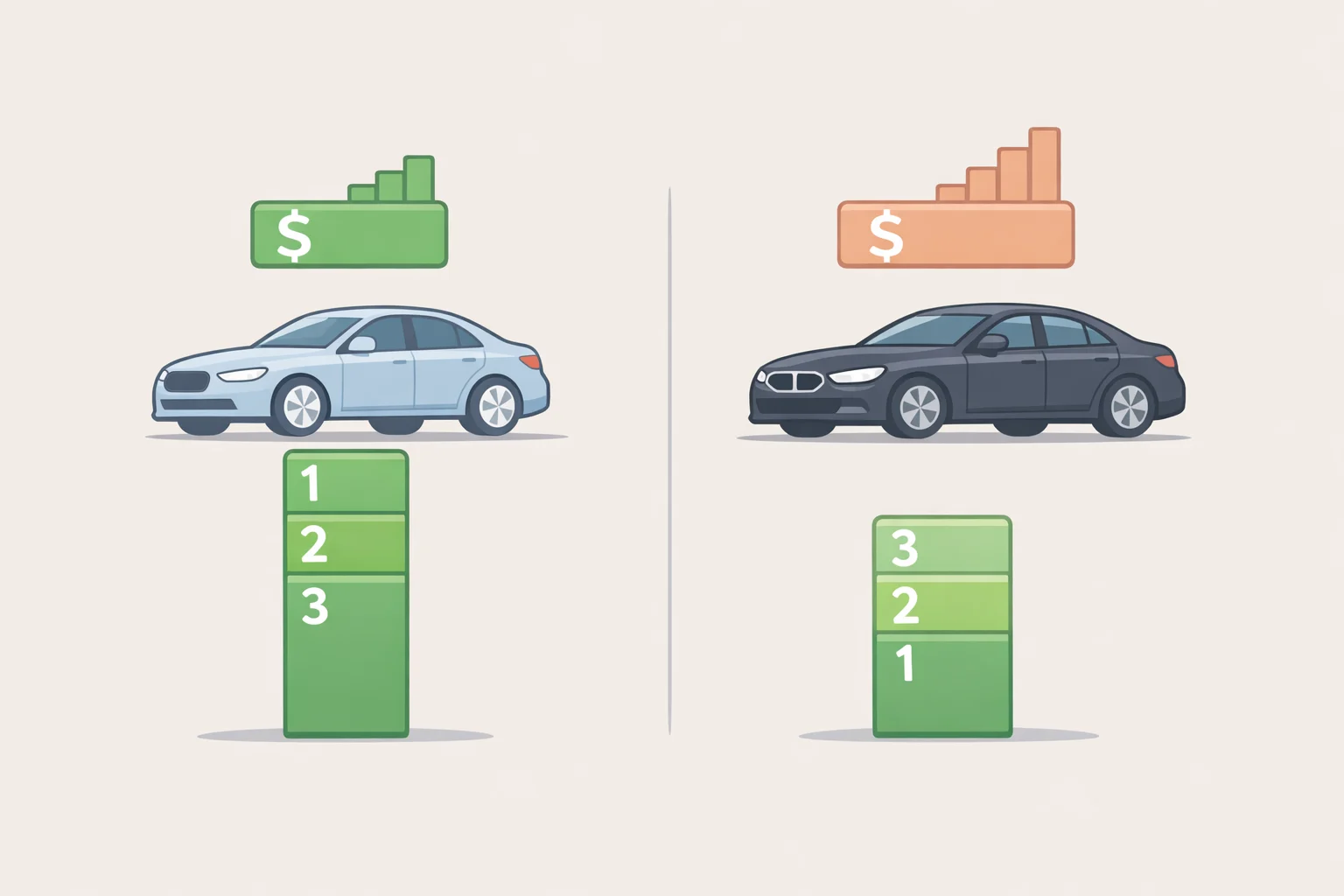
The 2026 RZ comes in three configurations: the front-wheel-drive 350e, the all-wheel-drive 450e, and the high-performance all-wheel-drive 550e. Base prices, including destination, run from about $47,295 for the 350e to $58,295 for the 550e F Sport, according to Ars Technica and Capital One. Capital One's own loaded test vehicle carried an MSRP of $62,184, a reminder that the sticker price and the price a buyer actually pays rarely match once options enter the picture.
That roughly $10,000 gap between the base 350e and the flagship 550e buys real performance: 402 horsepower versus 221, and that 4.1-second sprint to 60 mph. It also costs 72 miles of range. Ars Technica put it bluntly: the base RZ is more than $10,000 cheaper and still rated for 301 miles, a comparison that makes the 550e's math hard to defend on paper alone.
Cross-shop the 550e against rivals and the picture gets murkier, not clearer. Capital One notes that dual-motor AWD versions of the Audi Q4 e-tron and Genesis GV60 Performance land around 250 miles, while the Cadillac Optiq tops 300, meaning the RZ 550e isn't the range leader even among cars aimed at the same buyer. Where the 550e does win is against pricier performance trims: it undercuts the Cadillac Optiq-V and Genesis GV60 Performance on cost, per Capital One. That's a real advantage. It's just not the one Lexus tends to emphasize in the marketing.
Earlier this year, USA Today called the RZ lineup one of America's cheapest luxury EVs, with a starting price below the average new EV, and noted the RZ shares much of its bones with its cheaper Toyota sibling, the bZ. That framing holds up at the entry trim, where the value case is straightforward. It gets harder to make once a buyer starts adding options and climbing toward the F Sport trim, where the price tag stops looking like a bargain and starts looking like every other performance EV on the lot, minus a chunk of the range.
2026 Lexus RZ range: the biggest drawback
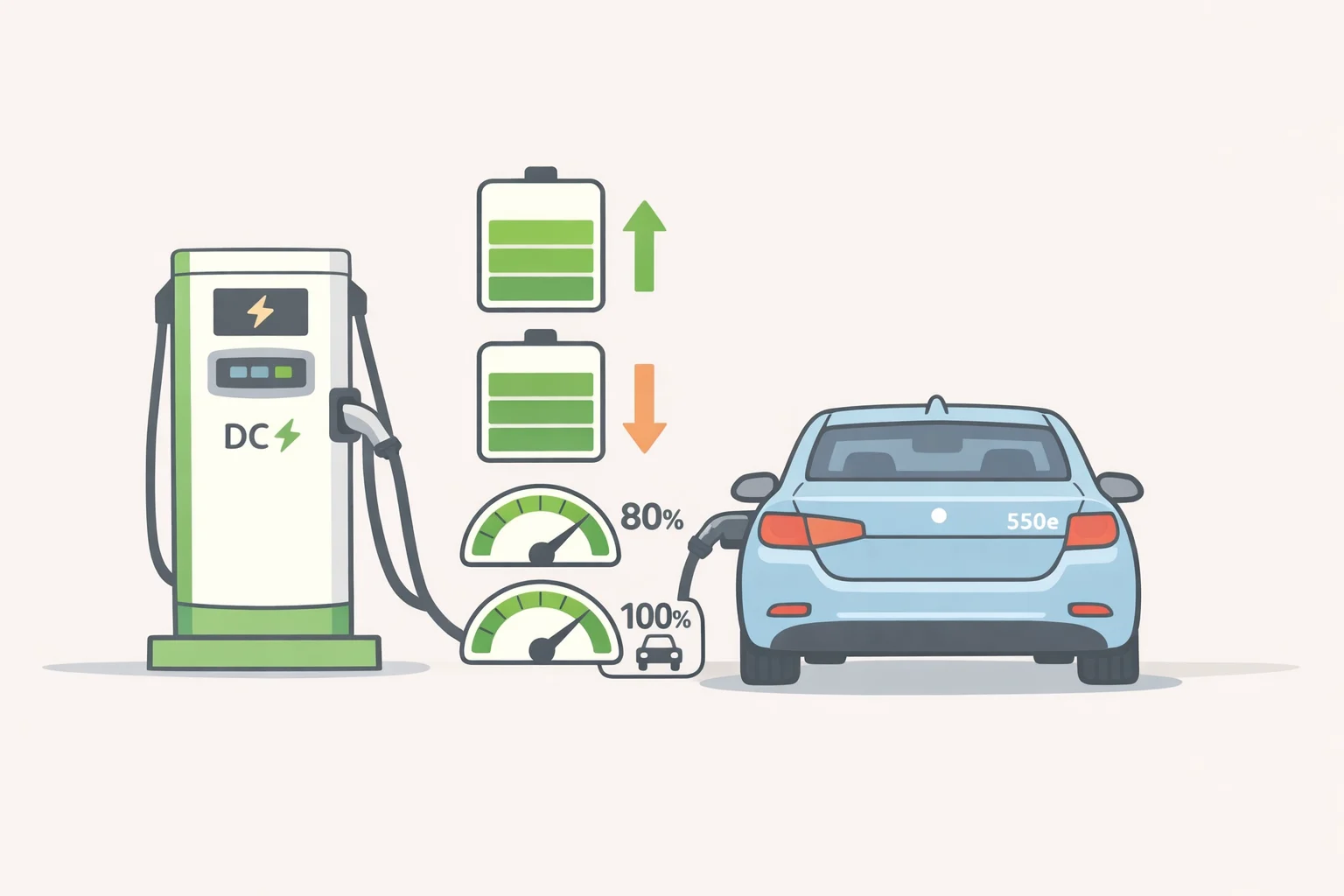
Rated range and real-world range are two different numbers, and the 550e's gap between them is where the trim's flaws show up most clearly. Ars Technica tested the car in chilly but not sub-freezing February weather and recorded an average of 2.5 miles per kWh. At 50% state of charge, the car's own display showed just 88 miles remaining, a figure that turns the 229-mile rated maximum into more of a best-case scenario than a working number.
Capital One reached a similar conclusion from a different angle, calling 229 miles simply not enough, while noting the rest of the lineup, at 257 to 301 miles, is less likely to trigger range anxiety. That's a notable split inside one brand's own lineup. Buyers shopping the entry and mid trims get a genuinely usable EV. Buyers shopping the flagship get a car that needs more frequent charging stops to do the same job.
Not every test told the same story, though. Capital One's own 550e test loop returned 111 MPGe, well above the EPA's combined estimate of 95 MPGe, suggesting the car can outperform its own rating in warmer, gentler driving. That's a useful counterpoint to Ars Technica's cold-weather figures, and it points to a car whose real-world range swings more than most depending on temperature and driving style, not a car that's simply mediocre in every condition.
Faster charging blunts some of the pain but doesn't erase it. Ars Technica measured a real DC fast-charge session that added 35.2 kWh in 26 minutes, close to Lexus's own claims for the car, a legitimate improvement over the outgoing RZ. But because the 550e's overall range ceiling is lower than the rest of the lineup, the same percentage of charge simply banks fewer total miles than it would in the 301-mile base 350e.
The charge port's new location adds its own friction. Ars Technica describes the front-right fender placement as awkward at Tesla Superchargers, where the driver has to nudge uncomfortably close, playing a kind of chicken with the car's automatic emergency braking, just to get the cable to reach. TractionLife, testing the 450e in Canada, had a smoother experience overall and praised the Supercharger network's app integration as seamless. The difference likely comes down to specific stall geometry rather than a hardware flaw across the board, but it's a real inconsistency buyers should expect to run into.
Is the 2026 Lexus RZ worth it?

Strip away the powertrain debate and the RZ holds up well. Cargo space measures 34.9 cubic feet, more than the Audi Q4 e-tron, Cadillac Optiq, Genesis GV60, and Volvo EX40 offer, according to Capital One. A 14-inch touchscreen, wireless Apple CarPlay and Android Auto, and Lexus Safety System+ 3.0, which bundles adaptive cruise control, forward-collision warning, and automatic emergency braking, all come standard. Lexus builds on that base with blind-spot monitoring, rear cross-traffic alert, and a low-speed Traffic Jam Assist feature, per Capital One. The cabin, in Capital One's own assessment, seems impeccably built, even if the design leans a little dull, and the climate controls, mostly virtual buttons parked on the lower third of the touchscreen, feel like a step backward from physical knobs.
The 550e's driving character is the trim's best argument for existing. Capital One calls it surprisingly fun to drive, and the eight simulated gear ratios, worked through paddle shifters, give the RZ a personality most single-speed EVs don't bother with. Ars Technica is less sold on the execution, noting the simulated shifts turn jerky unless the driver is fully off the throttle, and that Hyundai's version of the same trick, in the Ioniq 5 N, feels more polished. The 2026 Lexus RZ flaws, then, are concentrated almost entirely in one trim: the base and mid versions don't inherit the range problem, and the top trim doesn't fully deliver on the performance-EV fantasy it's selling either. Capital One flags one more small annoyance across the lineup: an overly sensitive driver-inattention warning that could use some tuning.
The verdict
The 2026 refresh earns its billing. Battery capacity, charging speed, and output all improved substantially over the 2023 original, and for two of the RZ's three trims, that adds up to a genuinely competitive EV with strong cargo space and a thorough safety suite standard. The exception is the trim built to be the headline act.
For buyers cross-shopping this segment, the decision comes down to priorities. Want a quick, characterful EV and don't mind extra charging stops? The 550e delivers that, jerky simulated shifts and awkward Supercharger geometry included. Want the actual value story Lexus is selling? Buy the 350e or 450e instead; either one gets the bigger battery and faster charging without the range penalty. Whether Lexus eventually narrows that gap on the flagship, or simply lets the 550e exist as a niche performance pick rather than the range-topper, is worth watching as the RZ heads toward its next model year.