Ukraine MUL.E Electric Military Motorcycle: Mine-Resistant
Ukraine's Defense Ministry has codified and approved the MUL.E, the country's first all-wheel-drive electric military motorcycle, for service in the Armed Forces (Interfax, in late July). The machine pairs two features no standard motorcycle offers: low ground pressure that the ministry says reduces the risk of triggering most anti-vehicle mines, and a detachable generator that recharges phones, radios and FPV drones far from any power grid (TechRadar, earlier this month; Euromaidan Press, in late July).
Ukraine's Defense Ministry said the MUL.E passed testing that confirmed its stated performance before entering service (Interfax, in late July). What follows is what the MUL.E is built to do, how its mine-avoidance and power-station features are supposed to work, and where the ministry's claims currently outrun independent confirmation.
What is the MUL.E electric military motorcycle?
Video of the Day
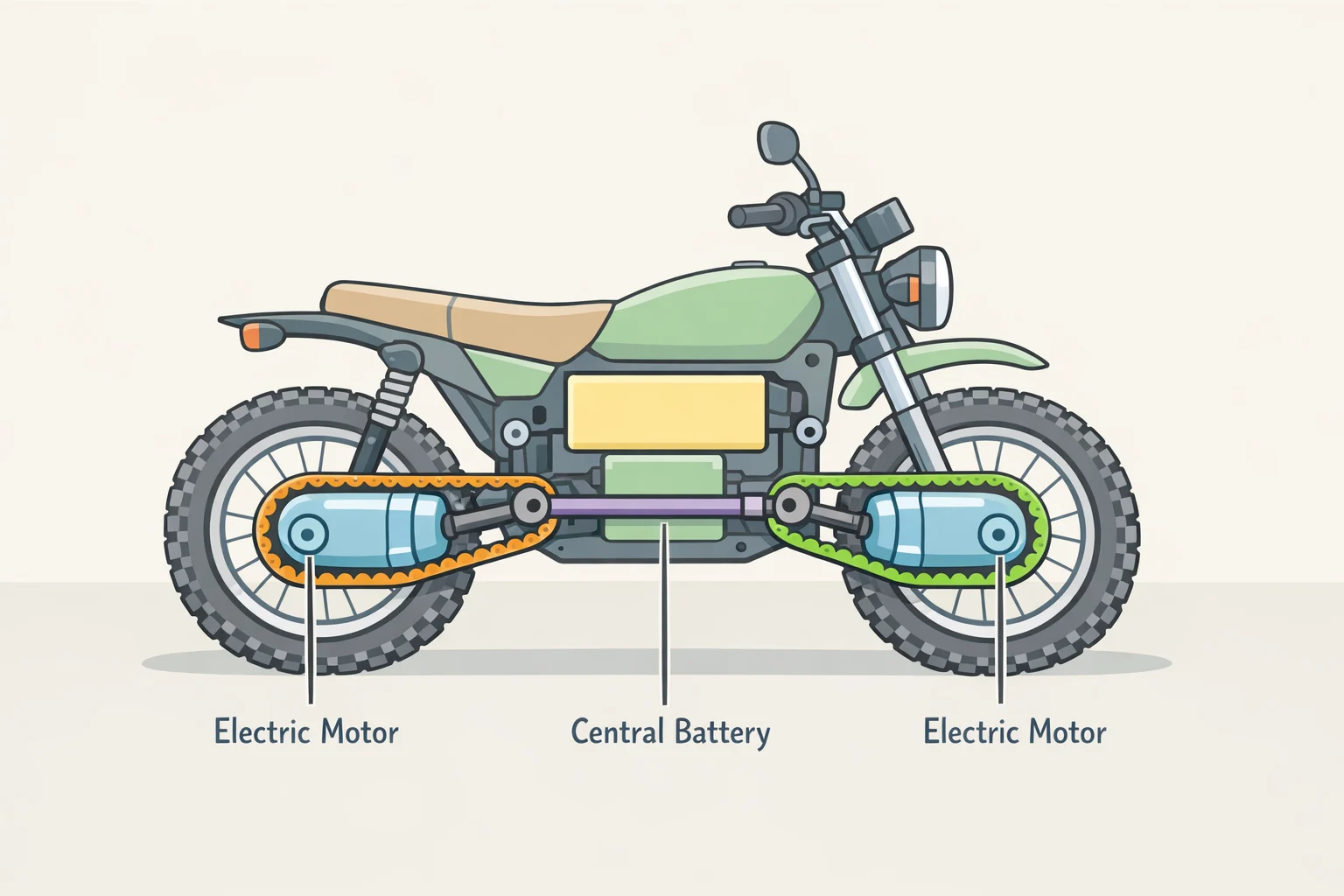
A Ukrainian defense enterprise developed the MUL.E after soldiers asked for a vehicle suited to high-intensity modern warfare, according to the ministry's account (Euromaidan Press, in late July). The core of the design is a 2x2 all-wheel-drive layout running on two independent electric motors, so the bike keeps moving even if one motor fails (TechRadar, earlier this month).
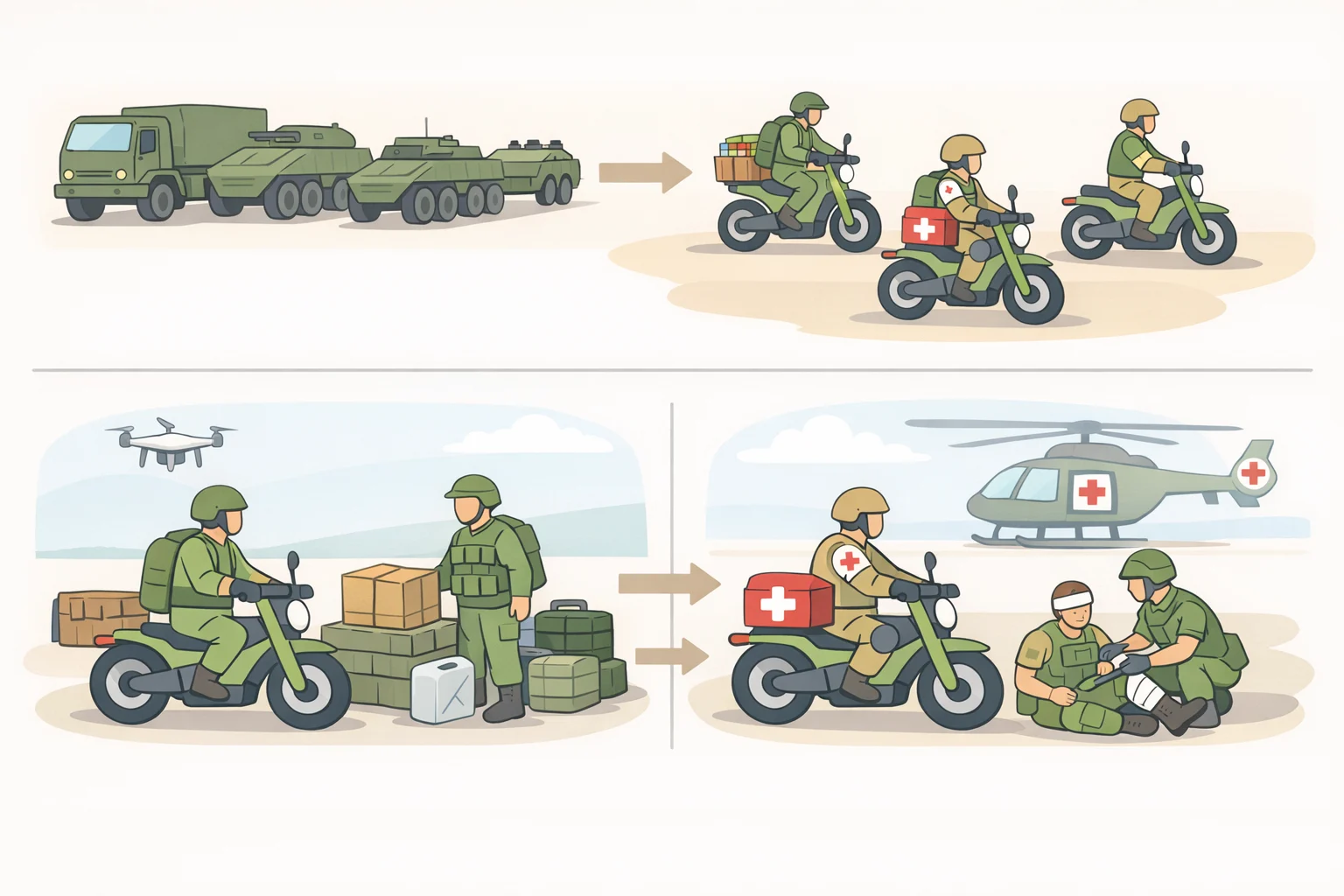
The ministry lists four intended jobs: carrying two armed soldiers, hauling small cargo, evacuating wounded personnel, and towing a loaded trailer across roads and rough terrain alike (Interfax, in late July). The MUL.E is not Ukraine's first attempt at this class of vehicle. It follows the WOLFSTORM, an electric motorcycle approved in June that reaches 80 km/h and carries two fully equipped soldiers, with its thermal and acoustic signature described as reduced (TechRadar, earlier this month). The MUL.E adds all-wheel drive, mine resistance and a generator to that concept, extending what an electric two-wheeler can do for the small mobile groups that increasingly define how Ukraine fights, according to Euromaidan Press (Euromaidan Press, in late July).
Video of the Day
How Ukraine's all-wheel-drive electric motorcycle handles mines
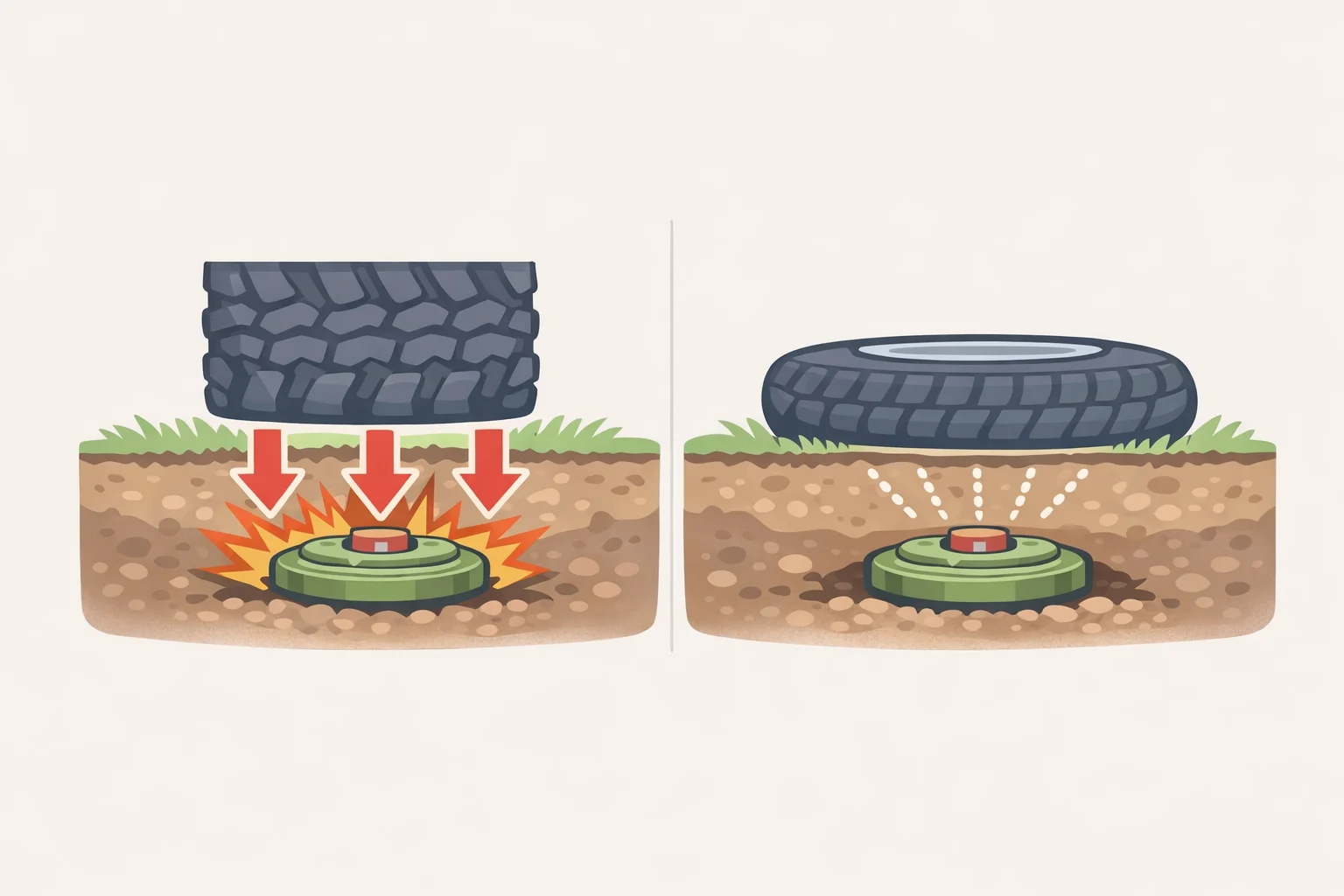
The MUL.E's standout feature, per the ministry, is low ground pressure roughly comparable to an infantryman's footstep, which the ministry says reduces the risk of triggering most mines designed to destroy trucks and armored vehicles (Interfax, in late July). That is a claim about lowering the odds of activation, not a guarantee of immunity.
The same wide off-road tires and all-wheel-drive combination are meant to let the motorcycle move through sand, marsh, deep snow and washed-out ground, conditions that regularly restrict wheeled military mobility (TechRadar, earlier this month). None of the available reporting specifies which mine types were tested, and the announcement does not include failure rates or independent test data. The claim covers pressure-fuzed anti-vehicle mines specifically; it says nothing about tripwires or other fuze types, and it should be read as a ministry claim confirmed by ministry testing rather than a battlefield-proven fact.
Euromaidan Press frames the mine-crossing capability as a meaningful advantage on a front where mined routes have made large stretches of terrain difficult to cross, even for units without heavy armor (Euromaidan Press, in late July).
How the MUL.E works as a drone charging power station
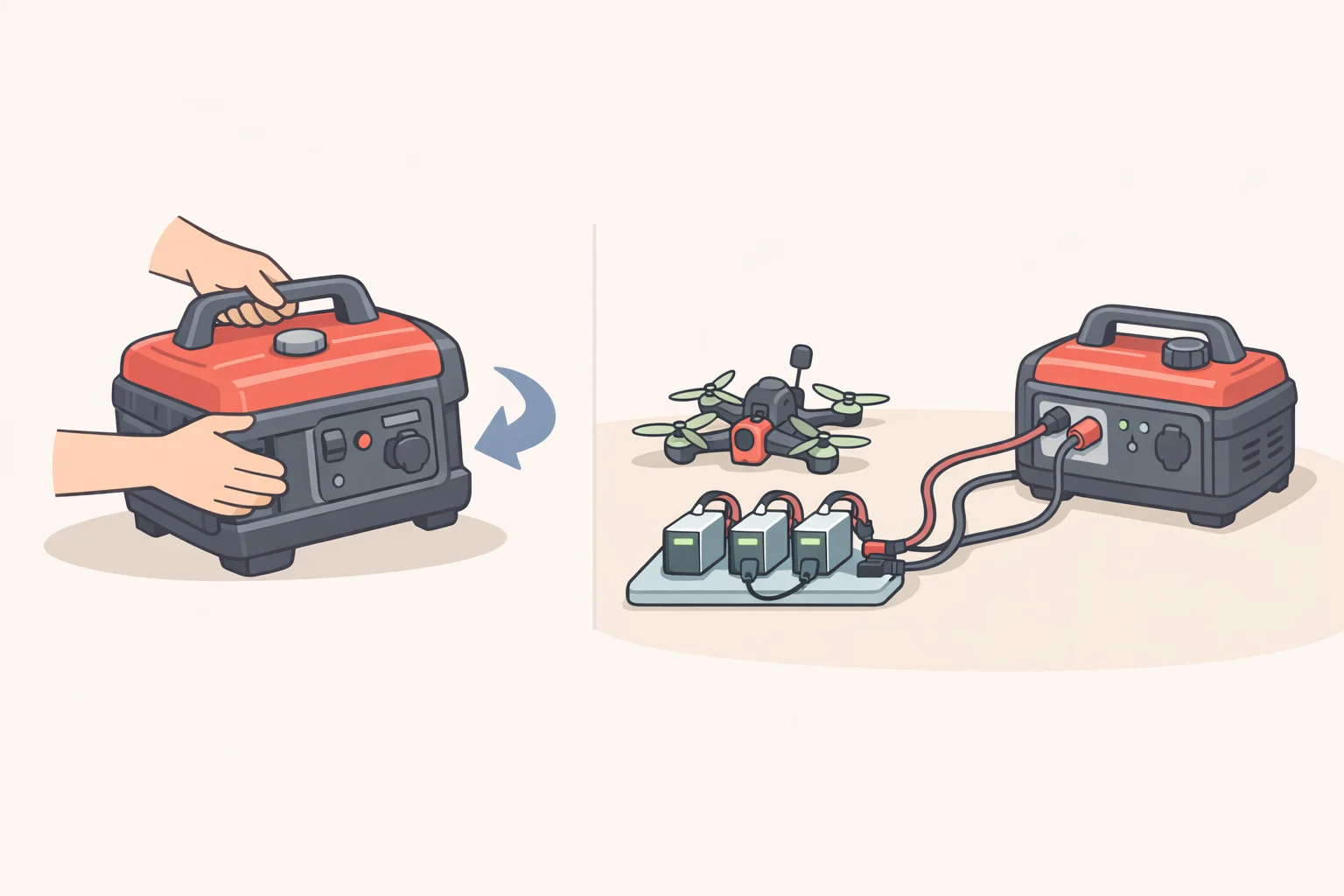
The second half of the MUL.E's pitch is the generator. A removable gasoline unit mounted on the frame recharges the bike's batteries, and once detached, it keeps running as a standalone power source (Interfax, in late July). Soldiers can use it to charge FPV drone batteries, radios, phones and communications gear, which turns the motorcycle into a piece of mobile infrastructure for units operating away from any grid connection (Euromaidan Press, in late July).
A full battery charge is stated to last nearly 100 km (TechRadar, earlier this month). Instead of becoming stranded once that range runs out, the additional generator recharges the bike before continuing to operate independently as a portable power source (TechRadar, earlier this month).
The tradeoff is less clear. The Royal United Services Institute notes that electric motorcycles already in use in Ukraine are valued partly because they run quieter and produce a smaller heat signature than gas-engine equivalents, making them harder for drones to spot. The ministry has not published generator output, runtime or noise figures, so it is not clear how much of that quiet running survives once a soldier fires up the petrol generator to keep drones charged.
Ukraine's shift toward electric military motorcycles, in context
Ukraine's move toward small, dispersed vehicles tracks a wider shift the war has forced on both sides. Independent analysis from RUSI found drones responsible for 60 to 70 percent of damaged or destroyed Russian military systems roughly a year ago, a figure that helps explain why both militaries have leaned harder on motorcycles and ATVs instead of armored columns (RUSI, last year). RUSI also found that neutralizing a single motorcycle takes roughly the same resources as stopping a much larger armored vehicle, which makes dispersed riders a costlier target to chase than the price of the bike would suggest (RUSI, last year).
That analysis also draws a line worth applying to the MUL.E. Motorcycles and ATVs on this front are used for fast, dispersed assault waves, but RUSI's research describes them just as often serving logistics, medical evacuation, reconnaissance and electronic warfare support, particularly in terrain where heavy armor is too slow or too exposed to operate (RUSI, last year). The MUL.E's stated job list, ferrying soldiers, evacuating wounded, hauling cargo, sits in that second category. It is built as logistics and support hardware, not an assault vehicle.
Ukraine's own procurement numbers reflect the broader shift toward this vehicle class. The Defense Procurement Agency contracted 1,500 motorcycles in 2026, three times last year's volume, and a six-company competitive tender on that contract saved the state budget nearly $290,000 (Euromaidan Press, in late July). That figure covers the year's broader motorcycle contract; none of it is confirmed to be MUL.E units specifically.
None of this makes motorcycles a substitute for armor. Tanks and armored vehicles still provide protection and firepower that a two-wheeled platform cannot match in high-intensity combat, a point the Adapt Institute made plainly earlier this year. Motorcycles fill a mobility and logistics niche, moving people, wounded soldiers and small cargo through terrain and threats that would stop or expose a heavier vehicle. They are not a replacement for the vehicles built to absorb enemy fire.
What to watch next
Nearly every specific performance figure attached to the MUL.E, from its mine-avoidance mechanism to its charging capacity, traces back to the Defense Ministry's own announcement, repeated across outlets rather than independently tested (Interfax, in late July; TechRadar, earlier this month).
What happens next depends on units carrying the bike into the field, not on further statements from the ministry. Whether the MUL.E crosses mined ground the way its designers claim, and whether its generator keeps drones and radios running without giving away a unit's position, are questions only frontline use can answer.