Ford Fathom electric midsize truck: price isn't everything
Ford is betting that a $28,350 starting price can succeed where the F-150 Lightning failed, turning what ABC News describes as "cash-strapped Americans" into electric truck buyers (ABC News, today). The Ford Fathom electric midsize truck, unveiled today, is walking into a segment that has spent the past year proving electric trucks don't sell themselves just because they're cheap.
The price itself is genuinely unusual. Edmunds counted just 69 vehicles on sale with a base MSRP of $35,000 or less, and the average EV transaction price hit $56,713 in the second quarter of 2026 (ABC News, citing Edmunds). Set against those numbers, an affordable electric midsize truck starting at $28,350 looks less like a marketing figure and more like a real outlier.
It also arrives at an awkward moment for the category it's trying to revive. EV sales made up just 5.8% of new-vehicle volume in the second quarter of 2026, barely moved from the first quarter and down sharply from the 10.6% record set in the third quarter of 2025, right before the federal EV tax credit expired (ABC News, citing Cox Automotive). A cheap sticker price earns Ford headlines today. Whether it earns sales depends on three things that have nothing to do with the MSRP.
Ford Fathom electric midsize truck: price, features, and the 2027 launch
Video of the Day
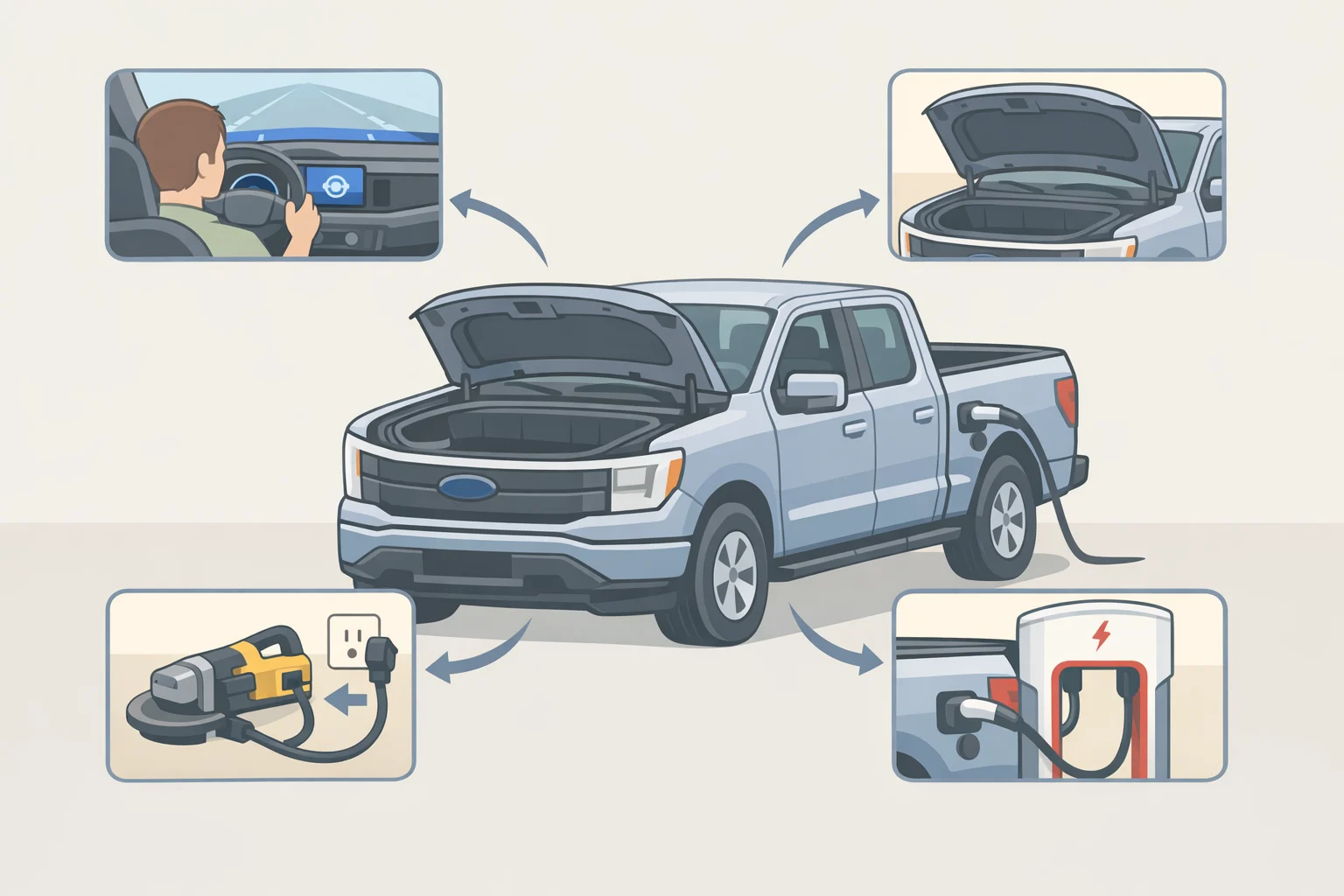
The Fathom will be the first vehicle built on Ford's new Universal Electric Vehicle (UEV) Platform, a program the company has called its "Model T moment" (ABC News; Automotive World, earlier this year). Ford didn't release photos or a detailed spec sheet today, but confirmed the truck will ship with BlueCruise hands-free highway driving, bi-directional power, a front trunk in addition to a conventional bed, and access to Tesla's Supercharger network for road trips and daily charging (ABC News).
The price itself has been in motion for months. Business Insider reported last month that Ford was targeting a starting price of roughly $30,000, with deliveries planned for 2027 (Business Insider). Ford has since sharpened that target to a specific $28,350, and pre-orders for the 2027 Ford Fathom open in early 2027 (ABC News).
That's what Ford has promised in public so far. Every review, every comparison, and every skeptical shopper will measure the truck against that number once it actually sits on a dealer lot.
Video of the Day
What will make the Ford Fathom electric truck successful?
A low starting price gets attention. Turning that attention into orders depends on three separate things going right.
The bargain has to hold up once buyers start configuring the truck. Ford's earlier target of roughly $30,000 sat about $20,000 below the average U.S. new-vehicle transaction price, by the company's own comparison reported earlier this year (Automotive World). The newly confirmed $28,350 figure would presumably widen that gap further, though Ford hasn't recalculated the comparison against the sharper number, and it hasn't released trim-level or option pricing either. Until that detail exists, $28,350 describes an entry configuration, not necessarily what most buyers will actually drive home.
Edmunds' Ivan Drury frames the truck as a response to "the widespread affordability crisis affecting the entire truck segment," but stops short of calling it revolutionary. He points to the Ford Maverick, a $27,145 gas-and-hybrid pickup that's become a sleeper hit, as proof that much of what buyers want in this size and price class already exists without a plug, calling the Fathom "an incremental iteration rather than a complete revolution in budget-friendly design" (ABC News). That comparison cuts both ways: the Maverick proves this size and price bracket sells fine without an EV attached, which means the Fathom still has to offer something the Maverick doesn't. Drury does credit it with the potential to chip away at that $56,713 average EV transaction price simply by existing at scale (ABC News).
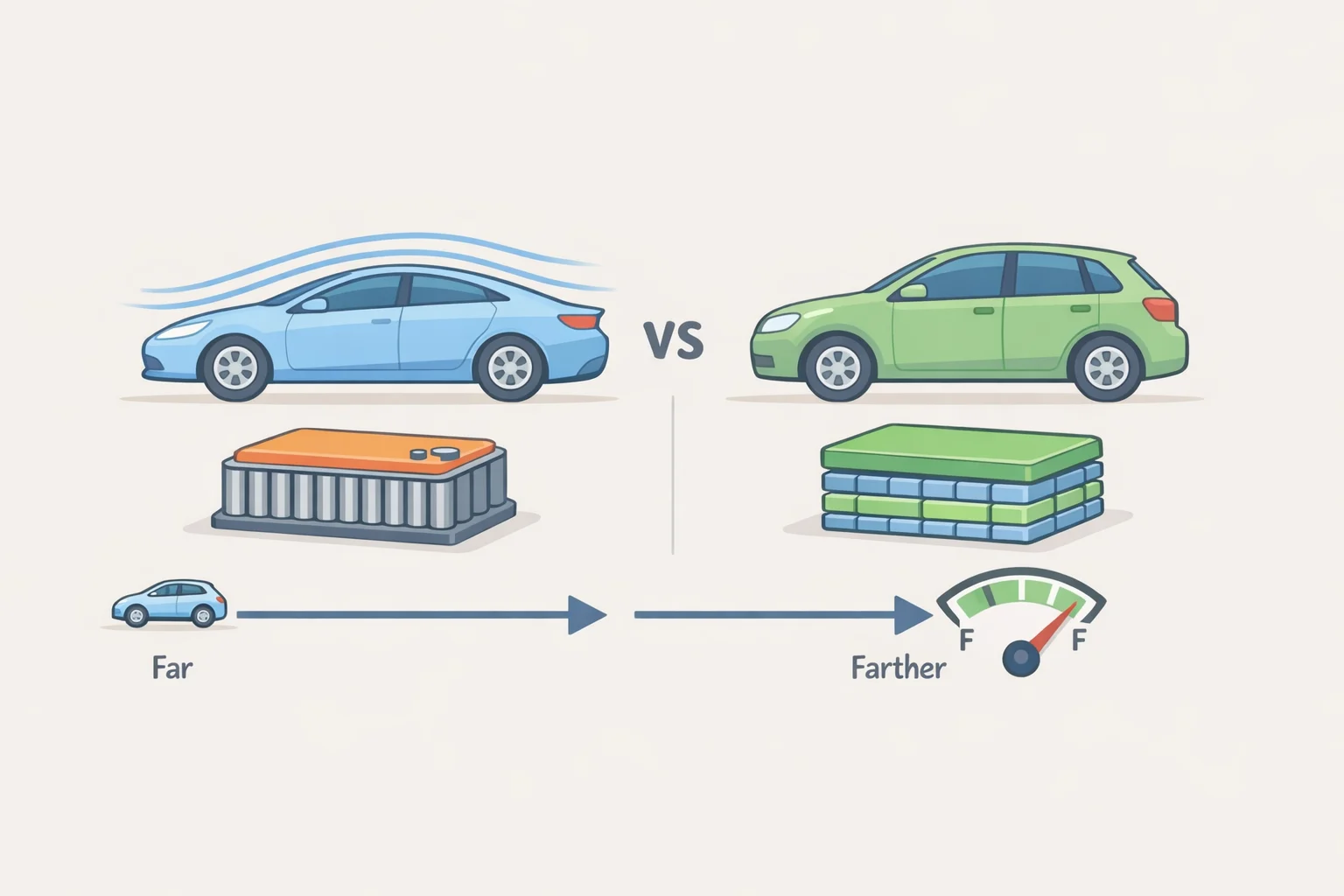
The EV fundamentals have to hold up against a gas truck, not just against other EVs. Ford says the truck is more than 15% more aerodynamic than any production vehicle currently on sale, and claims that gain alone is worth nearly 50 extra miles of range without a bigger battery (Automotive World). Ford executive Alan Clarke has described a "bounty culture" inside the program, where every design tradeoff gets converted into a dollar figure or a mile of range: adding a single millimeter to the roof height, he says, costs $1.30 in battery or 0.055 miles (Automotive World). Batteries typically account for roughly 40% of an EV's cost, and the industry has usually addressed range anxiety by simply oversizing the pack, according to the same analysis. The Fathom instead uses a structural lithium-iron-phosphate battery built into the body, an attempt to claw back range through efficiency rather than raw cell count (Automotive World).
None of that has been converted into numbers a buyer can actually compare against a gas truck. Business Insider noted last month that Ford still hadn't released an EPA range estimate (Business Insider). Several other figures buyers will need are also still missing: real-world cold-weather range, peak charging speed and how many reliable fast chargers sit along a typical route, towing and payload capacity, and what insurance and repair bills look like once the truck is actually on the road. Ford's structural battery design and a battery-management system built to be serviced without swapping the entire pack are meant to lower those long-term costs (WardsAuto), but nothing in the reporting so far includes independent insurance or repair-cost figures confirming it. Every efficiency number above is a Ford claim right now, not a verified advantage.
It has to win the argument as a truck first. Clarke has been direct about why Ford picked this size instead of another Lightning-style full-size EV. "Big trucks are a tougher market than small trucks," he said on the Edmunds Podcast, calling the compact format "a much better use case" (InsideEVs, two months ago). Ford says the cabin will offer more interior volume than a previous-generation Toyota RAV4, the world's best-selling SUV, which Clarke cites as evidence the size is usable rather than a compromise (InsideEVs).
Ford's own framing of the project breaks from how the industry usually pitches EVs. "This isn't about being really good at being an EV," Clarke said. "It's about being good as a product that happens to be an EV" (InsideEVs). He's also talked about wanting the truck to be "fun to drive" in a way that "tugs at your heartstrings" (InsideEVs), language aimed squarely at buyers who felt lukewarm about the Lightning.
Ford Fathom vs. other affordable electric pickup trucks

Electric pickups have had, in InsideEVs' phrase, "an epic failure" in the U.S. so far. Ford discontinued the F-150 Lightning last year, citing weak demand after the federal tax credit expired, and GM's Factory Zero plant in Detroit, which builds the Chevy Silverado EV, GMC Sierra EV, and Hummer EV, has reportedly sat idle since spring due to soft sales (InsideEVs).
Against that backdrop, the Fathom's price gap stands out. Reporting two months ago suggested that at roughly $30,000, the truck "would have no real direct competitor" (InsideEVs), a rare position to hold in a crowded auto market.
Drury's read on the strategy captures the tension better than any spec sheet. The Fathom, he says, "strategically blends a prior misstep with a success," adopting "the Maverick's award-winning dimensions and strong sales" while using "an EV powertrain, a configuration that faced significant headwinds with the Lightning, as broader consumer enthusiasm for electrification has cooled" (ABC News). Put plainly: Ford is betting that buyers who rejected a large, expensive electric truck might accept a smaller one if it costs closer to a Maverick.
Ford has also signaled that its retreat from full-size electric trucks isn't permanent. The Lightning is expected to return eventually as an extended-range EV, pairing an electric powertrain with a gasoline engine for a maximum range of 700 miles (ABC News). Read together, the two moves suggest Ford is stepping back from one specific strategy, chasing range through bigger battery packs, rather than giving up on electrified trucks altogether.
The Fathom's real competition isn't another cheap EV truck. There isn't one. Its competition is the skepticism left behind by the Lightning's discontinuation and Factory Zero's idle line, plus the Maverick sitting one aisle over in the same showroom, already doing much of the job with less complexity.
Ford Fathom pre-orders: what buyers should watch next

Ford has said more about the engineering behind the truck's repair costs than about the numbers that will determine what it actually costs to own. Three months ago, engineers at Ford's Louisville plant described consulting with insurers and repair specialists specifically to lower post-collision costs. The front of the truck uses a single aluminum unicasting designed to be trimmed and rewelded after a collision rather than replaced outright, and the battery-management system is built to be serviced without swapping the entire pack (WardsAuto). One Ford engineer framed the logic as a long-term bet: the savings show up less in the sticker price and more the first time an owner has a fender-bender (WardsAuto).
That same reporting quoted a Ford source saying operators in Louisville were "actually building the vehicles" three months ago (WardsAuto). Ford didn't specify whether those were pilot builds or retail production. Since pre-orders don't open until early 2027, they were more likely pre-production units than finished inventory, though that's an inference rather than a confirmed detail.
Buyers still won't know several basics until Ford releases more information:
- An EPA-certified range figure. Ford's aerodynamic and battery claims are detailed, but none had been converted into an official number as of last month's Business Insider report (Business Insider).
- Trim and option pricing. The $28,350 figure describes a starting configuration; what a mid-trim or well-equipped Fathom costs remains unannounced.
- Towing and payload capacity, the numbers that decide whether a compact electric truck can actually do a truck's job, haven't been published either.
One unknown has already resolved. Business Insider noted last month that even the truck's name hadn't been finalized (Business Insider); Ford has since confirmed it as the Fathom.
The stakes extend past one vehicle. Ford is already developing a second product on the UEV platform and has said it's targeting SAE Level 3 autonomous driving on its new EV line by 2028 (WardsAuto; Automotive World). The Fathom is a single product launch, but it's also the first public evidence of whether that whole approach works.
An affordable price isn't the same as an affordable truck experience
Ford has cleared the first bar. The $28,350 figure is real and published, and as of two months ago, no other electric pickup came close to it (InsideEVs). What Ford hasn't shown is that the Fathom can be more than an attractive number on a press release.
Everything that decides whether this becomes a repeat-purchase truck, rather than a one-quarter headline, sits in the numbers Ford still hasn't released: range, charging speed, towing capacity, and what a fully optioned truck actually costs. Ford has built a low price into a market that had mostly given up on cheap electric trucks. Whether $28,350 turns out to be a genuine floor or just the number Ford led with will depend on what shows up on the window sticker, not on what showed up in today's announcement.