Gecko GameCube emulator: what its progress claims mean
Dolphin has been the default way to play GameCube and Wii games on a PC for nearly two decades. Lately, a newer project pitched as "the new GameCube and Wii emulator" has been drawing attention in emulation forums, after its developer described fast progress in a community update two months ago. That project calls itself Gecko.
An emulator is software that mimics a game console's hardware closely enough that the console's original software runs on a PC instead of the actual machine. Gecko is attempting exactly that for GameCube and Wii titles, the same job Dolphin already does. That overlap is what makes a GameCube emulator comparison worth running right now, and why calling the Gecko GameCube emulator a genuine Dolphin emulator alternative deserves scrutiny rather than enthusiasm.
The real question isn't whether Gecko's update is exciting. It's whether the update proves the software works, or simply proves that development is moving. Right now it's the latter. The sections below explain why, and what would need to change for that answer to shift.
Gecko's developer wrote two months ago that the project has seen "many updates" likely to interest people who've been following it (EmuTalk.net, 2 months ago). Dolphin hasn't stood still either. Its progress report from mid-2025 documented a specific fix: The Daring Game For Girls, broken for years, is now compatible (Dolphin Emulator, over a year ago). That report is more than a year old at this point, so it reflects one fix made at that moment, not a running status update on Dolphin's current work.
What Gecko claims to offer so far
Video of the Day
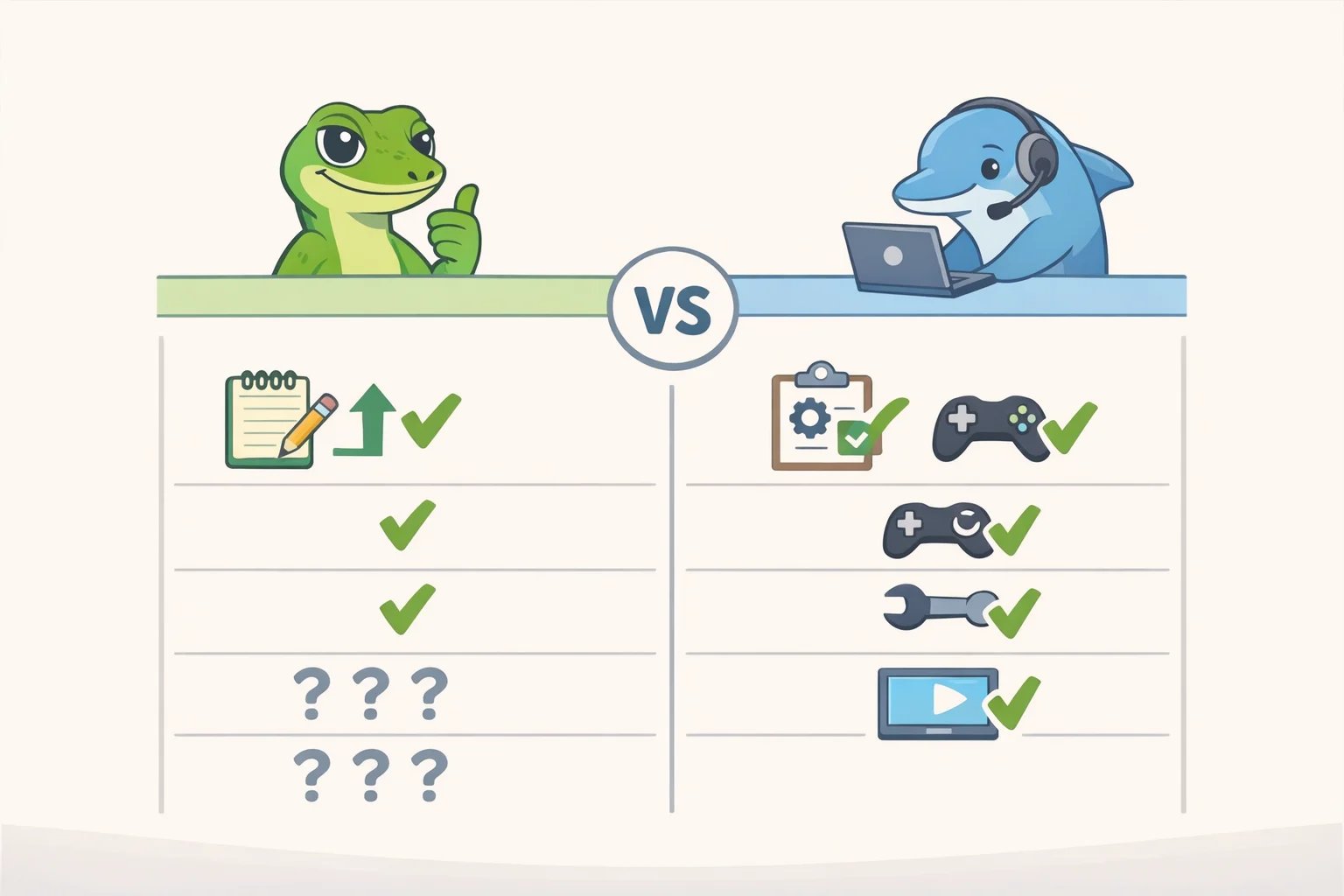
What makes Gecko notable, based on the public record, is that its developer used a single community post to announce a compatibility milestone and a batch of usability upgrades at once (EmuTalk.net, 2 months ago). That's considerable ground to cover in one update, and it's worth being precise about what the post actually establishes versus what it just gestures toward.
The post doesn't name a team, state a license, list supported operating systems, or link to a downloadable build. That silence doesn't mean none of that exists elsewhere. It means this particular update doesn't address it, and readers shouldn't mistake one enthusiastic forum post for a full product page.
Dolphin's cited report offers a useful contrast: it names a specific title and describes a specific fix, something outside observers can check against the actual game (Dolphin Emulator, over a year ago). Gecko's public record so far is one developer's account of the project's own progress. That's not a knock on the project so much as a different category of evidence, and treating the two as equivalent would be a mistake.
Video of the Day
Gecko emulator compatibility: what the 50% claim does and does not show
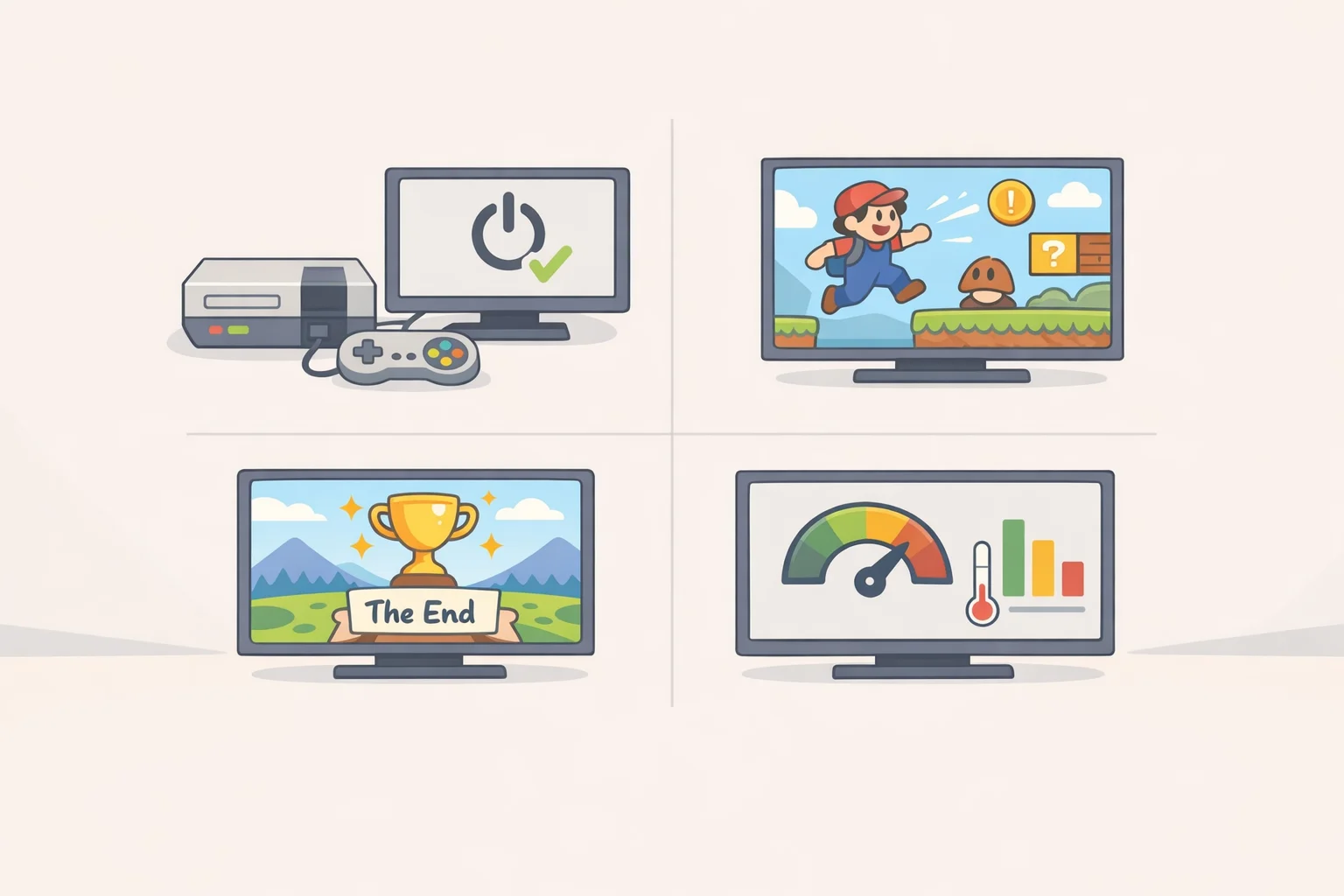
The headline figure in Gecko's update is compatibility. Its developer states that "at least 50% of the library runs now with only minor visual glitches" (EmuTalk.net, 2 months ago). Encouraging, if it holds up. But the post never defines what "runs" means, which library is being measured, or whether the figure covers GameCube titles, Wii titles, or both.
"Runs" could describe a game that boots to its title screen. It could just as easily describe one that plays through an entire campaign with nothing worse than cosmetic hiccups. Those are two very different bars, closer to the gap between a dashboard light turning green and a car finishing a cross-country trip. Until the post specifies which one it means, 50% reads as one developer's characterization, not a measurable statistic.
Dolphin's report takes the narrower, more checkable route: name one title, state plainly that it's now compatible after years of not working, done. Gecko's update points to no title-by-title breakdown, no public test suite, no independent database that would let outside observers check the 50% figure against anything comparable.
None of this makes the claim false. It makes it unverified, which is a different thing entirely. A self-reported milestone like this is a legitimate signal that a project is moving. It isn't proof of the documented parity Dolphin's itemized fixes provide.
Setup changes: a friendlier Gecko Wii emulator, with open questions
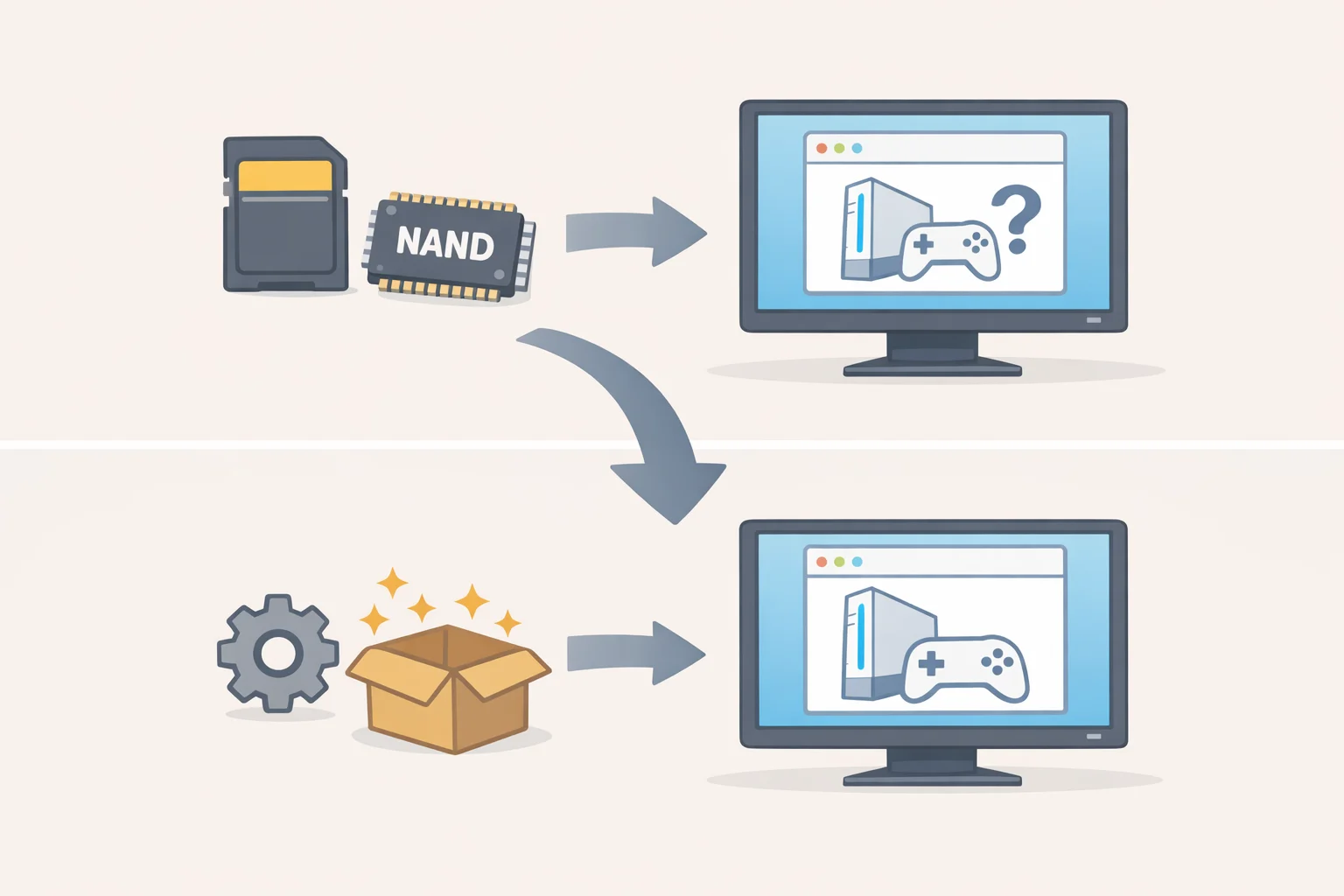
The more concrete claims in Gecko's update concern setup rather than compatibility. Its developer says a graphical UI launcher was "the most requested feature by far" and has now been added (EmuTalk.net, 2 months ago). For a lot of would-be users, that's the difference between actually opening an emulator and giving up halfway through a command-line setup.
The bigger change involves Wii support specifically. The update says Wii support "is now much more user friendly" because it no longer requires a user-supplied NAND, the console's internal storage and firmware dump (EmuTalk.net, 2 months ago). Think of a NAND dump as a full copy of a console's internal hard drive, firmware and all; historically, getting one meant pulling it from an actual Wii you owned. The post frames removing that requirement as a real simplification, though it doesn't explain what the old setup required or why a user-supplied NAND was necessary in the first place.
What it doesn't explain is what Gecko substitutes instead. Does it generate an equivalent file internally? Bundle something? Sidestep the requirement some other way? Whether that substitution touches save-data compatibility isn't addressed either. Worth keeping this separate, too, from the BIOS files discussed in the legal section below; related concept, different console, different question. A lower-friction setup and a fully documented one aren't the same thing, and right now Gecko's setup improvements sit closer to the first.
What would make Gecko's claims verifiable
The gap between a promising forum post and a validated compatibility claim isn't abstract. It's a specific checklist, and the current update leaves most of it open:
- A title-by-title compatibility list, rather than a single aggregate percentage.
- Clear definitions of what "runs" means at each stage: booting, gameplay, full completion, and frame-rate performance, along with a working definition of a "minor visual glitch."
- Which library the 50% figure covers, GameCube, Wii, or both.
- Supported operating systems and hardware requirements.
- Save-file and controller testing across a meaningful sample of titles.
- A publicly downloadable, reproducible build that outside testers can check independently.
- Documentation of what replaces the user-supplied NAND, and whether that substitution changes save data or functionality.
Clearing none of this would disqualify Gecko from eventually earning a place alongside Dolphin. It's simply the difference between a project update and a compatibility report, the same bar any new emulator would need to clear before comparisons to an established one become meaningful.
Dolphin emulator alternative or not: who should try Gecko now
Players who want broad, dependable game support today should stick with Dolphin. Its cited progress report offers a specific, checkable fix, the kind of itemized evidence a self-reported percentage doesn't yet match (Dolphin Emulator, over a year ago).
Anyone simply curious where Gecko is headed can reasonably watch the reported launcher and simplified Wii setup (EmuTalk.net, 2 months ago). Curiosity has limits here, though. A 50%-of-library claim says nothing about whether any particular game boots, holds a steady frame rate, saves reliably, or supports the controller someone actually owns, and the cited update doesn't address any of that for individual titles.
That distinction, more than any verdict on Gecko's future, is the practical takeaway for now: Dolphin for dependable results today, Gecko for tracking how a newcomer develops.
The legal backdrop, briefly
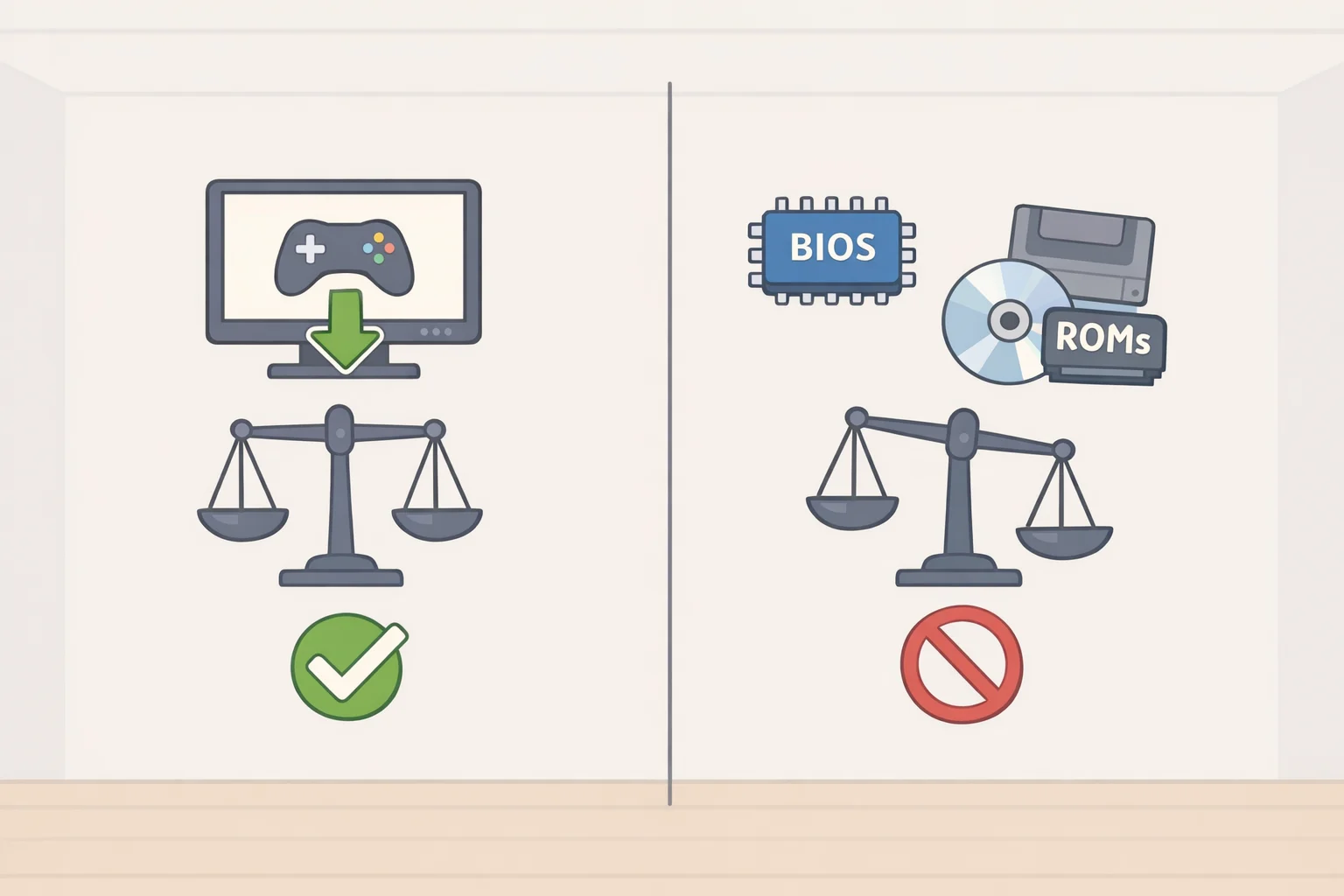
Gecko's removal of a user-supplied NAND requirement is a usability claim from the project's own post, not a legal determination. Emulator software and the game files it runs raise separate legal questions altogether, according to an analysis in the University of Cincinnati Intellectual Property and Computer Law Journal (UCIPCLJ, more than two years ago).
That analysis notes that popular emulators may require users to supply their own BIOS files rather than bundling them, partly because the legality of that "bring your own BIOS" approach has never been tested in court (UCIPCLJ, more than two years ago). Whether extracting a ROM from a game someone already owns is lawful also remains unresolved, and the analysis treats downloading emulator software and downloading ROM files as legally distinct questions (UCIPCLJ, more than two years ago).
None of that changes based on what Gecko's install screen looks like. A friendlier setup process and an unresolved legal question are simply two different things, and anyone pursuing GameCube or Wii emulation should keep them separate.
Conclusion
Dolphin's mid-2025 progress report gives it a documented fix anyone can check against actual gameplay. Gecko's update, claiming roughly half-library compatibility alongside a new launcher and a simplified Wii setup, describes real, specific work rather than vague enthusiasm. But those claims currently rest on one developer's account, and the checklist above shows exactly what's missing before that account becomes an independently verifiable compatibility report.
Readers curious about the legal side of emulation more broadly can read the UCIPCLJ analysis in full. Anyone tracking the Gecko GameCube emulator specifically now has a clear benchmark: watch for a title-by-title list, a public build, and documentation of what replaces the NAND. Until those appear, the fair read is that Gecko is moving quickly, not that it has caught up.