Bird Buddy 2 Review: Charming Hardware, Unfinished Software
Bird Buddy's newest hanging feeder ships with a 2K-capable, Gorilla Glass-protected camera that, in this Bird Buddy 2 review, still can't shoot in 2K. In a May review, Digital Camera World found that resolution and the promised 960p/90fps slow-motion mode sat greyed out in the app, leaving the reviewer stuck at 1080p/30fps video and 5MP stills (Digital Camera World).
One naming distinction matters before going further. This review covers the Bird Buddy 2, the company's newest hanging feeder camera. Where evidence comes from the previous-generation Smart Feeder Pro, sold with its own Nature Cam Pro camera, or the earlier Bird Buddy 2.0, it's labeled as such throughout. These are related products with overlapping design elements, not identical hardware, and findings from the older models shouldn't be read as confirmed Bird Buddy 2 behavior.
Bird Buddy isn't new to this category. Its original model launched on Kickstarter in 2020 as the first smart bird feeder, WIRED reported in 2025, and the Smart Feeder Pro that followed earned PCMag's Editors' Choice, with the outlet calling its camera the best feeder camera it had tested at the time (PCMag, 2025).
The real question isn't whether Bird Buddy can build appealing hardware. It clearly can. It's whether a premium-priced smart feeder is worth buying when its headline camera features sit behind pending firmware, live view lags for tens of seconds, and Birdfy models were listed at lower prices in that same May review (Digital Camera World). What follows covers what buyers actually get on day one, how that stacks up against alternatives on price and specs, and who, if anyone, should buy it right now.
Quick verdict: should you buy the Bird Buddy 2 now?
Video of the Day
Buy Bird Buddy 2 for the app, not for its advertised 2K and slow-motion modes. Buy it now if the app experience and free AI species identification matter more to you than guaranteed camera performance. Wait if 2K video or slow motion is the reason you're interested in the first place (Digital Camera World).
That distinction matters because the blocker isn't a settings toggle. One Digital Camera World reviewer tried the firmware update the app itself suggested and hit an error every time, even after charging the camera, resetting the app, and resetting the Wi-Fi router. That's a single tester's experience rather than proof the problem is universal, but it rules out a quick fix on that unit (Digital Camera World).
Video of the Day
Design, setup, and solar performance
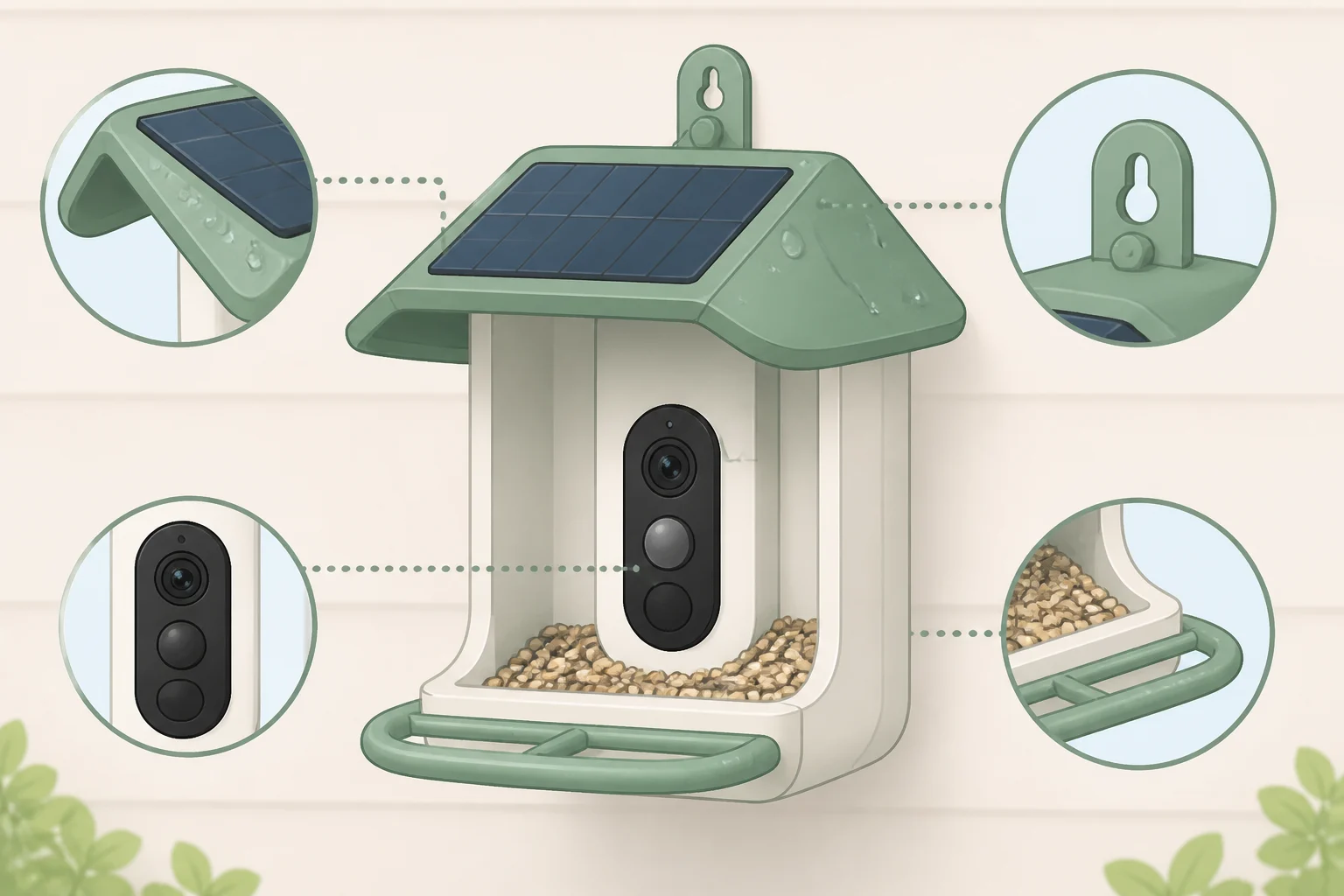
The build quality is the easiest part of this review to praise. The Bird Buddy 2 uses BPA-free, recycled ASA plastic with IP67 weatherproofing and a Gorilla Glass camera housing, and it survived driving rain and a squirrel's determined scratching during testing with little to no fogging (Digital Camera World). The unit measures roughly 9 by 6.3 by 6.9 inches and weighs about 1.3 pounds empty, running on a 3,900mAh rechargeable lithium-ion battery paired with an integrated solar roof (Digital Camera World).
Setup is quick. The feeder ships mostly assembled, and reviewers reported setup in under ten minutes, start to finish (Digital Camera World).
Solar performance on this specific unit looked strong. Running on standard power mode, one UK tester saw the solar roof hold the battery at 100% for two weeks straight through typically grey weather (Digital Camera World). Worth flagging as a pattern to watch: on the previous-generation Smart Feeder Pro, solar performance was less consistent. PCMag saw the Nature Cam Pro's battery drain after four to five overcast days even with the solar roof attached, and a WIRED reviewer noticed a corner of the solar panel lifting after four months outdoors (PCMag, 2025; WIRED, 2025). Those are Pro-specific findings, not confirmed behavior on the newer model, but they're reasonable to monitor if solar reliability is a priority.
Not everything about the design is a win. A shallow seed tray sits uncomfortably close to the camera lens, and the charging process is, in the reviewer's words, an oddly awkward design choice for a product this polished (Digital Camera World). The central weakness of this product is software, though the hardware has some usability flaws of its own.
Bird Buddy 2 features and flaws that matter before you buy
The practical limitation is cropping. In practical terms, higher resolution would give buyers more room to crop into a shot without losing detail, and it would make small identifying features, wing bars, eye rings, the marks that separate one sparrow from another, easier to pick out after the fact. None of that is available yet on Bird Buddy 2.
The video that is available shows visible compression artifacts, small digital blocks that appear during fast flight or in moving foliage like rustling leaves (Digital Camera World). That's a separate problem from resolution, and it means even the fallback 1080p mode isn't flawless.
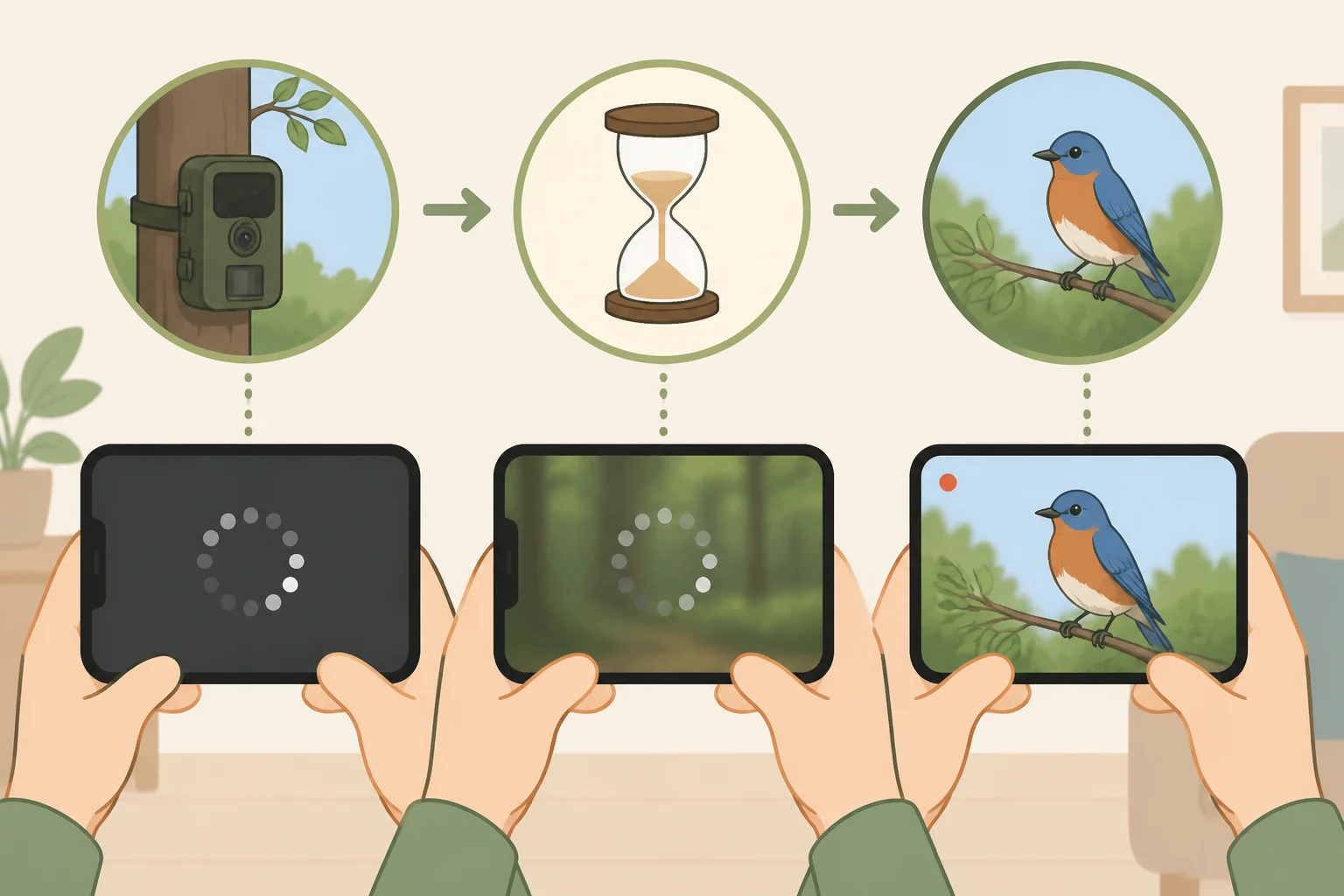
On Bird Buddy 2 specifically, testing turned up a run of frustrations beyond the locked modes: a firmware update that wouldn't install, compression artifacts in the fallback footage, and postcards that take a while to start recording once a bird arrives (Digital Camera World). Live-view lag adds to the list, and it isn't confined to one unit. Digital Camera World's tester saw livestream loads of more than 20 seconds on Bird Buddy 2, often long enough that the bird had finished eating and left, while PCMag reported delays up to 30 seconds on the earlier Pro model in 2025 testing (Digital Camera World; PCMag UK). Two reports across two hardware generations don't prove a platform-wide limitation, but they describe a recurring concern worth factoring into any purchase decision.
Pro owners should temper expectations about thorough documentation, too. WIRED's 2025 testing of the Smart Feeder Pro found the sensor didn't reliably capture every visitor even with all filters switched off, and there's no equivalent Bird Buddy 2 test yet to say whether that's improved (WIRED).
None of this erases what the software does well elsewhere in the lineup. On the Bird Buddy 2.0, Homes & Gardens found the free AI species identification accurate, correctly recognizing most feeder visitors in its 2025 testing (Homes & Gardens). On the Smart Feeder Pro, the postcard format, daily recaps, and Bird Buddy TV clips make the app itself the most engaging part of ownership, and reviewers found accurate species tagging without requiring a subscription (WIRED; PCMag). There's no Bird Buddy 2-specific test confirming those app features perform identically on the newer unit, though they likely run on the same underlying platform.
The vertical framing Bird Buddy uses across its feeders, 9:16 or 3:4, is also more shareable on social platforms than the 16:9 widescreen PCMag found on other feeder cameras it tested in 2025, though it captures less of the surrounding action, which some users find restrictive rather than purely advantageous (PCMag; Digital Camera World).
Price and how Bird Buddy 2 compares to other bird feeder cameras
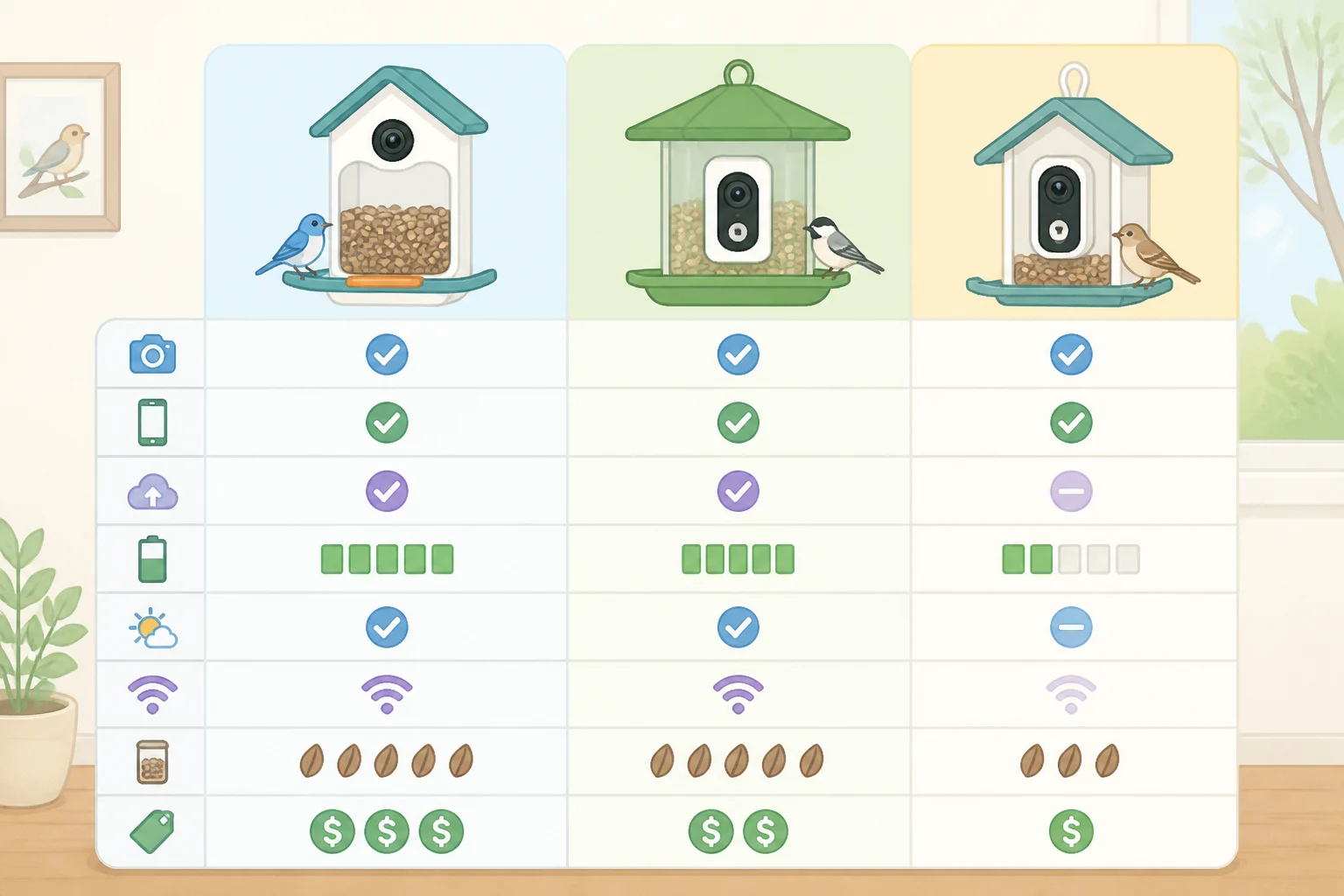
Price is where the picture gets murkier than it should be for a Bird Buddy 2 vs other bird feeder cameras comparison. Digital Camera World's May review cited an expected retail of $199/£199/AU$310, but also spotted Amazon listing the same unit at $299 at the time (Digital Camera World). Whether that gap has closed since is unclear from the available reporting; verify the current price before buying.
The supplied reporting also doesn't establish whether that price includes the solar roof. On the outgoing Pro, solar cost $70 more as a standalone add-on (PCMag), but that doesn't confirm how Bird Buddy 2 is packaged.
| Model | Price | Confirmed video | Subscription | Solar/battery | Connectivity |
|---|---|---|---|---|---|
| Bird Buddy 2 | Expected $199 / £199 / AU$310; Amazon listed $299 as of the same May report (Digital Camera World) | 1080p/30fps confirmed; 2K and slow motion locked as of May 2026 testing (Digital Camera World) | Not confirmed for Bird Buddy 2 | Held 100% battery for two weeks in one UK test (Digital Camera World) | Dual-band Wi-Fi (2.4GHz/5GHz), Bluetooth 5.1 (Digital Camera World) |
| Smart Feeder Pro (previous gen) | $279 solo, $349 with solar roof (PCMag) | 2K (1,536 x 2,048) at 30fps confirmed; slow motion at 960 x 1,280, 90fps (PCMag) | $5.99/month or $59.99/year individually, $89.99/year family (PCMag); WIRED separately reported $7.50/month or $90/year (WIRED) | Could drain after four to five overcast days despite the solar roof (PCMag); one panel corner lifted after four months outdoors (WIRED) | 2.4GHz only (WIRED) |
| Birdfy Feeder 2 | About $150 / £130 (Digital Camera World) | Not evaluated in this research | Not sourced | Not sourced | Not sourced |
| Birdfy Bamboo | About $189 / £175 (Digital Camera World) | Not evaluated in this research | Not sourced | Not sourced | Not sourced |
That table is transparent about its limits. It compares confirmed prices and specs, not real-world performance, because there's no equivalent hands-on testing of Birdfy's video quality, live-view speed, or app reliability in the available research. Using the $199 figure Digital Camera World cited, Bird Buddy 2 costs roughly $49 more than the Birdfy Feeder 2 and about $10 more than the Birdfy Bamboo (Digital Camera World), a much narrower gap than the $80-plus difference between Bird Buddy 2 and the outgoing Pro. If the $299 Amazon listing turns out to be the real price, that gap widens considerably. None of this means a cheaper Birdfy model outperforms Bird Buddy 2; it only means it costs less, and the evidence available can't settle whether it's the better buy.
On competitive standing more broadly, PCMag rated the Pro-generation Nature Cam ahead of the FeatherSnap Scout and Netvue Birdfy on resolution and dynamic range, in 2025 testing (PCMag UK). That verdict predates Bird Buddy 2's software issues and doesn't account for how those rivals have updated since, so there's no current, direct evidence that a named competitor now beats Bird Buddy 2 outright. Bird Buddy's premium no longer buys guaranteed access to its own advertised features. That narrows its margin over cheaper options, even without a confirmed better alternative on the market.
Who should buy the Bird Buddy 2 right now
The right choice depends on what you want from the feeder. Buyers who want daily recaps, accurate species tagging, and a feed that feels like a nature show get most of that today, since AI identification and the postcard experience already work well on related Bird Buddy models. Buyers drawn in specifically by 2K footage or slow-motion clips of a hummingbird's wingbeat are paying for a feature that doesn't exist yet on their unit, and should wait for confirmed, independently tested firmware. Budget-conscious buyers have a simpler calculus: Digital Camera World frames this as a feeder for real bird lovers who want a fun app and accurate identification, not for people watching every dollar (Digital Camera World).
Ownership basics before you buy
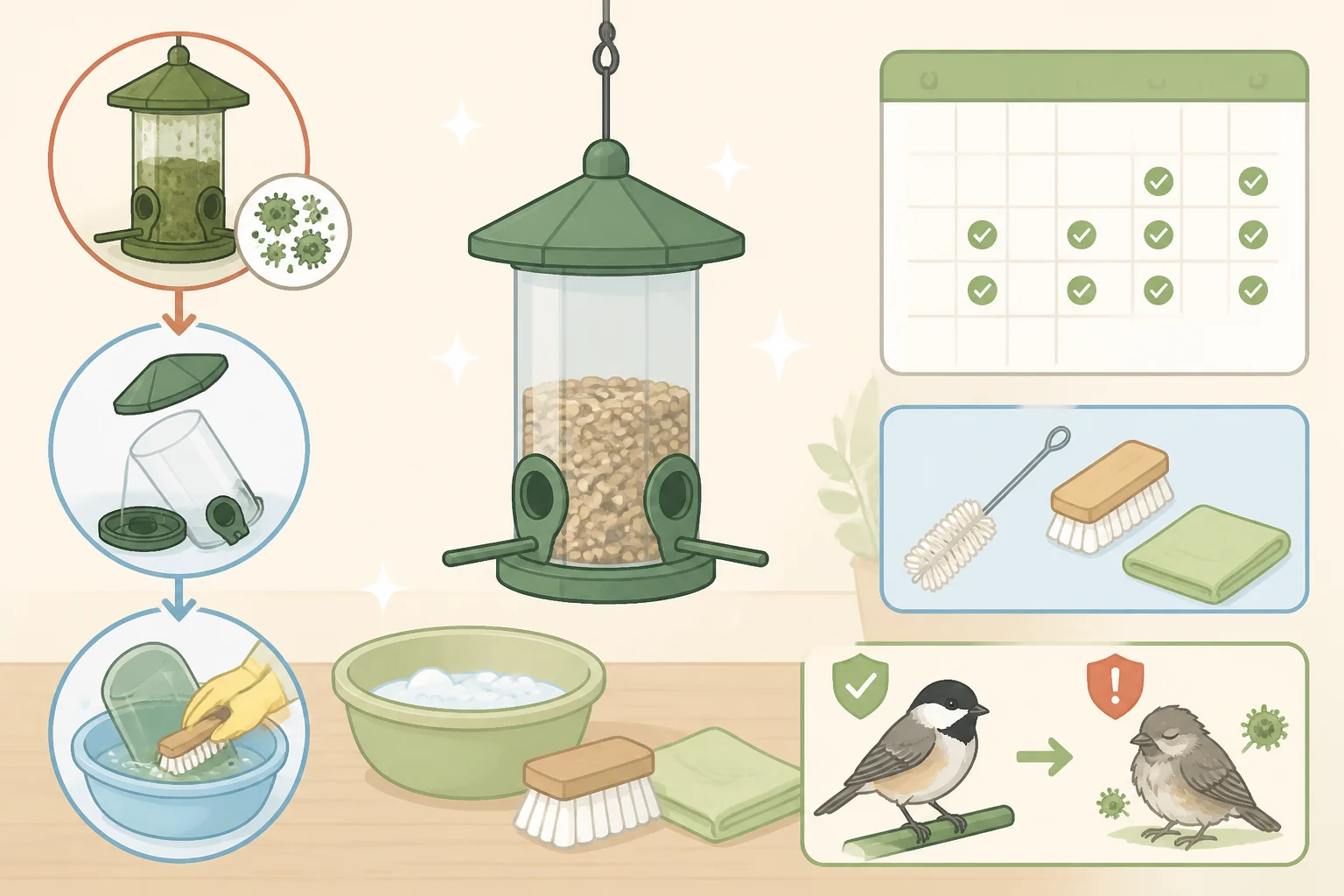
Owning a smart feeder is a maintenance commitment as much as a purchase, and the spec sheet doesn't capture that. The app lets owners set a reminder to clean the feeder every 30 days, but PCMag recommends cleaning every two weeks to clear moldy seed and reduce disease risk between visitors, a more conservative cadence worth adopting regardless of what the default reminder suggests (PCMag UK).
Feeding season matters too, and it varies by region. Digital Camera World's May review cites RSPB guidance recommending feeding primarily between November and April to limit disease transmission (Digital Camera World). That's a UK-specific guideline relayed through a product review, not a universal rule, and readers elsewhere should check their own local wildlife authority rather than apply it by default.
Three ownership details matter more than the camera specs. Seed capacity runs roughly 1.4 liters on the Bird Buddy 2. Bird Buddy's own marketing claims a 100-foot wireless range; one reviewer testing the unit had no connection issues at a real-world distance of 30 feet, which doesn't confirm the full claim but doesn't contradict it either. Wi-Fi support spans both 2.4GHz and 5GHz bands, an upgrade over the Pro's 2.4GHz-only connectivity (Digital Camera World; Homes & Gardens; WIRED). None of that is glamorous, but getting the hygiene cadence and placement right matters more to the birds using the feeder than any camera spec does.
Where this verdict could change
Two things would move the needle. The first is an independently verified firmware update that actually unlocks 2K and slow motion on retail units, not a promise sitting in a support roadmap. The second is a stable, confirmed retail price, given that the $199 figure and the $299 Amazon listing disagreed as recently as Digital Camera World's May review (Digital Camera World).
Bird Buddy helped push this category into the mainstream by landing on shelves at major retailers, a factor Digital Camera World credits with nudging the gamified birding trend to a wider audience (Digital Camera World). Whether it still leads that category is a separate question from whether it started it, and until firmware catches up with the hardware, the honest answer is: not yet, not at this price, not without independent retesting to confirm it. A previous-generation Pro unit, if you can find one at a worthwhile price, already delivers the 2K and slow-motion modes Bird Buddy 2 has only promised so far (PCMag).