Single vs. Dual-Motor Scooters: A Buyer's Decision Framework
The dual-motor scooter has become the default recommendation in mid-range category coverage. Not because two motors are always better, but because "two motors" is easier to say than "it depends on your commute." That gap between what's easy to recommend and what's actually right for a given rider is what this guide is built to close.
No product-specific research data supports this piece, so it makes no attempt to name models, cite benchmarks, or quantify performance gaps. What it does instead is lay out the specific questions, in the right order, that produce a defensible buying decision. The four rider profiles at the end are only useful when you've filled in the framework with real numbers from real tests.
Why architecture matters, and when it doesn't
Video of the Day
A dual-motor scooter drives both wheels. That's a physical arrangement with specific engineering implications, not a marketing tier.
By distributing propulsive force across two contact patches, a dual-motor drivetrain is generally expected to improve grip during sustained climbs and in low-traction conditions. Each motor also handles a lower share of the total workload under identical effort, which matters for how long peak performance holds before the controller backs off. These are plausible engineering advantages on the terrain where they apply. Whether any specific scooter captures them depends on implementation, not motor count alone.
A rear hub motor carries all of that alone. Improved torque conversion efficiency and better thermal management have narrowed the performance gap on some metrics in recent generations. On the specific terrain types where dual-motor designs have a structural edge, narrowing is not the same as closing.
Where the gap shrinks toward irrelevance is flat-road acceleration at moderate urban speeds. A rider covering twelve flat miles each way through a city center may never encounter the conditions where a second motor would have changed the outcome. The same rider, after a route change, might encounter those conditions every morning. The scooter's performance envelope stays fixed. The commute sometimes doesn't.
Video of the Day
Hill climb: the number that tells you the most
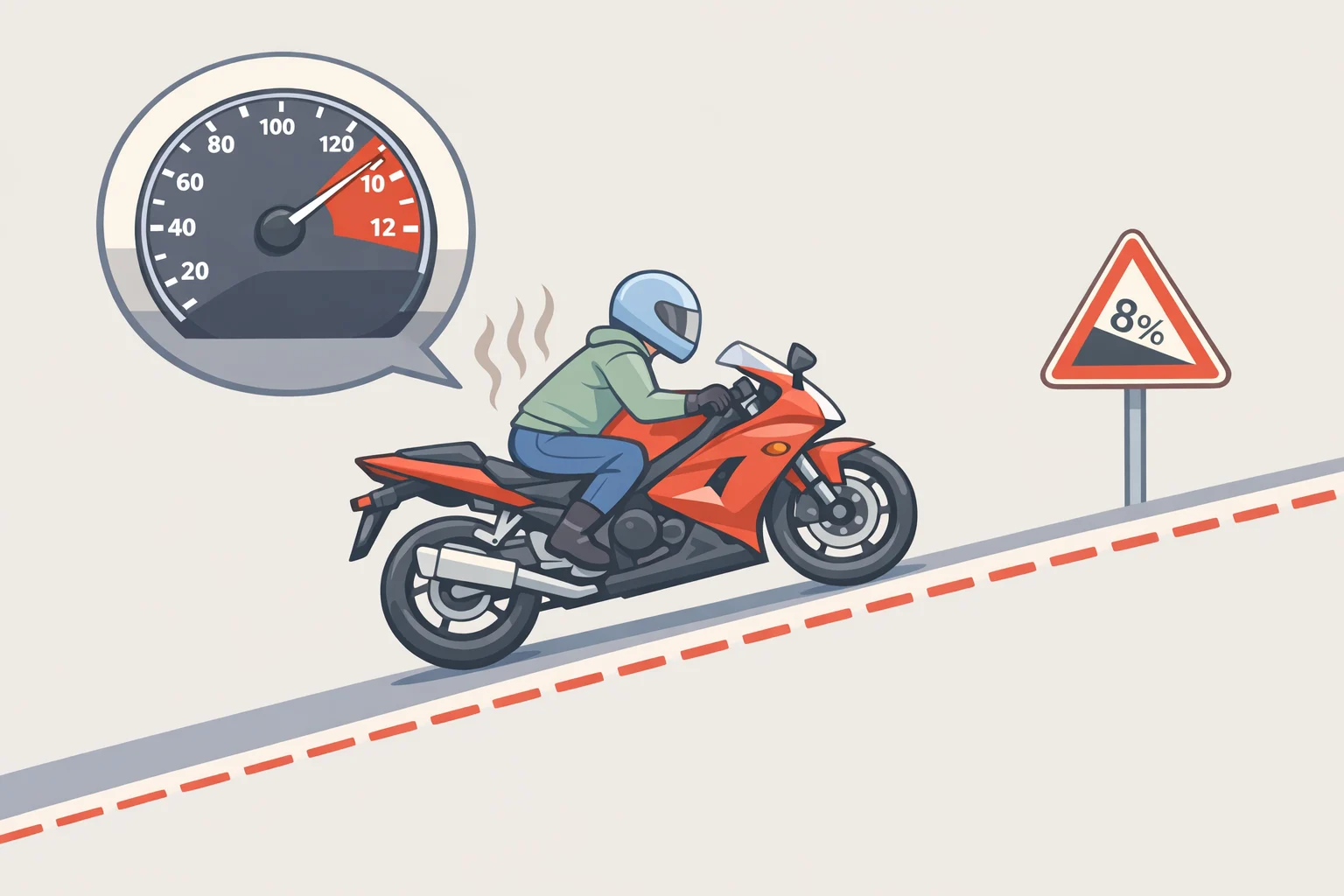
Sustained grade performance is where the single-versus-dual question stops being theoretical. The number that matters here is not peak torque, which describes what a motor can briefly produce under favorable conditions.
The useful number is sustained speed on a defined grade, at full throttle, at a consistent rider weight, over enough distance that the drivetrain has had time to heat up. That test exposes thermal behavior in a way that short-burst figures don't. A scooter that posts strong torque on paper but loses commuting pace on a moderate incline after a few minutes is a different product than one that holds speed through the same section.
For a hill-climb comparison to mean anything, four numbers need to be on the table: rider weight, grade percentage, distance held, and speed at the end of that stretch. A review that calls a scooter "capable on hills" without a grade percentage hasn't given you a fact. It's pointed in a direction.
The grade threshold also varies enough by city to make generalized claims actively misleading. A scooter that handles every gradient on a Chicago commute may struggle on certain San Francisco residential blocks. If the review you're reading can't supply a grade and a sustained speed, treat the hill-climb conclusion as decoration.
This is the one metric to anchor the evaluation on first. It's the hardest to fake, the one most reviews soft-pedal, and the one most likely to be the dealbreaker.
Range: where efficiency reasoning is strongest, and where it gets complicated
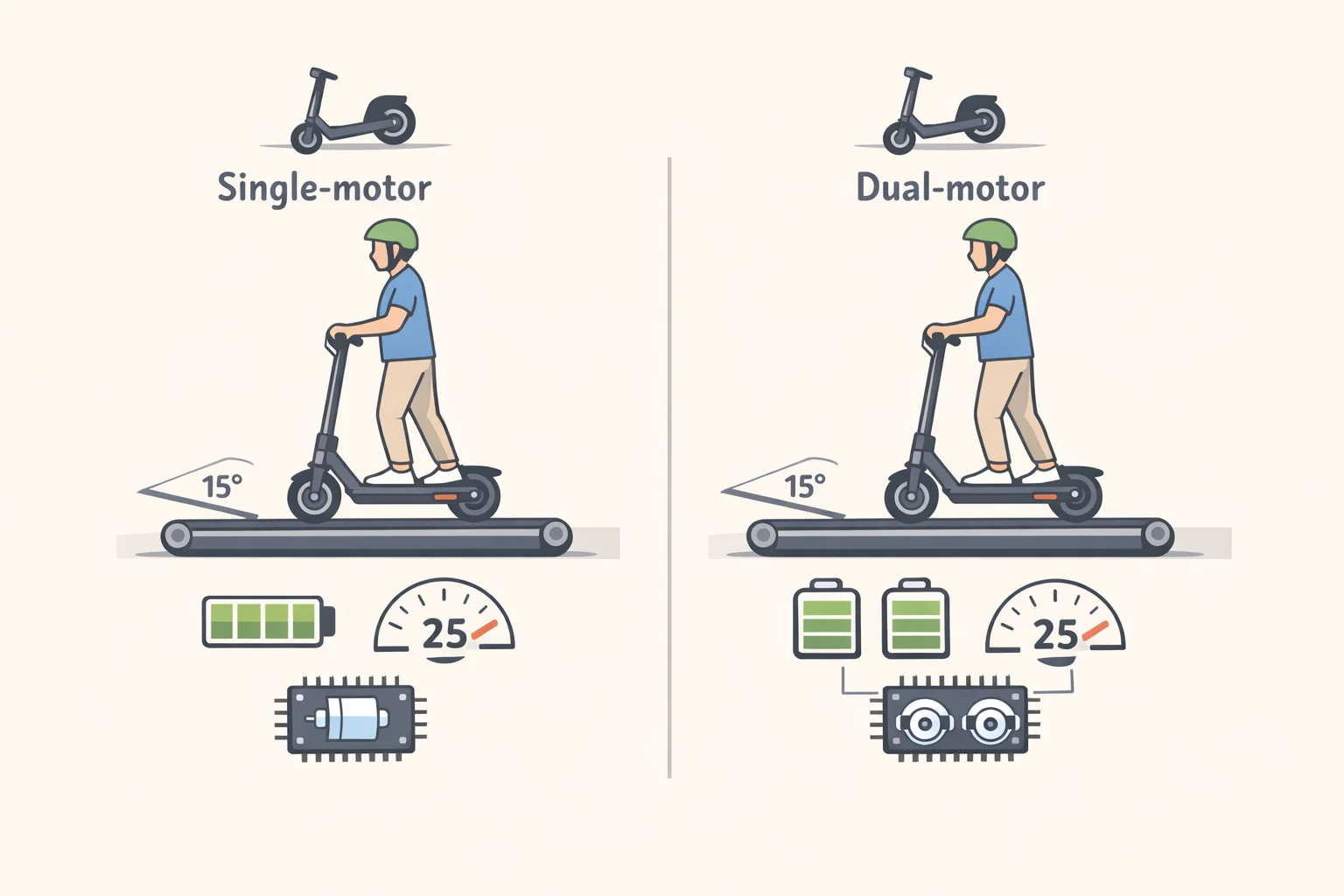
One motor drawing current at cruise speed consumes less than two doing the same work. From a comparable battery pack under similar conditions, that tends to produce better range per charge, sometimes meaningfully so on a ten-to-twelve mile daily round trip. This is a reasonable inference from basic drivetrain logic, not a guaranteed outcome for any specific scooter.
"Similar conditions" is where comparisons get complicated. Some dual-motor scooters engage the second motor only under load, running single-motor in cruise. A range test that pits a single-motor scooter against a dual running both motors continuously inflates the apparent gap relative to what real commuting produces. Any range comparison has to account for how each scooter's controller actually behaves across a realistic route.
Manufacturer range figures add another layer of distortion. They tend to be generated under conditions that maximize the output: low speeds, flat terrain, minimal stopping, light rider weight, optimal temperature. Real commutes satisfy none of those conditions consistently. The figure worth comparing is tested range under described conditions, run the same way against every scooter in the comparison. If the methodology isn't described, the numbers can't be compared.
If a single-motor option genuinely delivers comparable tested range to dual-motor alternatives in the same price bracket, that's a meaningful advantage. The key word is tested.
Portability: evaluated once, lived with daily
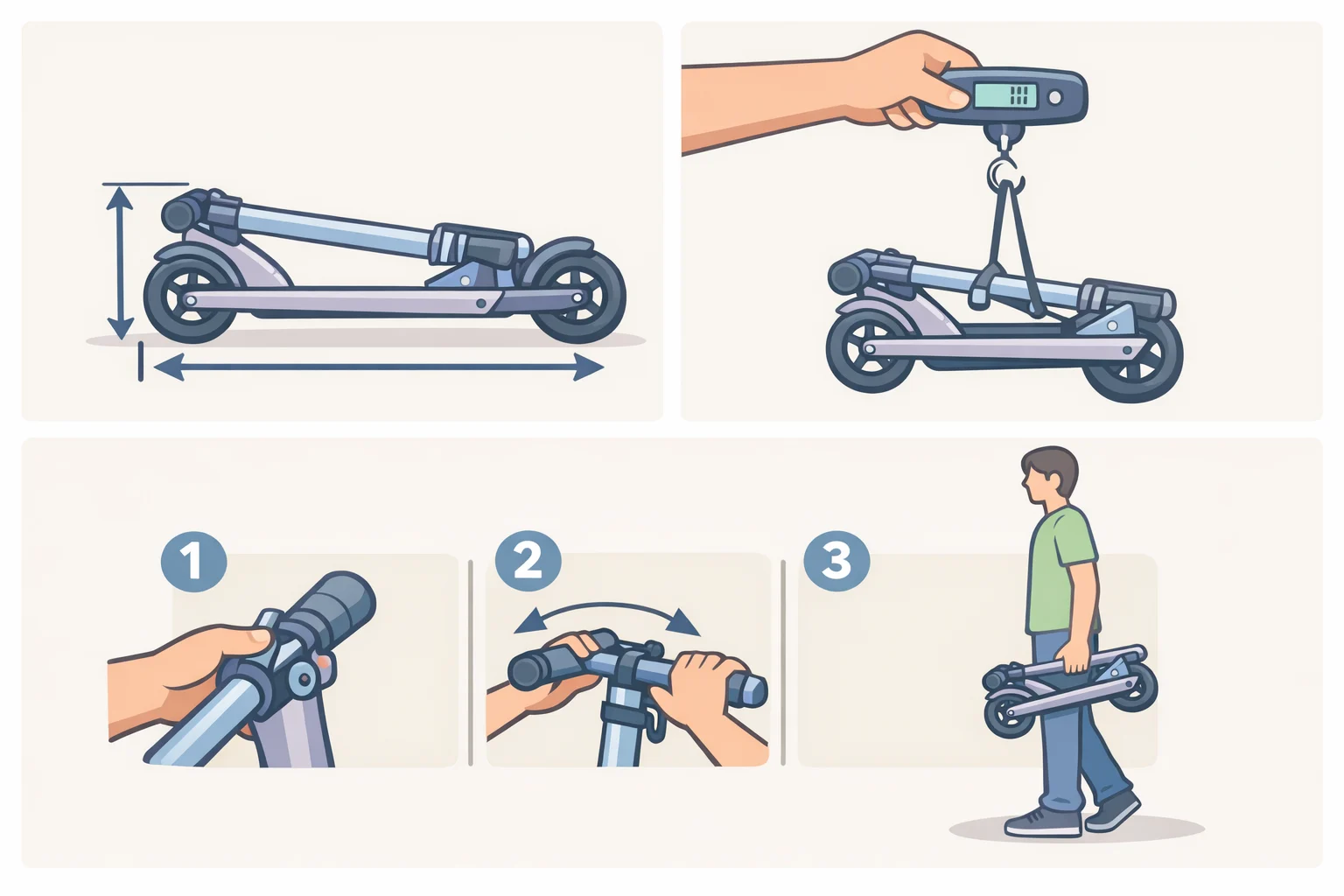
A scooter that's heavy to carry or awkward to fold doesn't punish you on the product page. It punishes you on a morning you're late, managing a shoulder bag, carrying the scooter up a stairwell you've climbed a hundred times before.
Carry weight matters, but the relevant figure is the weight delta between the scooters you're actually comparing, translated into your specific commute. Three extra kilograms is manageable across a short lobby. It's a different calculation on a commute involving a bus transfer, a turnstile, and a second stairwell.
Fold mechanism durability matters too, and it surfaces later than weight does. A clean two-step fold that locks securely on day one may behave differently at month seven, after the collar has absorbed daily use and the stem starts to shift. Short-term reviews rarely catch this. Longer-term owner feedback is where that failure mode tends to appear. Before purchase, check whether warranty terms cover stem and collar failures specifically, and what the repair path looks like outside the coverage window.
A complete portability comparison needs four things: folded dimensions, carry weight for each option, step count for the fold, and whether the locked position is mechanical or friction-dependent. Missing any of those, portability remains an opinion.
Serviceability: the cost that never appears on the spec sheet
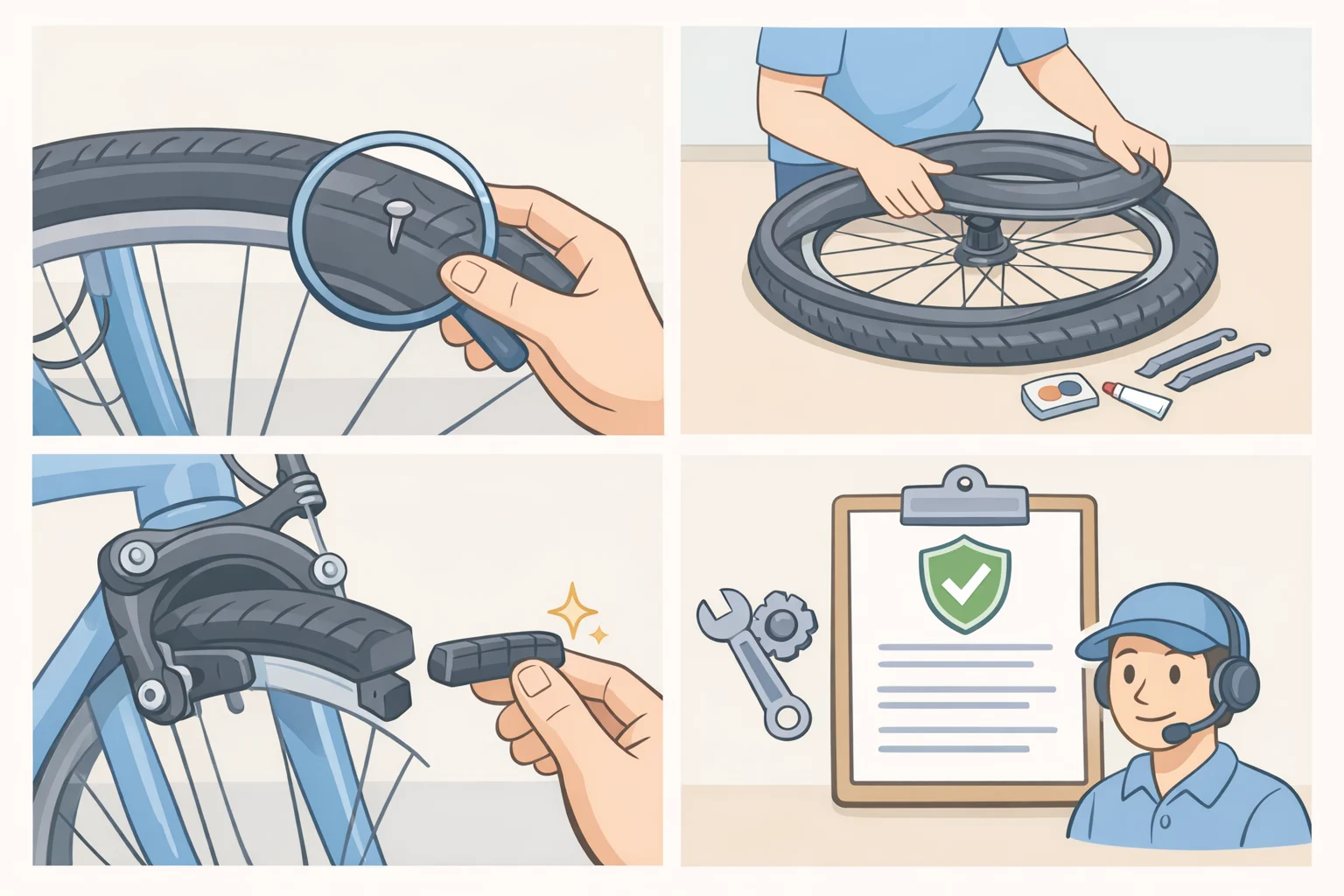
Performance benchmarks answer the first-week question. The two-year question is simpler: when something breaks, can you fix it without sending the scooter away for weeks?
In this price bracket, that question usually resolves to four checkpoints. Tire size: is the wheel a standard dimension that a local shop can source, or a proprietary spec that ties you to the manufacturer's supply chain? Inner tube access: on a hub-motor design, replacing a tube may require pulling the motor from the wheel, a job that's categorically different from a roadside fix. Brake pad sourcing: are compatible pads stocked anywhere local, or special-order items with lead times that leave the scooter unridable? Warranty enforcement: does claiming coverage require shipping the scooter to a single authorized depot, or is there a local dealer or user-serviceable path?
Single-motor drivetrains have fewer mechanical components, and in principle that means fewer failure points. Whether that translates into actual parts availability and simpler repairs depends on the manufacturer, not the motor count. A scooter with a clean spec sheet and a fractured parts supply chain is a worse two-year commitment than a slightly slower one you can actually fix.
Get these answers before purchase.
Four rider profiles, four different right answers
Flat-city commuters on short daily routes. This is where single-motor architecture is most coherent as a choice. On flat terrain, the performance gap with dual-motor alternatives narrows, and if a single-motor design matches rivals on tested range while coming in lighter and simpler to own, the value case is real. The test is whether the tested numbers support that conclusion for the specific scooters being compared. The theory fits; the data has to follow.
Riders with regular grades above ten to twelve percent. The hill-climb threshold comes before anything else here. If a scooter's sustained climb speed drops below comfortable commuting pace on grades that appear daily on your route, no range advantage or weight savings compensates. The comparison needs a named grade and a sustained speed from a credible independent test. "Handles inclines well" is not a substitute for that. If the test data shows a genuine gap on steep grades, the hill-climb finding disqualifies the scooter regardless of how it performs everywhere else.
Wet-climate commuters. Stopping performance in wet conditions depends on brake hardware, tire compound, and weight distribution. A review without wet stopping-distance data leaves this buyer guessing on a question with safety consequences. If that data doesn't exist for a scooter under consideration, its absence is relevant information, not a neutral gap. This buyer should treat missing wet-condition data as a reason to look harder, not as a clean slate.
Portability-first commuters combining a scooter with transit. Two numbers matter above all: the confirmed weight delta between the options being compared, and an honest read on fold mechanism durability past the first few months of daily use. A weight advantage that disappears when a stem collar loosens isn't an advantage. Ask specifically whether the warranty covers that failure mode. If it doesn't, factor the likely out-of-warranty repair cost into the comparison.
The decision hierarchy
A single-motor scooter can be the right purchase for a substantial share of urban commuters, and the wrong one for others on nearly identical routes. The difference between those outcomes is measurable.
Start with hill-climb. It's the hardest metric to soft-pedal and the one that most reliably disqualifies a scooter for a specific commute. A grade percentage and a sustained speed tells you more about real performance than any other single figure.
If the hill-climb data clears, move to range methodology. Two scooters with identical claimed figures may have been tested under conditions that share nothing. Confirm the test conditions before treating the numbers as comparable.
Then serviceability. A scooter you can't repair is on a countdown. Parts availability and warranty coverage should be confirmed before purchase, not discovered after the first mechanical failure.
Portability comes last not because it matters least, but because its impact depends entirely on your specific route. The weight delta that's irrelevant on a covered garage commute is a daily burden on one involving transit and stairs.
For flat-city commuters, a single-motor scooter that passes on range, serviceability, and carry weight is a strong candidate. For riders with regular steep grades, a single motor that trails on sustained hill-climb speed isn't a tradeoff to manage; it's a disqualifier. For wet-climate riders, the absence of wet stopping-distance data should prompt more research, not a purchase.
The rider profiles above only do useful work when attached to real benchmark data from real tests. Applied to verified numbers on specific models, the hierarchy tells you what to prioritize and what would send you elsewhere. Without those numbers, it's a checklist. The checklist is a start.