Phantom Twist Invisible Drone: AI-Designed to Fool Human Eyes
A Northwestern University drone presented yesterday at the Robotics: Science and Systems conference in Sydney doesn't use camouflage, exotic coatings, or light-bending materials to avoid detection. It just spins. At 25 revolutions per second, the Phantom Twist's body blurs into what researchers describe as a faint haze, making it roughly ten times less visually detectable than a conventional quadcopter, according to the perceptual metric used to evaluate it (Northwestern Now, July 2026; IEEE Spectrum, July 2026).
The prototype, palm-sized and weighing 30 grams, was designed through a fully automated AI pipeline that optimized component placement around a computational model of human vision rather than purely around aerodynamics. That design methodology, more than the drone itself, is what the research demonstrates: a proof of concept that AI can engineer physical hardware against the specific limits of human perception. The published materials focus on design and flight testing and do not address privacy, airspace safety, or misuse.
Previous attempts to reduce drone visibility focused on surface-level fixes: camouflage patterns, transparent structural materials, optical systems that mimic surroundings, according to Northwestern Now. The Northwestern team, led by Michael Rubenstein with computer vision researcher Emma Alexander, started from a different premise entirely. "Most efforts to hide drones focus on making them look like their surroundings," Rubenstein said. "Instead, we asked whether we could design the drone itself around the way humans perceive motion."
How the Phantom Twist invisible drone uses motion blur
Video of the Day
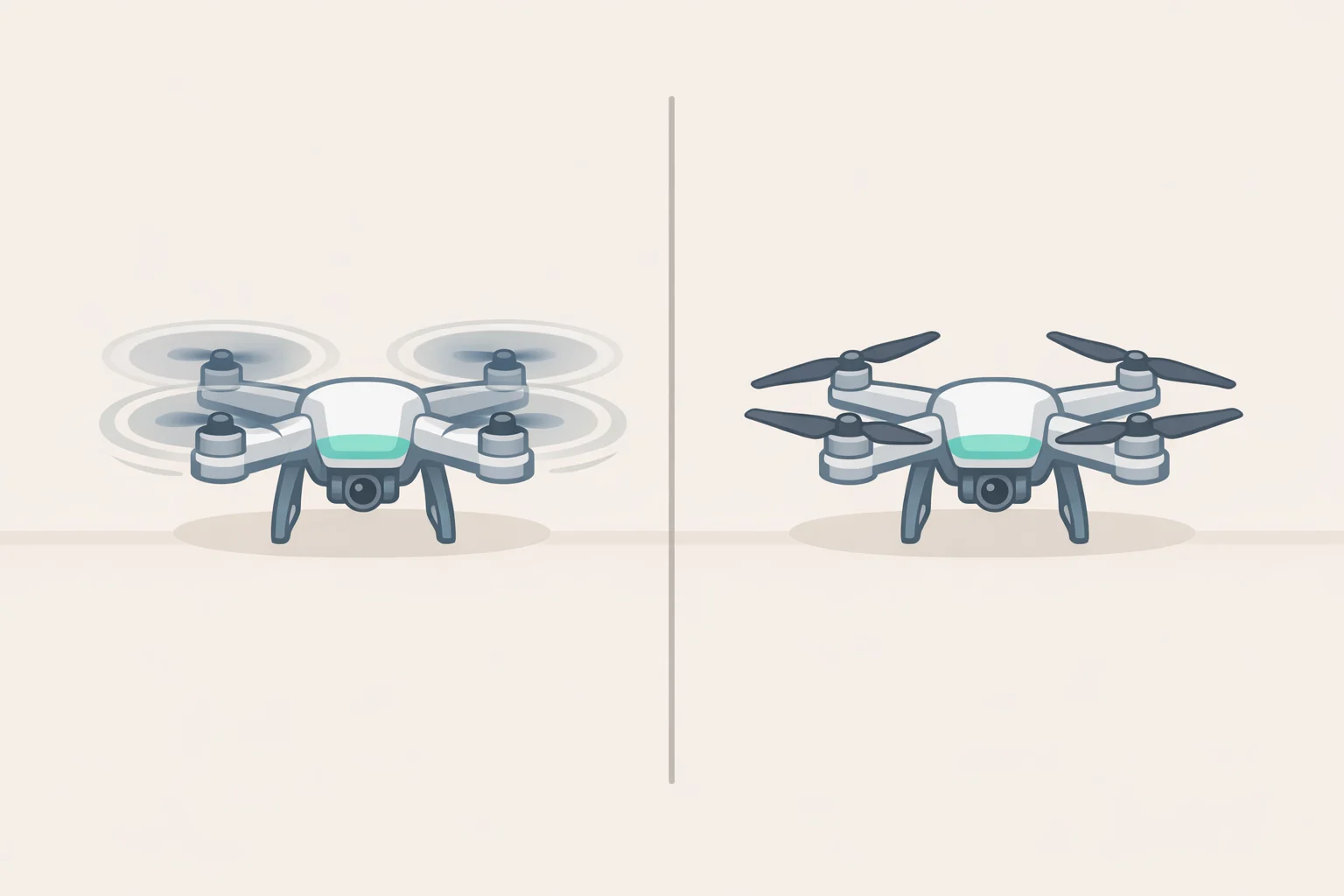
The visual system doesn't capture the world like a still photograph. It accumulates light over time, roughly like a camera's exposure window, Alexander explained. When an object spins fast enough, the eye averages its solid components with whatever sits behind them. "The motion blur essentially turns all of the mechanical components into this slight haze," Alexander told New Scientist. "And if you're not paying attention, you might really miss that slight change in the brightness of the environment."
A standard quadcopter has a stationary body with spinning propellers the fixed frame gives the eye something to lock onto. Phantom Twist flips that arrangement: one propeller spins in one direction while the entire drone body rotates the opposite way, so there are no fixed parts at all, per Northwestern Now.
Cardiff University optical perception researcher David Whitaker, who was not involved in the project, puts a useful boundary on what this actually means. The drone is "not becoming invisible, but blurring enough that it can be missed" and specifically when its coloring is close to the background, he told New Scientist. Against a mismatched background, the haze remains detectable. This is a system tuned for specific perceptual conditions, not a general cloak.
Video of the Day
Why human designers couldn't have found this design on their own
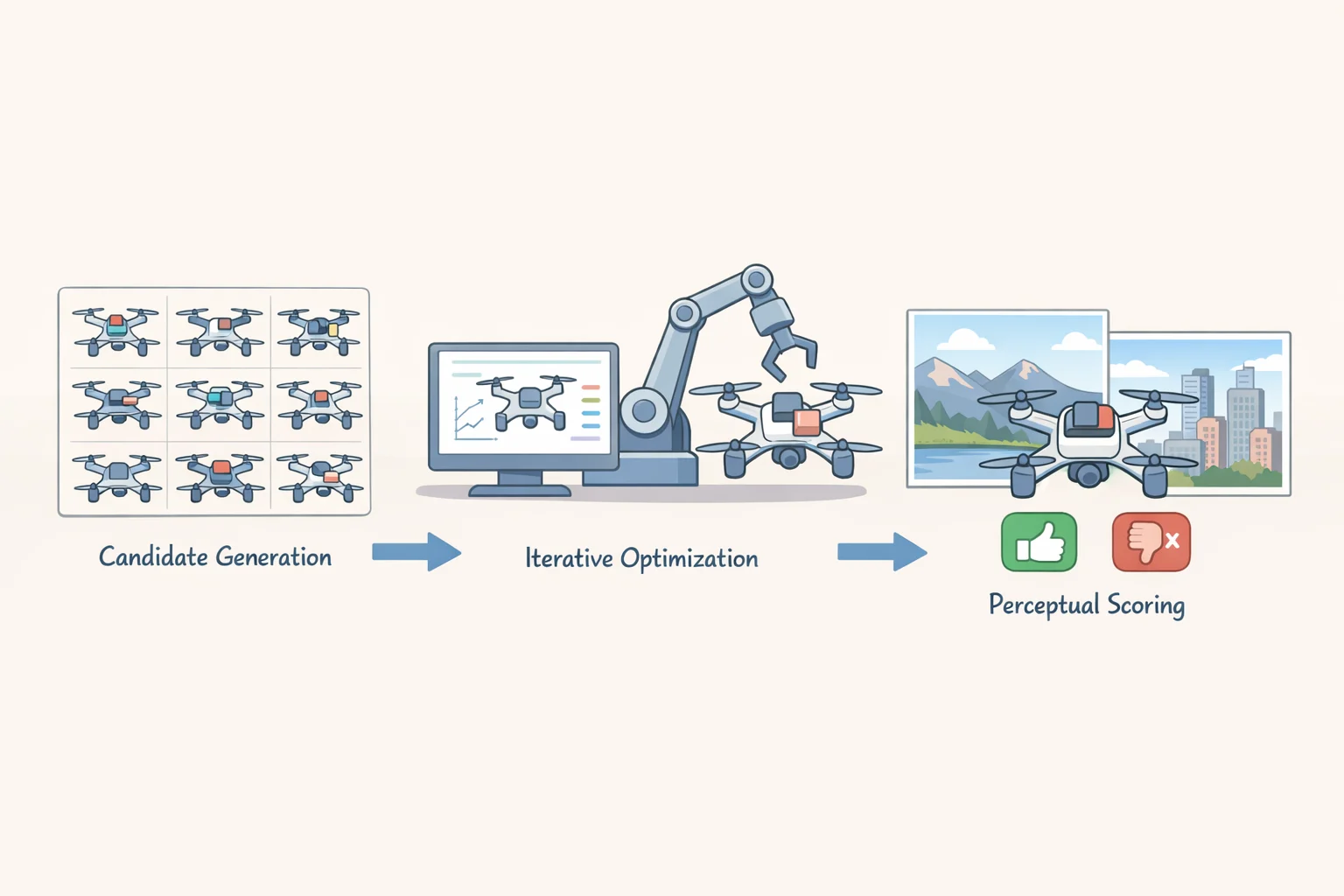
Spinning fast enough is straightforward. Arranging the physical components motor, propeller, circuit board, batteries, counterweights so the spinning cloud stays diffuse from every angle against many different backgrounds simultaneously is not. Visibility in this design is determined by whether components visually overlap from the observer's perspective as the body rotates, IEEE Spectrum reported. Any two parts that stack into a denser blob from a given viewing angle make the drone more conspicuous. Finding the arrangement that avoids that across all angles and backgrounds is a search problem no human designer can reliably solve by intuition.
The team ran a three-stage automated pipeline. First, AI generated millions of design candidates and narrowed them to roughly 20,000 that could physically fly, New Scientist reported. A second algorithm iteratively adjusted component positions within those configurations to minimize visibility from all viewing angles. Then a perceptual model approximating human vision scored each design against 100 real-world backgrounds; the 500 lowest-scoring candidates were fed back into the optimizer for further refinement (New Scientist; Northwestern Now).
The scoring used LPIPS, or Learned Perceptual Image Patch Similarity, which measures how much the presence of a spinning drone changes the perceived appearance of a background image as a human visual system would register it, not just as a raw pixel difference, IEEE Spectrum explained. The AI-optimized design scored 0.0104. A human-designed version of the same Phantom Twist architecture same spinning body, same single-motor configuration scored around 0.2, roughly twice as visible. A conventional quadrotor of the same size scored more than ten times higher, per IEEE Spectrum.
That comparison is the clearest evidence the pipeline did real work. Same architecture, same rotation speed, twice the visibility. "The design process was fully automated," Rubenstein said. "Then, when we were confident that a drone met all our criteria, we built it." Physical prototypes were fabricated only after simulations confirmed candidates met both aerodynamic and perceptual targets (Northwestern Now; arXiv).
What the prototype can and can't do
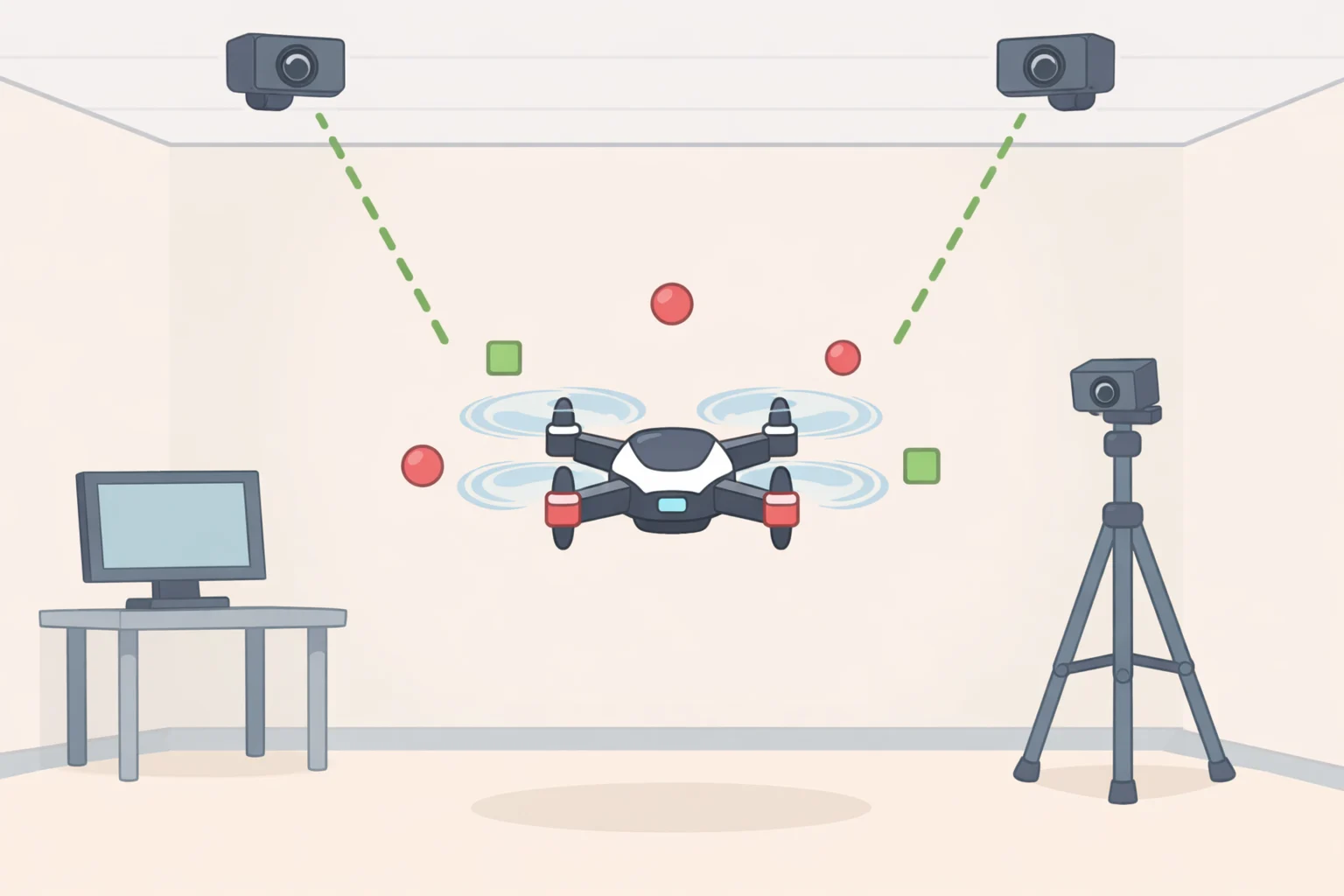
The ten-times visibility reduction wasn't confined to simulation. Multiple prototypes were built and flight-tested, confirming stable, controllable flight with measurably reduced visual detectability compared to quadcopters, the paper reports.
Everything else about the current hardware is sharply constrained. Phantom Twist requires an external optical tracking system to fly, which confines it to controlled indoor environments, IEEE Spectrum noted. Directional movement is theoretically achievable by pulsing the single motor at precise moments during each rotation, but the current prototype can only hold a steady hover maneuvering has not been demonstrated (New Scientist; IEEE Spectrum). The gyroscopic effect of constant spinning makes quick direction changes difficult, and the design won't bank at steep angles the way a quadcopter can, University of Portsmouth defense researcher Peter Lee told New Scientist.
The illusion itself depends entirely on keeping the structure sparse and lightweight. Any added sensor or payload increases visibility immediately, Lee noted. Scaling the design up would generate centrifugal forces that could destabilize flight or cause structural failure (New Scientist). The propeller is also clearly audible a drone that avoids visual detection while announcing itself acoustically is only partially stealthy, something the researchers acknowledge explicitly, per Northwestern Now. The reported results concern human visual detection; the research does not address radar or other sensor signatures.
Military and surveillance applications are obvious inferences, as Lee noted, but they remain speculative given where the hardware actually stands.
What comes next
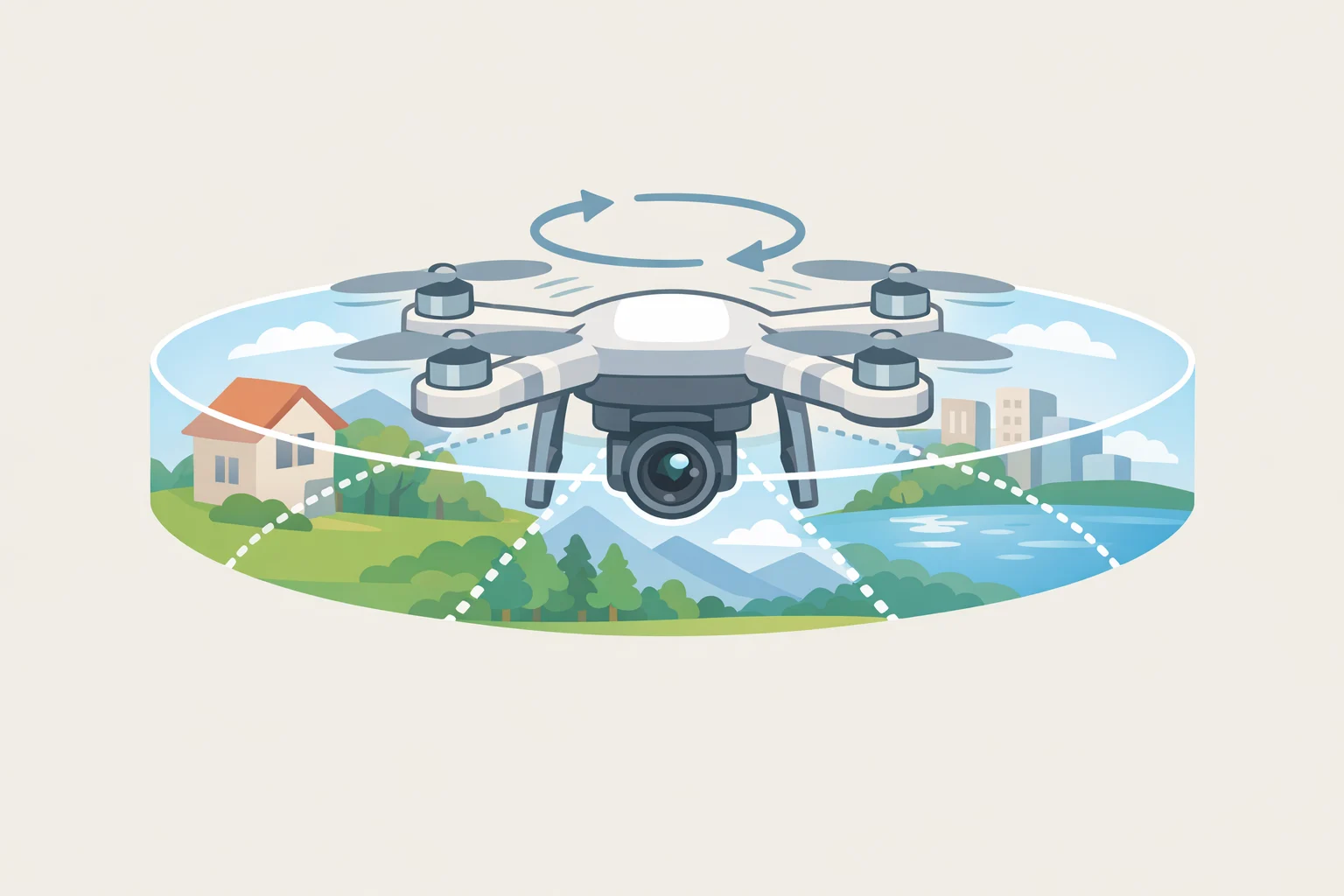
The team's most concrete near-term path is mounting a camera on the rotating body. As the drone spins, it could capture imagery in every direction, creating a continuous 360-degree view that could be used for onboard navigation and control, IEEE Spectrum reported. That development could eventually reduce dependence on external tracking systems. Rubenstein also plans future iterations using more transparent structural materials and quieter propulsion, per Northwestern Now.
The broader implication sits underneath the prototype itself. Using AI to optimize physical hardware geometry against a model of human perception rather than purely against mechanical or aerodynamic constraints is an approach that doesn't have to stop at drones. The same logic could apply to ground robots designed to move through human environments without drawing attention, or to device form factors tuned to reduce perceived intrusiveness. Phantom Twist needs significant further development before it becomes practically deployable. But the design methodology it demonstrates is already portable.