Smart Ring That Measures Glucose in Sweat, Explained
Researchers have developed and tested a wearable sensor that reads glucose and potassium ions from sweat in real time, using microfluidic channels paired with selective electrochemical electrodes to track both during physical activity and trigger a warning signal once readings cross set thresholds (PubMed ID 38441499). That's the real research behind online pitches for a smart ring that measures glucose in sweat. The available evidence supports a wearable sensor, not a ring-shaped product.
The cited study does not describe a ring, ring-specific trial, product name, or manufacturer. It describes a wearable sweat glucose sensor tested during exercise, not a finger-worn device (PubMed ID 38441499). Whatever ring-shaped product eventually reaches consumers, it isn't described in the evidence available here.
Diabetes management depends on regular glucose monitoring, and blood sugar testing today relies on an invasive method, according to a 2022 review of wearable sweat-glucose sensors. That same review argues there's a need for continuous, non-invasive monitoring and points to sweat-based sensing as one way to get it, surveying the field with commercialization specifically in view (the same review). This study belongs to that existing line of research rather than something built in isolation.
What the wearable sweat glucose sensor actually demonstrated
Video of the Day
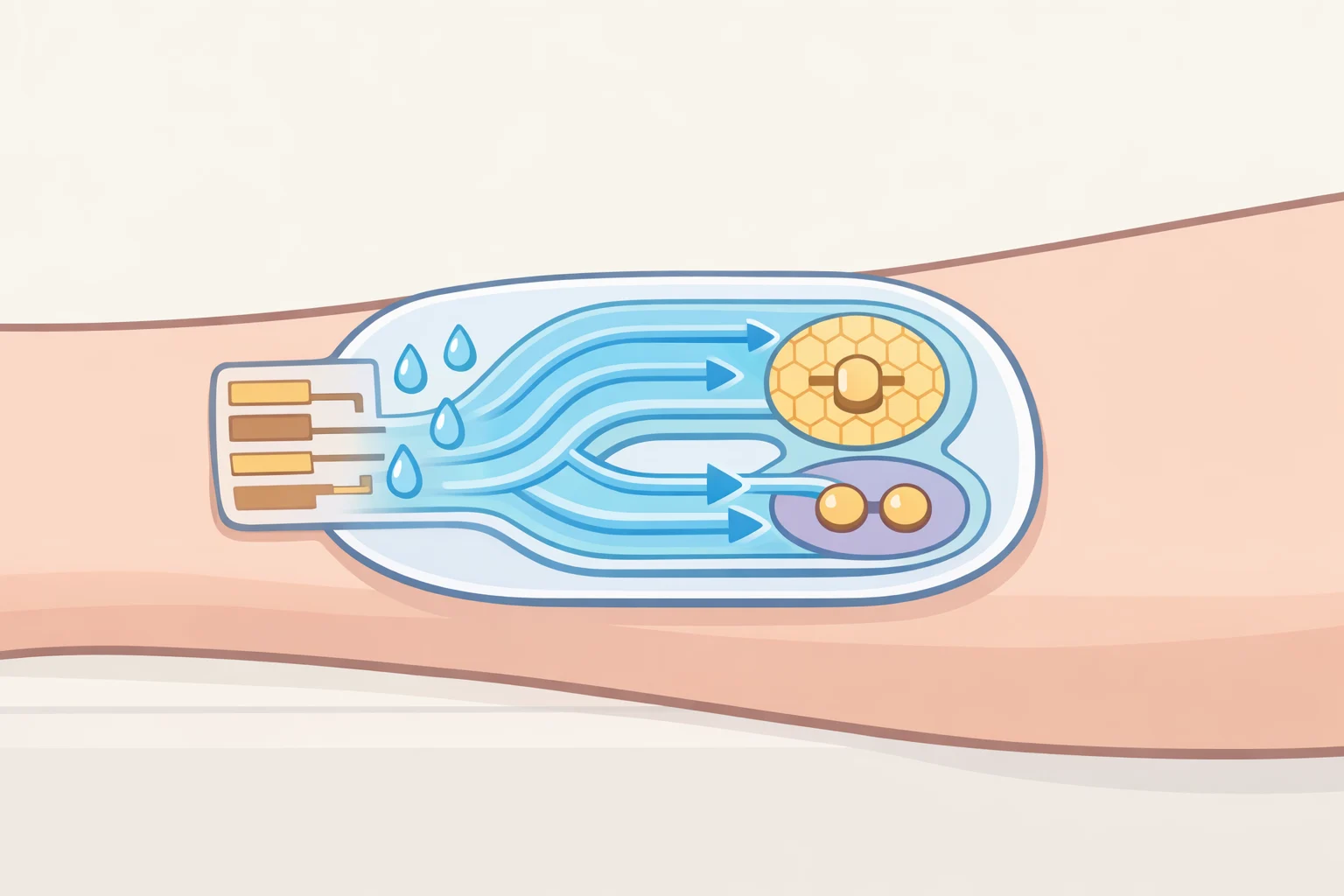
The device draws sweat through microfluidic channels to electrochemical electrodes that continuously track glucose and potassium ion concentrations. It issues a warning signal once readings cross experimentally set thresholds: 7.5 mM for potassium, and 60 µM or 120 µM for glucose (PubMed ID 38441499).
The PubMed abstract describes those alerts as designed to flag potential dehydration and hypoglycemic conditions (PubMed ID 38441499). That's the stated design intent behind the experimentally set thresholds, not an independently verified clinical finding. For someone exercising in heat, a threshold crossing is a useful early cue to check in with their body, not a diagnosis, and the abstract doesn't claim otherwise.
The same abstract calls the monitoring accurate, describing the combination of microfluidics and electrochemical analysis as enabling precise, real-time readings (PubMed ID 38441499). The supplied research data does not provide a numerical accuracy measure, a study population size, or a comparison against blood glucose measurements, so "accurate" here describes the sensor's design goal rather than a reported result.
The concept has earlier precedent. A 2022 review of biofluid-based glucose sensors cites a 2016 epidermal microfluidic patch as an early example of sweat-based glucose sensing (PubMed, 2022). The study belongs to a research line that stretches back roughly a decade rather than one that started with this prototype.
The study's framing also describes the device as cost-effective, but that description applies to the components used in a prototype (PubMed ID 38441499). It says nothing about what a finished consumer product would cost, how durable it would be outside controlled testing, or whether it could be manufactured at the scale a ring or watch would require.
Video of the Day
Why sweat is a hard stand-in for blood
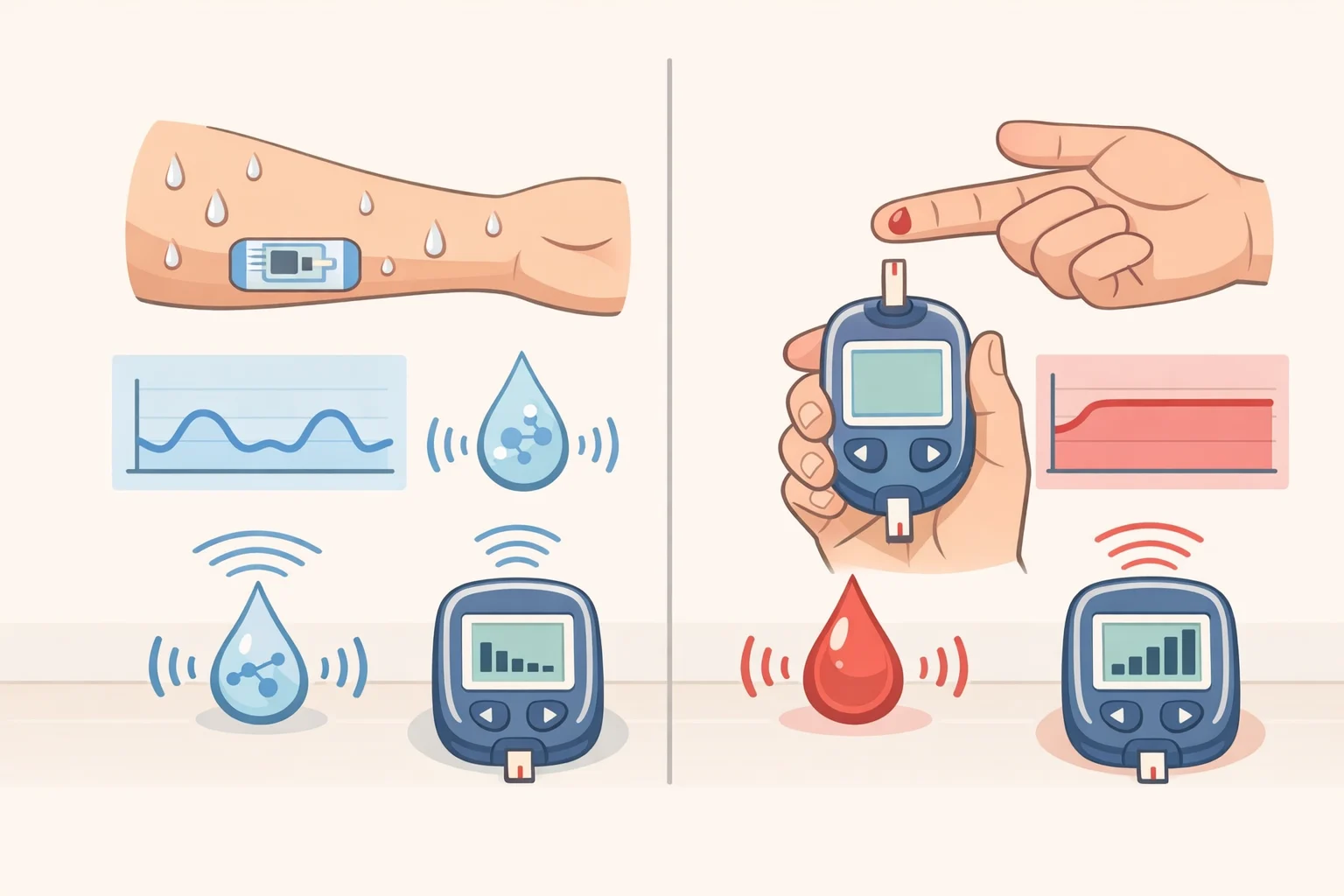
Glucose shows up in more than blood. A 2022 review lists tears, saliva, urine, breath, interstitial fluid, and sweat as fluids where glucose can be detected, which helps explain why sweat-based sensing keeps attracting research attention as a non-invasive option (PubMed, 2022).
Detecting a signal isn't the same as validating a relationship between that signal and blood glucose. The supplied research tested the device during physical activity; it doesn't report performance at rest, during sleep, or in cold conditions, because the study simply didn't test those situations (PubMed ID 38441499).
That's a narrower gap than saying sweat can never stand in for blood. This study answers one question, how the sensor performs during exercise, and leaves every other operating condition unreported. A device that works well on a treadmill has not been shown to work the same way on a couch.
What would turn this into a glucose and hydration monitoring ring
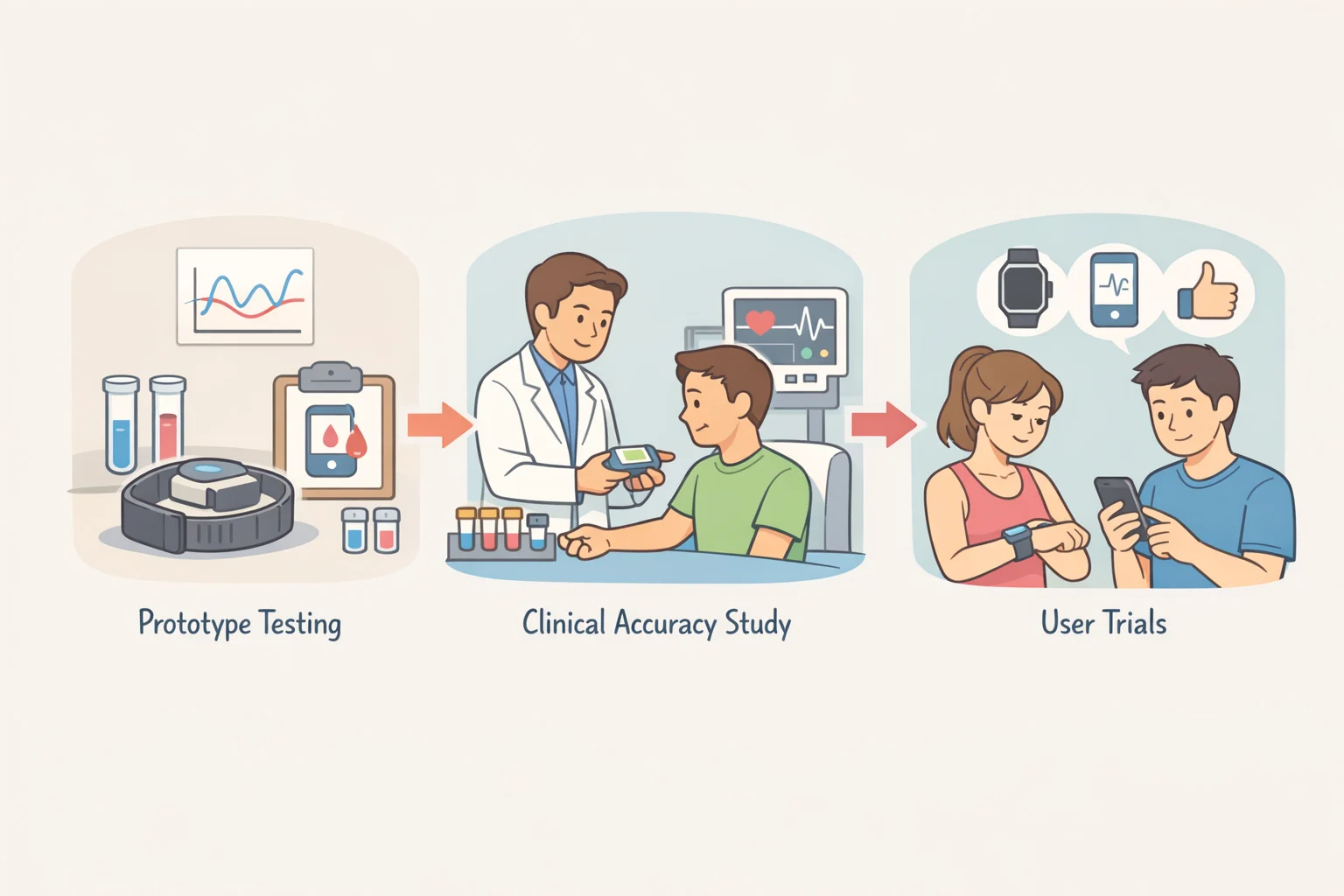
The supplied abstract shows a changing sweat signal can be measured in a prototype. It does not establish how closely those readings track blood glucose, how the device performs across different users, or whether it meets a clinical accuracy standard; none of that is reported in the supplied abstract (PubMed ID 38441499).
"Non-invasive" and "clinically useful" aren't interchangeable, either. A 2022 review found no commercially viable non-invasive glucose monitor on the market at that time. That review predates any current-market check, so it establishes only where the field stood roughly four years ago, not whether a glucose and hydration monitoring ring exists today.
Potassium is the only additional biomarker this research directly supports alongside glucose. Broader claims about a wider health-marker panel, the kind wearable-health marketing tends to imply, would need a separate, named product source to confirm.
An early signal, not a finished product
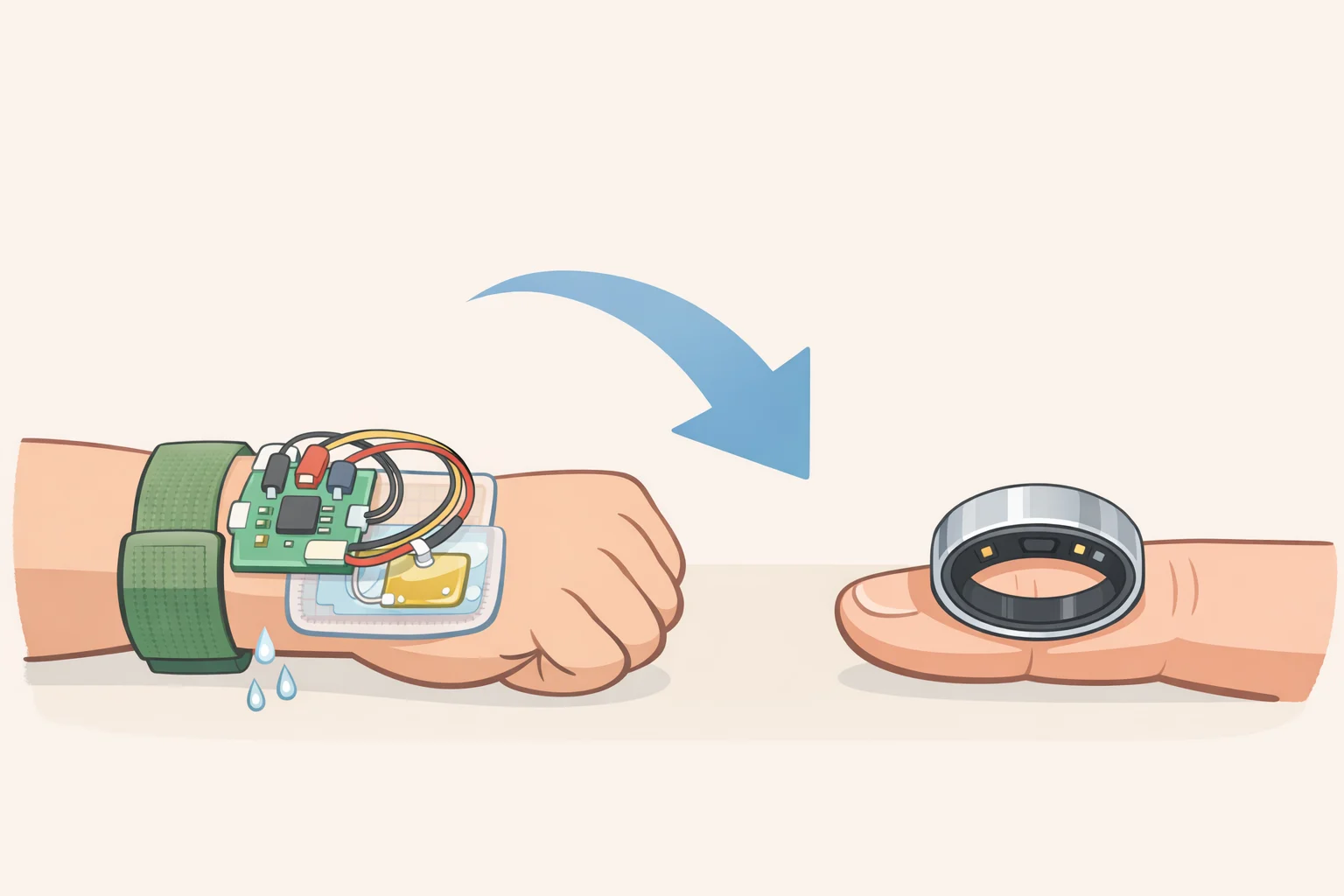
The demonstrated result is a microfluidic, electrochemical sensor that reads glucose and potassium ions from sweat in real time during exercise and issues threshold-based alerts, a genuine step in wearable biochemical sensing that stands on its own even without a ring attached to it (PubMed ID 38441499).
Turning that into a finger-worn consumer product would require clinical validation against blood glucose, reported accuracy metrics, and testing outside an exercise context, none of which appears in the current research. Until a study demonstrates otherwise, the grounded story is a sweat sensor built and tested for exercise, not a diabetes-management device already sized for a finger.