Movies like Widow's Bay: why Jaws is the first watch
Anyone searching for movies like Widow's Bay already has an answer, and it didn't come from a critic's guesswork. It came from the show's own director, who says one specific film shaped the whole premise: Jaws.
Widow's Bay is Katie Dippold's Apple TV comedy-horror series, starring Matthew Rhys as Tom Loftis, a widowed mayor trying to turn a cursed New England island into the next Martha's Vineyard (Wikipedia, published earlier this month; Ars Technica, two months ago). It premiered on April 29, 2026, and became a genuine word-of-mouth hit: viewership reportedly tripled by the fourth episode, according to Ars Technica's review (Ars Technica, two months ago). Then came the Emmy tally, 19 nominations including Outstanding Comedy Series (Wikipedia, published earlier this month).
None of that explains why Jaws, an earlier film that predates Widow's Bay by a wide margin, keeps surfacing as the reference point. That's on Hiro Murai, the series' director and executive producer, who told Polygon exactly how deep the connection runs, and what it means for anyone looking for what to watch after Widow's Bay (Polygon, two months ago).
Why Jaws is one of the best movies like Widow's Bay
Video of the Day
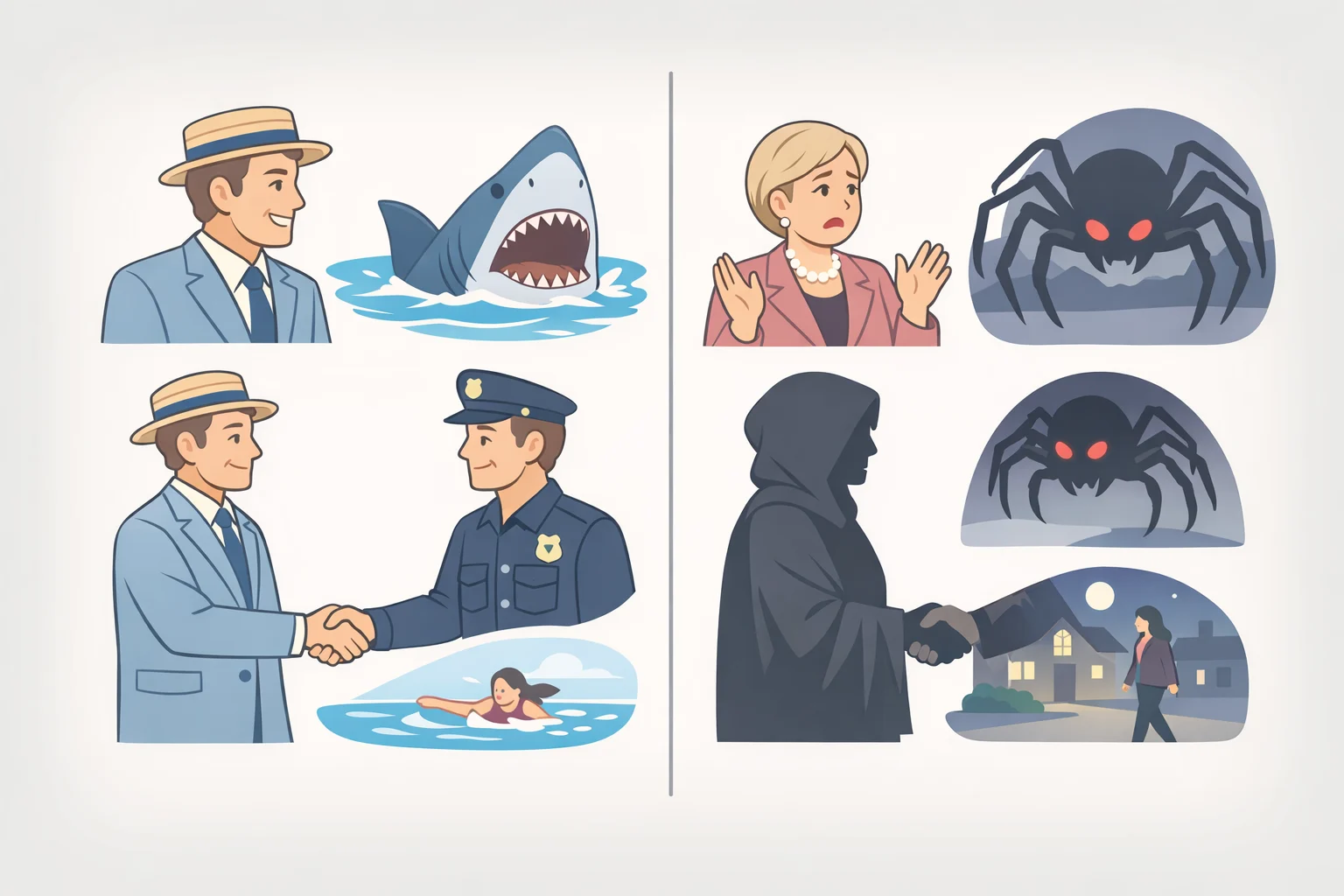
Murai didn't hedge when Polygon asked what shaped the show. He called Widow's Bay "basically Jaws from the perspective of the mayor, with a hefty dose of Stephen King horror thrown in" (Polygon, two months ago). That makes the comparison unusually direct: not a critic's reach, but the director's own account of the reference point behind the show.
He went further, telling Polygon that Jaws "was something that we talked about a lot in the beginning because it'd sort of been baked into the premise," and adding plainly, "We're kind of subverting the mayor of Jaws in this show" (Polygon, two months ago). The comparison works because viewers can read Amity's mayor in Jaws as a leader caught between economic ambition and a threat he'd rather not face. Widow's Bay borrows that same tension and hands it to a widower who lives in the town he's trying to sell.
The nod to that reference went beyond theme. Murai told Polygon the production found a clock that had actually appeared on the police station set in Jaws and used it as a prop (Polygon, two months ago). It's a small detail, but it says something about how literally the creative team treated the lineage they were building on.
Video of the Day
Spoilers ahead: the mayor's tourism gamble

Tom Loftis wants to turn the island into a trendy summer destination, the kind of place critics keep comparing to Martha's Vineyard, despite a colorfully bizarre history marked by periodic tragedies (Ars Technica, two months ago; Rolling Stone, two months ago).
Local resident Wyck, played by Stephen Root, warns Tom that a rolling fog means the island is "waking up," a sign more supernatural chaos is coming (Ars Technica, two months ago). Tom brushes him off, the way any mayor with a ribbon-cutting on the calendar would. He stays overnight in the town's haunted hotel to prove it's harmless, which it isn't, and runs into the island's legendary Sea Hag during his own inaugural beach swim (Ars Technica, two months ago).
By the finale, Tom is finally willing to believe Wyck's warnings and takes matters into his own hands to save the island (Rolling Stone, two months ago). That gives the Jaws comparison a concrete shape: Murai has described the show as subverting the Jaws mayor, and Rolling Stone's reporting shows exactly where that subversion lands, in a leader who eventually drops the denial once the danger becomes impossible to spin.
Why Widow's Bay's cursed island feels real

Dippold, the show's creator and showrunner, wanted the island to function like a real place, not a horror-movie backlot. Murai recalled that "from the very beginning, Katie was really adamant that we build a real place," with its own internal logic even when the plot turns farcical (Polygon, two months ago). He compared the goal to The Simpsons, a show where dropping into any part of the city tells its own story, complete with a sense of how far the town hall is from the beach and who'd actually be standing around it (Polygon, two months ago).
That mythology runs deep. The show traces its cursed small-town history back to the island's founding by Richard Warren, giving the premise real weight instead of treating it as set dressing (Ars Technica, two months ago). The range of tones inside that mythology is the real test: a killer-clown episode, a haunted-hotel storyline, a flashback chapter about the island's founding directed by horror veteran Ti West, and a mushroom-trip episode handled by comedy director Andrew DeYoung all sit inside the same ten-episode season without breaking the show's own rules (Ars Technica, two months ago; Rolling Stone, two months ago). That's what separates a genuine supernatural horror comedy from one that's just borrowing horror imagery for laughs.
Physically, the production built that illusion out of borrowed pieces. Interior sets, including the town hall and the Salty Whale bar, went up at New England Studios on a former military base in Devens, Massachusetts, while exteriors were shot across coastal Massachusetts towns and, for two days, remote fishing villages in Maine (Polygon, two months ago; Wikipedia, published earlier this month). Murai called the result "a weird hodgepodge of things" that somehow reads as one coherent island onscreen (Polygon, two months ago). That patchwork of real locations is what makes the town feel like it existed before anything supernatural showed up in it.
Why this supernatural horror comedy still isn't quite Jaws
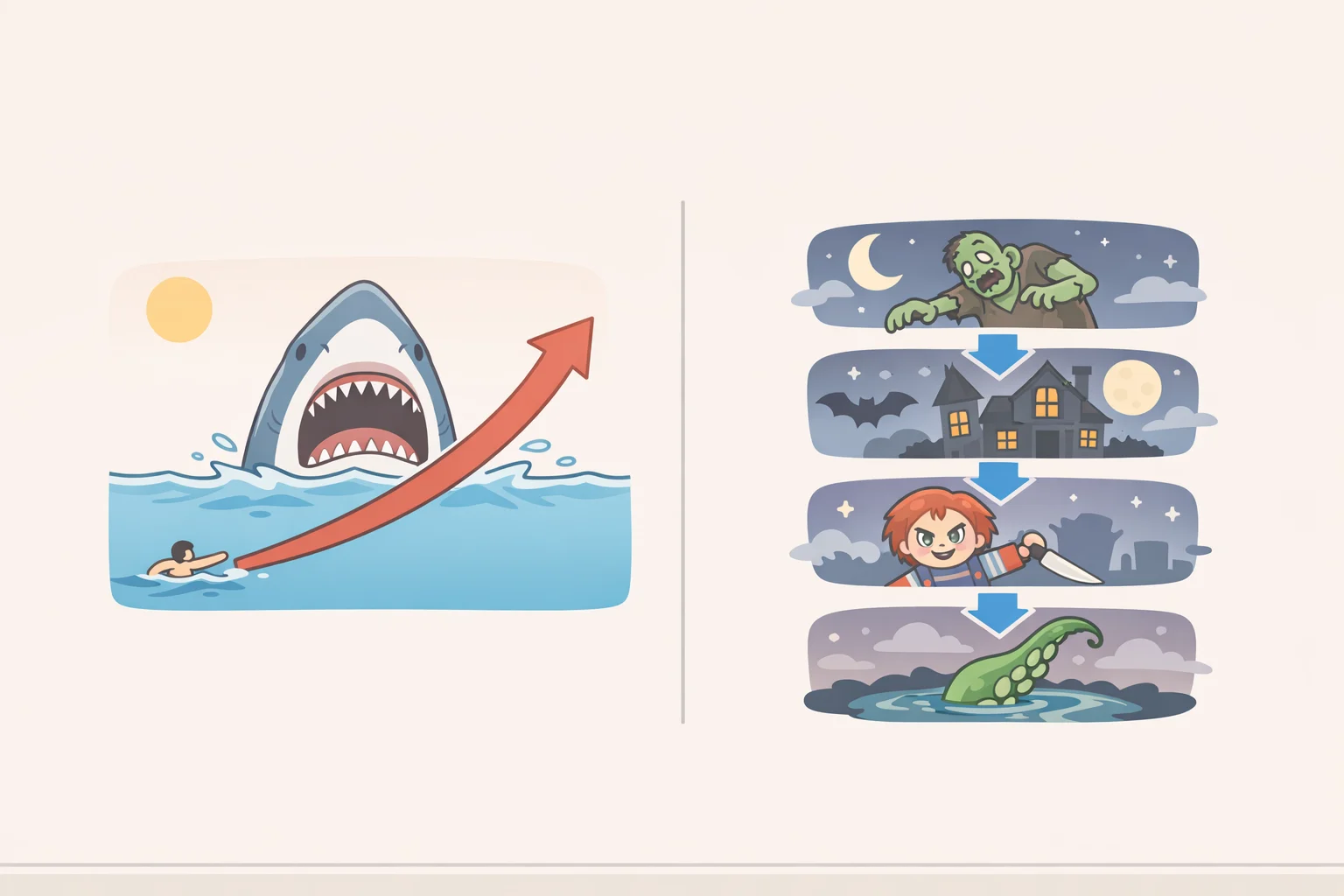
Treat Jaws as a contained thriller: one shark, one summer, a threat that keeps narrowing the town's options. Widow's Bay runs the opposite structure. Instead of a single escalating danger, it stacks episodic supernatural incidents, such as a killer clown, a haunted hotel, and a psychedelic mushroom trip, into a mythology that keeps widening rather than closing in (Ars Technica, two months ago; Rolling Stone, two months ago). That structural difference carries a tonal one with it: Widow's Bay deliberately balances fear and comedy, while Jaws plays its terror straight.
That difference matters for anyone deciding what to watch next. Viewers who want the mayor-versus-threat dynamic Murai identified, minus the jokes, will get exactly that from Jaws, delivered as pure, patient suspense. Viewers hoping for another laugh-and-scream hybrid should adjust their expectations: Jaws isn't going to make anyone laugh, and it isn't trying to.
Murai recalled that Dippold's ambition from the start was for the series to be "both really funny and actually scary," pushing back on horror comedies that treat fear as "cosplay," decoration on top of a comedy that was never really trying to frighten anyone (Polygon, two months ago). He described the target feeling as the "rollercoaster effect" of childhood horror movies, being scared and excited at the same time (Polygon, two months ago).
The numbers back up that balancing act. The season holds a 98% approval rating across 102 reviews on Rotten Tomatoes, with an 8.6-out-of-10 average, and a "generally favorable" 78 out of 100 on Metacritic based on 26 critics (Wikipedia, published earlier this month). Polygon's own review calls the season "that rare horror comedy that manages to actually be both terrifying and hilarious in equal measure, sometimes in the same scene" (Polygon, two months ago).
If a horror recommendation from Hiro Murai himself carries more weight than a generic list of loosely similar titles, this is it. He named Jaws directly as the show's foundational reference, not a comparison a critic drew after the fact.
What to watch after Widow's Bay while waiting on season 2
All 10 episodes of Widow's Bay season 1 were streaming on Apple TV as of Ars Technica's review two months ago (Ars Technica, two months ago). Apple TV renewed the series for a second season on June 11, 2026, so the door is open for more mythology (Wikipedia, published earlier this month). Dippold has joked that the new season will be "about how everything is great on the island and there's nothing to worry about," which, given the source material, sounds like a setup rather than a promise (Ars Technica, two months ago).
Jaws remains the clearest title with an on-record connection to Widow's Bay, straight from the director who helped build it. Streaming availability for an older film varies by service and region, so it's worth a quick check before pressing play. Just don't expect the jokes: watch it for the civic denial, the coastal setting, and the mayor who runs out of room to look away.