iPhone Duo vs Galaxy Z Fold 8: 5 Advantages for Apple Fans
Apple isn't trying to out-engineer Samsung's eighth-generation foldable. It's betting that enough iPhone owners will pay a premium to fold their existing ecosystem in half rather than switch platforms. That's a narrower, more testable claim than "better foldable," and it's the right frame for weighing iPhone Duo vs Galaxy Z Fold 8: this comparison isn't about which hardware wins outright. It's about which company built the stronger case for the customer already standing in front of them.
The numbers set the stakes. The iPhone Duo goes on sale October 23 at $1,999, about $100 more than the Galaxy Z Fold 8's $1,899.99 starting price (TechRepublic, last week). Samsung has spent eight hardware generations refining the foldable form factor since the original Galaxy Fold shipped more than seven years ago; the Duo is Apple's first attempt (The Verge, last week). Early coverage from hands-on demo units frames the split cleanly: Apple leans on software polish, Samsung leans on engineering experience (Digital Trends, last week).
Everything below comes from manufacturer specifications and pre-release demos. The Duo is due in stores October 23, and the coverage available now doesn't include independent side-by-side battery, camera, or drop testing (TechRepublic, last week). What follows separates the documented, launch-day advantages from the claims that still need real-world verification: five specific areas where Apple's published specs give the Duo a genuine edge, then where Samsung still leads, and finally what nobody can answer until reviewers spend real time with both phones.
iPhone Duo vs Galaxy Z Fold 8: which advantages actually matter?
Video of the Day
These five are ranked by how much they'll matter to an actual buyer, not by how they read on a spec sheet.
1. IP68 water and dust resistance beats IP48
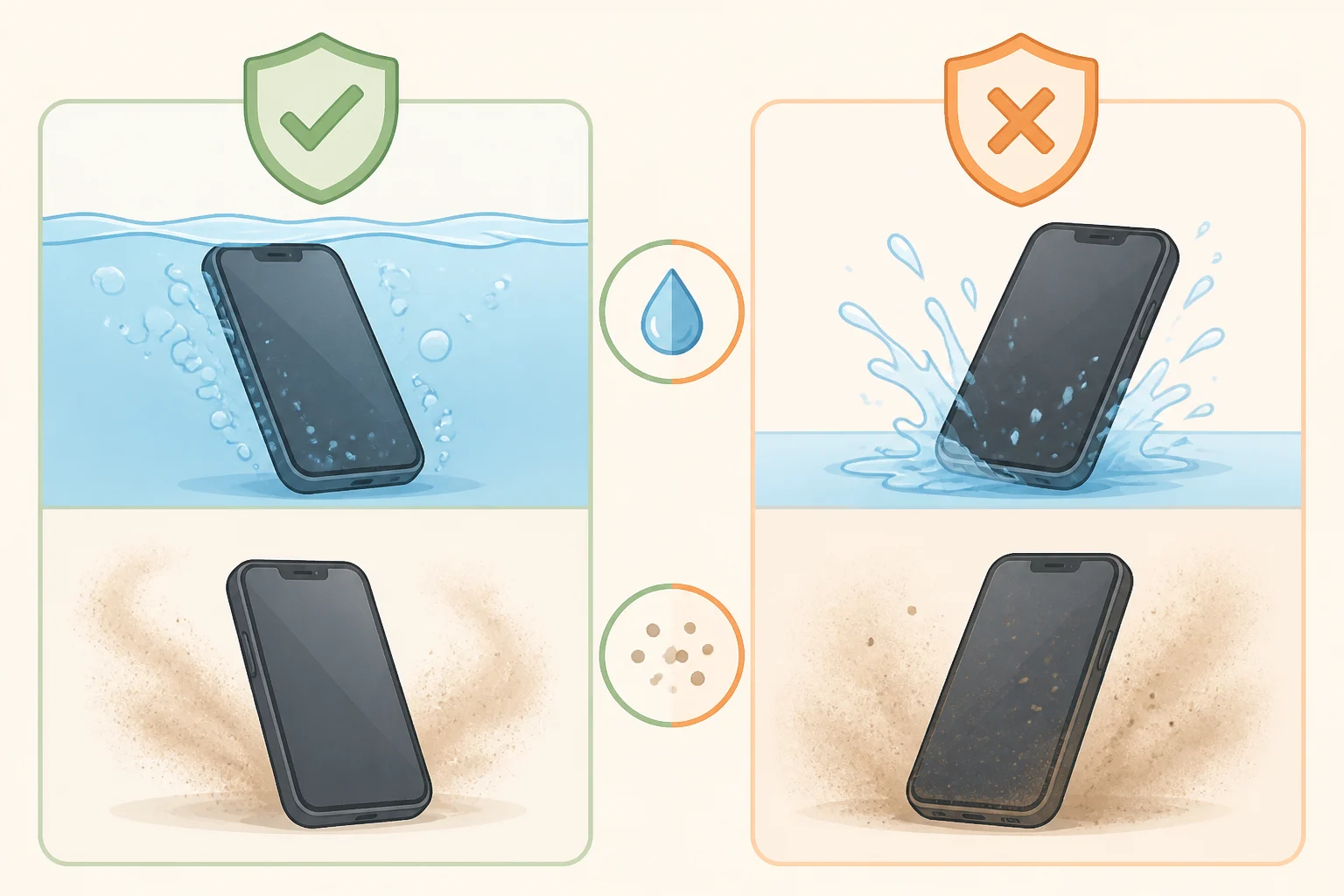
The Duo carries a full IP68 rating; the Fold 8 is rated IP48, a meaningfully lower bar for dust and water protection (TechRepublic, last week). Apple specifies IP68 protection up to 6 meters of water for 30 minutes (Digital Trends, last week).
Both companies reinforce their folding displays with titanium underneath, so that part of the durability story is a wash (TechRepublic, last week). Where they diverge is exterior materials: Apple protects the Duo with Ceramic Shield, while Samsung uses Gorilla Glass Ceramic 3 and Gorilla Glass Victus 2 (TechRadar, last week). None of that settles drop survival or how either hinge holds up after a year of folding; the rating gap is real, but it describes ingress protection, not overall toughness.
Anyone who's caught a phone in the rain or dropped one near a sink gets a published protection advantage in Apple's favor. Whether that translates into fewer real-world failures is something only time, and independent testing, will show.
2. Ecosystem continuity is the strongest pull for existing iPhone owners
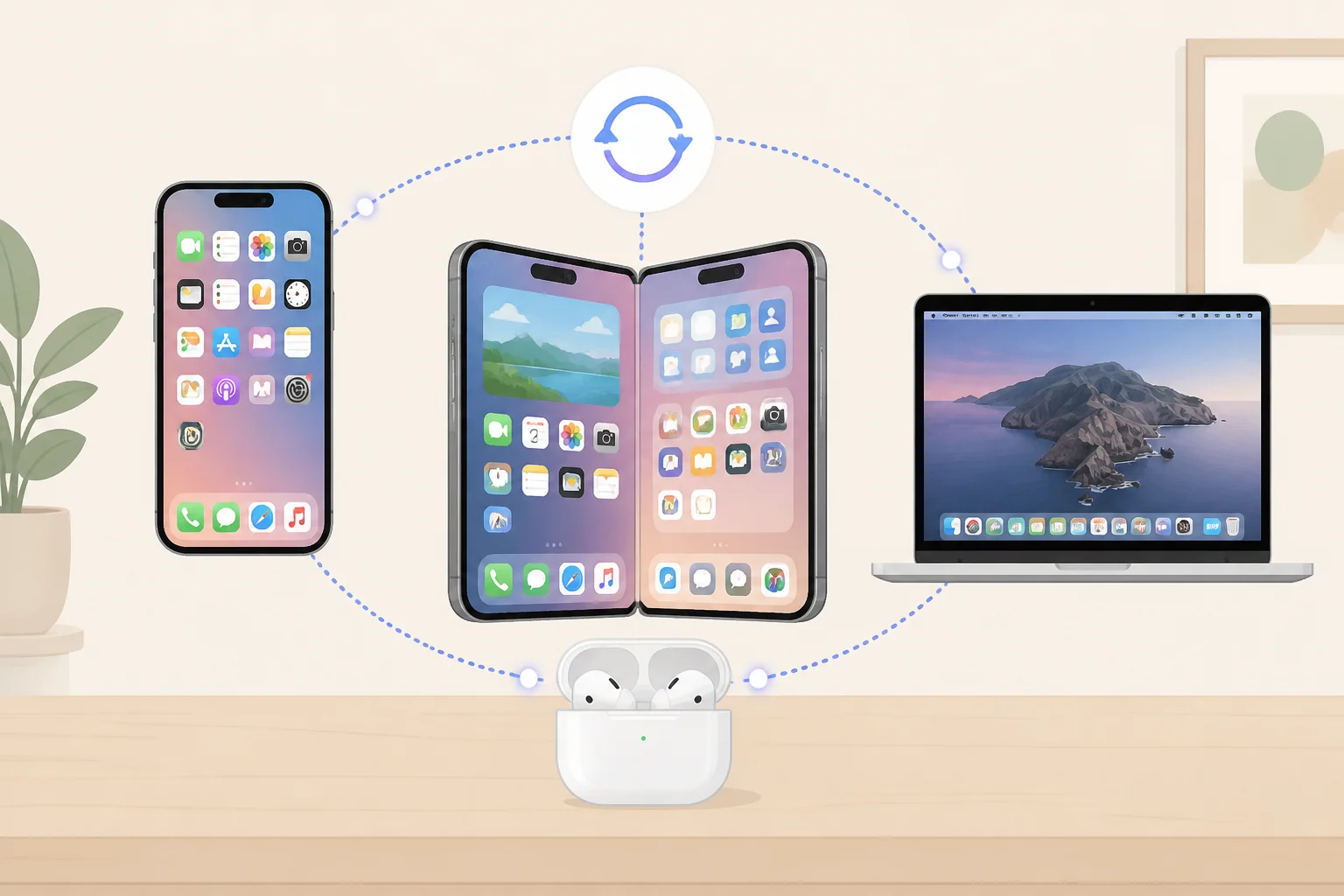
This is a fit advantage, not a claim that iOS beats Android at multitasking. iOS 27's Split View runs two apps, or two windows of the same app, with drag-and-drop and saved pairs (Digital Trends, last week). The Duo unlocks via Apple Watch and slots into an existing iPhone, Mac, and AirPods setup, a continuity story that only pays off if a buyer already owns those devices (TechRepublic, last week).
Apple also built foldable-specific touches that only exist because of this hardware: an outer-screen selfie preview, two-sided FaceTime for group settings, and a Smart Take feature that fires the shutter automatically once it detects a pose (The Verge, last week). None of that means Samsung's software is less capable. One UI still runs three-app split view against Apple's two, plus full DeX desktop output, so Samsung's multitasking ceiling is objectively higher (Digital Trends, last week). What the Duo offers instead is familiarity: someone deep in Apple's ecosystem gets a bigger screen without relearning their phone, and that's a narrower promise than "better software," but it's the one that will actually decide the sale for a lot of buyers.
3. MagSafe and Qi2 give the Duo an accessory ecosystem Samsung can't match
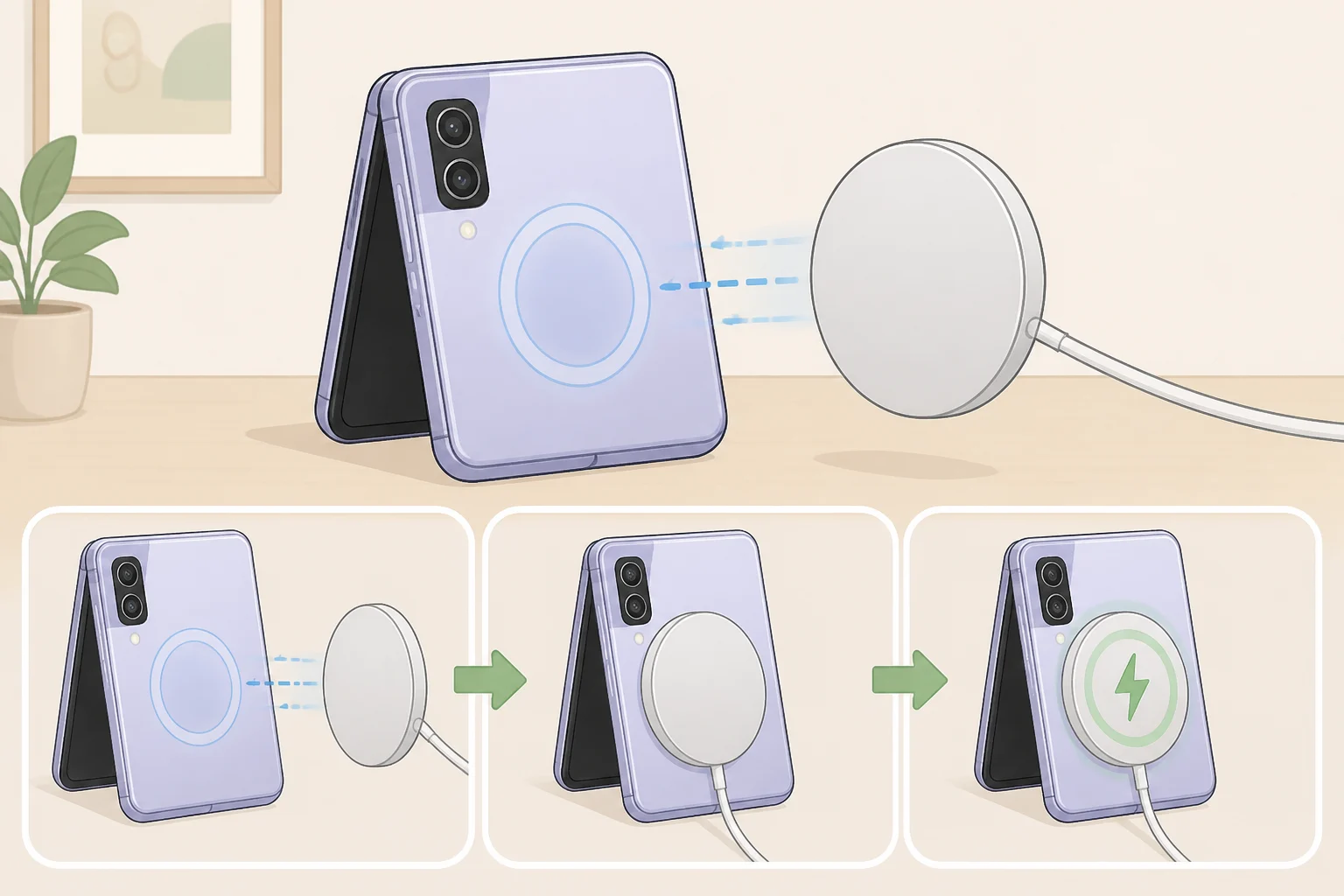
The Duo supports MagSafe and Qi2, reaching roughly 50% wireless charge in about 30 minutes (Apple, last week). Digital Trends' reviewer called the Fold 8's lack of magnetic wireless charging a personal gripe, pointing out that the Duo has it, Google's Pixel 11 Pro Fold has it, and no current Galaxy flagship does (Digital Trends, last week).
That's a specific, verifiable gap rather than a general software preference. Anyone using magnetic car mounts, wallets, or stands gets an accessory ecosystem the Fold 8 simply can't join.
4. A 2TB storage ceiling matters, but only to a narrow slice of buyers
Apple doubles Samsung's maximum onboard capacity, which is genuinely useful for large 4K/120fps Dolby Vision footage, game libraries, or local work files (Apple, last week). It doesn't mean most people need it; it means the option exists for people who shoot or edit heavy local video and would otherwise run out of room.
The 2TB configuration costs $3,199, a $1,200 premium over the base model (Digital Trends, last week). That's a real advantage for professionals working on-device, and an irrelevant one for almost everyone else. Treat it as a niche win, not a universal one.
5. Apple's nano-texture display finish is promising, but it's still Apple's own claim
Apple says a custom nano-texture material makes the display "perceptually flat," reducing glare and minimizing crease visibility compared to a standard glossy panel (The Verge, last week). TechRadar confirms this is a genuine hardware distinction: the Duo uses a matte nano-texture finish where the Fold 8 uses a glossier anti-glare coating (TechRadar, last week).
That confirms the two finishes are different, not that Apple's is better. Crease visibility and glare performance are Apple's own characterization until someone runs both phones side by side outdoors and indoors under the same light (Apple, last week). Outdoor users and anyone annoyed by visible creases on prior foldables should watch this closely. Nobody should buy on the strength of it yet.
Apple Pencil support belongs in a different category entirely. It doesn't ship with the Duo at launch, so it can't count as a current advantage. More on that below.
Video of the Day
Where Samsung still leads
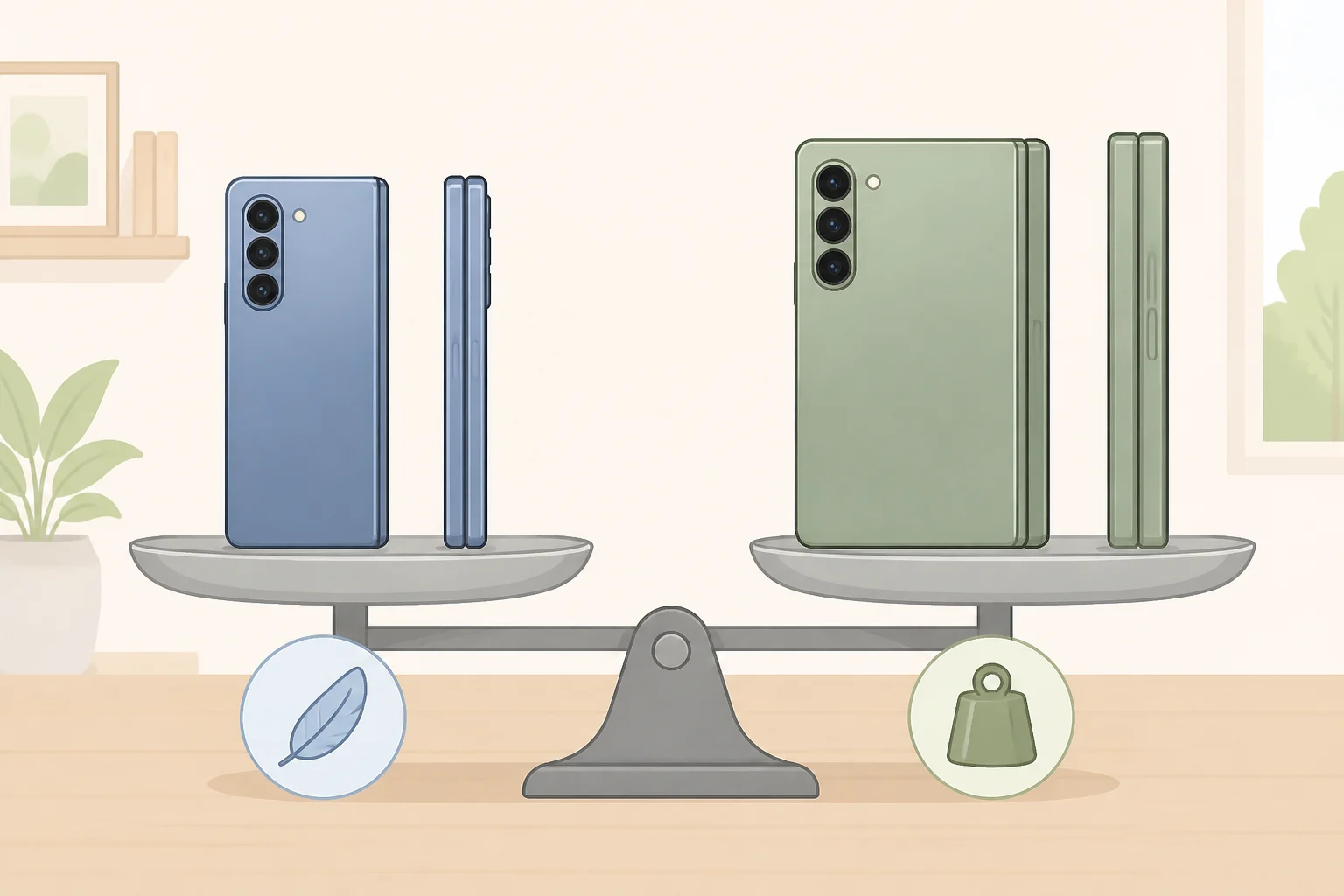
Three areas favor the Fold 8 outright, and none of them are close calls.
Weight and thickness go to Samsung by a wide margin. The Fold 8 is 53 grams lighter (201g vs. 254g) and thinner both open (4.5mm vs. 5.2mm) and closed (9.7mm vs. 11.3mm). Digital Trends' reviewer put it plainly: that gap isn't a rounding error, it's the difference between a foldable that feels like a regular phone and one that starts feeling heavy in a jacket pocket (Digital Trends, last week).
Samsung's productivity ceiling is also higher for power users. Full DeX desktop output, three-app split view, and a physical nano-SIM slot alongside eSIM give Fold 8 owners options the Duo doesn't; the Duo is eSIM-only worldwide (Digital Trends; TechRadar, last week). Travelers who rely on a physical SIM card lose that flexibility entirely with the Duo.
The Fold 8 also starts $100 cheaper, and Digital Trends notes Samsung's stronger track record on software support, seven years of OS updates against Apple's typical five, though Apple hasn't confirmed a specific update commitment for the Duo yet (Digital Trends, last week). If portability, multitasking depth, or price-per-dollar drive the purchase, the Fold 8 wins outright. That's exactly why the five Duo advantages above need to be read as ecosystem-specific rather than universal.
What no one can answer yet
Four questions have no real answer until reviewers spend weeks with both phones outside a controlled demo.
Battery claims aren't directly comparable. Apple cites up to 31 hours of inner-display video playback and 44 hours on the outer display; Samsung cites up to 26 hours. TechRepublic warns explicitly against treating these figures as head-to-head results, since the two companies use different testing methods (TechRepublic, last week).
Camera quality is unproven on either side. The Duo's 48MP main and ultrawide sensors face off against the Fold 8's 50MP equivalents, but megapixel counts don't establish image quality, and no independent photo or video comparison exists yet (TechRepublic, last week).
Neither phone offers stylus support on day one. Apple Pencil USB-C compatibility for the Duo's displays isn't arriving until later in 2026, and the Fold 8 doesn't support any S Pen at all (TechRepublic, last week).
Long-term hinge durability and crease progression remain open questions on the Duo specifically. The IP68 rating and titanium reinforcement describe engineering intent, and the pre-release coverage reviewed here doesn't include independent testing of how either claim holds up after months of daily folding (The Verge, last week).
Three buyer paths, not one verdict
TechRepublic's own framing supports a split verdict rather than a single winner: the Fold 8 is "the easier recommendation for buyers who want the more mature foldable today," while the Duo "makes more sense when the reason for buying a foldable starts with Apple rather than the folding mechanism itself" (TechRepublic, last week). Digital Trends reaches the same conclusion from a different angle: for Apple users, the Duo is effectively "the only option," while for Samsung users already invested in Android, the Fold 8 remains "an excellent choice" (Digital Trends, last week).
Preorders open October 16, with the Duo reaching customers October 23. Retail availability will finally allow broader independent testing of the Duo's battery, cameras, display finish, and durability, which is where most of the open questions above get resolved (Apple, last week).
| Priority | Better choice | Why |
|---|---|---|
| IP68 protection, MagSafe accessories, staying in Apple's setup | iPhone Duo | Stronger published ingress rating, magnetic charging, ecosystem continuity |
| Portability, desktop-style multitasking, lower price | Galaxy Z Fold 8 | Lighter, thinner, DeX, three-app split view, $100 cheaper |
| Camera quality, real battery life, crease visibility, hinge durability | Wait | No independent testing exists on either phone yet |
Choose the Duo now if IP68 protection, MagSafe accessories, or staying inside an existing Apple setup matter more than saving weight or money. Choose the Fold 8 now if portability, desktop-style multitasking, or the lower price point are the priority; it remains the more proven piece of hardware. Wait if the purchase hinges on camera quality, real-world battery life, crease visibility, or hinge durability over time. Those answers arrive only after the Duo has spent a few weeks in the hands of people who don't work for Apple.