CMF separates from Nothing: inside its India strategy
CMF, the budget sub-brand Nothing launched in 2023, is now a separately incorporated company majority owned by Indian shareholders and headquartered in India, according to founder Carl Pei (Inc42). He announced the move Monday in a letter titled "India Is Inevitable," posted on X, saying the goal is to help build a global consumer electronics company from India (India Today).
Nothing spins off CMF, but it doesn't walk away. The London-based company keeps a minority stake in the new entity and stays on as a partner, continuing to supply engineering expertise, its operating system, supplier relationships and global brand infrastructure (India Today; ABP Live).
The arrangement builds on plans Nothing first sketched out a year ago, when it described CMF as an eventual independent subsidiary with India as its base for operations, R&D and manufacturing (India Today). Monday's letter is the part that was missing back then: who actually owns the thing.
The announcement lands the same year CMF quietly shelved a planned successor to its most popular phone, even as Pei talks about the brand in far bigger terms. Here's what changed, why he's framing it as a bet on India's engineering future, and what still has to prove itself.
Why CMF separates from Nothing
Video of the Day

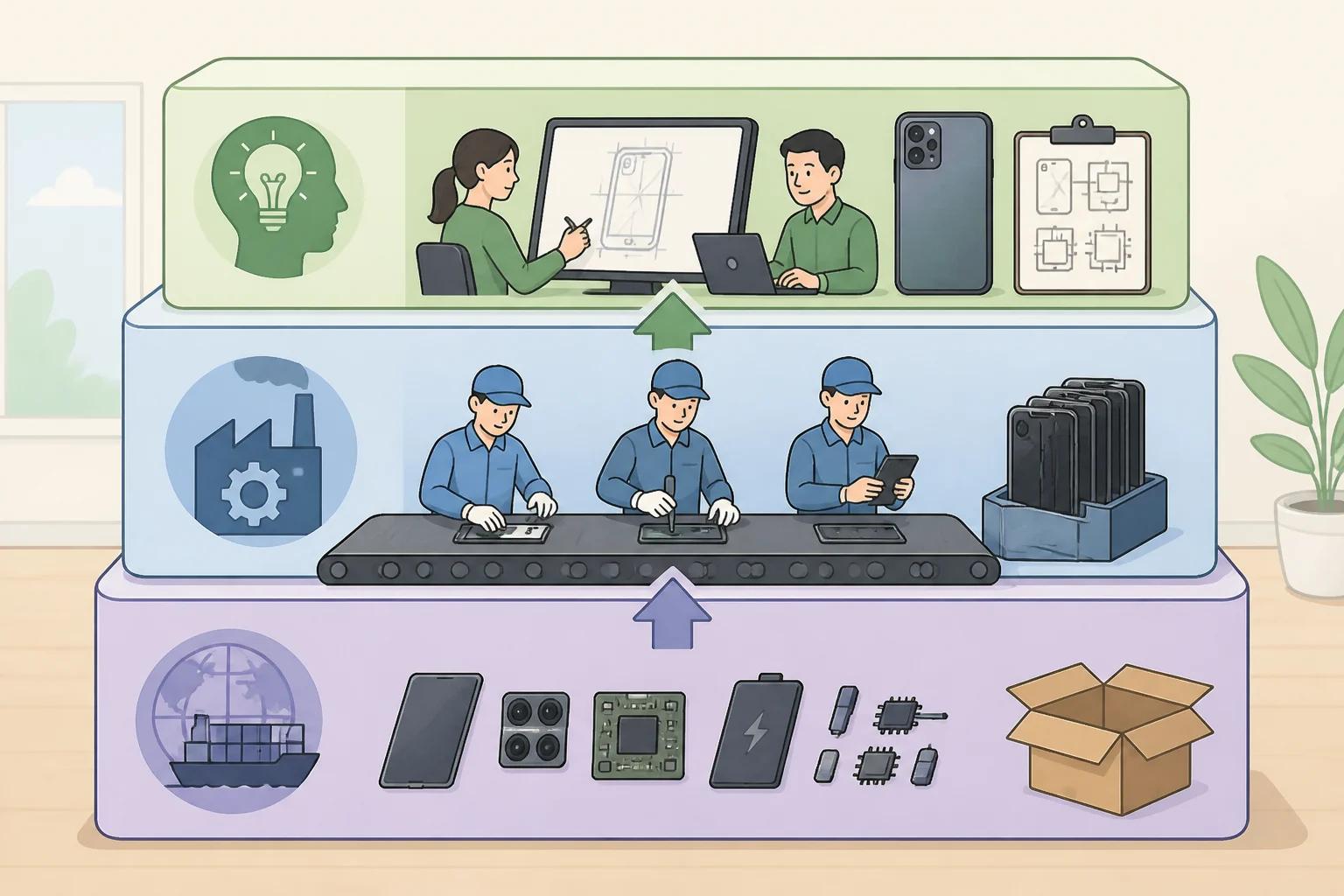
Pei's letter argues that India's manufacturing success hasn't yet produced a homegrown brand capable of designing its own chips, cameras or software. Nearly all phones sold in the country, 99.2%, are now assembled domestically, up from almost none a decade ago (Inc42; ABP Live). What India still lacks, in his telling, is the deeper capability sitting behind that assembly line.
He backs the argument with a specific memory of how the last cycle played out for domestic brands. "Within two years, foreign brands arrived with what the domestic ones lacked: real engineering," he wrote (ABP Live). It's his own reading of that history, not an independently audited account, but it's the premise the entire restructuring rests on.
Pei also makes his outsider status part of the pitch. "I'm not Indian. I'm a Swede who spent eight years in China and runs a company from London," he wrote. "I've seen this happen once. I know what it takes. And we've already built the pieces that are missing" (ABP Live).
CMF India Private Limited was formally incorporated in December 2025 with the Registrar of Companies in Delhi, listing Nothing's India president Akis Evangelidis and CFO Hemanth Kundavaram as directors (Inc42). His bet is that pairing majority Indian ownership with continued access to Nothing's engineering base closes the gap the last generation of domestic brands couldn't.
Video of the Day
What actually changes for CMF

The new entity holds majority Indian ownership, runs its own local team and R&D operations, and stays headquartered in India. Nothing keeps a minority stake and continues as a shareholder and partner rather than a parent company (India Today; ABP Live).
This builds on groundwork laid a year ago. In September 2025, Nothing formed a joint venture with Noida-based Optiemus Infracom to make India a production and export hub for Nothing and CMF products, with both committing to invest more than $100 million and create over 1,800 jobs across three years (India Today; Inc42).
The spin-off also arrives alongside a government push in the same direction. India's electronics ministry rolled out a ₹62,500 crore Mobile Phone Manufacturing Scheme that offers Indian-owned brands a 5% incentive plus another 3% for local design and R&D, aimed at deepening domestic value addition rather than just assembly (Inc42).
The scale of that broader shift is real. Mobile phone production in India climbed from ₹18,900 crore in FY15 to ₹6.27 lakh crore in FY26, with exports rising from ₹1,566 crore to ₹2.60 lakh crore over the same stretch (Inc42). None of that changes what independence means for CMF day to day, though. Structurally and financially, it's now its own company. Operationally, it still leans on Nothing for the exact capabilities Pei says India still needs to build for itself.
CMF's ambitions against where it stands today
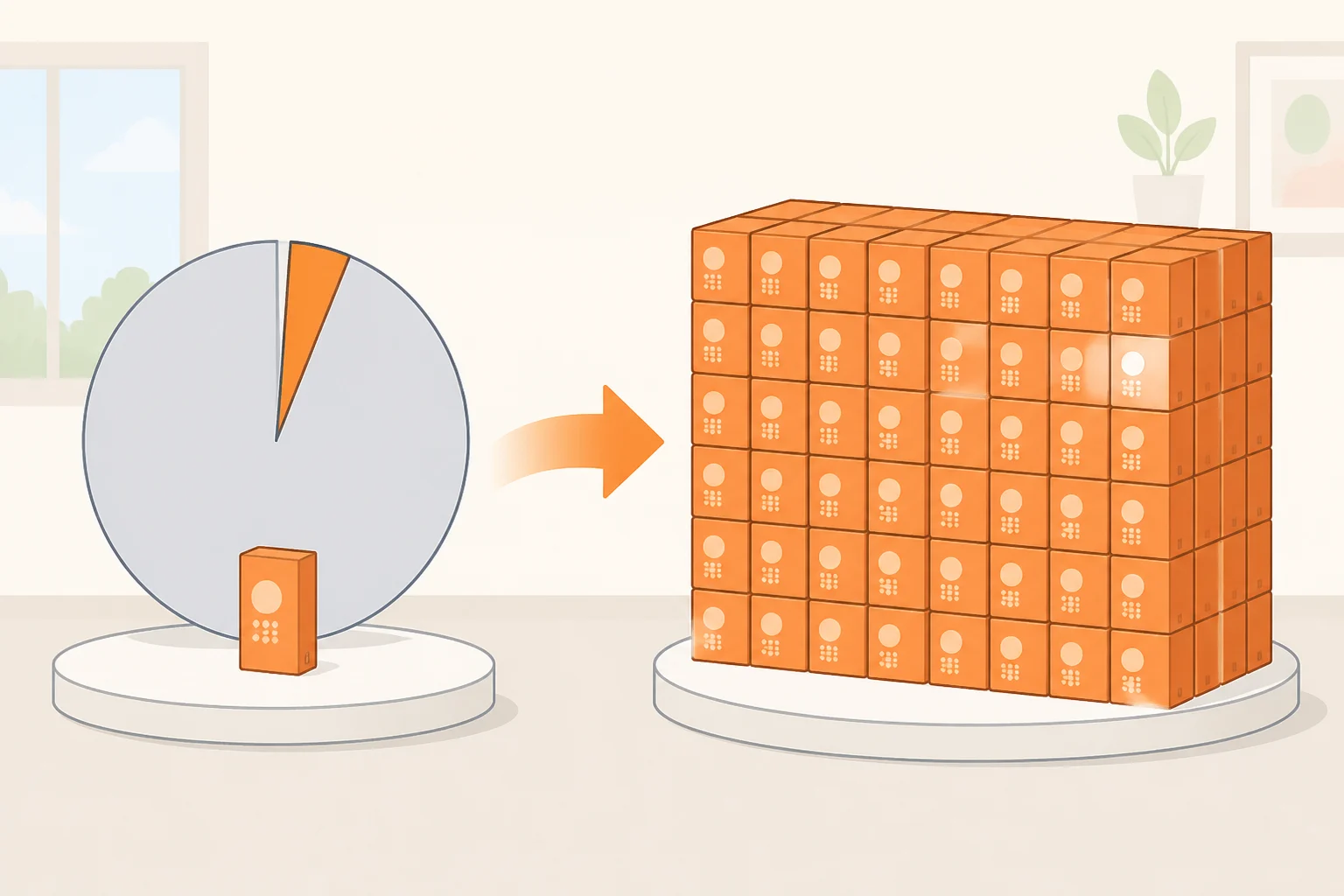
Pei has set a long-term target of 100 million smartphones a year for CMF, a figure he calls "the line between a brand and a platform." He's framed it as a long-term ambition rather than a production schedule with fixed milestones (Inc42; ABP Live).
Against that number, CMF is still a young brand. It started in 2023 as an affordable, design-led line built around a watch, earbuds and a charger, before expanding into phones, headphones and smartwatches for price-conscious buyers (Inc42). Pei describes it as India's fastest-growing smartphone sub-brand in 2025, built on the manufacturing foundation he's now trying to deepen (ABP Live).
Fastest-growing and 100 million units a year describe two very different companies. Pei's letter doesn't put a date on closing that distance, which is the real work ahead.
No new CMF phone in 2026
CMF will not launch a successor to the CMF Phone 2 Pro this year. Co-founder Akis Evangelidis said earlier this year that rising memory prices made it impossible to deliver a meaningful upgrade at a price that made sense for the brand, and that CMF would rather delay than ship a product it wasn't proud of (India Today).
The brand will keep launching products in other categories this year, including entirely new ones, and is focusing on IoT devices while it reassesses its smartphone plans once market conditions improve. It released the CMF Buds Neo last month as part of that push to broaden its ecosystem beyond phones (India Today).
The timing is worth sitting with. CMF is making its biggest structural move toward "real engineering" in the same year it's admitting it can't yet solve the supply-chain economics of its core product.
What to watch next
CMF now exists as a separately incorporated, majority Indian-owned company with its own R&D mandate, but Nothing's continued role as shareholder and partner means the break is partial, not total (India Today; ABP Live).
Pei is explicitly measuring CMF against the fate of India's earlier homegrown phone brands, which lost ground once foreign rivals showed up with real engineering behind them. Whether CMF avoids that outcome isn't something Monday's letter settles. As Pei put it: "India will produce global consumer electronics companies. The only question is when, and that depends on who builds them" (ABP Live).
The more useful marker for tracking progress isn't the 100-million-unit target, which carries no fixed timeline, but the Optiemus joint venture's execution: whether the $100 million investment and roughly 1,800 jobs materialize on schedule over the next three years. Whether CMF's promised IoT expansion can sustain the brand's momentum while its phone lineup sits paused is the other thing worth watching as 2026 plays out.