Meta Camera-Free Smart Glasses Rumor: Ray-Ban Display Update
Meta used its Sept. 23 Connect keynote to turn Ray-Ban Display into a broader ambient computing device: hands-free navigation, a voice-driven Hologram for video calls, mirrored phone notifications, and Threads feeds. Chatter has circulated online suggesting Meta was quietly moving toward camera-free smart glasses. Meta's own announcement says otherwise, describing continued video capture as a headline feature and calling the glasses the first consumer device that lets people "capture and experience videos" in Dolby Atmos with natively recorded spatial audio, Meta said.
Nothing in that release describes Meta smart glasses without a camera. The announcement describes continued video capture and gives no indication that the new hardware is camera-free. What it does raise is a more concrete question: as Meta piles new data-generating features onto Display, what happens to the video and voice data those features collect once it leaves the glasses?
What Meta actually announced
Video of the Day

Meta is rolling out hands-free navigation, the Hologram calling feature, an Explore app, mirrored notifications, and Threads community feeds, alongside expansion into the UK, Canada, France, Italy, and Germany, according to Meta. None of it ships all at once, and a couple of features aren't live at all yet.
Navigation becomes available later this month in the US and Canada, per Meta. Beyond spoken walking directions, Meta says the same voice command can pull up turn-by-turn cycling routes or real-time transit departures on the display, so a rider or pedestrian never has to touch a phone. Meta says the feature is available in English in the US, though the release does not specify whether that language limit applies to navigation broadly or to a specific function within it.
Hologram is further out. It starts in Early Access on WhatsApp for US users later this fall, Meta said. Mirrored notifications carry only a "coming soon" label, with Meta noting that wearers will be able to choose which notifications to turn off rather than seeing everything from their phone mirrored by default.
The hardware went on sale yesterday in Canada and the UK. Pre-orders opened the same day in France, Italy, and Germany, with general availability in those three markets landing on October 13, Meta said. Prescription lenses arrive through Essilor Luxottica retail stores in France and Italy on that same date, with Germany following later in the year.
Video of the Day
Are Meta camera-free smart glasses available?
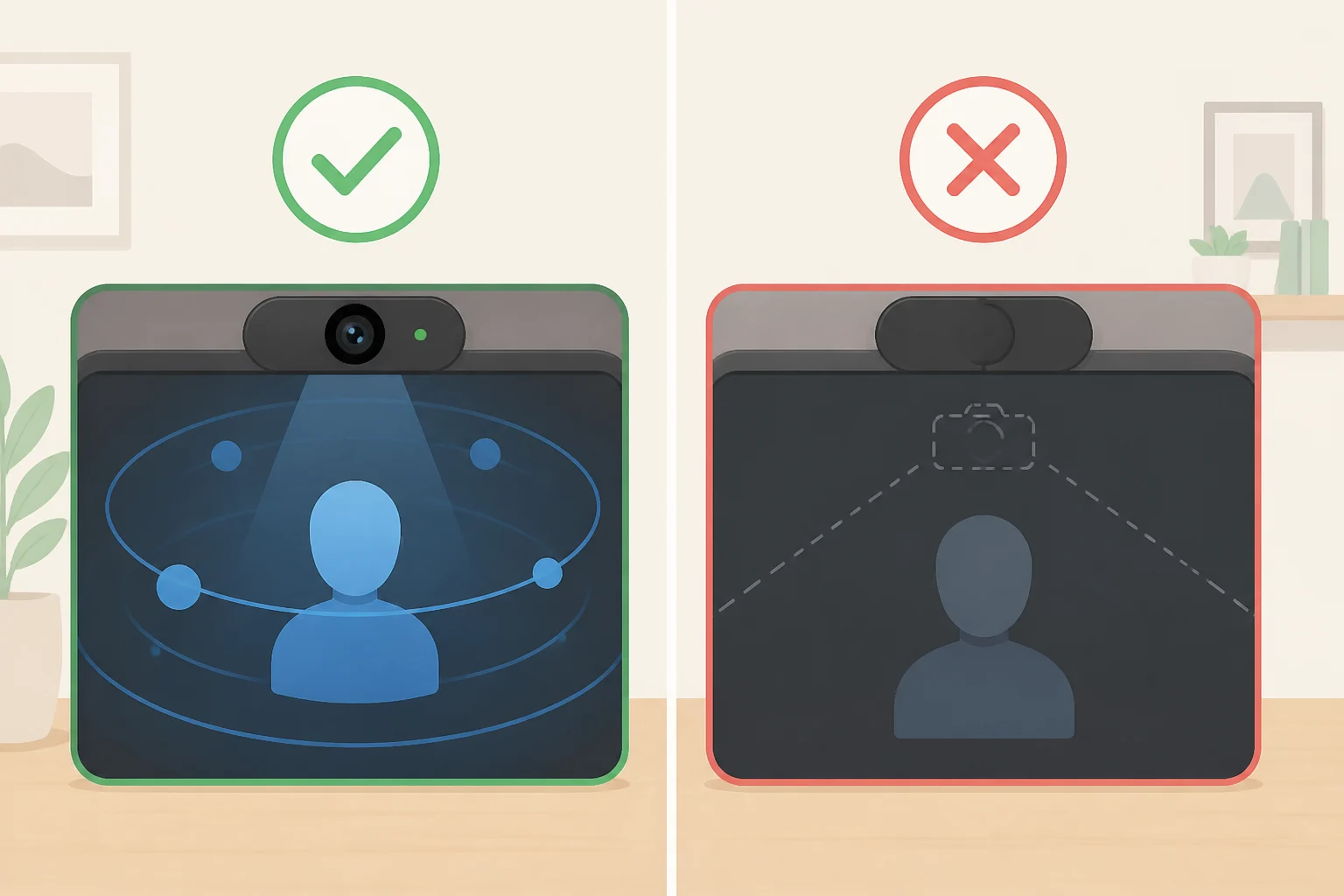
No. Meta's Sept. 23 release describes continued video capture as a headline capability, pitching Dolby Atmos video with natively recorded spatial audio, per Meta. Meta announced ongoing video capture. It made no claim, and offered no evidence, that Display ships without a camera.
Some of the new features plausibly draw on visual sensing. Meta says walking directions will reference visible landmarks, telling a wearer to "turn left at the yellow house" instead of naming a street, Meta said. That phrasing implies some awareness of the surroundings, but Meta hasn't said what's doing the sensing: the outward-facing camera, a separate sensor, or map data matched against GPS. That's an open question, not a confirmed camera function.
Other features explicitly aren't camera-based. Hologram runs entirely off the wearer's voice, with the model inferring expression from what's said and how it's said rather than a live video feed, Meta said. Mirrored notifications and Threads feeds pull from phone and account data instead. The announcement does not explain how these features handle data, including navigation queries, Hologram calls, or Threads feeds, once that data leaves the device.
What's announced, what's reported, and what's still unknown
Reporting on Meta's older Ray-Ban lineup gets mistaken for documentation of the new Display hardware often enough that it's worth keeping the two apart.
- Announced by Meta on Sept. 23: continued video capture, Dolby Atmos spatial audio, landmark-based walking directions, cycling and transit navigation, voice-driven Hologram, mirrored notifications, Threads feeds, and expansion to five new markets.
- Reported by EFF about Meta's Ray-Ban lineup broadly, six months ago: automatic import of captured media into the Meta AI companion app, an optional Cloud Media setting, human review of some AI training footage, and default-saved Meta AI conversation audio.
- Still unconfirmed: whether Display's navigation feature uses the camera at all, and whether the newest features change how data is handled on the newest hardware. Meta hasn't published anything addressing that gap.
Where captured photos, video, and audio actually go
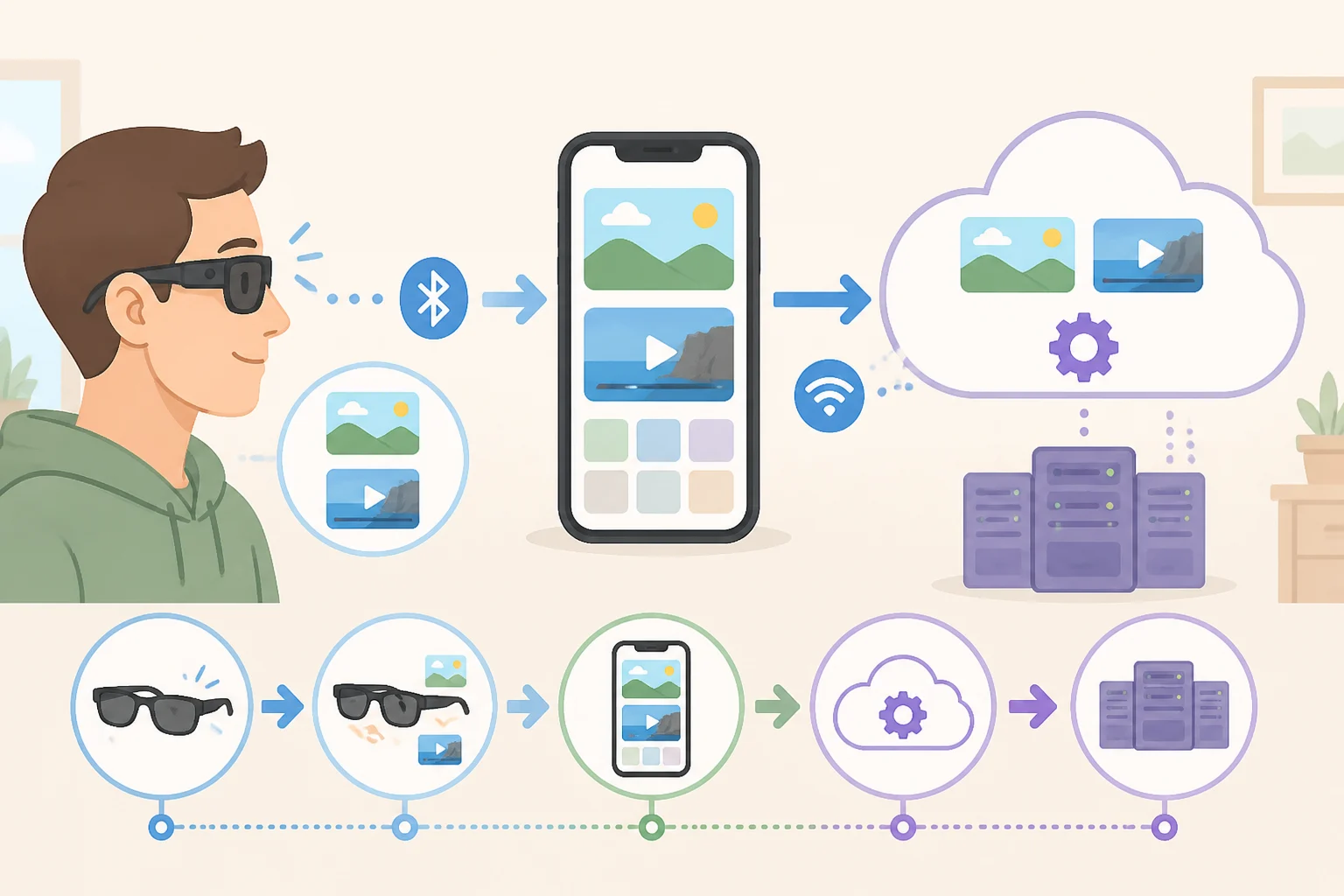
What follows comes from an EFF review of Meta's Ray-Ban lineup broadly, published six months before this week's Display update, EFF reported. Meta hasn't confirmed that the same process applies unchanged to Display; treat this as background on the existing lineup, not a technical spec for the new hardware.
Two mechanisms get conflated often enough that they're worth separating. Photos and video captured on the glasses import automatically, by default, into the Meta AI companion app required to set them up, an on-by-default transfer from glasses to phone, per EFF. A separate setting called Cloud Media controls whether that content also goes to Meta's servers for processing and temporary storage. Turning it off stops the cloud step; it does not stop the app import, and it's a different thing entirely from whatever backup a phone's own operating system does with photos already on the camera roll.
None of the AI features run locally on Meta's existing lineup, EFF reported. Meta hasn't said whether Display's newest features share that architecture. A voice command like "Hey Meta, start recording" sends footage straight to Meta's servers, and some of that video is used for AI training, including footage that has gone through human review. An investigation by Swedish newspapers found workers annotating footage that included nudity, which Meta told the BBC was consistent with its terms of use, according to EFF.
Audio from conversations with Meta AI specifically is saved by default and stays saved unless deleted manually, per EFF. That covers AI conversation audio as EFF documented it, not every voice interaction the glasses handle. Footage saved to a phone's camera roll can also land in Apple's or Google's own cloud backups depending on device settings, stretching the trail well past Meta, EFF found.
None of this shows the glasses recording constantly; EFF's own reporting makes no such claim, per EFF. It shows several documented pathways that footage and audio can travel once recording starts, each with its own retention rules. Closing one gap in that chain, like disabling Cloud Media, doesn't close the others.
What bystanders can actually know
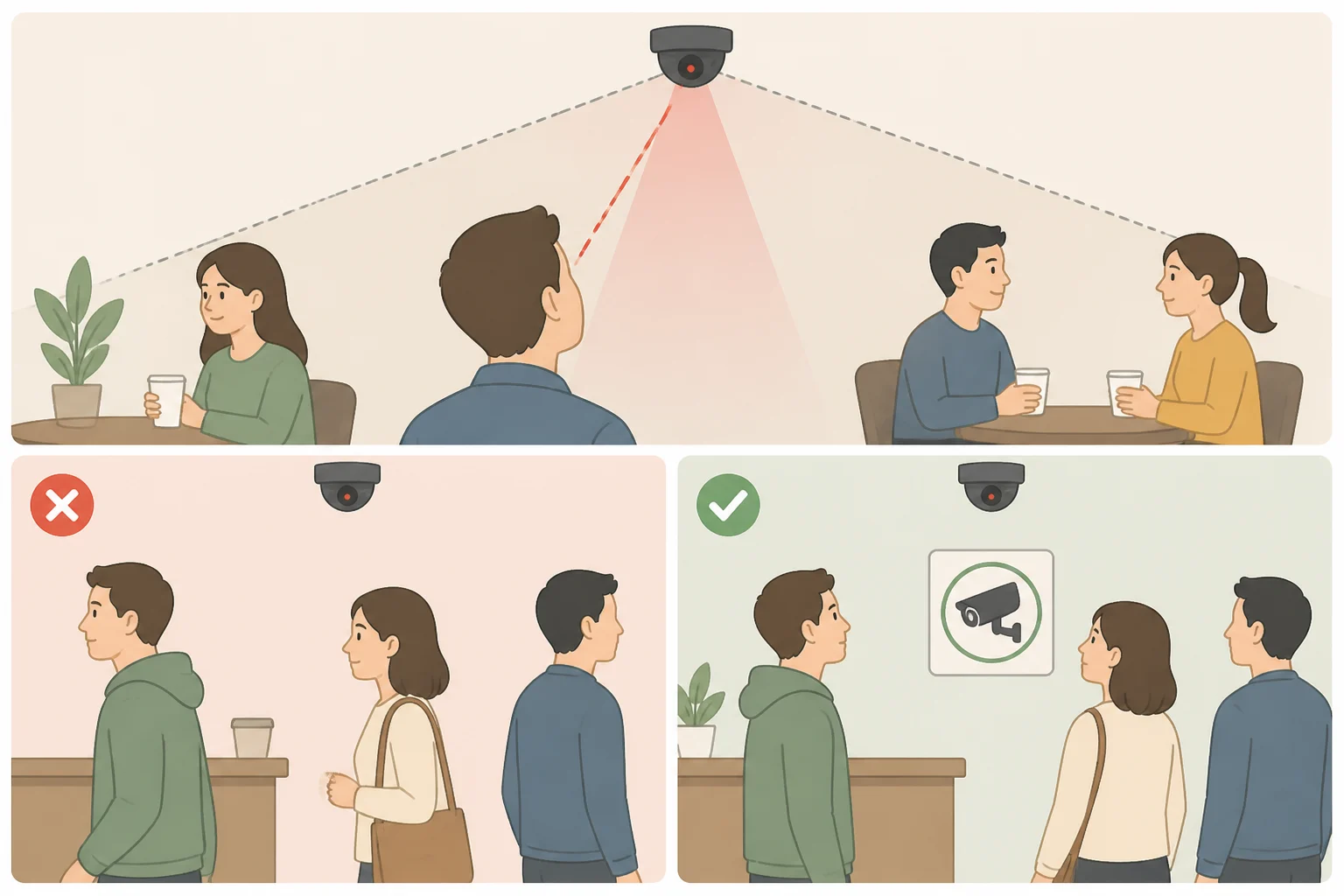
Recording on Meta's existing glasses is designed to be invisible to people nearby outside of a small indicator light, and that light can be disabled with inexpensive modifications, EFF reported. That limits how much weight the light can carry as real-world notice, and Meta hasn't said whether Display changes anything about it.
Ordinary social friction fills part of the gap. Recording in public is often lawful, but businesses such as restaurants and stores may post signs discouraging smartglasses or simply ask someone to stop, according to EFF. EFF advises against recording in private spaces such as bathrooms and changing rooms regardless of what the hardware technically allows.
EFF also reports unconfirmed "rumblings" that Meta may pursue facial recognition for its smart glasses, something the group warns would substantially escalate the privacy risk to bystanders, EFF reported. Nothing in Meta's Sept. 23 announcement mentions facial recognition, and EFF itself frames the prospect as a rumor, not a roadmap.
What Meta still hasn't said
The camera survived this update; that much the announcement settles. What it doesn't settle is whether Hologram, navigation, or mirrored notifications route data through the same import-and-cloud pipeline EFF documented on the older lineup, or something built differently for Display.
The available material does not settle that question. Meta would need to provide Display-specific documentation or another technical explanation, and independent testing of the retail hardware could fill in some of the gap in the meantime. With Google's Warby Parker partnership already public and Apple rumored to be working on a competing pair, whichever company answers that question first, clearly and in writing, sets the bar the rest of the industry gets measured against.