How to Watch Artemis II Launch Live: Full Schedule Guide
Tomorrow evening, four astronauts launch toward the Moon on the first crewed deep-space mission in more than 50 years. The simplest way to watch Artemis II live: tune in to NASA+ at 12:50 p.m. EDT on Wednesday, April 1, free, no account needed. NASA's YouTube channel starts earlier, at 7:45 a.m. EDT, for anyone who wants to follow tanking from the beginning. The launch window opens at 6:24 p.m. EDT and stays open two hours.
The gap since humans last traveled this far is not rhetorical. The Artemis II Reference Guide states it plainly: more than 50 years have passed since anyone ventured beyond low Earth orbit. Commander Reid Wiseman, Pilot Victor Glover, Mission Specialists Christina Koch and Jeremy Hansen, the last representing the Canadian Space Agency, will cover roughly 685,000 miles over approximately 10 days, testing Orion's life support systems with humans aboard for the first time, according to NASA's coverage announcement. If it works, Artemis III attempts a lunar landing. That's the weight behind tomorrow's countdown.
No account or subscription is required to watch on NASA+ or YouTube. Amazon Prime requires an active membership. All times in this guide are Eastern Daylight Time (EDT, UTC-4).
Artemis II launch time and the full April 1 watch schedule
Video of the Day
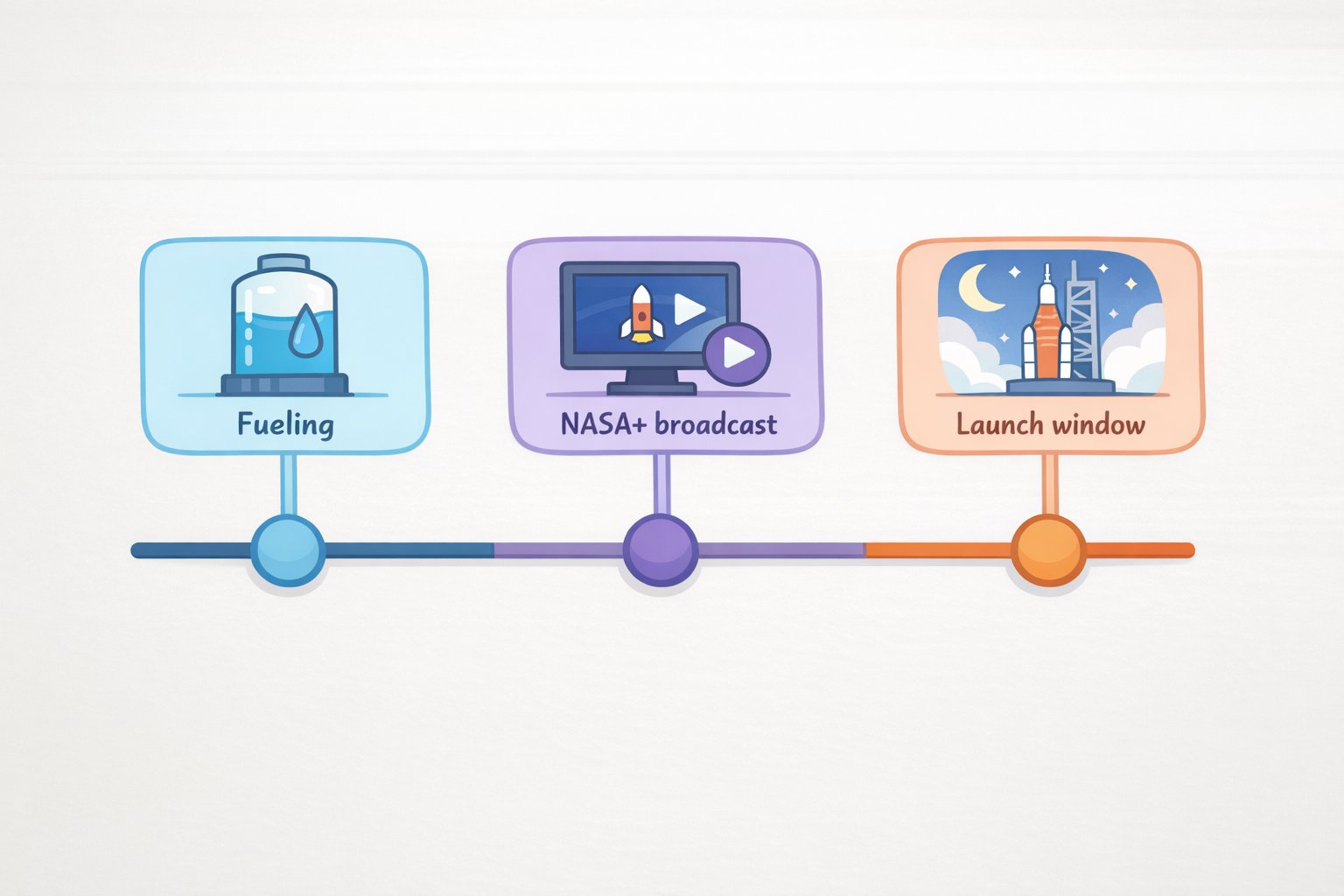
No time to read further? Everything needed to tune in tomorrow:
- Launch target: 6:24 p.m. EDT, Wednesday, April 1. The window stays open for two hours. Backup opportunities run through Monday, April 6 if no launch occurs tomorrow, per NASA's coverage schedule.
- Primary stream: NASA+, free, no subscription required. Full broadcast begins at 12:50 p.m. EDT. Available at plus.nasa.gov and via the NASA App on iOS and Android.
- Easiest browser option: NASA's YouTube channel at youtube.com/NASA. Tanking coverage begins there at 7:45 a.m. EDT, making it the earliest live option, as NASA's countdown blog confirmed yesterday.
- Amazon Prime Video will carry launch, lunar flyby, and splashdown coverage for Prime members.
- Weather is 80% favorable, with cloud cover and high ground winds as the primary concerns, NASA reported yesterday.
Quick reference:
- 7:45 a.m. EDT Tanking coverage begins (NASA YouTube)
- 12:50 p.m. EDT Full NASA+ broadcast begins
- 6:24 p.m. EDT Launch window opens (two hours)
- ~9:00 p.m. EDT Post-launch news conference (contingent on liftoff)
Video of the Day
Where to watch the NASA Artemis II live stream: platforms compared

The options differ in meaningful ways. Picking the right one depends on where you already are and how much of the day you want to follow.
Pick your platform:
- Want the official full show? Use NASA+.
- Want the earliest live feed? Use YouTube at 7:45 a.m. EDT.
- Already watching through Prime? Use Amazon Prime Video.
- Want onboard visuals after launch? Check the Orion spacecraft feed.
NASA+ is the official full-program broadcast: anchored commentary, mission graphics, interviews, and coverage running seamlessly through post-launch events. Free, no account required, available on plus.nasa.gov, the NASA App, and streaming devices including Roku, Apple TV, and Amazon Fire TV, according to NASA's viewing guide. Think of it as the network feed for the mission.
NASA's YouTube channel is the better call for anyone already in a browser or who wants a background tab running all day. It carries the tanking feed from 7:45 a.m. EDT earlier than any other option and runs through launch. Go to youtube.com/NASA or search "NASA" directly on YouTube.
Amazon Prime Video is carrying launch, flyby, and splashdown coverage under NASA's confirmed partnership. It requires an active Prime membership but no additional channel add-on, per NASA's coverage announcement. Worth noting: if a scrub occurs, check Prime's schedule separately only the NASA blog and coverage page are guaranteed to post updated times immediately.
The Orion spacecraft live stream is a separate feed, direct views from inside or outside the capsule, that NASA will provide as bandwidth allows. Distinct from the main broadcast and particularly worth finding in the hours after liftoff. It will be linked from the Artemis coverage page.
One note on broadcast TV: major U.S. television and cable networks are not confirmed in NASA's official coverage documentation. Streaming is the reliable path.
| Platform | Start time | Cost | Best for | |---|---|---|---| | NASA+ | 12:50 p.m. EDT | Free | Full official broadcast | | NASA YouTube | 7:45 a.m. EDT | Free | Early coverage, browser viewers | | Amazon Prime Video | Launch window | Prime membership | Existing Prime subscribers | | Orion spacecraft feed | Post-liftoff | Free | Live capsule views |
What to expect during the prelaunch window and what "hold" means

First-time launch viewers often tune in at the wrong time, wait through apparent silence, and bail before the interesting parts. The prelaunch hours have a logic to them.
Tanking loading super-cold liquid hydrogen and liquid oxygen into the SLS rocket takes several hours and is visible on camera starting at 7:45 a.m. EDT. Teams work through dozens of system checks during this window, and NASA commentary explains what is happening at each stage, as NASA's coverage schedule outlines. Tune in at 12:50 p.m. when NASA+ goes live and tanking will likely be underway or nearly complete.
Built-in countdown holds are normal. The countdown includes scripted pause points where teams verify systems before resuming. A hold is not a scrub unless NASA's commentary team explicitly says so do not read silence as bad news.
The crew will suit up and ride out to the pad in the hours before the window opens. Crew walkout is covered live and reliably draws the biggest viewership of the prelaunch day.
Once the window opens at 6:24 p.m. EDT, the team has two hours to attempt liftoff. About eight minutes after engine ignition, the SLS core stage separates and Orion reaches space, according to the Artemis II daily agenda. The crew then has roughly 23 hours in high Earth orbit to check Orion's systems before the translunar injection burn on flight day 2 sends them toward the Moon.
If the launch slips: what to do and where to look
A scrub is not a crisis. The program has already cleared its technical bar. NASA's Flight Readiness Review polled unanimously "go" on March 12, and the rocket has been at the pad with the countdown running since Monday, per NASA's readiness blog. Any slip tomorrow would be weather or an isolated same-day technical issue, not a program-level setback.
Backup launch opportunities extend through Monday, April 6. Each day has its own window. NASA will post updated times on the Artemis blog and the mission coverage page as soon as a new attempt is confirmed. Those two pages are faster and more accurate than social media when things change mid-count.
An 80% favorable forecast is solid, but cloud cover and high ground winds are still in play. If coverage pauses unexpectedly, check NASA's live blog for an official status update before assuming the launch is off.
Scrub protocol, three steps:
- Bookmark the NASA Artemis blog now. It is the fastest official source during holds and scrubs.
- If a scrub is called, return to that page for the next confirmed window; the blog will include both the date and the specific time.
- Come back to NASA+ or YouTube on the next attempt using the same schedule. Coverage timing will mirror today's.
After liftoff: key moments worth following over 10 days
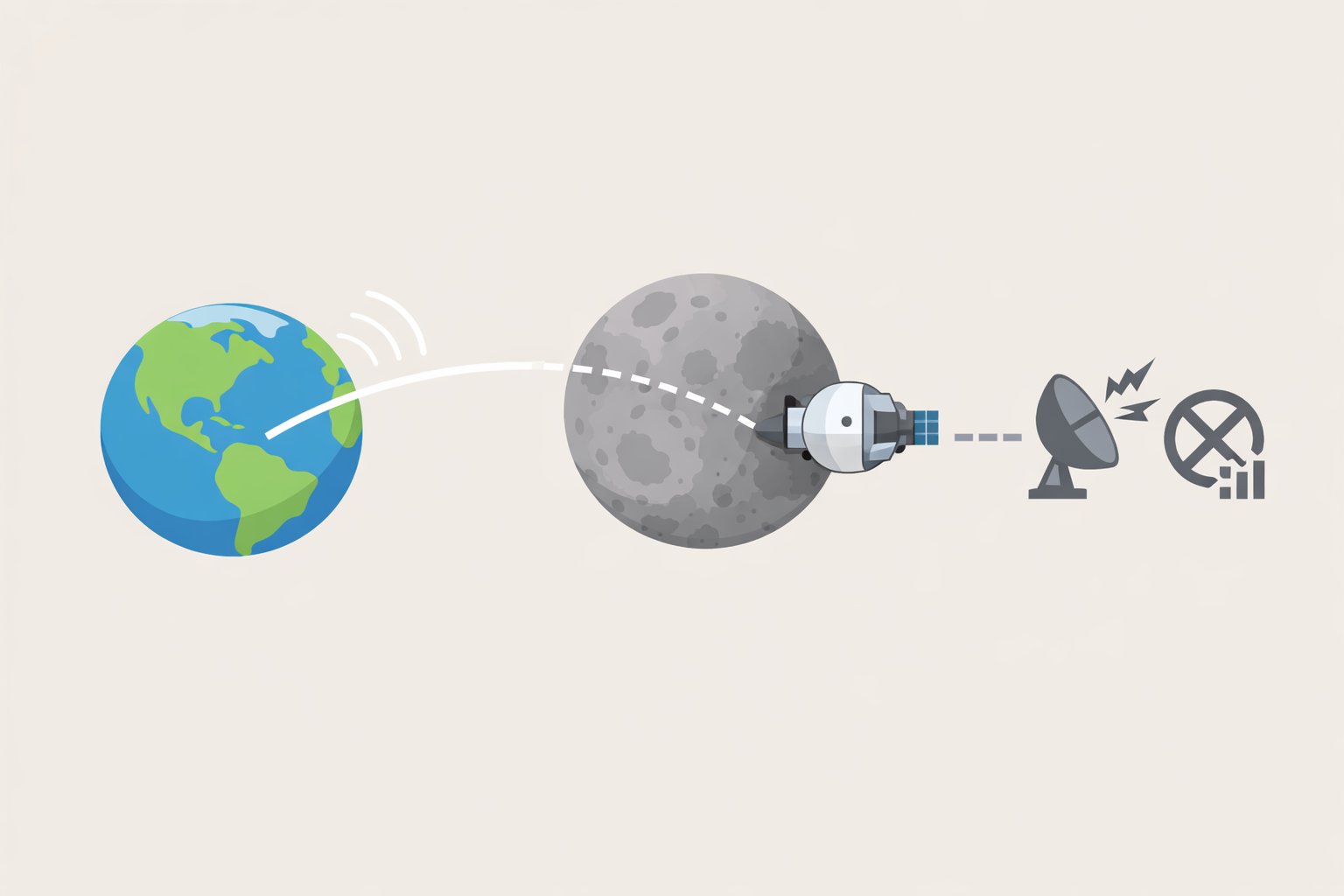
Tomorrow's launch opens a 10-day mission. Three moments in the days that follow are worth scheduling around.
Artemis II YouTube live coverage resumes for the lunar flyby on Monday, April 6, with NASA+ coverage beginning at 12:45 p.m. EDT. The crew will pass within 4,000 to 6,000 miles of the lunar surface at that range, the Moon is expected to look roughly basketball-sized held at arm's length, per the mission daily agenda. For a launch on April 1, the crew is expected to surpass the distance record set by Apollo 13 in 1970: 248,655 miles from Earth, as NASA's coverage schedule confirmed.
There is also a blackout to watch for. As Orion passes behind the Moon's far side, the crew will lose contact with Earth for 30 to 50 minutes, per the daily agenda. The silence is expected. The crew will be recording video and observations during that window the footage just cannot reach Earth until they emerge on the other side.
Splashdown is targeted for Friday, April 10, at 8:06 p.m. EDT, with NASA+ return coverage starting at 6:30 p.m. EDT. NASA and U.S. Navy recovery teams will be staged in the Pacific Ocean, according to NASA's coverage plan.
Between those bookends: daily mission briefings from Johnson Space Center begin April 2, skipping April 6 due to flyby activities. The crew will also participate in live downlinks throughout the flight, with times posted on the Artemis blog as confirmed. Track Orion's position in real time at nasa.gov/trackartemis.
The short version
Tune in to NASA+ at 12:50 p.m. EDT for the full broadcast, or open NASA's YouTube channel at 7:45 a.m. EDT to follow tanking from the start. The launch window opens at 6:24 p.m. EDT and runs two hours.
If April 1 scrubs, backup opportunities run through April 6. Bookmark the NASA Artemis blog now; it is the fastest official source when things change.
The mission covers more than 685,000 miles over roughly 10 days, with splashdown targeted for 8:06 p.m. EDT on April 10, per the Artemis II Reference Guide. What the crew brings back from this flight, in data and in proof, determines when humans next stand on the Moon.