Anbernic RG 55G1 Gameplay Video Reveals Emulation Range, Lacks Specs
Anbernic posted a five-minute gameplay video of the RG 55G1 to X/Twitter and YouTube today, showing the Android handheld running titles across PS Vita, Wii, 3DS, PSP, and PS2. It's the clearest look at the device in use since the initial render-based announcement in mid-June, according to Android Authority.
The RG 55G1 is shaping up as a competitor to the AYANEO Pocket Micro 2, which starts at $269, Android Authority reported. Anbernic has not disclosed pricing, a release date, or the core specs that would make that comparison meaningful.
What the Anbernic RG 55G1 gameplay video actually shows
Video of the Day
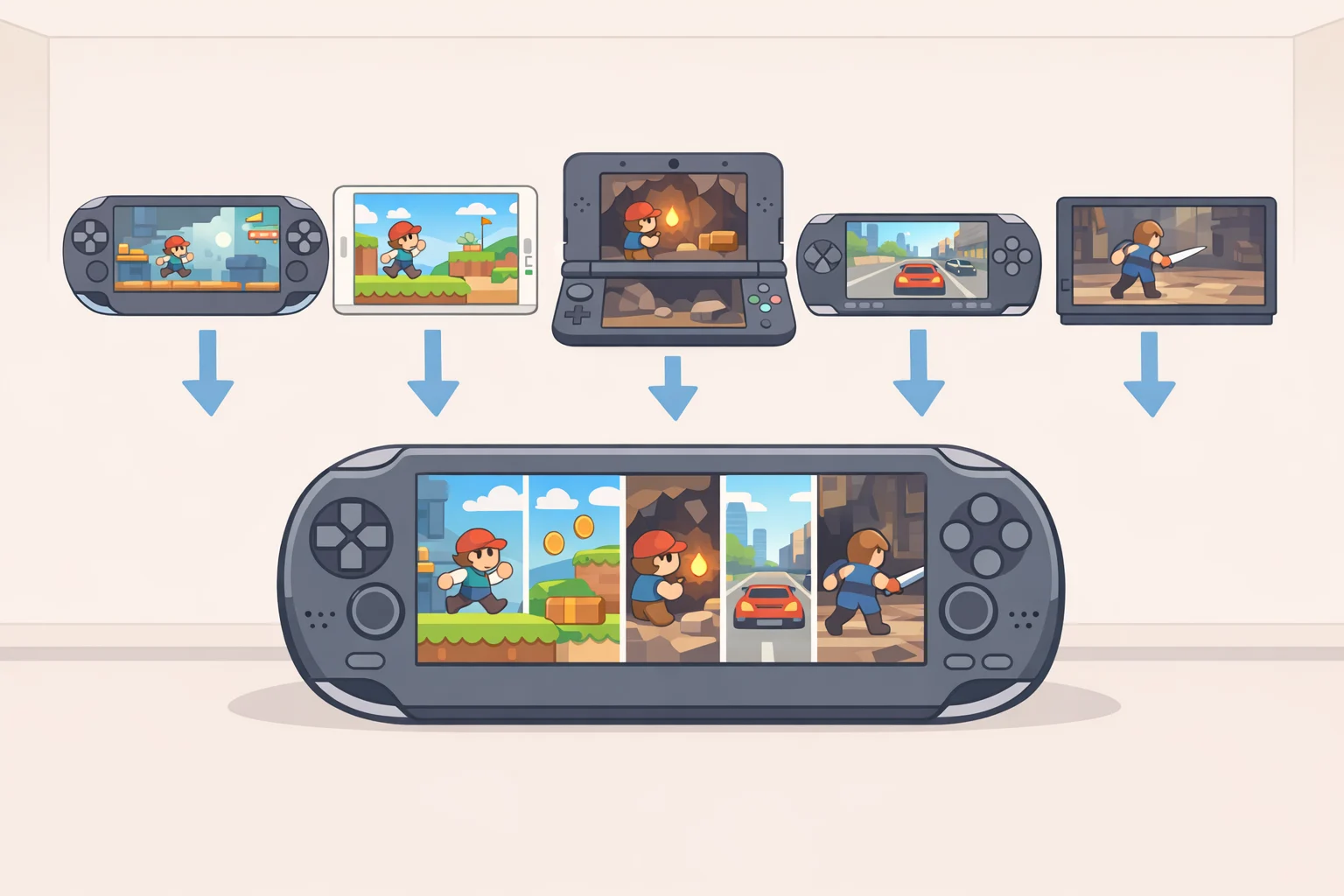
The video runs through a substantial range of emulation targets: Portal 2 and Etrian Odyssey III via GameNative, three PS Vita titles via Vita3K Ys VIII: Lacrimosa of Dana, Soul Sacrifice Delta, and Attack on Titan: Wings of Freedom plus a collection of Wii, Nintendo 3DS, PSP, and PS2 games, per Android Authority.
Vita3K is one of the tougher Android emulation workloads in the video. The footage shows games loading and running, which confirms the device is functional hardware rather than a render. What it cannot confirm is frame rates, emulation settings, thermal behavior over extended sessions, or whether the device was running under controlled conditions.
Anbernic published this on its own channels, not through an independent reviewer. The footage is curated, the titles are Anbernic's selection, and the conditions are Anbernic's to set. What the video establishes: the RG 55G1 is a real, working device that can run games from demanding platforms. What it doesn't establish is how that performance holds up under ordinary use, a distinction Notebookcheck flagged in its coverage of the earlier hands-on video ten days ago.
That distinction matters more for some platforms than others. PS2 and PSP emulation on Android has been mature for years, and most capable mid-range chips handle both without much strain. PS Vita emulation via Vita3K is a different story the emulator is still maturing, and real-world performance varies considerably depending on the game and the hardware underneath it. Seeing Ys VIII run in a promotional clip is encouraging; knowing whether it stays smooth through an hour of play requires independent testing with a production unit.
Video of the Day
Confirmed hardware vs. unverified reports
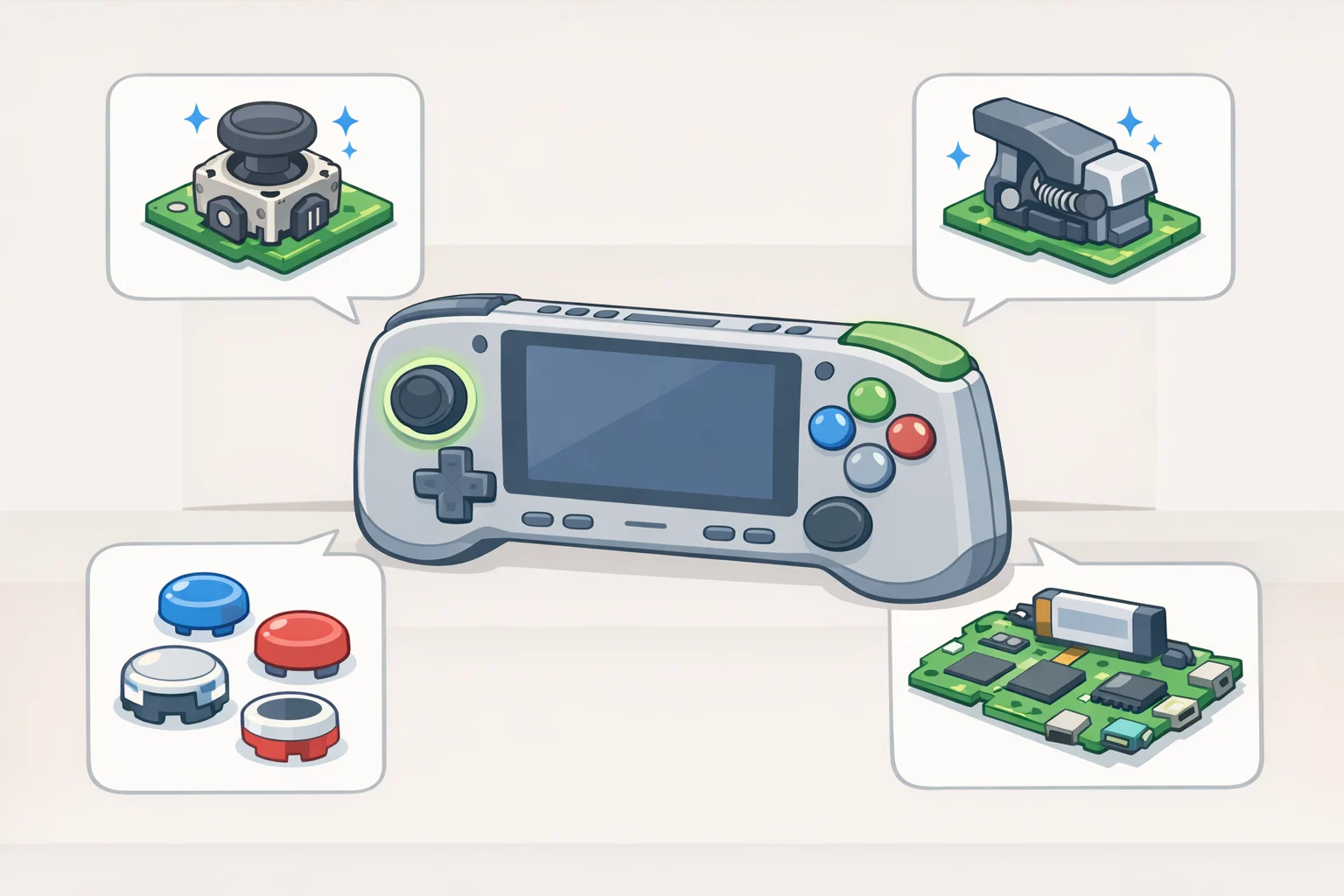
Anbernic has officially confirmed a set of control features: double-shot molded buttons, 3D Hall-effect joysticks, and Hall-effect triggers, per the Anbernic blog. The hands-on footage published last week confirms full-panel 2.5D glass on the front, a plastic body, and RGB lighting rings around the thumbsticks that illuminate during use, per Notebookcheck. The device will ship in Indigo, Black, and Retro Grey, the last of which features colored ABXY buttons.
Two reported specs have not been officially confirmed. Early coverage described a 5.5-inch LCD display and a Snapdragon-based processor, but Anbernic has not verified either figure, per Time Extension. Front-facing speakers and an internal cooling fan appear in secondary reporting but similarly lack official confirmation.
The absence of a confirmed chipset is the most significant gap. Processor generation determines the ceiling for consistent emulation performance not just whether an emulator will open, but whether it stays stable across a full gaming session. RAM affects how well that performance holds under load. Display resolution shapes how upscaled retro content looks on screen. Battery capacity determines whether a session resembles the gameplay video or degrades as the device heats up. None of those figures exist yet, as Android Authority noted, which means any comparison to the Pocket Micro 2's $269 starting price is missing the numbers that would actually drive it.
Worth noting: "Snapdragon-based" is a wide category. The performance gap between a lower-tier Snapdragon and a current mid-range model is substantial in emulation workloads, particularly for Vita3K. Until Anbernic names the specific processor, the rumored attribution doesn't narrow the performance window by much.
The Switch Lite resemblance is close, and it's functional
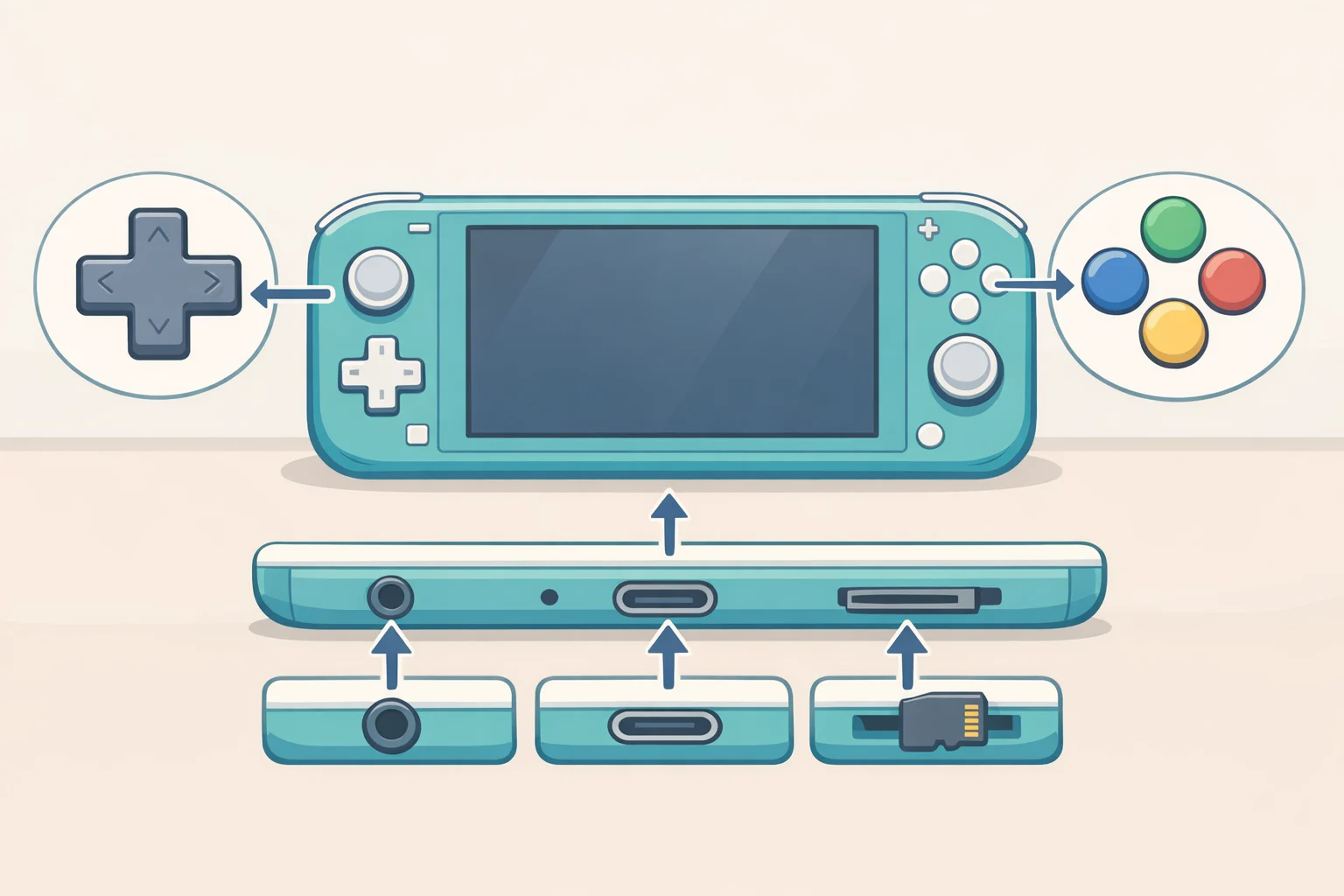
The resemblance to the Nintendo Switch Lite is close enough to invite the comparison at every turn. The ABXY buttons follow Nintendo's layout. The D-pad sits above the left analog stick. Power and volume controls are on the upper-left edge. The microSD slot, an off-center USB-C port, and 3.5mm jack all run along the bottom the same port arrangement found on the Switch Lite, per Notebookcheck.
The Switch Lite layout is one of the most widely recognized horizontal handheld forms available. Borrowing it means the RG 55G1's basic controls and button positions will feel familiar to anyone who has used Nintendo's device. Some retro handhelds adopt unusual layouts that take time to adjust to; the RG 55G1 sidesteps that entirely.
The back is mostly flat, with triggers that protrude outward, per Notebookcheck. That profile looks clean in video. Whether the grip depth and weight balance are comfortable over longer sessions is something no amount of footage can answer that requires a device in hand.
What comes next
The RG 55G1 has now made three public appearances: a render-based announcement in mid-June, a real-unit hands-on video about a week later, and today's gameplay demo. Each step has added something concrete. The device is real, the controls are confirmed, and it can load games from a range of platforms that includes some demanding targets.
Specifications and pricing will determine whether the RG 55G1 is more than an appealing design exercise, as Notebookcheck put it. Anbernic has not published a spec sheet, a price, or a release date. When the processor model does surface, it will answer the question this gameplay video raises but cannot resolve: whether the PS Vita and Wii footage reflects what typical users can expect, or what Anbernic's best-case demo conditions can produce.