DuckDuckGo browser YouTube ad blocking is now on by default but the filter-list foundation means it will periodically break
DuckDuckGo announced this week that its browser blocks YouTube ads out of the box, with no extension to install and no settings to configure. The feature is enabled by default on iOS, Mac, and Windows and covers most video ads across the broader web, according to the company. Android requires manual activation for now via Settings > Ad Blocking, with automatic enabling planned shortly, BleepingComputer reported.
One constraint applies across all platforms: this works only when YouTube is open inside the DuckDuckGo browser. Open it in the YouTube app and the feature does nothing, Android Authority noted. Users can toggle the feature on or off from the settings menu at any time on any supported platform, Engadget reported.
That browser-only scope is worth stating plainly up front, because it shapes everything else about who this actually helps. For users who already watch YouTube through a browser on desktop or iPhone, the value is immediate and requires nothing from them. For anyone whose default viewing happens through the YouTube app, this announcement changes nothing.
How the filter-list system works
Video of the Day
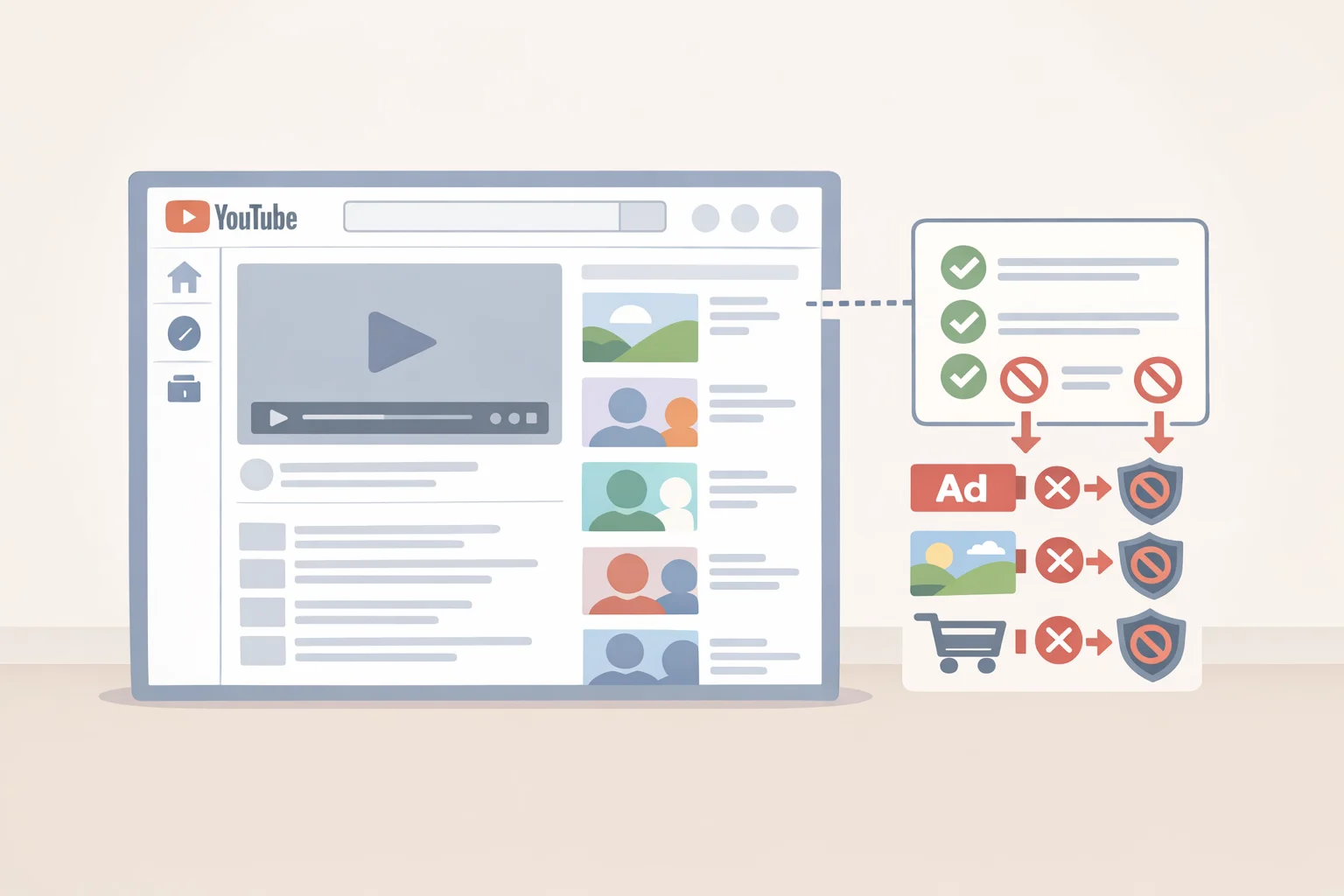
DuckDuckGo isn't building its own ad-detection engine from scratch. The feature runs on uBlock Origin's open-source, community-maintained filter lists, which identify and block YouTube's ad delivery infrastructure. DuckDuckGo layers its own compatibility rules on top to handle edge cases, per BleepingComputer and Engadget.
The strength of building on uBlock Origin's lists is real. They're battle-tested, actively maintained, and already power one of the most widely used ad-blocking extensions in existence. The weakness is structural: filter lists are reactive. A new ad-serving domain can only be blocked after someone identifies it, writes a rule, and gets that rule distributed. Until then, ads get through.
DuckDuckGo acknowledges this directly. Because YouTube regularly rotates how it delivers ads, the blocker may stop catching them temporarily after an update, until the community revises its filter lists, BleepingComputer reported. That's not a caveat buried in a support document the company included it in the feature announcement itself.
Video of the Day
Why the DuckDuckGo browser ad blocker will sometimes break, and how long gaps typically last
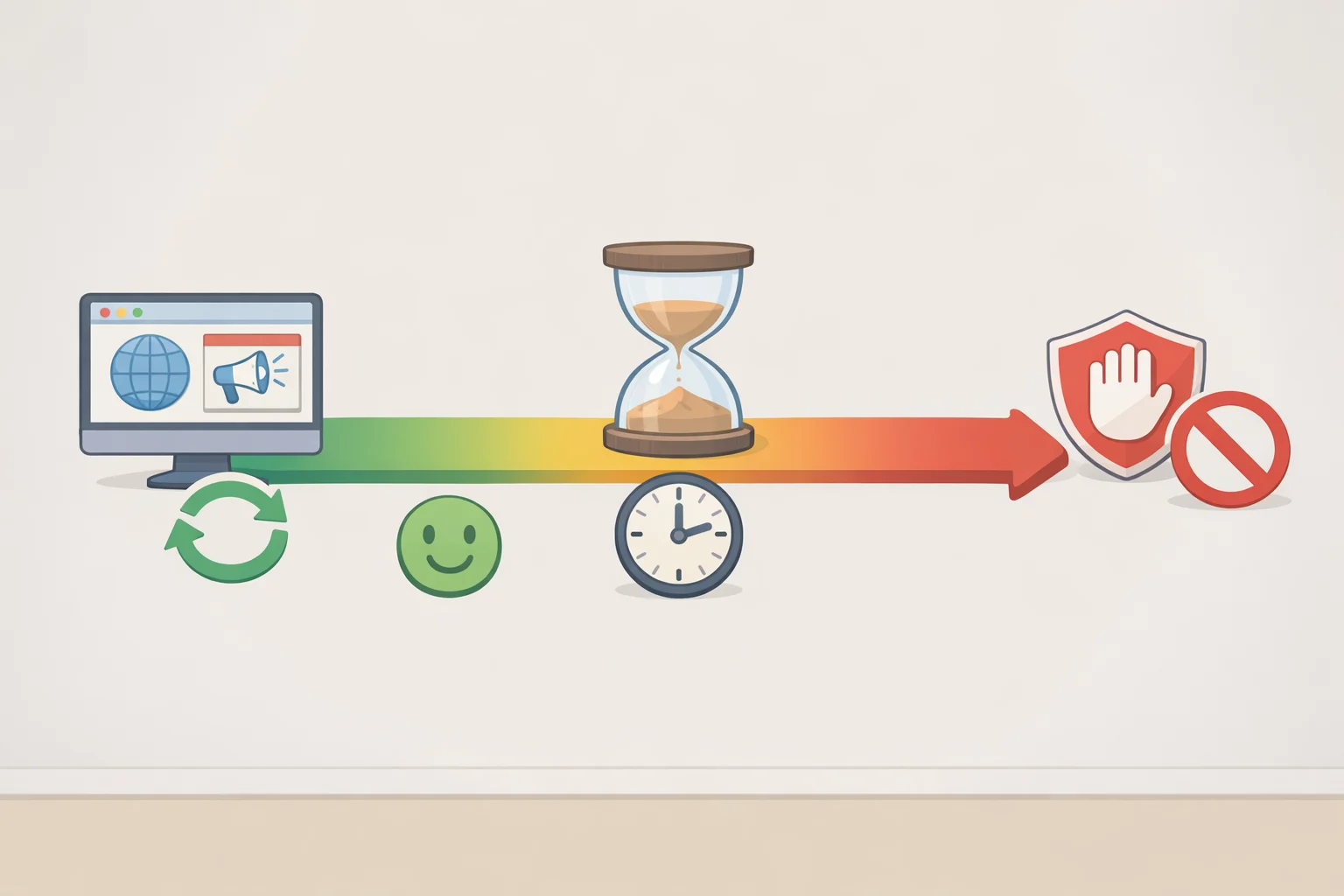
The gap between a new ad-delivery method appearing and a filter rule catching it isn't just a theoretical concern. A peer-reviewed ACM study crawling 50,000 websites found that among rotating ad domains that were eventually blocked, the average survival time before detection was 410.5 days, with a median of 195.5 days. Only 30.5% of evasive rotating ad domains were caught within 90 days of first appearing. Domains that were never blocked at all extended their reach by an estimated 784.7 additional days on average.
Those numbers come from the broader ad ecosystem, not YouTube specifically. YouTube's situation differs in one important way: its ad infrastructure is well-documented and closely watched by a large community of developers specifically motivated to keep the filter lists current. That attention likely compresses the lag compared to obscure ad networks. But the structural problem remains regardless community filter lists can only respond to tactics after they appear, not before.
The practical picture, then, is this: the blocker works until YouTube makes a significant change to how it serves ads, then coverage lapses for some period, then the filter lists catch up, and the cycle repeats. DuckDuckGo itself has signaled that users should expect this pattern. The question isn't whether gaps will happen but how long they'll last when they do.
What users get and what they're trading for it
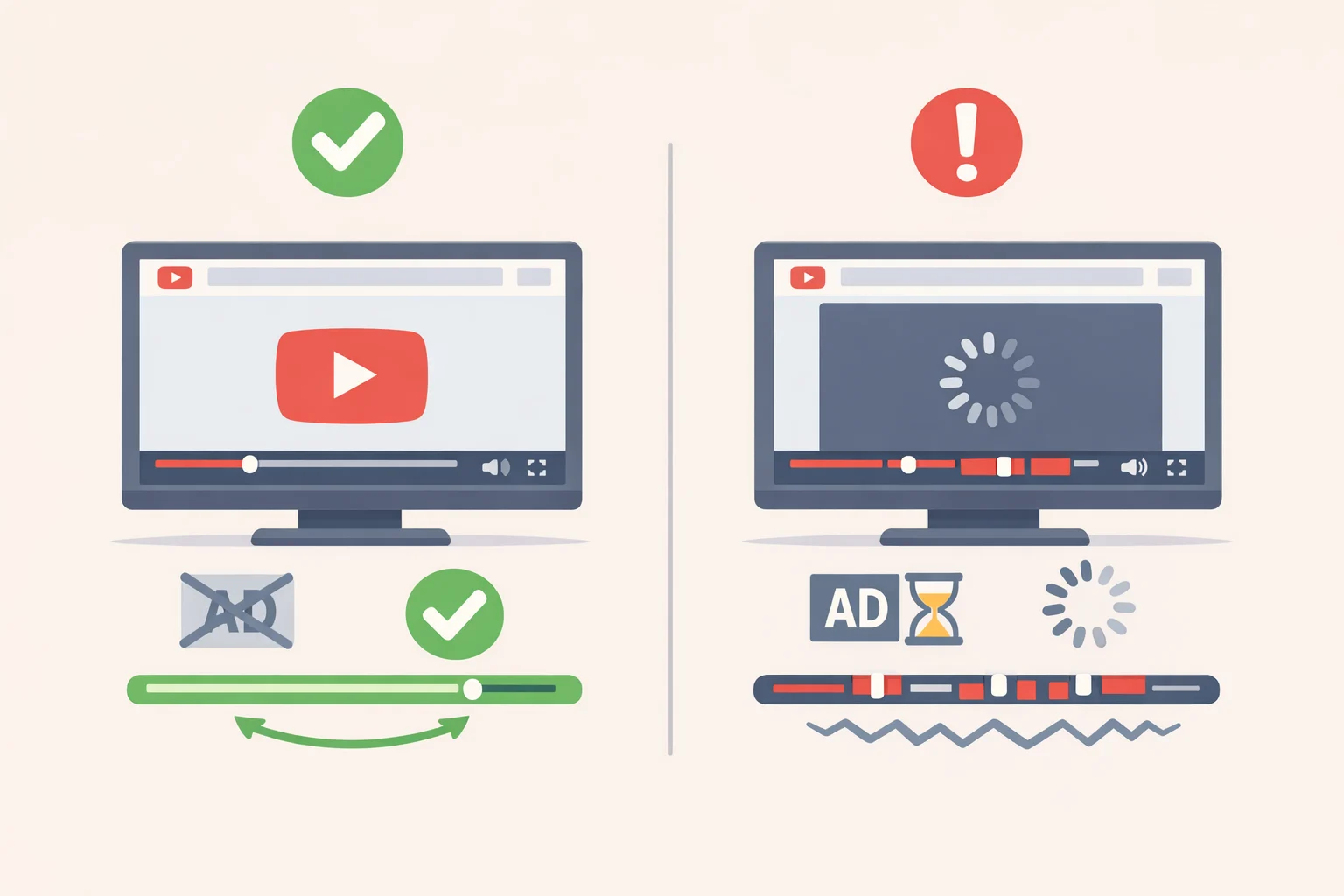
DuckDuckGo's description of the experience is specific. "It's the regular YouTube experience, just without ads," the company said, with viewing history, logged-in features, and playlist position all preserved. That's a meaningful contrast to more aggressive privacy tools that frequently break site functionality in the process of stripping ads.
The tradeoffs are modest. Users may notice slightly longer buffering times while the blocker processes ad requests, and there may be occasional unexplained hiccups, Engadget noted. Neither is a dealbreaker, and for anyone who's spent time troubleshooting third-party extensions, "slightly longer buffering" is a reasonable exchange.
The new blocker also runs separately from Duck Player, DuckDuckGo's older privacy-oriented YouTube embed that routes playback through YouTube's strictest privacy settings to limit tracking cookies and suppress personalized ads. Both tools can run simultaneously: Duck Player for the embedded player experience, the ad blocker for the standard YouTube site, according to BleepingComputer. Users who care about both ad removal and tracking protection can stack them.
Default-on design, and why YouTube's response matters more than the feature itself
DuckDuckGo joins Brave and Opera as browsers that bundle ad blocking natively, without depending on third-party extensions, BleepingComputer reported. The competitive field is small but the shared logic is clear: make privacy and ad blocking the starting condition rather than a feature users must discover and activate.
That default-on decision carries more weight than it might appear. A feature requiring discovery reaches the technically motivated people willing to search for an extension, read reviews, install it, and configure it. A feature that's already active when someone installs the browser reaches everyone who doesn't actively go looking to turn it off. For a browser built around a privacy proposition, that distribution logic reinforces the brand promise without asking anything extra from new users.
YouTube's ad load has grown heavier in recent years, with ads becoming more frequent, longer, and sometimes unskippable, BleepingComputer noted. Free YouTube is funded by that advertising, which supports both operations and creator payouts, with YouTube Premium as the paid alternative for users who want to skip it. A browser-level default blocker routes around that structure without the user making any deliberate choice to do so.
What YouTube does in response is the unresolved part of the story. The company has previously deployed friction and warnings against extension-based ad blockers detection scripts, interstitial warnings, degraded playback for identified blockers. Those measures targeted a specific delivery mechanism. Whether YouTube applies the same logic to ad blocking built into a browser's default configuration, or treats it as a different category of problem requiring a different response, isn't established from what's currently known. That answer will do more to determine the long-term durability of this feature than anything in DuckDuckGo's implementation.
The near-term impact on YouTube's ad revenue is real in principle but bounded in practice. DuckDuckGo's browser holds a fraction of Chrome's or Safari's market share, and the browser-only scope further limits the population of users the feature reaches. This announcement matters more as a signal that browser-native default ad blocking is becoming a competitive expectation than as an immediate material threat to YouTube's bottom line.
The longer question is whether more browsers follow. If they do, YouTube faces a different kind of pressure than it did when the fight was primarily about extensions. Whether that produces an escalating technical response, a policy shift, or simply a faster filter-list update cycle from the community is the part of this story still being written.