Should You See The Odyssey in IMAX: Best Screen Options Ranked
The Odyssey opens this week as the first feature film ever shot entirely on IMAX cameras, and that single production fact changes how you should think about buying a ticket. If you're asking whether you should see The Odyssey in IMAX, the honest answer is: it depends entirely on what's actually near you. The film was physically captured on a format that only fully reveals itself in a specific type of room, and that room is much harder to find than a ticket listing suggests.
This guide explains what the format difference means for what you see on screen, how to determine what your local theater is actually showing, and how to choose the best realistic option when IMAX 70mm isn't accessible.
The short answer: a ranked hierarchy
Video of the Day
If you want the payoff before the explanation, here it is. Go as high up this list as geography and availability allow:
- IMAX 70mm the intended presentation; get here if you can
- Standard 70mm a strong film presentation Nolan endorses; more widely available than IMAX 70mm
- Laser IMAX or Dolby Cinema the best digital options; both benefit from the film-originated source
- Chain premium large-format (Regal RPX, Cinemark XD, Cineplex UltraAVX) a meaningful step up from a standard screen
- Standard digital IMAX (non-laser) skip this if a Dolby Cinema or chain PLF is available nearby
The rest of this guide explains why the hierarchy works the way it does, and how to figure out which tier your local theater actually occupies.
Video of the Day
What the format difference actually means on screen
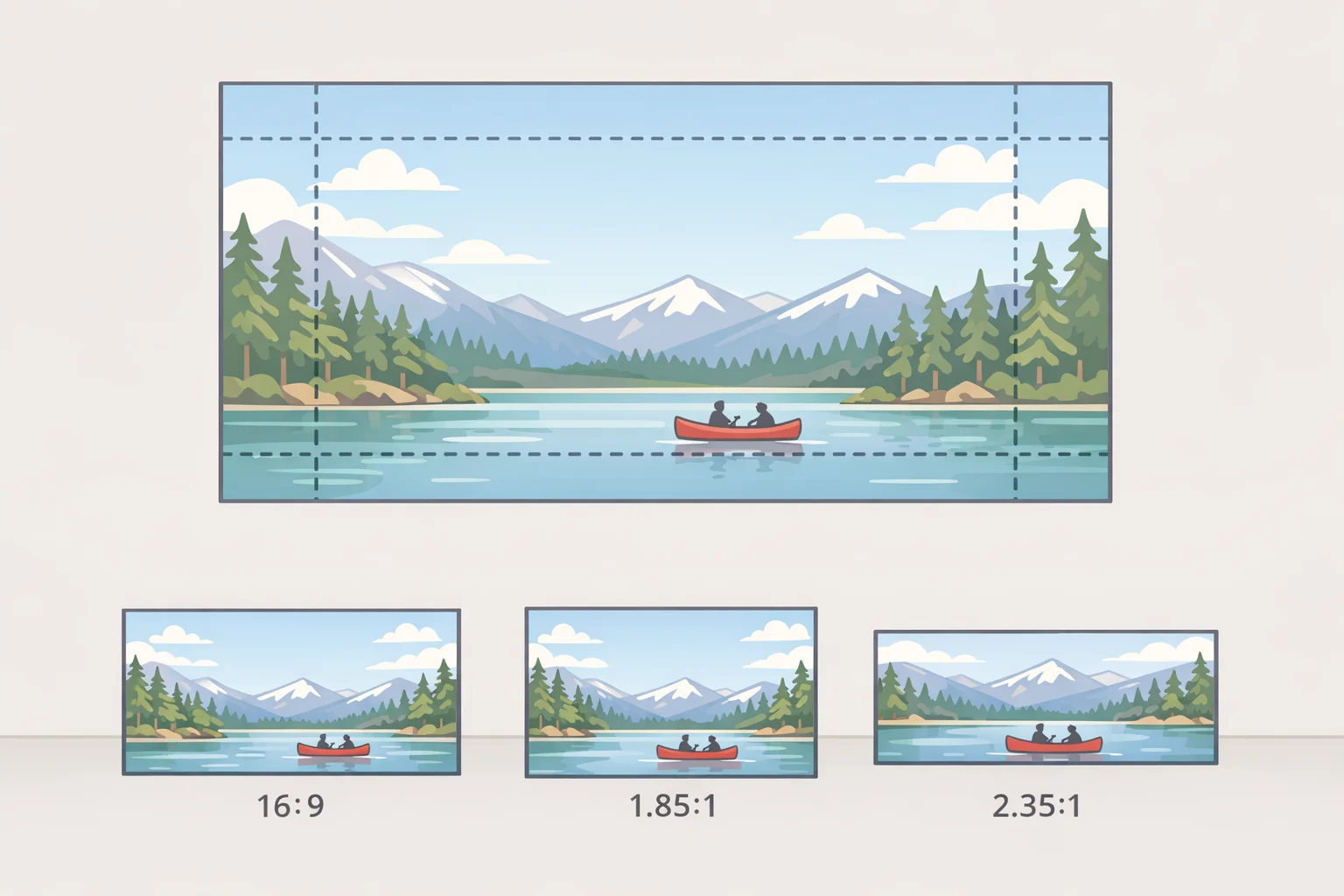
Start with the most concrete viewer implication: aspect ratio. In IMAX 70mm, The Odyssey is presented in a nearly square 1.43:1 frame that fills a floor-to-ceiling screen, as odysseymovie.com confirms. Every other format, including standard digital, IMAX digital, and Dolby Cinema, shows a cropped version of that image, with the top and bottom of the frame removed, per The Independent. This isn't an abstract quality distinction. It's less picture.
The reason it matters more for this film than for most is that Nolan didn't shoot on IMAX and then scale down for other presentations. Every frame was originated on IMAX cameras, so the additional image area exists from the moment of capture. The goal, as Nolan describes it, is to fill the peripheral vision of the audience so the screen effectively disappears. "You're getting a feeling of 3D without the glasses," he told the Globe and Mail this week.
The resolution gap is significant. Each IMAX 70mm frame contains roughly 18,000 pixels of information, compared to 1,920 on a standard HD home screen and nearly ten times the resolution of a conventional 35mm projector, according to the Globe and Mail. These figures come from Nolan, who is not a neutral party, but the underlying physics of large-format film are not disputed.
One nuance softens the binary framing. Nolan has been shooting with IMAX cameras since The Dark Knight, and over nearly two decades his team developed what they call "center punching the action," composing shots so that critical visual information stays centered and is retained when the frame is cropped for non-IMAX presentations, as The Independent reported. Non-IMAX versions aren't accidentally cropped; they're deliberately composed for the smaller frame. What they lose is context and scale, not comprehension.
Think of it like a photograph shot on a large-format film negative. Both a large print and a phone snapshot show the same subject. The negative contains more information, but that information only becomes visible when you print it large enough to actually see it. An IMAX 70mm screen is that print. Smaller formats are the phone snapshot of the same scene.
How to tell what your theater is actually showing
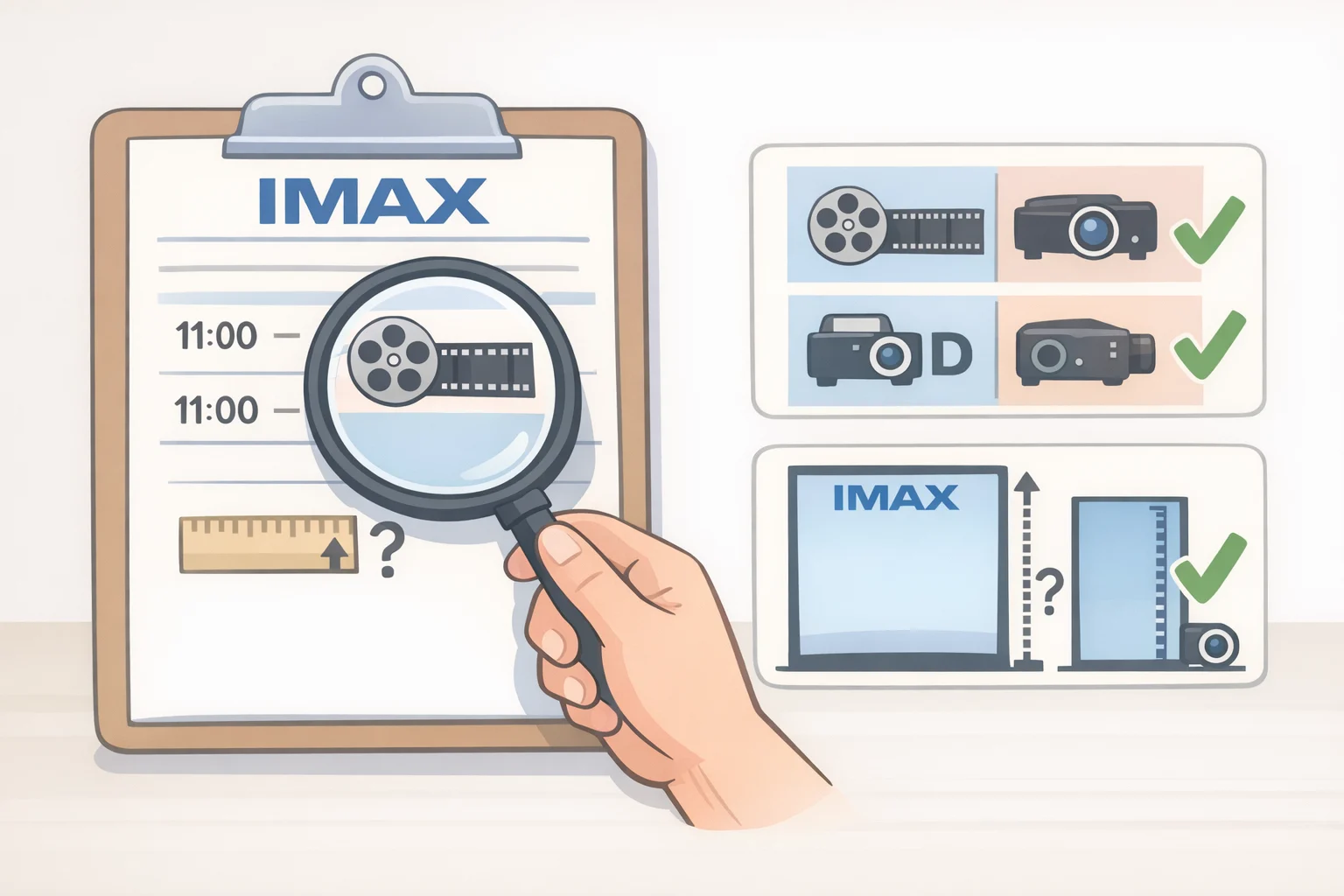
"IMAX" on a ticket can mean a true 70mm film presentation, a digital IMAX screen with laser projection, a digital IMAX screen with older lamp-based technology, or a converted multiplex auditorium with a smaller screen than some non-IMAX alternatives. The brand does not guarantee the format. The film's official format comparison page illustrates framing and aspect ratio differences by format, but notes explicitly that real-world screen dimensions vary significantly by theater. It shows composition, not physical screen size.
Before purchasing, three questions are worth checking:
- Is this a film or digital presentation? Film means 70mm. Everything else is digital.
- Is this a full-height IMAX screen? Only 1.43:1 auditoriums show the complete uncropped frame.
- What projection technology is it using? Laser IMAX and Dolby Cinema use high-contrast laser projectors; standard digital IMAX uses older lamp-based technology. The IMAX theater finder distinguishes film from digital locations, and the official format page confirms which aspect ratios apply.
The access problem comes down to hardware. Worldwide, only 41 venues can project IMAX 70mm film, according to GamesRadar+, citing The Guardian. IMAX CEO Richard Gelfond explained the bottleneck at the film's New York premiere: new film projectors haven't been manufactured in roughly 50 years, so the company has to locate decommissioned units and rebuild them. "We build new projectors every day, but film projectors, using this film, it's not practical," Gelfond told Variety, per GamesRadar+. "So we've got to find them, and we've got to retrofit them and rebuild them." Some venues are already sold out through week five of the run.
Of the 32 U.S. and Canadian venues showing the film in IMAX 70mm, confirmed locations include AMC Universal CityWalk in Los Angeles, AMC Lincoln Square in New York, Cinemark 17 in Dallas, Regal King of Prussia near Philadelphia, and Esquire IMAX in Sacramento, per the Globe and Mail. The flagship New York and Los Angeles venues were effectively sold out through multiple weeks at the time of writing.
Should you seeThe Odysseyin IMAX if IMAX 70mm isn't available?
Yes, with calibrated expectations. Here's how each remaining option stacks up.
IMAX 70mm or standard 70mm
IMAX 70mm is the intended presentation. Nolan calls it the "best possible experience," per the Globe and Mail. If there's a venue within reasonable travel distance and seats exist, that's where to go.
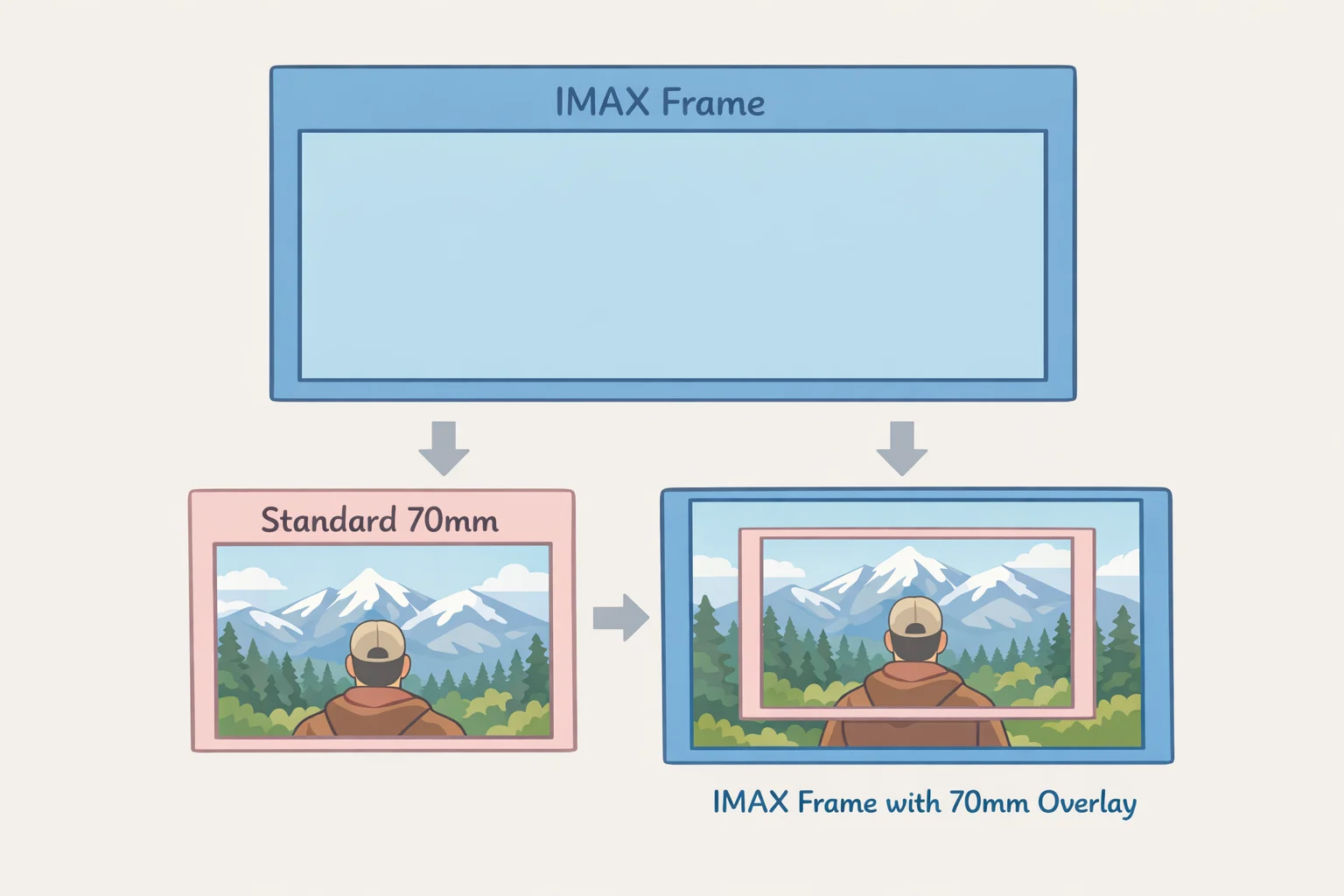
Standard 70mm is his second endorsement: "a fabulous presentation," different from IMAX 70mm but not inferior in kind, per the same Globe and Mail interview. Standard 70mm prints are going to more art-house and specialty venues worldwide. Worth noting: standard 70mm does not preserve the full 1.43:1 IMAX frame, so the top and bottom of the image are still cropped relative to the IMAX 70mm presentation. It's a strong film presentation on its own terms, not a substitute for the full expanded frame.
Laser IMAX or Dolby Cinema
Because The Odyssey was originated on IMAX film rather than digital cameras, the scan used for digital presentations starts from a higher-quality source than a film shot digitally from the outset. "When you scan it for the digital format, you're working with the absolute best possible image that you could acquire, and that translates wonderfully to the new projector formats like the laser projectors in a lot of IMAX locations, the Dolby Cinema locations, which have a wonderful, high-contrast laser projector," Nolan explained to the Globe and Mail.
No independent head-to-head comparison of laser IMAX versus Dolby Cinema for this specific film is yet available, so this ranking reflects technical basis rather than confirmed viewing experience. Both use laser projection; both benefit from the film-originated source; both crop the 1.43:1 frame. For most readers, the better screen in their city is the practical call.
Chain premium large-format
Regal RPX, Cinemark XD, and Cineplex UltraAVX offer meaningful improvements over a standard multiplex auditorium and are more widely available than any IMAX or Dolby option, per the Globe and Mail. These systems weren't designed for this film's native format and shouldn't be treated as equivalent to any IMAX or Dolby option. They're still a better choice than a standard screen, and for viewers without IMAX or Dolby access, a sensible pick.
Standard digital IMAX (non-laser)
Skip this if a chain PLF or Dolby Cinema is available in the same area. Variable screen sizes and older lamp-based projection technology make it the weakest IMAX-branded option, often at comparable or higher ticket prices than better alternatives nearby.
Check the theater, then buy the ticket
The Odyssey is worth seeing in a premium format because IMAX is structural to how the film was made, not cosmetic to how it's being marketed. Every frame was originated on IMAX cameras, as AP News confirmed, and the full image only exists in rooms equipped to show it.
With only 41 IMAX 70mm venues worldwide and many sold out weeks into the run, per GamesRadar+, most readers will be choosing among digital options. That's a meaningful compromise but not a wasted ticket. Digital IMAX and Dolby Cinema benefit from the same film-originated source, and non-IMAX versions are composed deliberately for the cropped frame, not accidentally diminished.
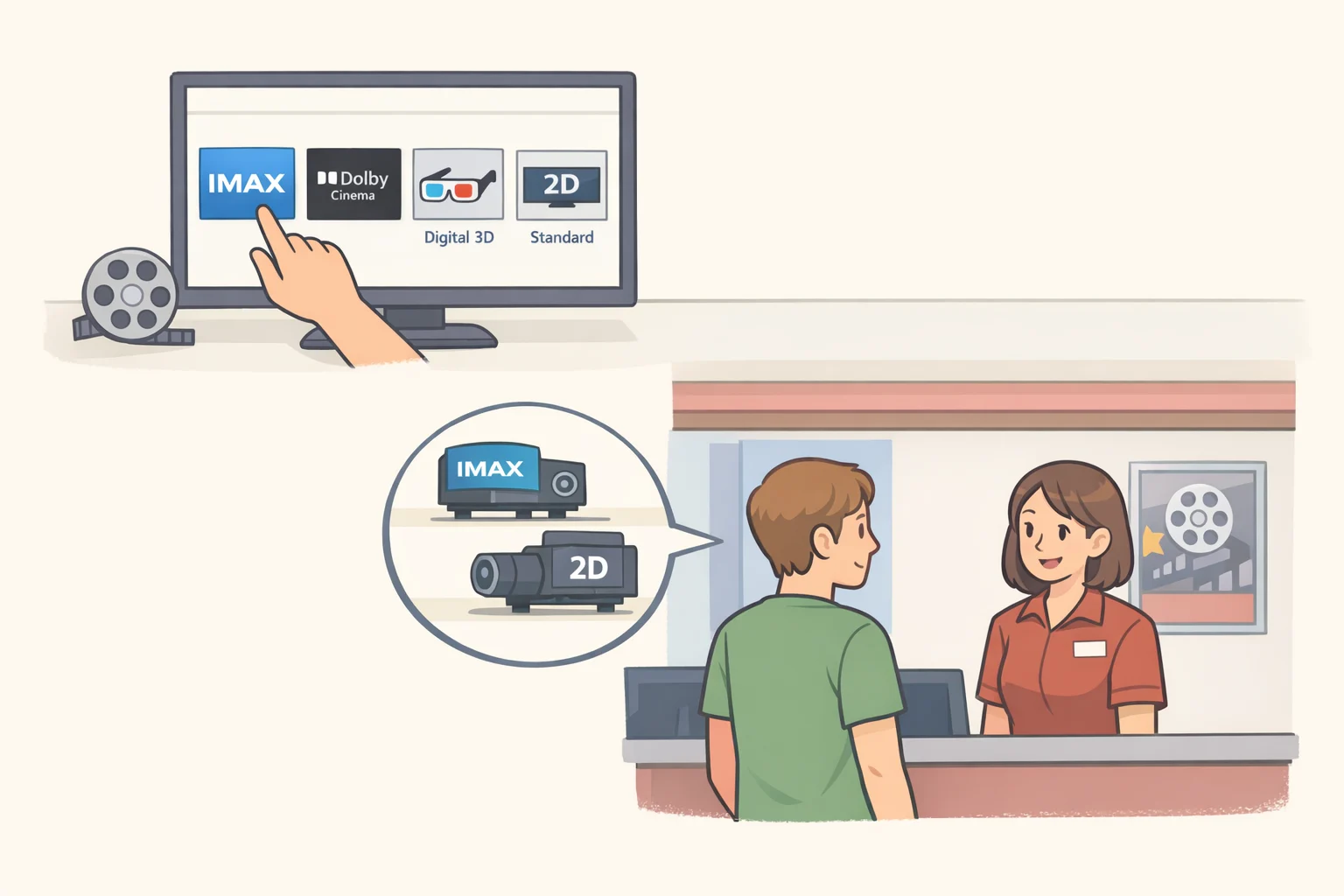
Before purchasing: check the theater's format listing for "70mm," "laser," and aspect ratio. Don't rely on the IMAX logo alone. Use the official format comparison tool to understand what framing you'll actually see, then use the IMAX theater finder to confirm film versus digital at your specific venue. The hierarchy above tells you what to do with that information once you have it.