Why Physical Game Discs Still Matter: Ownership, DRM, and Outages
Two weeks. Two major platform failures. During the Xbox outage, players couldn't launch games fully installed on their own consoles because the platform couldn't verify their licenses remotely, as Mashable reported this week. The hardware worked fine. The files were there. Permission had been withheld, and that was enough.
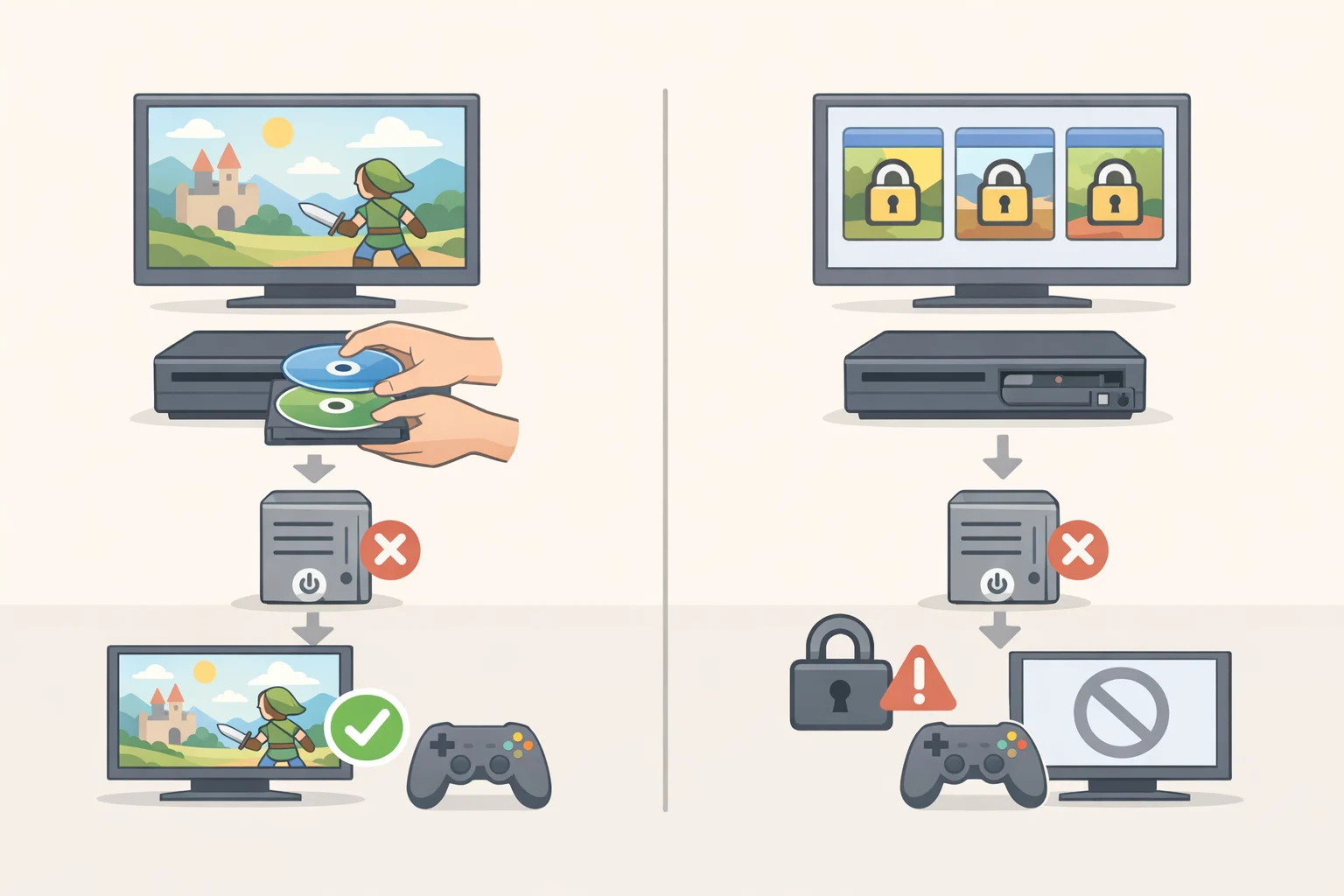
That is why physical game discs still matter. A disc in an offline machine doesn't phone home. A digital license tied to an account and enforced by DRM requires the authentication chain to hold. When it doesn't, locally installed software becomes inaccessible through no fault of the player's own hardware.
Sony confirmed around the same time that it will stop manufacturing PlayStation game discs after January 2028, Mashable reported. The two events aren't connected by cause. They are connected by consequence. The outages showed what authentication-dependent gaming looks like on a bad day. The disc announcement means that bad day becomes the permanent condition.
Why physical game discs still matter: access is not the same as ownership
Video of the Day
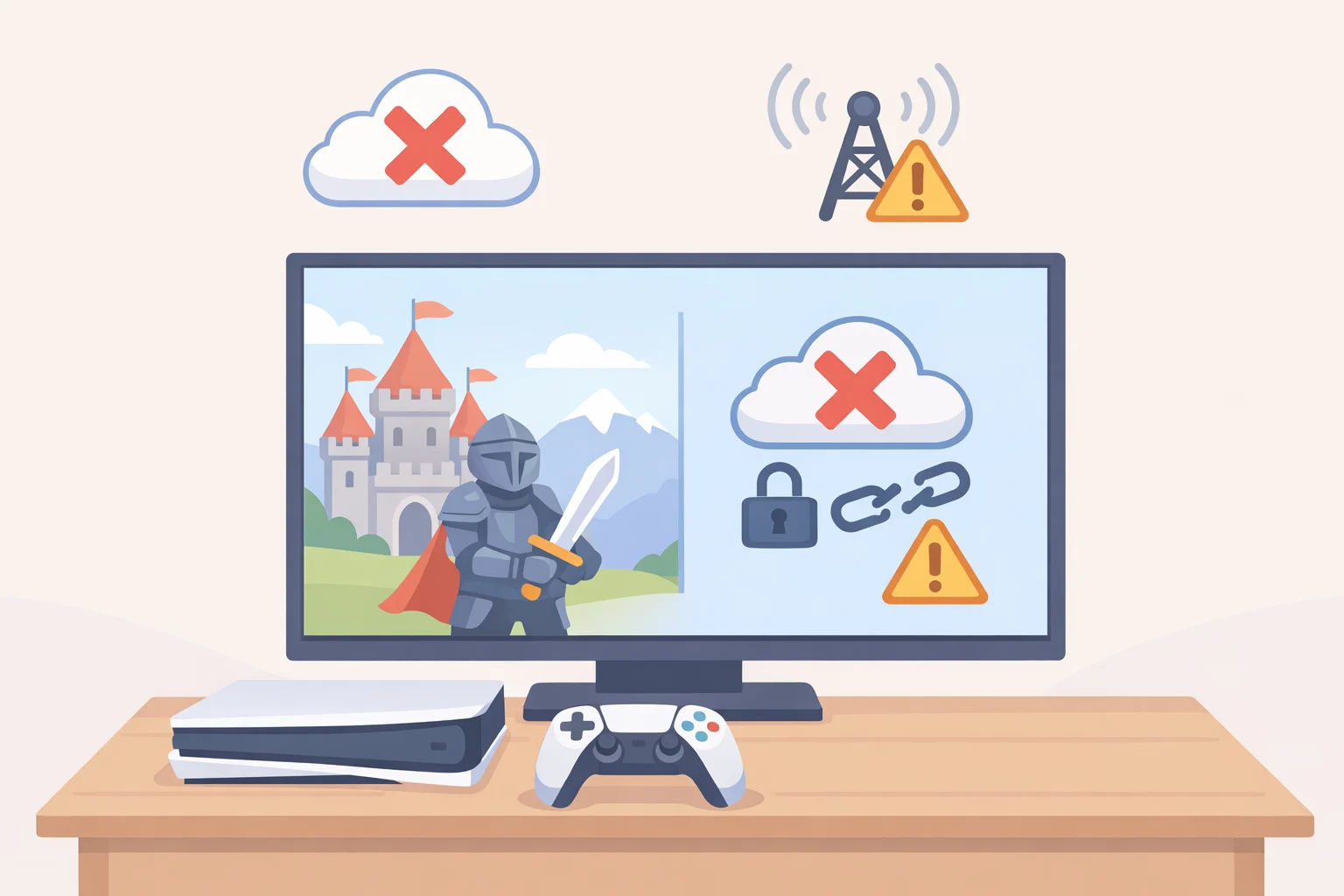
Most players hadn't consciously reckoned with what the Xbox failure made plain: a game installed on your hardware is not necessarily yours to run. The permission to launch it lives somewhere else.
Many Xbox titles require an internet-based authentication check before launching, not just for online features but for the game itself, per Mashable. Local installation is treated as provisional. When the outage hit, nothing broke on the player's end. Permission was just temporarily unavailable.
U.S. courts have spent decades upholding "clickwrap" and "shrinkwrap" license agreements that let publishers restrict access, transferability, and legal recourse, according to a Texas A&M Journal of Property Law student article published earlier this year. What looks like a purchase at checkout is legally a revocable license. The word "buy" in the storefront carries a different meaning in the terms of service.
DRM software handles the technical enforcement. It can force internet connections for single-player games, degrade performance, and tie access to user accounts that can be suspended, compromised, or caught up in licensing disputes years after the original transaction, as the EFF documented earlier this month. A subscription payment error, a licensing dispute with a publisher, or a unilateral update can all change what you're permitted to run. Disc phaseout doesn't create that vulnerability. It just makes it inescapable.
Video of the Day
The concrete costs: resale, bandwidth, and a pattern of erasure
Physical media carries the legal "right of first sale," meaning a buyer can resell, lend, or pass on a copy. Courts have held that digital purchases don't carry the same right, the EFF reported earlier this month. A digital-only market guts the second-hand option entirely: no buying a finished game at half price, no recouping anything when you're done with it.
Going all-digital also shifts the distribution burden onto the player. Modern games are enormous files, high-speed internet remains unavailable to significant portions of the U.S., and for many players a single AAA download can take days and exceed a data cap, according to the EFF. With a disc, that storage cost was included in the purchase price.
The Crew makes the erasure pattern concrete. When Ubisoft shut down the game's servers in March 2024, players who had paid $59.99 for a physical disc got an error message on insertion with no path back to gameplay. Digital purchasers had the title removed from their libraries entirely, including any visible record that they had ever owned it, per a UNC law journal note. Ubisoft's response to complaints pointed to the packaging disclosure that access could be revoked. The lawsuit that followed was voluntarily dropped two days later.
The Crew isn't an anomaly. 2K has retired annual sports titles as quickly as two years after release, wiping out in-game purchases with no carryover to the next full-price entry. Blizzard forced the original Overwatch, which had sold over 50 million copies including physical-disc sales, into a mandatory migration to Overwatch 2 that effectively deleted what players had paid for, per the same UNC law journal note. These aren't rogue corporate decisions. They're the licensing model doing what it was built to do: preserving the publisher's ability to control, modify, or terminate access after the sale. The outages are the same logic, applied by accident rather than intention.
Physical vs. digital games: where discs help, and where they don't
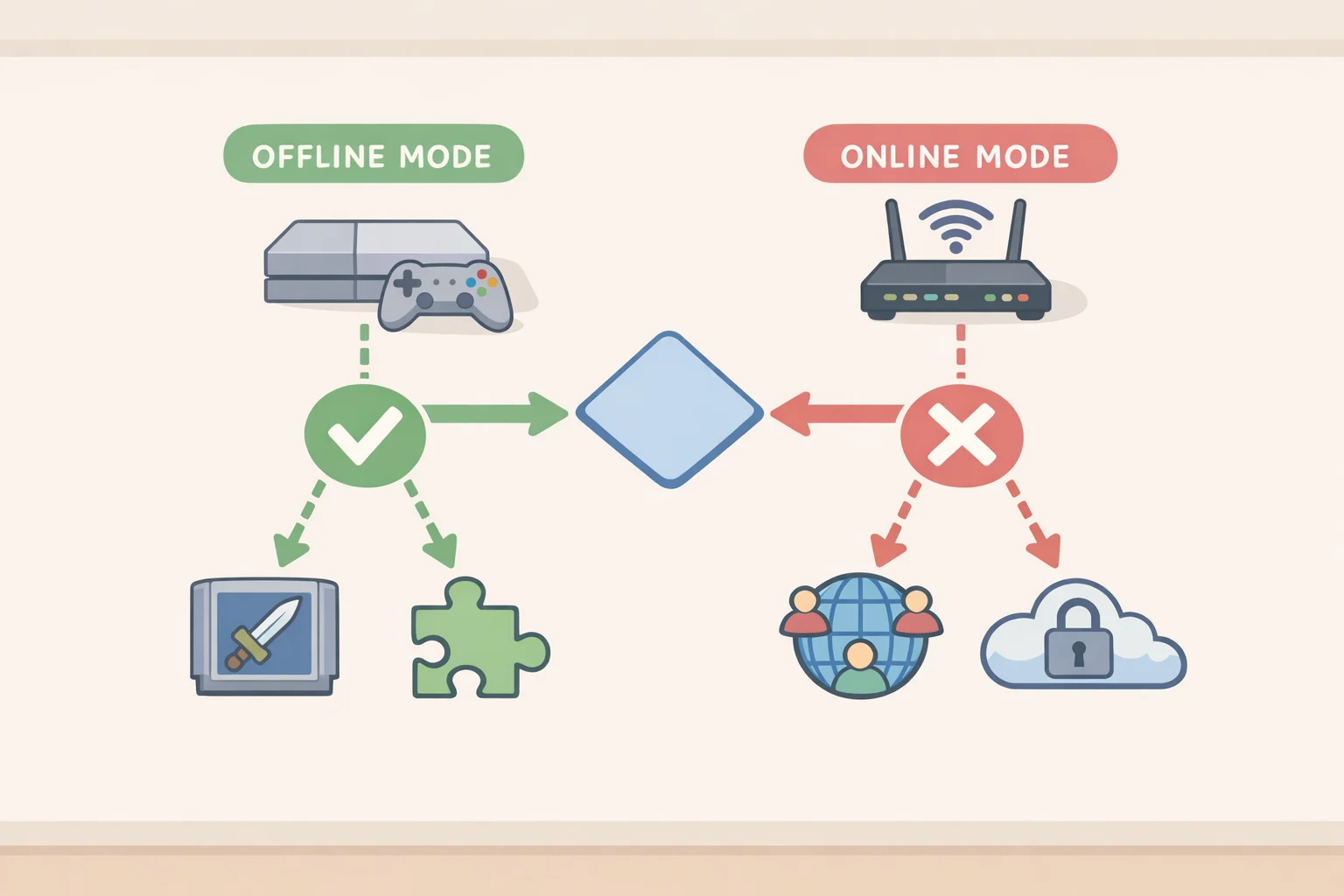
Physical media is partial protection, not complete protection. The argument for preserving it rests on that partial protection being meaningfully better than none.
The Crew illustrates the limit plainly. When a game is architected around server-side functionality, the disc is a delivery vehicle for a license, not a standalone product. A rough framework: an offline single-player game on disc offers the strongest protection against authentication failure; a disc for an always-online or live-service title offers limited protection because the server dependency is structural, not incidental; a digital-only purchase in any category offers the least independent control.
Digital distribution does carry genuine advantages. Broader access for smaller developers, faster patches, cloud saves. Those are real. The case against disc phaseout isn't that physical media is superior technology.
It's narrower than that. Eliminating physical media eliminates the option of offline-capable, transferable ownership and replaces it with a system where access is always contingent on a third party's continued participation. The EFF argued earlier this month that gaming is following the same arc as film and television: digital convenience arrives first, the physical alternative gets phased out, and consumers eventually find themselves paying recurring fees to access libraries they'll never own. The disc's value was never the plastic. It was the use it gave players before that negotiation closed.
What should change
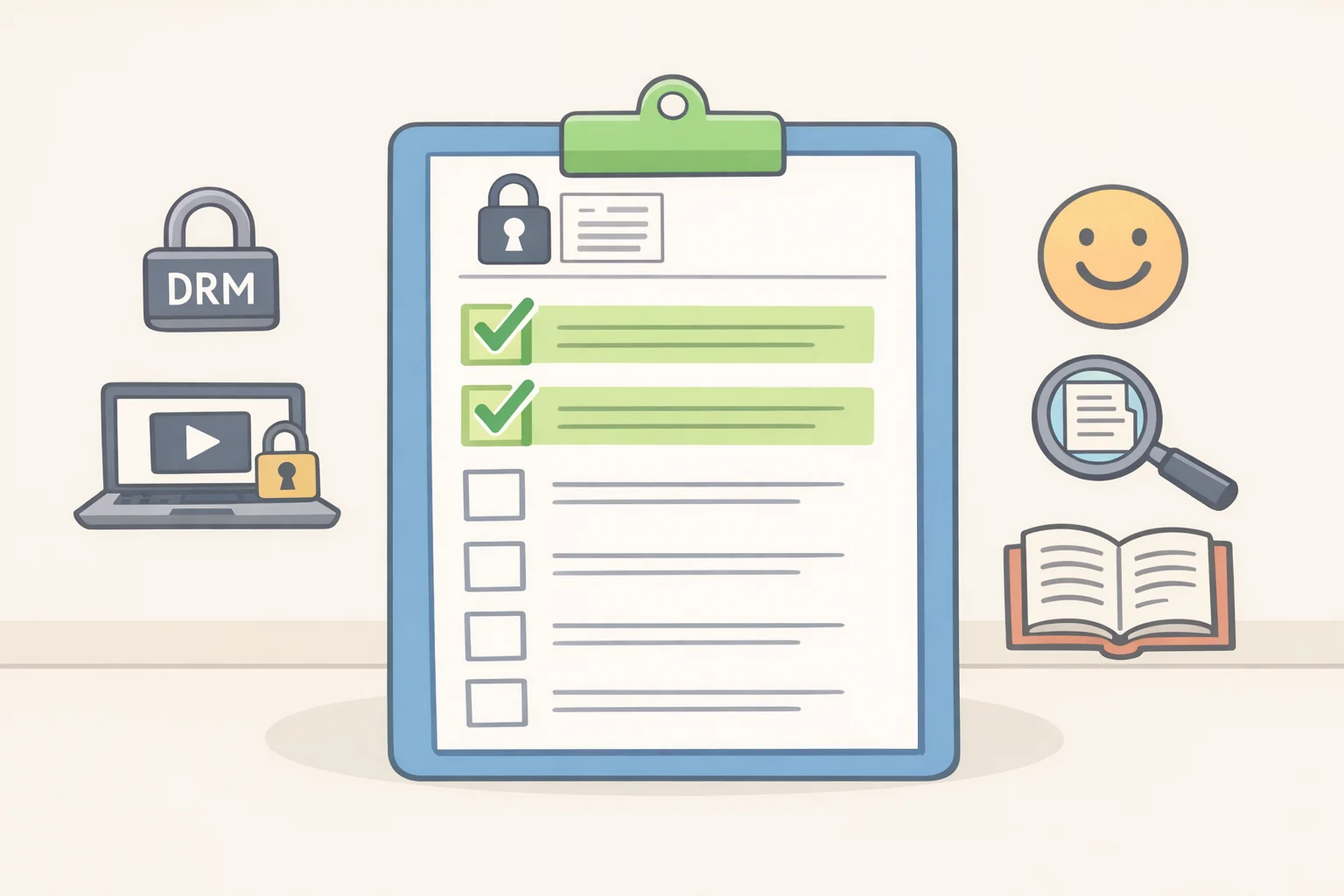
Some ground has already been covered. California's AB 2624 took effect January 1, 2025, making it unlawful for digital storefronts to use terms like "buy" or "purchase" without explicit disclosure that consumers are acquiring a revocable license rather than outright ownership, per the Texas A&M Journal of Property Law article published earlier this year. It addresses the labeling problem. The underlying structure stays intact.
The EFF has called for extending first-sale rights to digital media and reforming DMCA Section 1201 to permit fair-use circumvention. The gaming industry has actively lobbied against both, including arguing that community-run servers are illegal.
The long-term preservation costs of DRM barriers are already on the record. A Knowledge Rights 21 report from late 2024 found that of 3,783 arcade games studied, 712 required DRM circumvention for preservation, adding an average of 10.6 months per title and a combined 628 years of aggregate delay. The Stop Killing Games initiative has flagged over 430 currently available titles as having no end-of-life plan, per the UNC law journal note. Today's authentication-dependent console libraries are tomorrow's version of that problem, at far greater scale.
The minimum reasonable standard shouldn't be controversial: single-player titles playable offline without authentication; a path to offline functionality when a game's active lifecycle ends; license terms disclosed at the point of purchase in plain language. Those aren't radical demands. They're what players already thought they were buying.
What Sony and Xbox demonstrated this week, one by announcement and one by accident, is the shape of what's coming. A system that requires a corporation's servers to stay operational, cooperative, and solvent before you can run software you paid for is not ownership. Outages last days. Server shutdowns are permanent.