Marvel's Wolverine PS5 Review: Nightmare Doors Disrupt Pacing
Marvel's Wolverine arrives on PS5 today, priced at $69.99, and the surprising part of the reporting so far isn't the violence everyone expected (PlayStation.Blog). It's that the only completed review circulating in the run-up to launch treats that violence as a byproduct of character rather than the main event, and saves its sharpest criticism for something else entirely: an optional side-content door that opens at the wrong moment.
Narrative director Walt Williams laid out the design goal plainly in an interview published yesterday: to build empathy for "a man who has suffered so much and lost so much" (PlayStation.Blog). Compared to Spider-Man's sprawling New York, the team wanted Wolverine's world "closer, more visceral, more contact with the world, more grounded," a deliberate scaling-down meant to keep the focus on one man rather than a city (PlayStation.Blog). Five days ago, The Independent published what appears to be the only finished-playthrough account available in the material compiled for this piece, after roughly 18 hours with the game on PS5 Pro, and called the story "surprisingly deep, emotionally intelligent and compelling" (The Independent).
Taken together, those two accounts support a narrow but confident claim: the writing achieves what Insomniac aimed for, at least according to that one detailed review, and the combat mechanics reinforce it. The documented weakness is just as specific, a pacing problem tied to optional content, not a broader failure of storytelling.
The premise that makes Logan's rage make sense
Video of the Day
Insomniac's setup gives Logan's anger somewhere to come from before he throws a single punch. He rejoins Team X, a mutant task force, three years after walking away from it, right as the Reavers, a mercenary militia working for Bolivar Trask, hunt down vulnerable mutants meant for delivery to their client (PlayStation.Blog, three months ago).
Developers frame his outbursts as a direct response to watching people he has spent his life protecting get "treated like science experiments and tossed away," rather than generic berserker rage (PlayStation.Blog, yesterday). That's a meaningful distinction for a character whose mythology risks flattening into "guy with claws gets mad."
The Independent's review suggests the script delivers on that intent. It names loss, isolation, and "wanting to be loved without hurting others" as the story's central emotional threads, and credits the quieter, non-combat stretches of the campaign with doing much of that work (The Independent). An independent account confirming that intent landed on the page is a different thing than a developer simply stating the intent, and it's a gap plenty of licensed superhero games never close.
Video of the Day
Marvel's Wolverine story and combat work best together
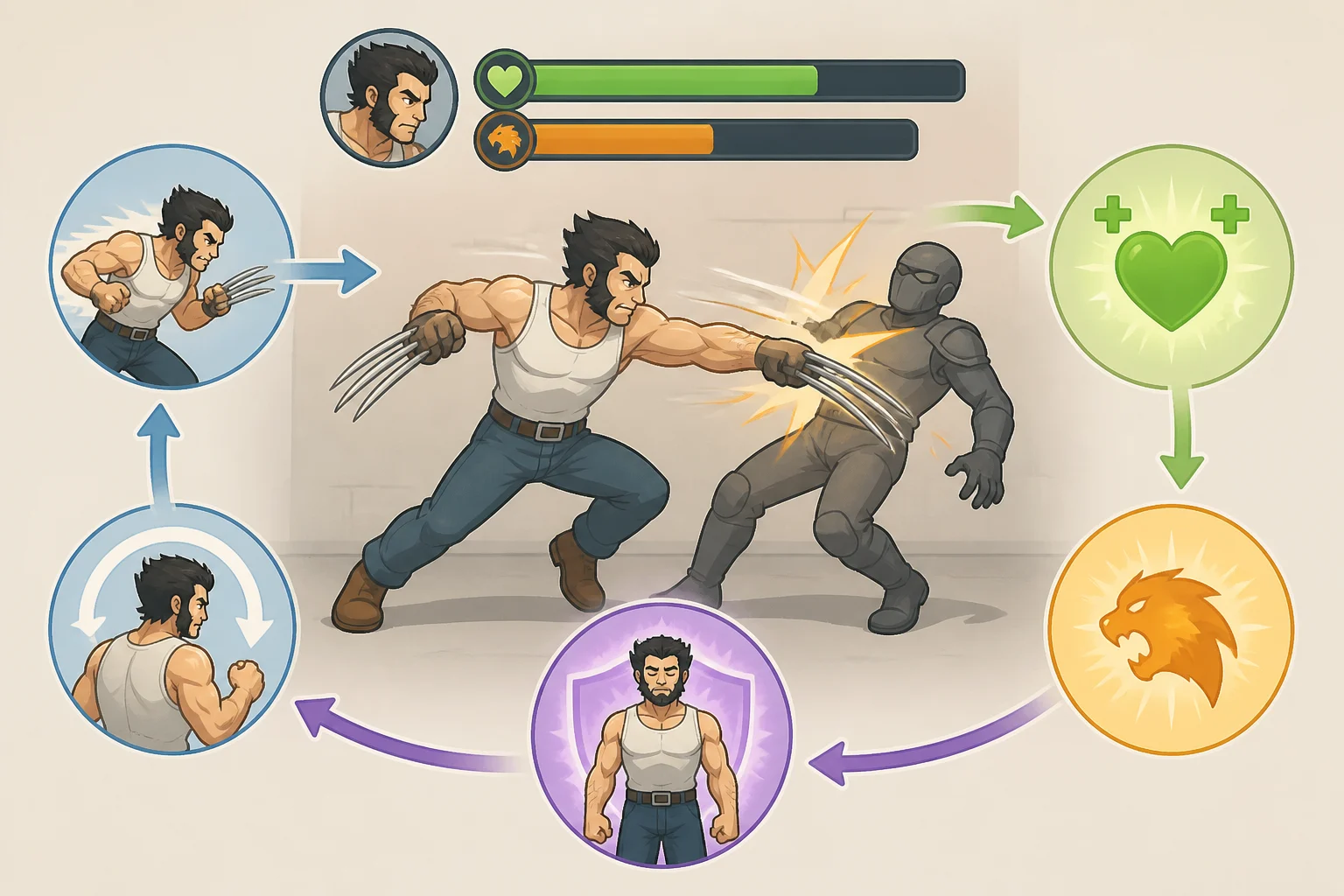
Dialogue can sell a theme, but combat is where a game either proves it or exposes it as marketing language. Insomniac built Logan's Rage system around three tiers ordered specifically as "survivability, resilience, and fury," meaning his power escalates through endurance before it ever turns offensive (PlayStation.Blog, two weeks ago). Special Techniques like Tornado Spin sit on top of that base loop, and players can equip up to four at once, which at least gives Logan's moveset some shape without locking anyone into a single approach for an entire fight (PlayStation.Blog, two weeks ago).
The Independent's hands-on account confirms the resilience-first design actually plays out. Triangle-combo attacks restore health mid-fight, and having at least one gauge filled lets Logan regenerate instead of facing a game-over screen (The Independent). That design forces a real choice: standing back and playing it safe doesn't restore health, only staying aggressive does, so the more damage Logan takes, the harder a player has to push forward to bring him back. It turns the healing factor from a stat readout into a dare, which is a sharper way to dramatize resilience than any cutscene could manage.
That same structure invites a fair objection, though. A meter-gated Rage system could just as easily flatten Logan's suffering into something to farm rather than something to feel, turning grief into a resource bar. The Independent's account pushes against that reading somewhat, since it ties the regeneration to sustained combat performance rather than idle waiting, but it's a real tension worth naming rather than glossing over. The same review describes combat as relentless, forcing constant reaction to enemy behavior, and singles out the sound design, specifically the detail of claws scraping metal, as unusually well realized (The Independent). That's a firsthand account of a completed playthrough, not a developer pitch, and it's the strongest evidence available that story and mechanics are pulling in the same direction rather than sitting side by side.
One pacing problem: Nightmare Doors show up at the worst time
The campaign is linear by design. Players control only Logan from start to finish, even though Jean Grey plays a pivotal role in the plot, and The Independent argues that restraint "really helps to keep the focus on the narrative" (The Independent). It's a deliberate trade-off: no branching perspective, no parallel subplot, just one man's story told straight through.
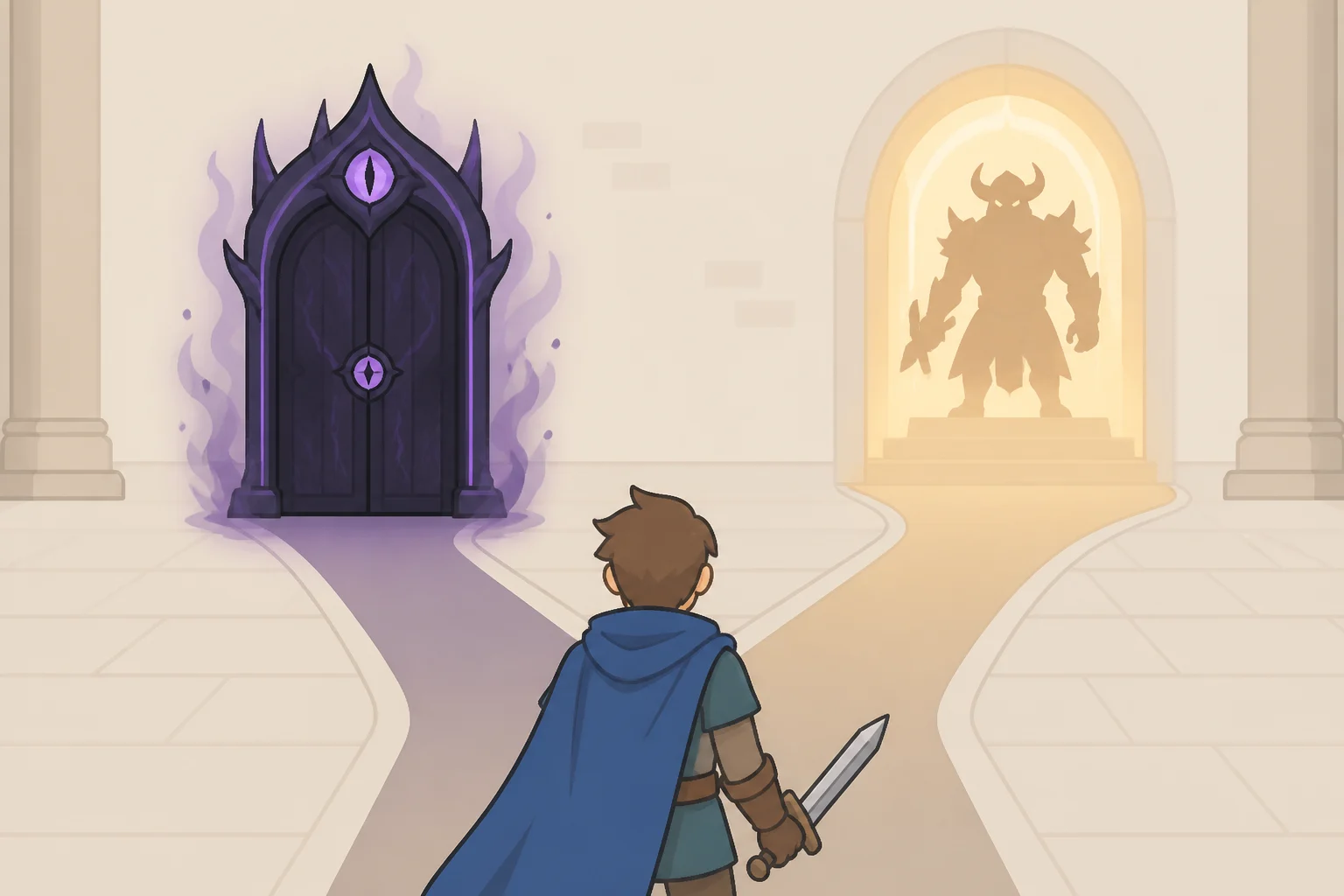
Sitting alongside that linear path are optional Nightmare Doors and trials, timed objectives, enemy-wave survival, races, that reward upgrades to damage output, Rage generation, and resource detection (The Independent). Reasonable enough on paper. The review's sharpest complaint is about timing, not content: a Nightmare Door can appear right before a major battle and, if a player chooses to engage it, rob the tension built up to that point (The Independent).
That makes the flaw one of sequencing, not one of construction. The review doesn't show the main plot collapsing; it shows optional rewards competing with a scene the campaign wants the player to take seriously, at least in this one documented playthrough.
Who this game is for

Based on the one detailed account available, Marvel's Wolverine suits players who want a focused, linear, character-driven action game and don't mind blood along the way. The game is unapologetically graphic, including dismemberment on full display, but ships with violence and adult-language toggles for anyone who wants to dial that back (PlayStation.Blog, two weeks ago).
Two limits are worth flagging before treating that review as the final word. It ran on PS5 Pro over roughly 18 hours, including side content, so how the game performs on standard PS5 hardware hasn't been separately confirmed (The Independent). The game also ships with more than 100 accessibility features, among them audio description, adjustable game speed, high contrast visuals, and strong haptic signals, but no independent account has tested how well those hold up in actual play yet (PlayStation.Blog, two weeks ago).
Readers who want a linear, violent Wolverine story built around one man's grief have enough here to make an informed call. Anyone weighing base-hardware performance, or planning to lean on the accessibility toolkit to actually play the game, should wait for that reporting to catch up.
The detail worth watching as more player accounts surface this week is whether the Nightmare Door complaint holds up across other playthroughs, since only one full review exists in the material available right now. If it repeats, it becomes the defining knock on an otherwise well-built story. If it doesn't, it's a footnote in a game that did the harder job first: making a healing-factor mutant's rage feel like grief rather than spectacle.