Retroid Pocket Duo Lite Plus: What Less Actually Costs
Retroid's lineup now has three dual-screen handhelds fighting for the same wallet, and the newest one asks a pointed question. The Pocket Duo Lite Plus launches at $199 with the same processor tier as the $269 standard Duo. If the chip is the same, is saving $70 worth accepting the cheaper Lite's screens and controls, or is that $70 buying more than the spec sheet lets on (Handheld Guru, yesterday)?
Retroid only announced the standard Duo and Duo Lite last week, and 365Daily.net described the Retroid dual-screen handheld category as increasingly crowded even before this third model showed up (365Daily.net, today). The Lite Plus is Retroid's answer to buyer feedback: the company said it was "listening to the community" when it introduced the middle option, according to its own announcement (Handheld Guru, yesterday). What follows is a breakdown of what Retroid has actually confirmed about the Lite Plus, what enthusiast outlets are still guessing at, and which of the three models makes sense depending on what a buyer actually wants from it.
Retroid Pocket Duo Lite Plus specs vs. Pocket Duo Lite and Duo
Video of the Day
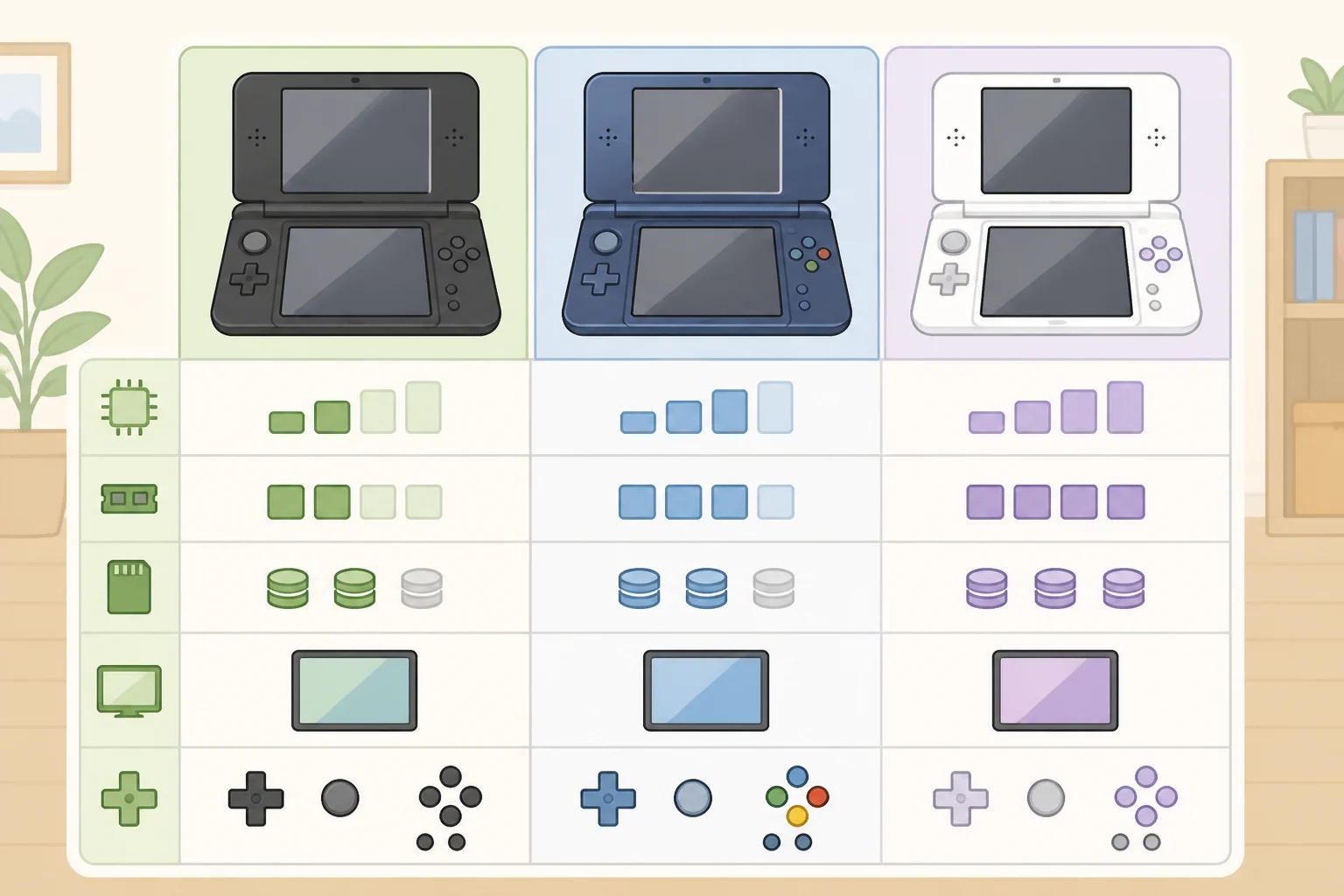
Retroid's three-model lineup now reads like a price ladder with even rungs. The Duo Lite lists at $149, the Lite Plus launches at $199 (discounted from a $219 list price using the code LITEPLUS), and the standard Duo lists at $269. That puts the Lite Plus $50 above the cheapest model and exactly $70 below the most expensive one (Handheld Guru, yesterday; Held Games, earlier this month).
The headline change is the processor. The Lite Plus drops the base Lite's QCS6125, an industrial derivative of the aging Snapdragon 665 with Adreno 610 graphics, in favor of the standard Duo's Dragonwing Q-7790, an industrial variant of the Snapdragon 7 Gen 4 paired with Adreno 722 graphics (365Daily.net, today; Held Games, earlier this month). That's not an incremental bump. It's a jump of several chip generations, and it's the single biggest reason the Lite Plus exists as its own product rather than a repackaged Lite.
Memory and storage follow the same pattern. The Lite Plus ships with 8GB of RAM and 128GB of storage, matching the standard Duo's storage capacity and beating whatever configuration the base Lite offers (Handheld Guru, yesterday). Handheld Guru's own framing captures the pitch precisely: the Lite Plus combines the internal components of the standard Duo with the physical form factor of the Lite (Handheld Guru, yesterday). What's explicitly named in that description is the chip, the RAM, and the storage. The announcement doesn't detail the cooling system or the battery, which matters more than it sounds like it should, and the next section explains why.
Controls are where the Lite Plus visibly parts ways with the Duo it's borrowing a processor from. It keeps the Lite's inline shoulder buttons rather than adopting the Duo's bumper-style triggers (Handheld Guru, yesterday). That's a genuine ergonomic difference rather than an inherent downgrade, though players who lean on precise trigger pulls in racing or shooting games may find themselves with a preference one way or the other.
| Spec | Duo Lite ($149) | Duo Lite Plus ($199 promo / $219 list) | Duo ($269) |
|---|---|---|---|
| Chip | QCS6125 (Snapdragon 665-class) | Dragonwing Q-7790 (Snapdragon 7 Gen 4-class) | Dragonwing Q-7790 (Snapdragon 7 Gen 4-class) |
| GPU | Adreno 610 | Adreno 722 | Adreno 722 |
| RAM | Not specified in cited reporting | 8GB | Not specified in cited reporting |
| Storage | Less than 128GB (exact figure not specified) | 128GB | 128GB |
| Display | Dual 60Hz IPS LCD, 4.2-inch bottom panel | Presumed dual LCD, not confirmed | Dual 120Hz OLED, 4.5-inch bottom panel |
| Shoulder buttons | Inline | Inline | Bumper |
| OS | Android 15 | Not specified in cited reporting | Android 16 |
Sources: Handheld Guru; Held Games
Retroid isn't new to aggressive introductory pricing, either. Its pre-order pricing on the Duo and Duo Lite narrowed the gap between those two models to $114, down from the $120 retail gap, with the Lite at $135 and the Duo at $249 during that window (Held Games, earlier this month). The Lite Plus's promo code fits that same pattern: launch pricing that undercuts the eventual list price, at least for a while.
Video of the Day
What Retroid hasn't confirmed about the Duo Lite Plus

The processor, memory, and storage are documented. The screen is not. Handheld Guru presumes the Lite Plus uses dual LCD panels, reasoning that OLED would likely push the price past the $199 target, but the outlet treats that as an educated guess rather than a confirmed spec (Handheld Guru, yesterday).
That guess has real precedent behind it. The standard Duo uses dual 120Hz OLED panels. The base Lite uses dual 60Hz IPS LCDs, with a bottom screen that measures 4.2 inches against the Duo's 4.5-inch panel. Neither source discloses pixel resolution for any screen across the entire family, which is a genuine information gap rather than a minor omission (Held Games, earlier this month). Without resolution numbers, it's impossible to say how sharp any of these screens actually look, let alone the Lite Plus's unconfirmed one.
Software is similarly unsettled. The standard Duo ships on Android 16, and the base Lite ships on Android 15. The supplied reporting does not specify which OS the Lite Plus will run (Held Games, earlier this month). Given that the Lite Plus borrows its chip from the Duo, betting on the newer OS build isn't unreasonable, but it isn't confirmed either.
Performance numbers deserve the same caution. Early estimates put the Q-7790 ahead of Snapdragon 865-class chips and somewhere between the 888+ and the 8 Gen 1 (Held Games, earlier this month). That's an estimate for the chip class in general, gathered before the Lite Plus existed as a product. It says nothing about how this specific device handles heat, whether performance holds up during long emulation sessions, or how well it runs the more demanding end of the 3DS library. The available reporting simply doesn't include Lite Plus-specific benchmarks yet, which is a limitation of what's been published so far rather than evidence the device will underperform.
Battery capacity and battery-life testing fall into the same bucket: not addressed in any of the cited reporting. Buyers weighing screen-on time against a competing model are working without that number for now.
Which model actually fits which kind of buyer
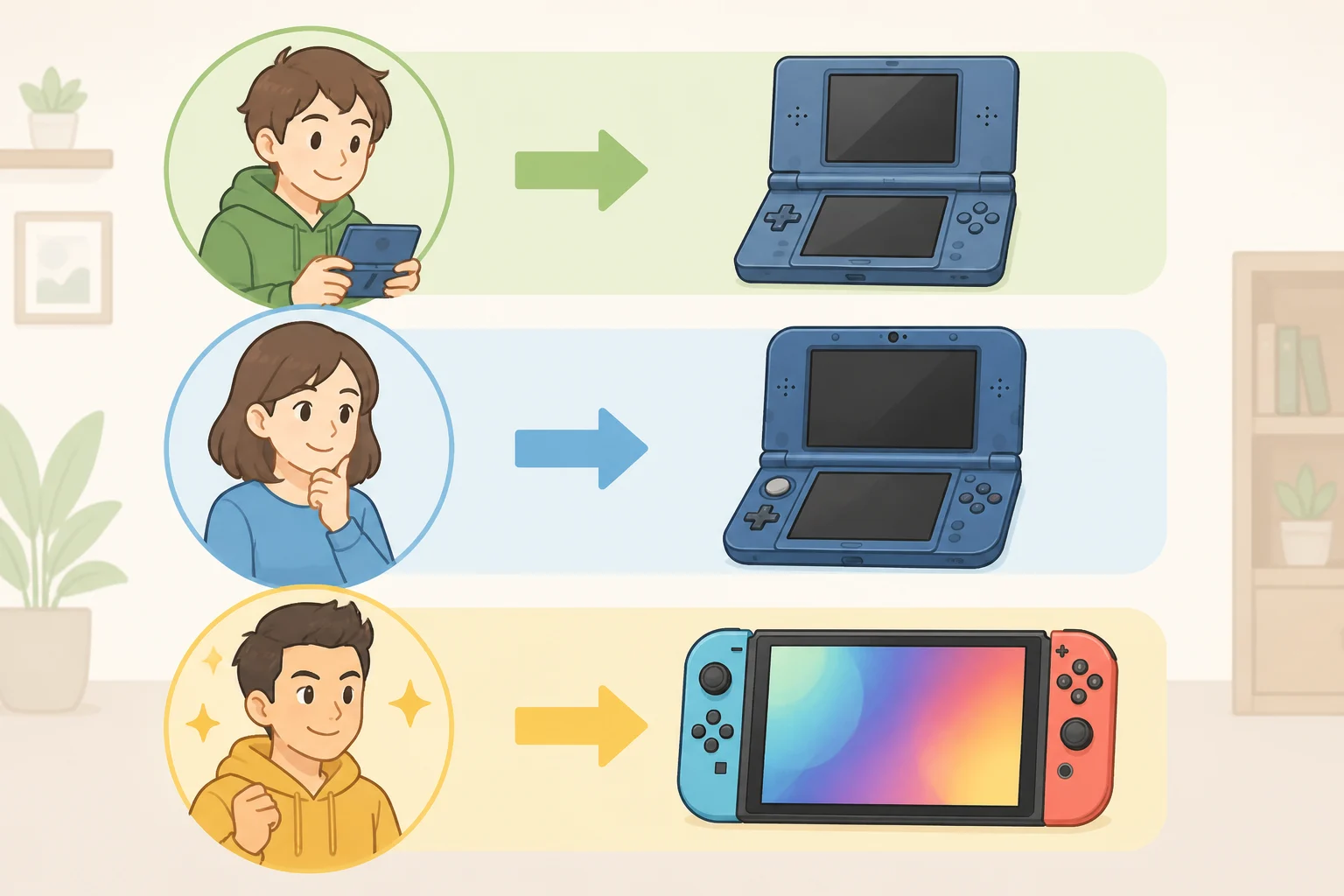
Held Games ran its own comparison of the $149 Duo Lite against the $269 standard Duo and called the Lite the "pure value" winner, recommending it specifically for price-sensitive buyers whose main interest is the DS library rather than 3DS or heavier emulation targets (Held Games, earlier this month). Retroid demonstrated Mario Kart 7 running through the Azahar emulator on the Duo Lite, and it ran smoothly, but Held Games judged the QCS6125's Adreno 610 GPU well short of what the demanding end of the 3DS catalog actually needs (Held Games, earlier this month). That's precisely the ceiling the Lite Plus's Q-7790 chip is positioned to raise, at least on paper, since no Lite Plus-specific 3DS testing has been published yet.
Handheld Guru frames the Lite Plus around solving one specific problem: giving buyers Duo-level processing without the Duo's full price, provided they're willing to accept the accompanying trade-offs in screen and control hardware (Handheld Guru, yesterday). Framed that way, the three models split into fairly distinct buyer profiles:
- Duo Lite ($149): the right call if the DS library is the priority and price sensitivity outweighs everything else.
- Duo Lite Plus ($199 promo): worth a look if the goal is meaningfully more emulation headroom than the base Lite offers, without stretching to Duo pricing, and inline shoulder buttons plus a likely LCD screen aren't dealbreakers.
- Standard Duo ($269): the pick for buyers who want OLED panels, 120Hz refresh, and bumper-style triggers, and are willing to pay for all three.
That framework holds up reasonably well against Retroid's own positioning, but it leans entirely on confirmed specs. Anyone weighing screen quality, sustained performance, or battery life against that decision is working with fewer data points than the price comparison alone suggests.
The verdict: what to watch before the Lite Plus ships
At $199, the extra $50 over the Duo Lite buys a documented processor-generation jump, the same chip class found in the $269 Duo, plus matching RAM and storage. That's a real, verifiable upgrade rather than marketing language stretched thin (Handheld Guru, yesterday).
The $70 saved against the standard Duo comes with one confirmed trade-off, inline shoulder buttons instead of bumpers, and several unresolved ones. Display type, resolution, operating system, and battery behavior all remain outside what the cited reporting has established (Handheld Guru, yesterday; Held Games, earlier this month). There's no firm release date attached to any of this yet, just a November shipping window that Retroid has confirmed (Handheld Guru, yesterday).
That shipping window is the natural point to reassess. Once units reach reviewers, screen measurements, battery testing, and 3DS-specific benchmarks would settle most of what's currently guesswork, though none of that testing has happened yet based on the available reporting. Until it does, the honest read on the Lite Plus is conditional rather than settled: buyers whose top priority is raw processing headroom over the base Lite, and who don't mind inline shoulder buttons or an LCD screen, have enough confirmed information to make that call now. Buyers who care about display quality, sustained performance under load, or battery life should treat the current spec sheet as a starting point, not a finish line, and wait to see what November's shipments actually reveal.