Best Googlebook to buy: what the poll results reveal
If you're hunting for the best Googlebook to buy, a reader poll Android Authority ran today isn't going to hand you a clean answer. The Lenovo Googlebook 15 took the top spot, but it only pulled 19% of the vote. Add up everyone who said they're waiting for more options or want nothing to do with Googlebooks at all, and that group hits 28.3%, bigger than Lenovo's winning share, according to Android Authority.
A leader that can't crack 20%, with nearly three in ten respondents unconvinced, isn't proof of which Googlebook is best. It's a sign that even readers tracking this launch closely haven't settled on a favorite.
Context matters before any of these numbers carry weight. This is a self-selected Android Authority readership poll, not a representative survey of laptop buyers, and no sample size or demographic breakdown has been published. Three of the five Googlebooks launched above $1,000, and two of them, Lenovo's and Dell's, had their prices corrected downward after launch: Lenovo from $1,299 to $1,099, and Dell from $1,199 to $999 (9to5Google).
Before treating poll rank as a buying signal, it's worth separating what these numbers actually show from what they don't, checking whether an earlier sellout at Google's own store means anything about demand, and then lining up what each of the five laptops offers for the money.
What the Googlebook poll results show about buyer interest
Video of the Day

Lenovo's Googlebook 15 topped the Googlebook poll results with 19%, followed by the Dell XPS Googlebook at 16%, the Acer Googlebook 14 at 14.1%, the ASUS Googlebook 14 at 12.7%, and the HP Googlebook 14 trailing at 9.8%, according to Android Authority.
Those five figures add up to 71.6%, not 100%. The rest splits two ways: 15% said Googlebooks intrigue them but they're waiting for more models to choose from, and 13.3% said they have no interest in the category at all, per Android Authority. Combine the last two groups and you get the 28.3% figure that beats Lenovo's win. Ask which Googlebook should I buy, and nearly three in ten respondents answer "none of them yet."
Reader comments attached to the poll add some texture. One commenter, gjgraf91, said they're waiting on something from Samsung, though it's unclear whether they mean a Samsung-made Chromebook or the next Galaxy Book, an ambiguity Android Authority flagged directly. Another reader, notforhire, was blunter: "No thanks." Price came up repeatedly too: one commenter wrote that Googlebooks "priced themselves right out of the chromebook market they were suppose to be replacing," while another pointed out that at these prices, a MacBook sits in the same range, according to Android Authority.
None of this proves Googlebooks are struggling. It does mean the launch hasn't produced a runaway favorite. The comments suggest price bothers at least some engaged readers, but the poll itself never asks why people voted the way they did, so it can't measure how much price actually drove any single decision. Treat it as a snapshot of one engaged audience's current mood, not a verdict on the category.
Video of the Day
A quick Google Store sellout doesn't settle the demand question
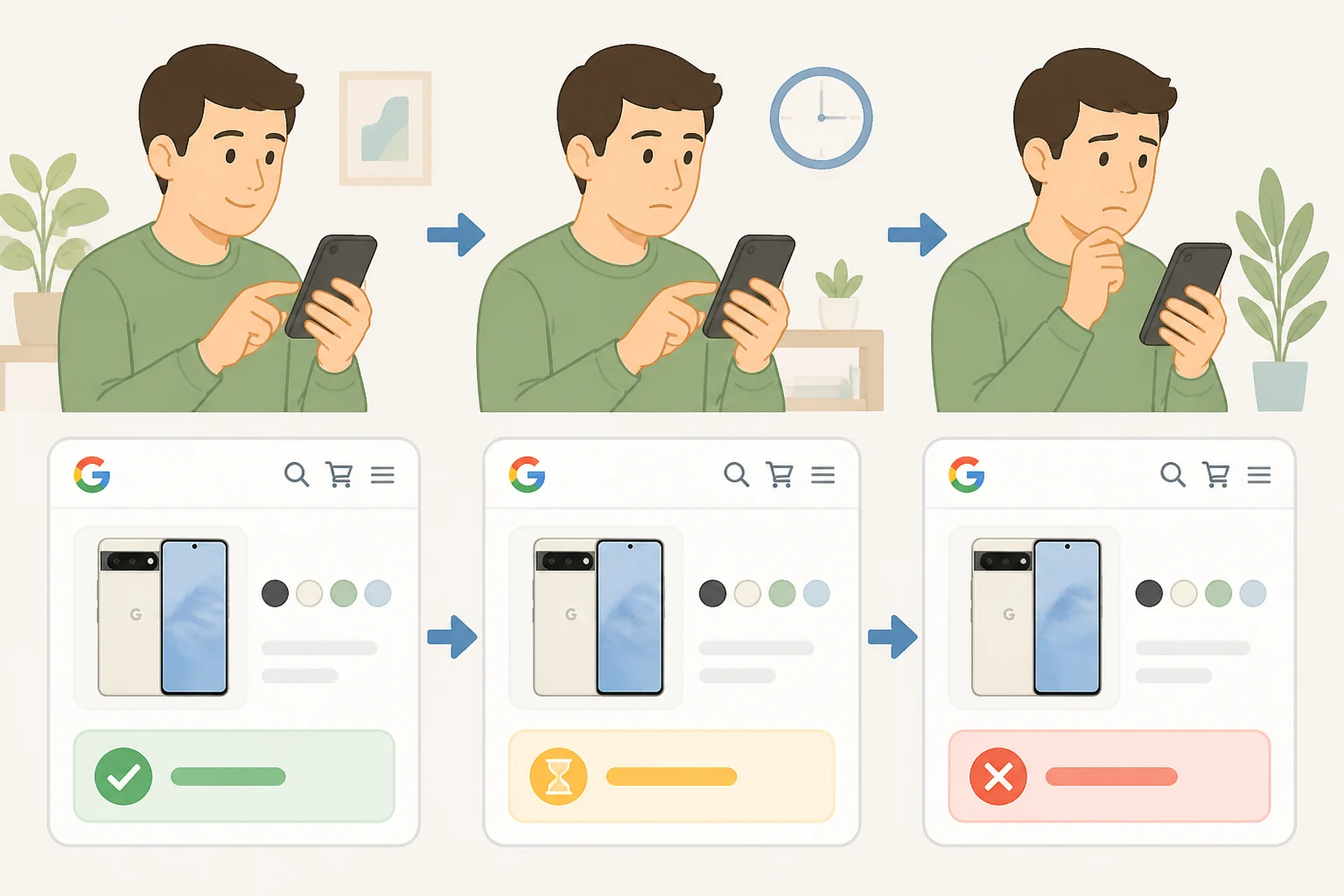
Weeks before this poll ran, another data point made the rounds. Google's US online store burned through its direct pre-order inventory for the Acer, Dell, and Lenovo Googlebooks within days of pre-orders opening on September 21, according to Android Authority. A Reddit user spotted the shortage after checking the store repeatedly and finding every listed model unavailable, and other users in the same thread reported seeing the same thing, with several switching over to Best Buy to finish their orders.
It's tempting to read that as proof Googlebooks flew off the shelves. The catch: Best Buy was still accepting Googlebook pre-orders at the time, ahead of the October 4 release, which means the allocation at Google's own store ran out, not that demand overwhelmed supply everywhere, per Android Authority.
No unit sales figures or production numbers for any of these laptops appear in the reporting, so a quick stockout at one retailer fits a conservative initial batch just as well as it fits genuine high demand. The September sellout and this month's lukewarm poll each measure something narrow. Neither tells you how the category is actually performing, and leaning on either one alone reads more into this launch than the evidence supports.
Comparing Googlebook prices and specs: Lenovo Googlebook 15 vs Dell XPS Googlebook
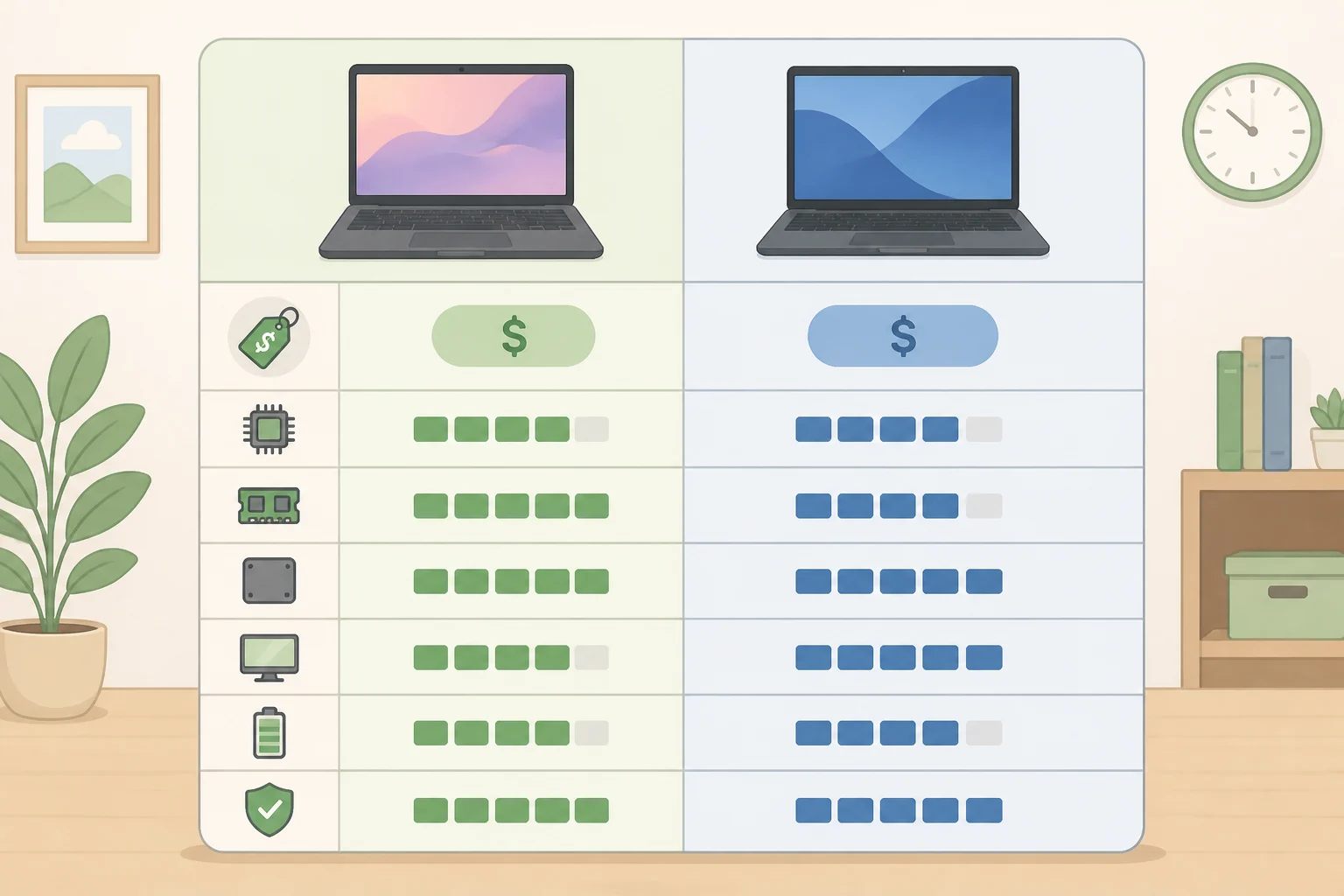
Strip away the poll rankings and look at what's actually on the spec sheet, since that's the part buyers can verify today.
| Model | Poll share | Reported starting price | Standout verified spec | Why you might compare it |
|---|---|---|---|---|
| Lenovo Googlebook 15 | 19% | $1,099 (corrected from $1,299) | 15.3-inch 120Hz OLED, up to 32GB RAM | Largest reported screen, 32GB memory ceiling |
| Dell XPS Googlebook | 16% | $999 (corrected from $1,199) | Snapdragon X Elite, up to 1TB storage | Storage headroom, lower entry price |
| Acer Googlebook 14 | 14.1% | $899 | Only convertible design in the lineup | Convertible form factor |
| ASUS Googlebook 14 | 12.7% | $1,299 | 15.9mm thick, 2.2 pounds | Portability above all else |
| HP Googlebook 14 | 9.8% | $1,299 | Snapdragon X Elite, shared with Dell | No clear edge over Dell at the same price |
Lenovo Googlebook 15 is the biggest of the five. Android Authority lists a 15.3-inch display at 2.84 pounds, while 9to5Google describes a 15-inch OLED panel with a 120Hz refresh rate, Intel Core Ultra 5 processors, up to 32GB of RAM, and up to 512GB of storage. Lenovo originally announced a $1,299 starting price, then corrected it to $1,099, according to 9to5Google. If screen size and that 32GB memory ceiling matter most, this is the model to compare first, though a poll win and a verified performance edge aren't the same claim.
Dell XPS Googlebook finished second with 16% of the vote. It runs a Snapdragon X Elite chip and offers up to 1TB of storage, according to Android Authority, and its price dropped too, from an announced $1,199 to $999, per the same report and 9to5Google. Buyers who value storage headroom and a lower entry price over screen size should weigh this one against Lenovo.
Acer Googlebook 14 is the outlier. It's the only convertible in the group and the cheapest overall at $899, yet it finished third in the poll, not first, according to Android Authority and 9to5Google. The lowest price didn't produce the highest vote share, which hints that price wasn't the only thing on respondents' minds. Consider Acer if a convertible design solves a real problem for you, not simply because it carries the lowest sticker price.
ASUS Googlebook 14 came in fourth with 12.7% of the vote. Its draw is a thin-and-light build, 15.9 millimeters thick and 2.2 pounds, starting at $1,299, per Android Authority. HP Googlebook 14 finished last at 9.8%, sharing the same Snapdragon X Elite chip as Dell but also starting at $1,299, according to the same Android Authority report. Nothing in the reported specs gives either model a clear edge that justifies paying more than Lenovo or Dell.
This comparison covers price and specs only, not performance. No independent battery, benchmark, or build-quality testing for any of these five laptops shows up in the reporting, so it tells you what each machine promises on paper, not how it holds up once reviewers spend real time with it.
What the published specs don't confirm yet
Lenovo's 32GB RAM figure and Dell's 1TB storage figure are maximums, not confirmation of what actually ships at the $1,099 and $999 starting prices. Neither Android Authority nor 9to5Google breaks out which processor, RAM, or storage tier comes bundled into each base configuration, and that gap matters more than the headline price does.
Acer's convertible design is confirmed by both sources, but how the hinge or display actually folds isn't described anywhere in the reporting. Treat "convertible" as a category label, not a guarantee of a specific tablet mode, until a hands-on review fills in the details.
Before ordering, check the product listing directly rather than assuming a spec carries over from the "up to" figure:
- Does the $1,099 Lenovo listing actually include the 32GB RAM option, or a lower tier?
- Does the $999 Dell listing include the 1TB storage option, or a smaller default?
- What exact screen size and weight do the ASUS, HP, and Acer models ship with, beyond the single dimension each source reports?
A model can look like the best fit on paper without turning out to be the strongest performer once it's actually in hands.
Best Googlebook to buy: which model should you choose?
Match the laptop to an actual need rather than its poll rank, then confirm the configuration before paying for it.
- Start with Lenovo if the largest reported display and the 32GB memory ceiling top your list, but verify that RAM tier is actually included at the $1,099 starting price before ordering.
- Compare Dell if the $999 entry price and up-to-1TB storage option matter more than screen size, and confirm which configuration that price actually buys.
- Choose Acer only if the convertible format solves a real problem; the $899 price is a bonus, not the reason to buy it.
- Hold off if independent battery, performance, or build-quality testing matters to your decision. None of that exists yet for any Googlebook.
For ASUS and HP, buy only if a specific design detail or configuration outweighs the lower prices Lenovo and Dell already offer. Otherwise, verify the exact configuration and current retailer stock, or wait for reviewers to actually test these machines before putting $899 to $1,299 toward a category that, by its own fans' admission, hasn't produced a clear winner yet.